Florida Lake Maintenance Calendar for Wet and Dry Seasons
Florida's rain pattern can change a healthy community lake within weeks. A retention pond that looks clear in April may develop algae, floating debris, or eroded banks after several summer storms.
A reliable Florida lake maintenance plan follows the weather instead of treating every month the same way. HOAs, golf courses, and property managers can use the dry season for inspections and repairs, then increase monitoring when heavy rain accelerates plant growth and runoff.
Key Takeaways
- Dry-season inspections help identify erosion, clogged structures, invasive plants, and aeration problems before summer storms arrive.
- Wet-season visits should focus on stormwater inflows, algae, floating debris, water levels, and shoreline damage.
- Weekly or biweekly service works best when the schedule matches the lake's size, nutrient load, vegetation, and public use.
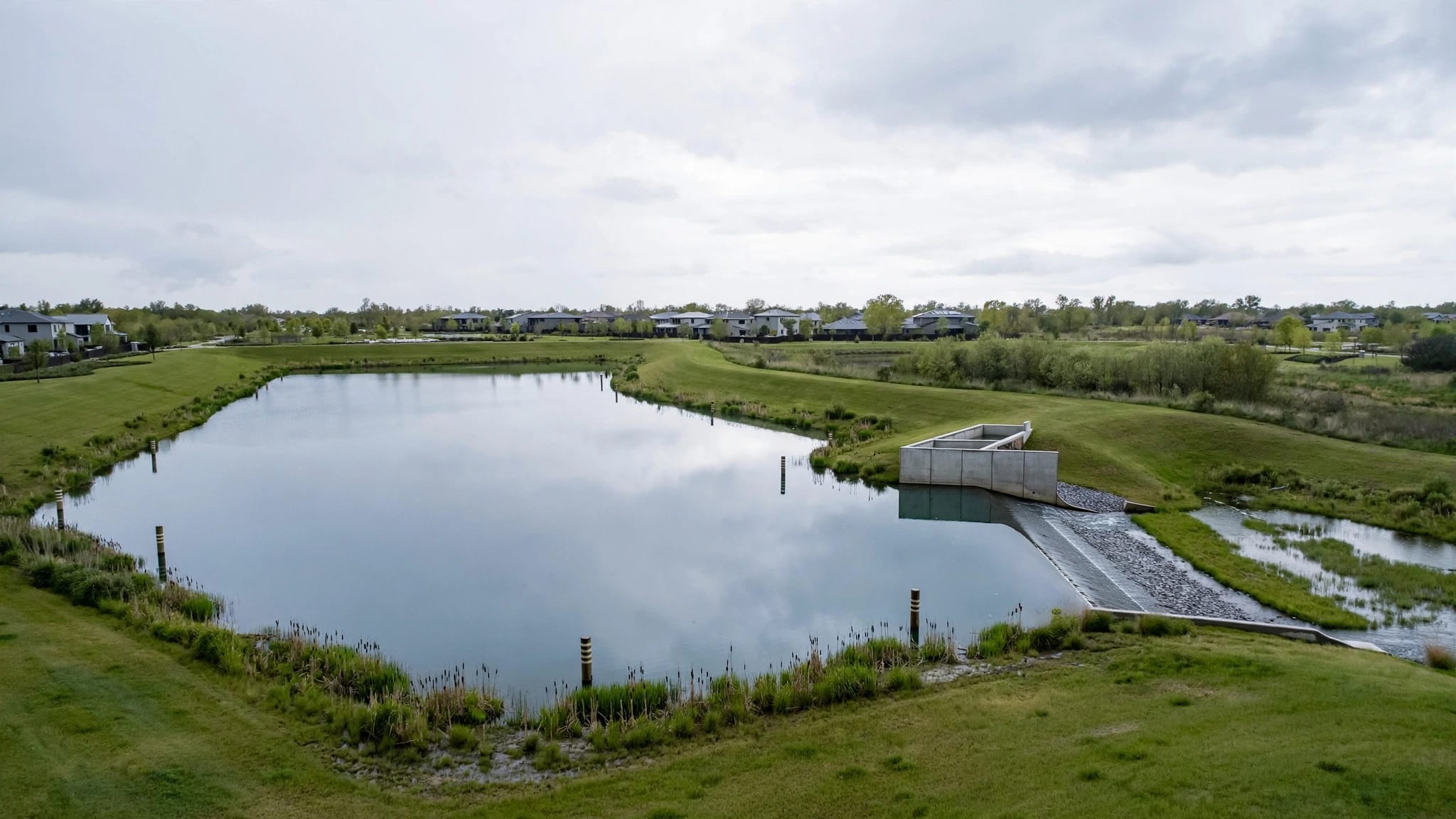
- Retention ponds need careful treatment because they collect runoff from roads, roofs, turf, and landscaped areas.
- Licensed aquatic treatment and documented inspections help protect residents, wildlife, property, and regulatory compliance.
Florida Lake Maintenance Calendar by Month
Florida has regional weather differences, but many Southwest Florida properties experience a dry season from about November through April and a wetter period from May through October. North Florida may see a different schedule, so local rainfall and site conditions should guide the calendar.
| Months | Main maintenance priorities |
|---|---|
| January and February | Inspect shorelines, remove debris, check aeration, and document water clarity |
| March and April | Repair erosion, clear inflow areas, inspect outfalls, and address early plant growth |
| May and June | Increase monitoring for algae, weeds, stormwater surges, and rising water levels |
| July through September | Inspect after storms, remove debris, watch dissolved oxygen risks, and control rapid growth |
| October | Review storm damage, correct problem areas, and prepare the next annual service plan |
| November and December | Complete condition assessments, trim approved vegetation, and plan dry-season repairs |
This calendar works best as a starting point rather than a fixed rule. A golf course pond surrounded by fertilized turf may need more frequent visits than a residential lake with little runoff. A small pond beside a busy road may also collect trash and sediment faster than a larger water body.
Keep written records of treatment dates, weather, water conditions, shoreline concerns, and recommended repairs. These records help an HOA board or property manager compare conditions over time and make informed budget decisions.
Dry-Season Priorities: November Through April
The dry season gives maintenance crews a better chance to inspect areas that become difficult to reach during high water. Lower rainfall also creates a useful window for identifying shoreline failures, exposed roots, damaged banks, and blocked drainage features.
Start with a full walk around the water body. Look for bare soil, small channels cut into the bank, leaning trees, exposed irrigation lines, and areas where grass has disappeared. Small erosion marks can expand quickly once summer rain sends concentrated runoff toward the pond.
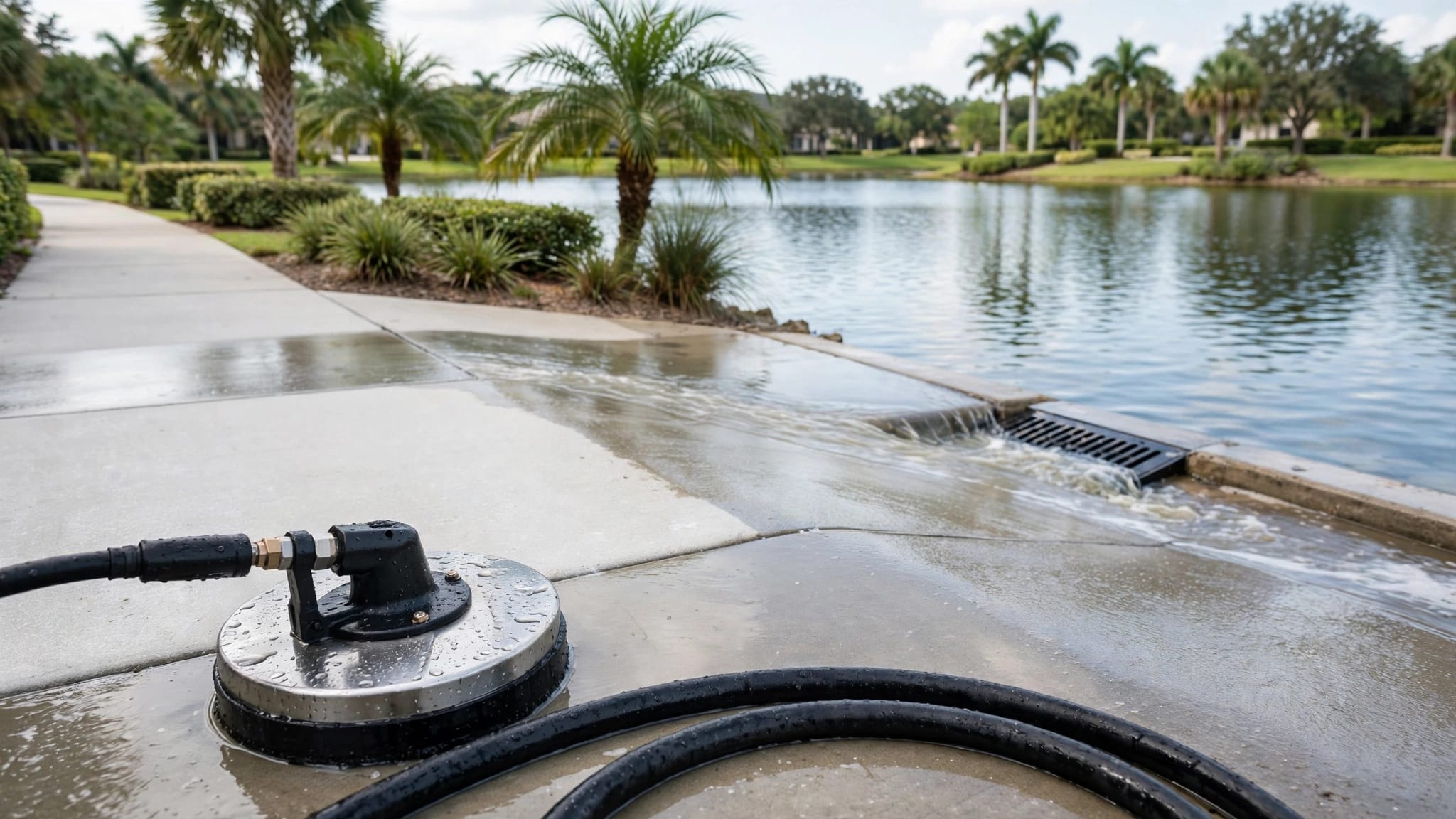
Check stormwater inlets, pipes, weirs, and outfalls for sediment or vegetation blockage. A clogged inlet can force water around the structure and wash away nearby soil. Retention ponds often receive runoff from paved surfaces, so trash and sediment may collect at these entry points even when the main pond appears clean.
The dry season is also a good time to inspect aeration equipment. Confirm that compressors, diffusers, electrical connections, and fountains operate correctly. Aeration can support oxygen levels and water circulation, but it doesn't remove the nutrients that feed algae. The property may still need better fertilizer control, shoreline planting, debris removal, or other water-quality measures.
Aquatic plant growth may slow during cooler weather, yet established weeds won't disappear on their own. Identify plants before selecting a treatment. A licensed professional can distinguish desirable littoral vegetation from invasive or nuisance species and plan treatment around label directions, water use, fish, pets, and wildlife.
For many properties, early spring is the best time to correct problems before the wet season. That may include stabilizing a damaged bank, replacing failed shoreline vegetation, removing accumulated debris, or adjusting the service frequency.
Wet-Season Priorities: May Through October
Rainfall changes the workload. Stormwater carries soil, fertilizer, grass clippings, leaves, and other material into lakes and retention ponds. Those nutrients can support algae and aquatic weed growth, while sudden inflows can damage banks and alter water levels.
After a heavy storm, inspect the areas that receive concentrated runoff first. Check whether an inlet has become blocked, whether water has cut a new channel, and whether trash has collected along the downwind shoreline. Floating debris should be removed before it sinks, breaks apart, or creates a safety issue.
Warm water and long periods of sun can also increase algae activity. Look for green surface mats, suspended green water, unusual odors, or a sharp change in appearance. A sudden algae problem deserves prompt attention, especially when residents use the shoreline or when pets can reach the water.
Wet-season inspections should also include plant growth along banks and in shallow areas. Some vegetation helps protect soil and provides habitat, but dense nuisance growth can block views, interfere with drainage, or spread across the pond. Treatment should target the identified plant and avoid unnecessary disturbance to desirable areas.
Heavy rain can expose a drainage problem that was invisible during the dry season. Inspect the inflow points, not only the middle of the lake.
During July, August, and September, weekly visits may be appropriate for properties with frequent algae outbreaks, high nutrient runoff, heavy public use, or fast-growing weeds. Biweekly service may fit a more stable site, although crews should still respond after major storms.
Never judge water quality by appearance alone. Clear water can still have poor circulation or excess nutrients, while a pond with some natural plant growth may be functioning well. A service provider can review conditions, recommend testing when needed, and compare results against previous inspections.
What HOAs and Golf Courses Should Monitor
A useful maintenance calendar connects visible conditions with the property's actual risks. For an HOA, that means protecting resident access, views, pets, sidewalks, fences, and nearby homes. For a golf course, the plan also needs to account for irrigation, play areas, cart paths, drainage, and turf management.
Set clear inspection points around each lake. Include stormwater inlets, fountains, aeration equipment, access areas, outfalls, bridges, and sections with known erosion. Consistent locations make changes easier to document.
Pay attention to these conditions:
- Algae and surface scum: Record the location, coverage, color, odor, and changes after treatment.
- Aquatic weeds: Identify whether growth is floating, submerged, or rooted along the shoreline.
- Erosion: Photograph bare banks, undercut areas, exposed roots, and sediment deposits.
- Water level changes: Compare unusual rises or drops with recent rainfall and drainage conditions.
- Debris: Remove branches, litter, fishing line, and other material that can affect safety or equipment.
- Equipment performance: Note weak fountains, stopped diffusers, unusual compressor sounds, and electrical issues.
- Public access: Check signs, fences, slopes, and areas where children, pets, or guests may approach the water.
Fertilizer management also belongs in the lake plan. Excess nutrients can enter through turf runoff, landscape beds, irrigation overspray, and decaying organic matter. Keep grass clippings out of the water, maintain planted buffer areas where appropriate, and address irrigation that sends water directly toward the pond.
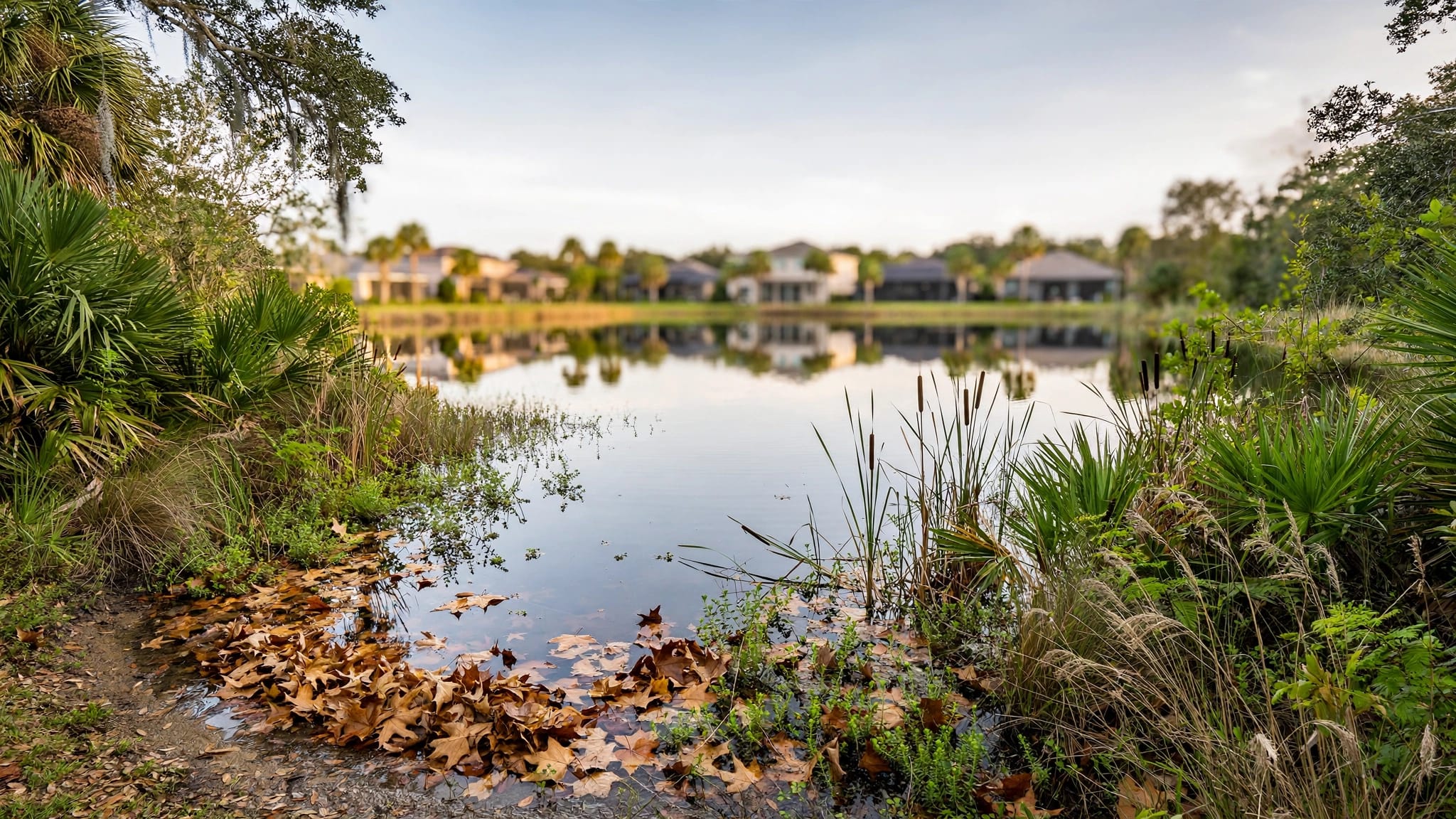
Littoral plants can improve the edge of a lake when they match the site's design and growing conditions. However, they need room, maintenance, and a clear purpose. A blanket removal approach may expose soil and increase erosion, while unchecked growth can block access and views.
Matching Service Frequency to Site Conditions
There isn't one correct visit schedule for every Florida property. The right frequency depends on how quickly conditions change and how much risk the lake creates for residents, guests, property, and equipment.
Weekly service often fits high-use communities, golf courses, ponds with recurring algae, and sites that receive heavy runoff. Frequent visits allow crews to identify small problems before they spread.
Biweekly service can work for stable lakes with moderate growth and dependable water-quality conditions. The provider should still adjust visits after tropical weather, prolonged heat, or a sudden change in water appearance.
Seasonal inspections may suit a low-risk property only when the site has limited growth, low public exposure, and no active shoreline or drainage problems. Seasonal service shouldn't replace an inspection after major storms.
Ask for a written scope of work. It should identify which water bodies receive service, how often inspections occur, what conditions trigger a treatment, and how the provider documents results. The plan should also state whether it includes aeration checks, debris removal, shoreline observations, water testing, and repair recommendations.
Aquatic treatments should follow product labels and the conditions of the site. A licensed commercial applicator can select and apply products according to applicable requirements. For a Southwest Florida community, Seabreeze Lake Maintenance holds Commercial Applicator License #CM28291 and State-Licensed Specialty Contractor #SCC131152136.
A strong provider also explains what the crew found. Property managers need practical information they can share with board members, residents, golf course staff, and vendors. Clear photographs and service notes are more useful than a generic statement that the pond was treated.
Planning the Annual Lake Budget
A yearly budget should separate routine care from repairs. Weekly or biweekly maintenance may cover inspections, aquatic weed and algae control, equipment checks, and routine debris removal. Shoreline stabilization, erosion control, sediment work, and equipment replacement may require separate planning.
Schedule the major assessment before the wet season. That review can identify areas where runoff enters the lake, banks that need reinforcement, and vegetation that may require attention. Then reserve funds for storm-related work later in the year.
After wet-season storms, update the budget rather than waiting for the next annual meeting. Repeated erosion or algae growth often points to an underlying drainage or nutrient issue. Treating symptoms without correcting the source can increase long-term costs.
Boards and managers should also ask how a provider handles safety and environmental concerns. The service plan should account for residents, pets, wildlife, irrigation needs, fishing areas, and nearby recreational spaces. Ask about treatment notifications and site-specific restrictions before work begins.
For a property that needs a professional review, Get a Free Lake Health Assessment to arrange a lake inspection with Seabreeze Lake Maintenance.
Conclusion
A dependable Florida lake maintenance calendar changes with rainfall, temperature, water levels, and plant growth. Use the dry season to inspect and repair the site, then increase monitoring when summer storms bring more runoff and faster biological growth.
The strongest plans focus on causes as well as symptoms. Regular inspections, responsible aquatic treatments, working aeration, sound shorelines, and clear service records help communities and golf courses protect their lakes before small problems become expensive repairs.
Recent Posts