
Can Leaf Litter Raise Nutrients in Florida HOA Lakes?
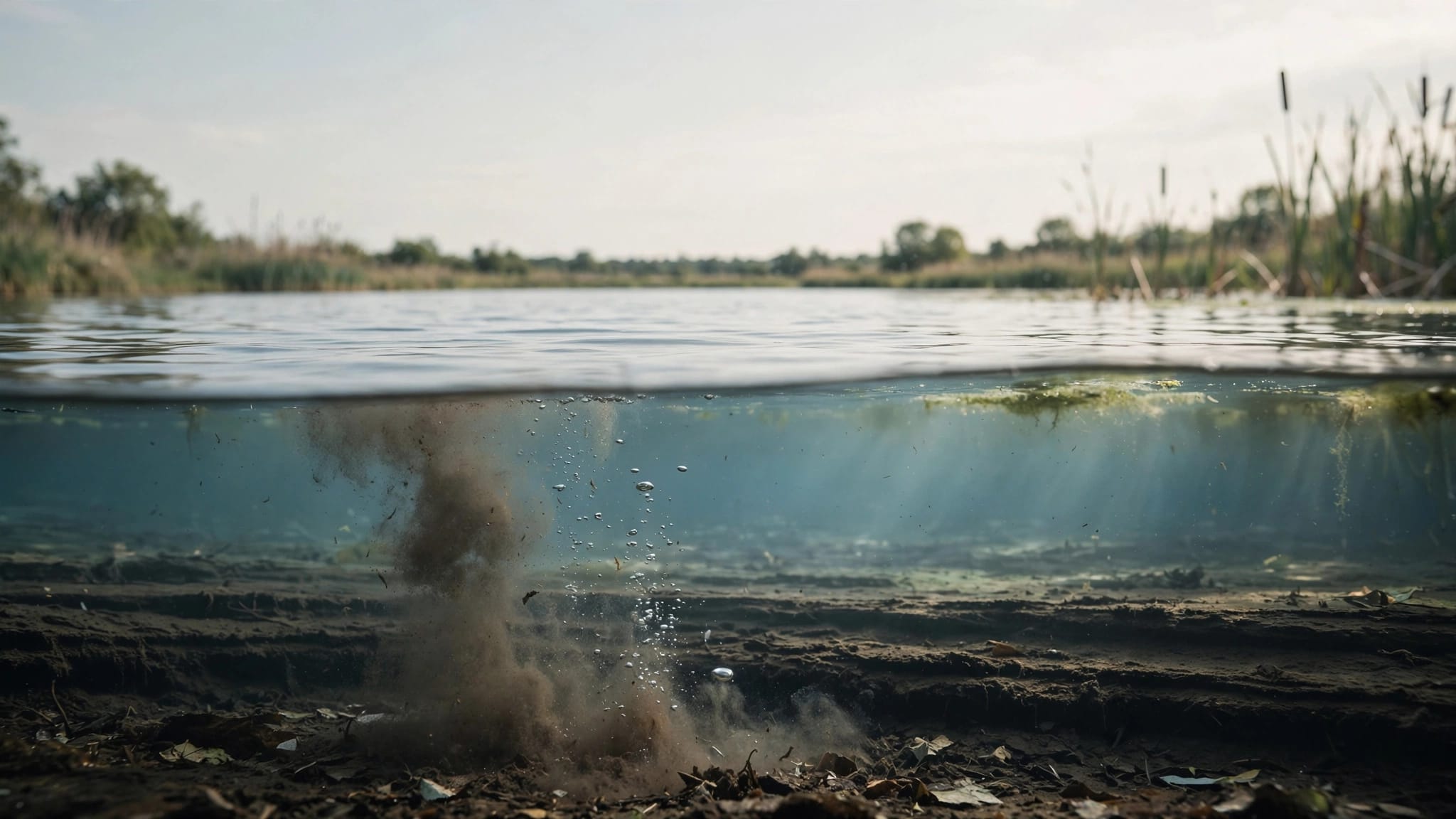
Yes, leaf litter can raise nitrogen and phosphorus levels in Florida HOA lakes as it breaks down. It also adds organic matter that uses dissolved oxygen during decomposition, especially where debris collects in shallow, poorly circulated water.
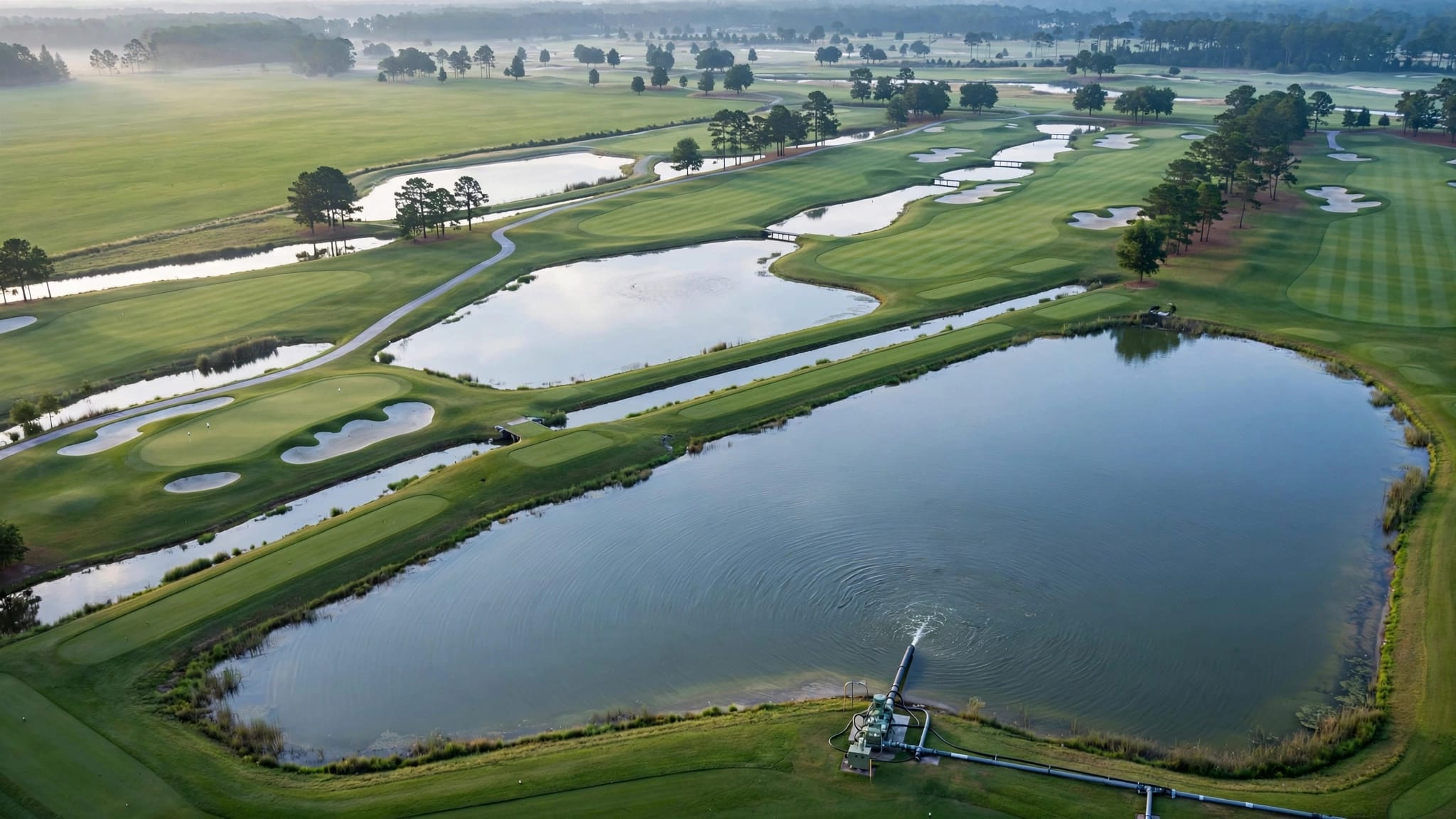
For retention ponds, gated communities, and golf course lakes, the concern is repeated accumulation rather than a few scattered leaves. Start by identifying where leaves enter the water and where they settle.
Key Takeaways
- Leaves add nutrients and organic material as they decompose.
- Removing accumulated debris before it sinks reduces material entering bottom deposits.
- Recurring algae requires investigation of runoff, circulation, sediment, and shoreline conditions.
- Each lake needs its own assessment, even within a connected system.
How Nutrients in Leaf Litter Reach the Water
Leaves contain nitrogen and phosphorus. Once they enter a lake, some compounds dissolve into the water while microbes break down the remaining material.
Decomposition affects more than nutrient levels
Bacteria and other organisms consume oxygen as they process leaves, pine needles, grass clippings, and other organic debris. Heavy accumulations can increase oxygen demand, particularly in warm water with limited circulation.
Decomposition also produces carbon dioxide and organic acids. These processes can lower pH, although the response depends on the lake's chemistry and buffering capacity. Understanding how decomposing leaves affect lake pH helps connect debris buildup with changes beyond visible algae.
Dark water alone doesn't prove excessive nutrients. Dissolved organic compounds can also affect color.
Settled leaves add to bottom deposits
Leaves that sink become part of the lake's organic sediment. Over time, repeated inputs can contribute to muck alongside dead algae, aquatic vegetation, and soil washed in from surrounding land.
Some phosphorus remains stored in these deposits. Under low-oxygen conditions near the bottom, sediment can release phosphorus into the water again.
That process helps explain why a shoreline cleanup may not stop recurring algae. Understanding how lake sediment releases phosphorus matters when nutrient problems continue after visible debris is gone.
Why Some Community Lakes Collect More Leaves
Tree cover matters, but drainage and wind also determine where debris accumulates. Leaves can enter directly from overhanging branches or travel through streets, swales, and storm drains.
Wet-season storms can move leaves, clippings, branches, and sediment into retention ponds together. Meanwhile, wind pushes floating material into sheltered coves, shoreline vegetation, and corners with limited water movement.
On multi-lake properties, one basin may receive runoff from a larger landscaped area than another. Connected pipes can also move water and suspended material between lakes.
Therefore, similar-looking lakes can have different nutrient pressures. A recurring debris pocket near an inlet deserves attention even when the rest of the shoreline looks clean. Clearing that pocket without addressing its drainage source leaves the same collection point in place.
How HOAs Can Reduce Leaf-Related Nutrient Inputs
The most useful response combines debris removal with changes to the landscape practices that keep feeding the lake.
Remove accumulations before they settle
Schedule debris inspections around storms, heavy leaf drop, and landscape maintenance. Focus on floating piles, shoreline pockets, and material collecting near drainage structures.
Landscape crews should collect leaves and grass clippings rather than blow them into lakes, swales, or storm drains. Place removed material where rainfall cannot carry it back into the water.
However, avoid clearing healthy shoreline vegetation merely to create a bare edge. Appropriate littoral plants help stabilize soil and slow runoff. The goal is to remove excessive debris while preserving useful shoreline cover.
Track each lake's sources and response
Record where debris collects, when it appears, and whether it follows mowing, storms, or irrigation. Pair those observations with total nitrogen, total phosphorus, dissolved oxygen, pH, temperature, and algae conditions.
A single water sample cannot establish how much of a nutrient result came from leaves. Fertilizer, eroding soil, pet waste, and sediment may contribute too.
Building a nutrient budget helps organize these sources for each basin. Then compare trends over time rather than treating every lake on the property as identical.
When Debris Removal Needs a Broader Management Plan
If one lake repeatedly develops algae, odors, or heavy muck, surface cleanup may address only part of the problem. The assessment should also cover circulation, eroding banks, inflows, outlets, and bottom conditions.
Aeration can improve oxygen and circulation where needed, but it doesn't remove every nutrient source. Likewise, algae treatment doesn't stop new leaves or sediment from entering.
We combine water-quality management, debris removal, aeration, algae control, and shoreline care for Southwest Florida properties. We hold Commercial Applicator License #CM28291 and State-Licensed Specialty Contractor #SCC131152136.
Frequently Asked Questions
Should an HOA remove every leaf from its lake?
No. Occasional leaves are a normal organic input. Prioritize repeated accumulations, blocked drainage structures, and debris pockets associated with poor circulation or declining water quality.
Will aeration eliminate nutrients released by leaves?
Aeration supports oxygen conditions and water movement. However, it doesn't physically remove incoming leaves or all nutrients already stored in sediment. Source control and monitoring remain necessary.
Can leaves explain why only one lake has algae?
They may contribute, but algae alone doesn't identify the source. Compare that lake's drainage area, debris accumulation, shoreline erosion, circulation, and water-quality trends with neighboring basins.
Keep Leaf Litter From Becoming a Recurring Load
Leaf litter can add nutrients to HOA lakes, especially when repeated inputs accumulate and decompose. Early removal and source control reduce that pressure before more material settles.
For persistent problems, the strongest plan addresses the lake, its shoreline, and the drainage feeding it.
Get a Free Lake Health Assessment to schedule a call and lake inspection with our team.
Recent Posts