Low pH in HOA Lakes: Causes, Risks, and Next Steps
An acidic reading in a community retention pond can point to more than a chemistry problem. A board dealing with low pH HOA lakes may see stressed fish, unstable water conditions, or an inflow carrying organic acids, but one test can't identify the cause.
That uncertainty matters in gated communities, golf course developments, and properties with several connected basins. For communities managing low pH HOA lakes , the right response starts with repeatable testing and an inspection of the shoreline, stormwater system, and basin conditions. The chemistry makes more sense once you know what pH measures.
What low pH HOA lakes reveal about water quality
pH measures how acidic or basic water is on a scale from 0 to 14. A reading of 7 is neutral at 25 degrees Celsius. Readings below 7 indicate acidic conditions, while readings above 7 indicate alkaline conditions.
The scale is logarithmic. Water at pH 6 has about ten times more hydrogen ion activity than water at pH 7. At pH 5, the difference is about 100 times. That doesn't make every below-7 reading an emergency, but it does show why a small-looking change can affect aquatic life and water chemistry.
Many freshwater systems fall somewhere between the mid-6s and mid-8s. However, Florida lakes and retention ponds don't all have the same natural chemistry. Source water, soil, tannins from leaves, alkalinity, groundwater, and biological activity can all affect the usual range for a particular basin.
Time of day also matters. During daylight, algae and aquatic plants consume carbon dioxide during photosynthesis, which can push pH upward. At night, plants, fish, and microbes release carbon dioxide through respiration. As a result, pH often reaches its lowest point before sunrise and rises during the afternoon.
A low pH result becomes useful only when you know when, where, and how the sample was collected.
A pH reading should be reviewed with dissolved oxygen, temperature, alkalinity, nutrients, turbidity, and conductivity. Boards that need help interpreting the full panel can review these HOA lake water test results alongside field observations.
Why pH falls in Florida retention ponds
Low pH usually has a cause within the watershed or the pond itself. The source may be natural, maintenance-related, or connected to stormwater movement.
Organic matter and decomposition
Leaves, pine needles, grass clippings, mulch, dead algae, and decaying aquatic plants add organic material to a lake. As microbes break down that material, they produce carbon dioxide and organic acids. The process can lower pH, especially in shallow areas with heavy debris and poor circulation.
Decomposition also uses dissolved oxygen. That connection matters because an HOA may notice several symptoms at once, including acidic water, foul odors, fish stress, and dark or cloudy conditions.
A thick layer of bottom muck can continue releasing carbon dioxide and nutrients even after crews remove visible debris. Therefore, a shoreline that looks clean may still have an underlying water-quality problem.
Stormwater, groundwater, and runoff
Florida retention ponds collect water from roads, roofs, lawns, drainage swales, and nearby properties. Rain can carry dissolved material from soil, mulch beds, leaf litter, and decaying vegetation into the basin. In areas with low mineral content, heavy rainfall can also dilute the water's buffering capacity.
Groundwater and inflows can change pH as well. Excavation or erosion may expose soil with different chemical properties than the original basin edge. Irrigation return flows can add dissolved materials, while runoff from poorly maintained areas can increase organic loading and nutrient pressure.
Fertilizer runoff doesn't always lower pH directly. It can feed algae and plant growth, however. When that material dies and decomposes, the resulting carbon dioxide and oxygen demand can contribute to lower readings.
Low alkalinity allows larger swings
Alkalinity is the water's ability to neutralize acids. It is different from pH, although the two measurements work closely together.
A lake with low alkalinity has less protection against acidic inputs. Rainfall, decomposition, or an inflow can then create a larger pH change. A lake with higher alkalinity may resist those changes, although high alkalinity doesn't guarantee a high pH.
Communities can review alkalinity and pH stability in HOA lakes to see why buffering capacity matters. For low pH HOA lakes , an alkalinity test often helps separate a temporary fluctuation from a recurring chemistry issue.
How low pH affects fish, plants, and lake treatments
The effect of acidic water depends on the reading, how long it lasts, temperature, dissolved oxygen, and the species living in the lake. A short-lived change is different from a repeated low reading across several weeks.
Fish exposed to acidic conditions can experience gill irritation, excess mucus, reduced feeding, and stress. Extended exposure may interfere with reproduction and the development of eggs or young fish. Fish gasping at the surface can indicate low dissolved oxygen rather than pH alone, so both measurements need attention.
Aquatic plants respond differently to pH. Some tolerate acidic conditions, while others become stressed or grow poorly. Low pH can also change nutrient availability and increase the mobility of some substances in bottom sediment. These changes may affect plant growth without creating an obvious surface symptom.
Low pH doesn't prevent algae from growing. Nutrient-rich water can still support algae, even when the pH is below the level a community expects. Treating the visible bloom without addressing decomposition, runoff, or poor circulation often leads to another problem later.
Water chemistry can also affect how aquatic treatments perform and how quickly plants respond. A low reading isn't a reason to increase a product dose. Product selection and application must follow the label, target species, site conditions, and Florida requirements. Large-scale plant die-offs can worsen oxygen demand if crews treat too much vegetation at once.
Acidic water may increase corrosion risk for some metal fittings, fountains, aerators, and other equipment. The risk depends on the material and the length of exposure, so repeated low readings deserve attention beyond the water sample itself.
How an HOA should confirm a low pH reading
Before changing the lake, verify the result. A reliable management decision usually follows these steps:
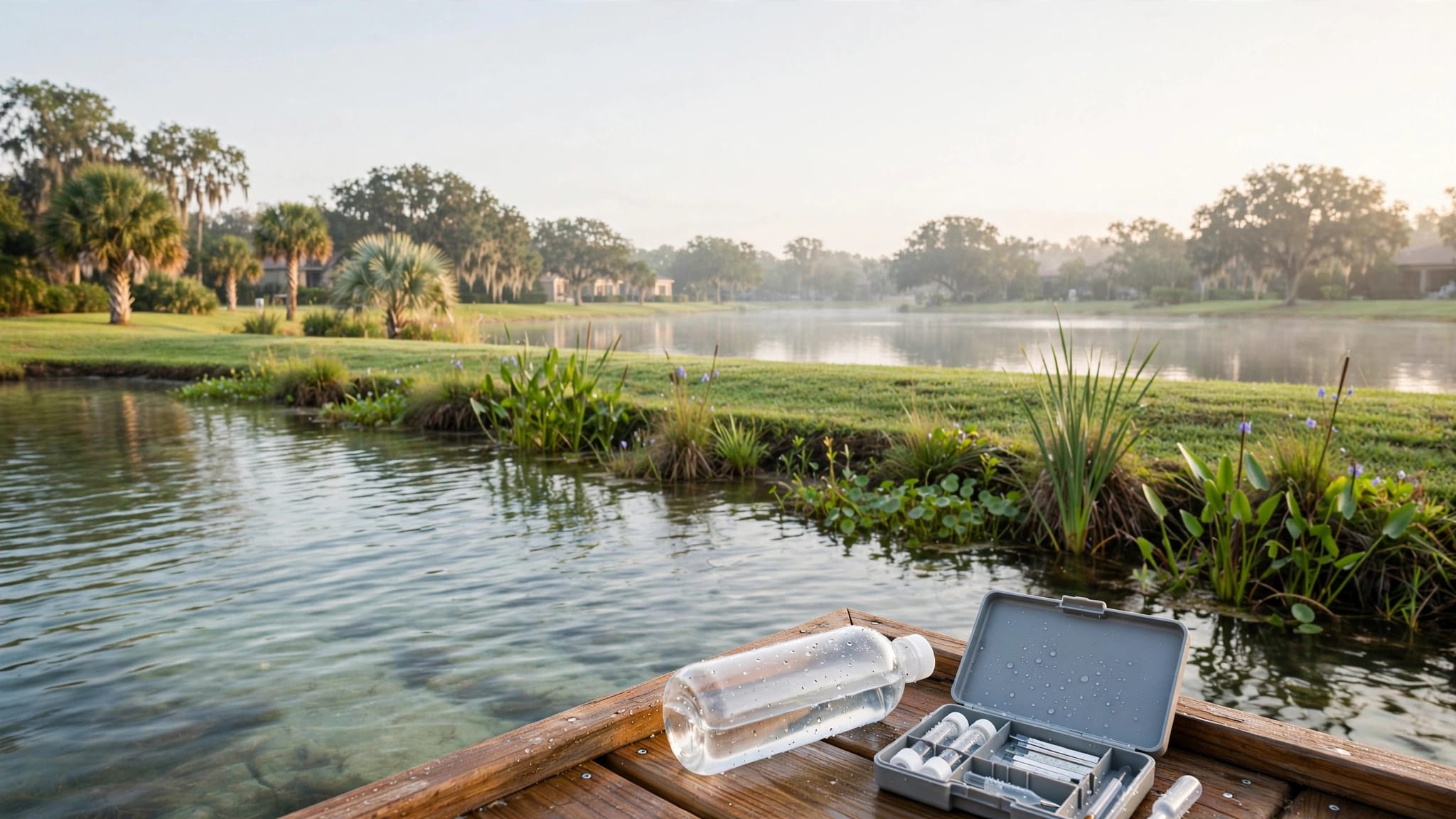
- Use a calibrated field meter or a reputable laboratory method. Record the time, water temperature, recent weather, and exact sampling location.
- Collect samples at more than one area, such as an inflow, open-water section, outlet, and shoreline with visible debris. If the pond is deep enough, compare surface and deeper water.
- Test alkalinity, dissolved oxygen, temperature, ammonia, nitrogen, phosphorus, turbidity, and conductivity. Each result adds context that pH cannot provide alone.
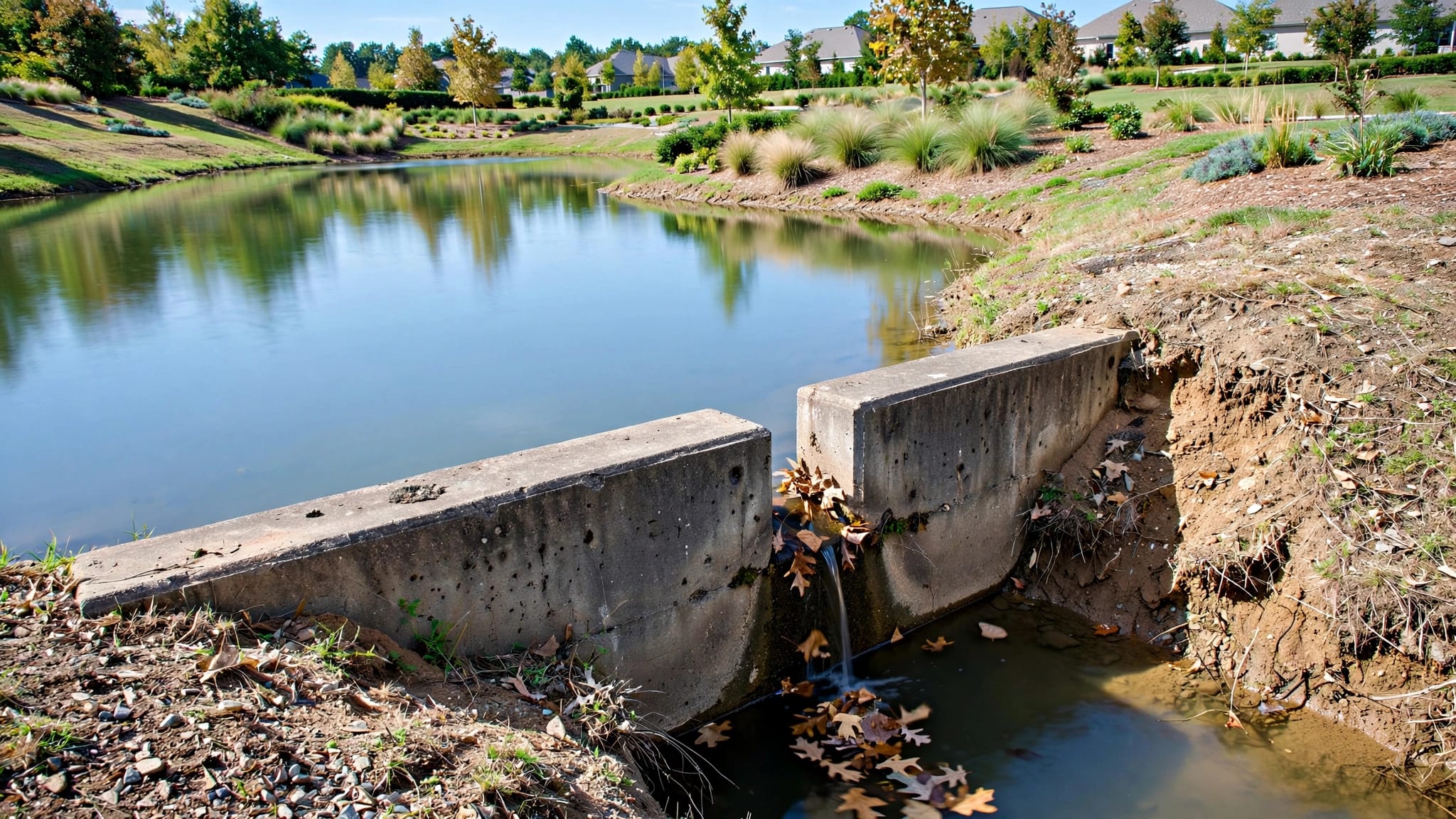
- Inspect storm drains, swales, inflow pipes, banks, littoral areas, and nearby landscape beds. Look for erosion, standing organic debris, unusual discharges, and areas where water remains stagnant.
Testing at different times can reveal a daily pattern. For example, a low reading before sunrise that rises by afternoon may point toward respiration and carbon dioxide buildup. A low reading at every location and time suggests a broader source, such as low alkalinity or acidic inflow.
HOA managers should keep the results in a shared maintenance record. Comparing current data with readings after storms, fertilizer applications, shoreline work, or algae treatments can show when the change began.
Correcting low pH without creating another problem
The best correction depends on the cause. Removing the symptom without addressing the source can produce a short improvement followed by another low reading.
Start with the material entering the water. Keep leaves and grass clippings out of the basin. Clear excess debris from shorelines, inspect drainage points, control erosion, and correct landscape practices that send soil or organic matter toward the lake. These steps reduce the load that decomposition places on the water.
Aeration can improve dissolved oxygen and gas exchange. It may help when excess carbon dioxide contributes to low pH, but it won't neutralize an acidic inflow or correct low alkalinity by itself. Aeration also needs proper placement and sizing for the basin.
Agricultural limestone, which contains calcium carbonate, may help raise alkalinity and improve pH stability when testing confirms a buffering problem. The application rate should account for alkalinity, pond area, average depth, water volume, and site conditions. A qualified professional should make that calculation.
Avoid adding hydrated lime, baking soda, pool chemicals, or other household products based on a single test. A rapid pH change can stress fish and aquatic organisms. It can also create a second water-quality issue that becomes harder to correct.
When algae or weeds are part of the problem, treatment should match the plant, coverage, weather, oxygen level, and water-use restrictions. Treating smaller areas in stages can reduce the oxygen demand created by decaying vegetation. Florida aquatic pesticide applications should be handled by a properly licensed applicator.
Routine maintenance helps prevent the next drop. Weekly or biweekly visits can identify debris buildup, shoreline damage, algae growth, clogged inflows, and water movement problems before they affect the entire basin.
When an HOA should call a lake management professional
A professional assessment is appropriate when pH remains low across repeated tests, fish show stress, odors develop, algae keeps returning, or several connected lakes change at the same time. It is also useful after major storms, construction activity, drainage modifications, or shoreline repairs.
The inspection should cover more than a spray treatment. A qualified provider should review water chemistry, inflows and outlets, shoreline condition, plant growth, circulation, and the property's maintenance history. That broader view helps the board separate a temporary reading from a problem that needs a management plan.
Seabreeze Lake Maintenance serves HOA communities, golf courses, gated neighborhoods, apartment complexes, and commercial properties in Southwest Florida. The company operates under Commercial Applicator License #CM28291 and State-Licensed Specialty Contractor #SCC131152136. Communities can Get a Free Lake Health Assessment to schedule a lake inspection and discuss recurring water-quality concerns.
Conclusion
A low pH result is a clue, not a complete diagnosis. In community lakes, the cause may involve decomposition, stormwater, source water, low alkalinity, poor circulation, or several conditions working together.
For low pH HOA lakes , the safest path is to confirm the reading, test the related water-quality parameters, inspect what enters the basin, and correct the source before adding treatment. A consistent monitoring and maintenance plan gives the HOA a clearer picture of lake health and helps prevent a small chemistry change from becoming a visible community problem.
Recent Posts