When Florida HOA Lake Testing Should Include E. Coli
A clear-looking retention pond can still carry bacteria after a sewage leak, flooded septic system, or heavy storm runoff. Florida HOA lake testing for E. coli becomes important when residents may contact the water or when a contamination event changes the lake's risk.
Most community lakes are drainage and stormwater systems, not swimming areas. Still, children, pets, maintenance crews, anglers, and guests can reach the shoreline. Knowing when to test helps an HOA respond to real risks without paying for unnecessary routine sampling.
When Florida HOA lake testing is needed
Florida HOA lake testing for E. coli is usually based on water contact, contamination risk, and the lake's designated use . Every retention pond does not need a standing bacterial testing schedule. However, certain conditions call for a laboratory sample.
Testing should be considered when:
- Residents swim, wade, paddle, or regularly enter the water.
- The community plans a recreational event near or in the lake.
- A resident reports illness after contact with the water.
- A sanitary sewer line, lift station, septic system, or wastewater facility fails nearby.
- Flooding carries runoff through streets, yards, animal areas, or damaged wastewater systems.
- The lake receives runoff after a major storm and people have access to the shoreline.
- A dead animal, large amount of animal waste, or sewage-like discharge appears near the water.
- A county health department, environmental agency, or other authority requests testing.
- The HOA changes the lake's use and begins promoting water contact.
Many Southwest Florida lakes receive stormwater from roads, lawns, sidewalks, and neighboring properties. During heavy rain, that runoff can carry fecal material into an inlet or retention pond. A lake that was low-risk during a dry period may need a different response after flooding or a sanitary system failure.
The association should also test before reopening a lake for recreational contact after a known contamination event. Follow-up timing should come from the testing laboratory and the relevant local agency, rather than from a general calendar.
Recreational contact changes the decision
A pond used only for drainage has different testing needs than a lake where people swim or launch paddleboards. Full-body contact creates more opportunity for accidental ingestion, while shoreline contact still matters for children, pets, and workers.
Fishing alone doesn't always mean a lake requires routine E. coli testing. However, anglers may enter the water, handle wet equipment, or bring dogs to the shoreline. The HOA should describe the actual use when speaking with a laboratory or health official.
A private HOA lake isn't automatically a public bathing beach, but a change in how people use the water can change the testing and notification requirements.
Property managers should review posted rules, lake access points, and community amenities together. If signs prohibit swimming but residents regularly ignore them, the board still needs a plan for complaints, illness reports, and possible contamination.
Rain, flooding, and sewage events need faster attention
Florida's rainy season can create short periods of high runoff. Heavy rainfall alone doesn't prove an E. coli problem, but it can move contamination from streets, yards, storm drains, and failed septic systems into a lake.
Flooding deserves extra attention when water has crossed a sanitary sewer overflow, wastewater site, agricultural area, or dense animal population. A broken lift station can also release wastewater near a lake without creating an obvious change in water color.
After a suspected event, restrict contact until the association receives guidance. Record when the event occurred, where the water entered the lake, how much rain fell, and whether anyone had contact with the water. Those details help the lab select sampling locations and help the HOA document its response.
What E. coli results can and cannot tell an HOA
E. coli is a type of bacteria commonly associated with the intestines of people and other warm-blooded animals. In surface water, its presence can indicate fecal contamination. Some strains can cause illness, while the test itself doesn't identify every disease-causing organism.
A positive result doesn't automatically identify the source. Possible sources include human sewage, septic leakage, domestic animals, wildlife, or contaminated stormwater. The result tells the board that the water sample contained the measured indicator bacteria. It doesn't tell the board which property, pipe, or animal caused the problem.
Likewise, a negative result is a snapshot. It applies to the sampled locations and time. Bacteria levels can change after rain, sunlight, water movement, additional discharges, or new wildlife activity.
Visual inspection can't replace laboratory analysis. Green water, surface scum, odor, floating debris, or dead fish may point to other water-quality problems, but none of those observations confirms or rules out E. coli. Algae treatment and bacterial testing address different concerns. HOA boards can review integrated weed and algae control when vegetation is affecting the lake, but an algaecide doesn't disinfect water contaminated by sewage.
The laboratory report may list results as colony-forming units per 100 milliliters, often written as CFU/100 mL. The correct interpretation depends on the water's use, the laboratory method, and any applicable state or local criteria. There isn't one universal number that every Florida HOA can apply to every lake.
Warning signs that support bacterial testing
A lake doesn't need to look polluted before the board investigates. Some of the strongest triggers involve events around the water rather than changes on the surface.
Pay attention to:
- A sudden sewage odor near an outfall, manhole, lift station, or drainage inlet.
- Brown or cloudy water entering the lake after flooding.
- A failed septic system on property draining toward the pond.
- Wastewater, gray water, or toilet-related material near the shoreline.
- Multiple reports of stomach illness after swimming or entering the lake.
- Residents reporting rashes or other symptoms after water contact.
- Large concentrations of bird or animal waste in areas where people gather.
- A new discharge, pipe connection, construction activity, or drainage change.
- Floodwater that reaches playgrounds, dog parks, walking paths, or lake access points.
These signs don't prove E. coli contamination. They do provide a reasonable basis for restricting contact and requesting professional guidance.
Illness reports need careful handling. An HOA shouldn't announce that the lake caused an illness based on one complaint. The board should document the report, advise the person to contact a healthcare provider, and consult the county health department when several people report similar symptoms or a contamination source is suspected.
What a professional E. coli testing process should include
A useful test begins with a clear question. The board should tell the lab whether it needs to evaluate recreational contact, investigate a suspected spill, document post-flood conditions, or support an agency request.
A sound process usually includes these steps:
- Review the site and event. Identify inlets, outfalls, access points, drainage paths, nearby septic or sewer infrastructure, and the timing of rainfall or a spill.
- Choose a qualified laboratory. Use a lab that performs the applicable surface-water method and can explain sample handling, reporting units, turnaround time, and certification status.
- Select representative sample locations. Sampling may include the area where people contact the water, a suspected inflow, and another point for comparison. The lab or qualified sampler should determine the final locations.
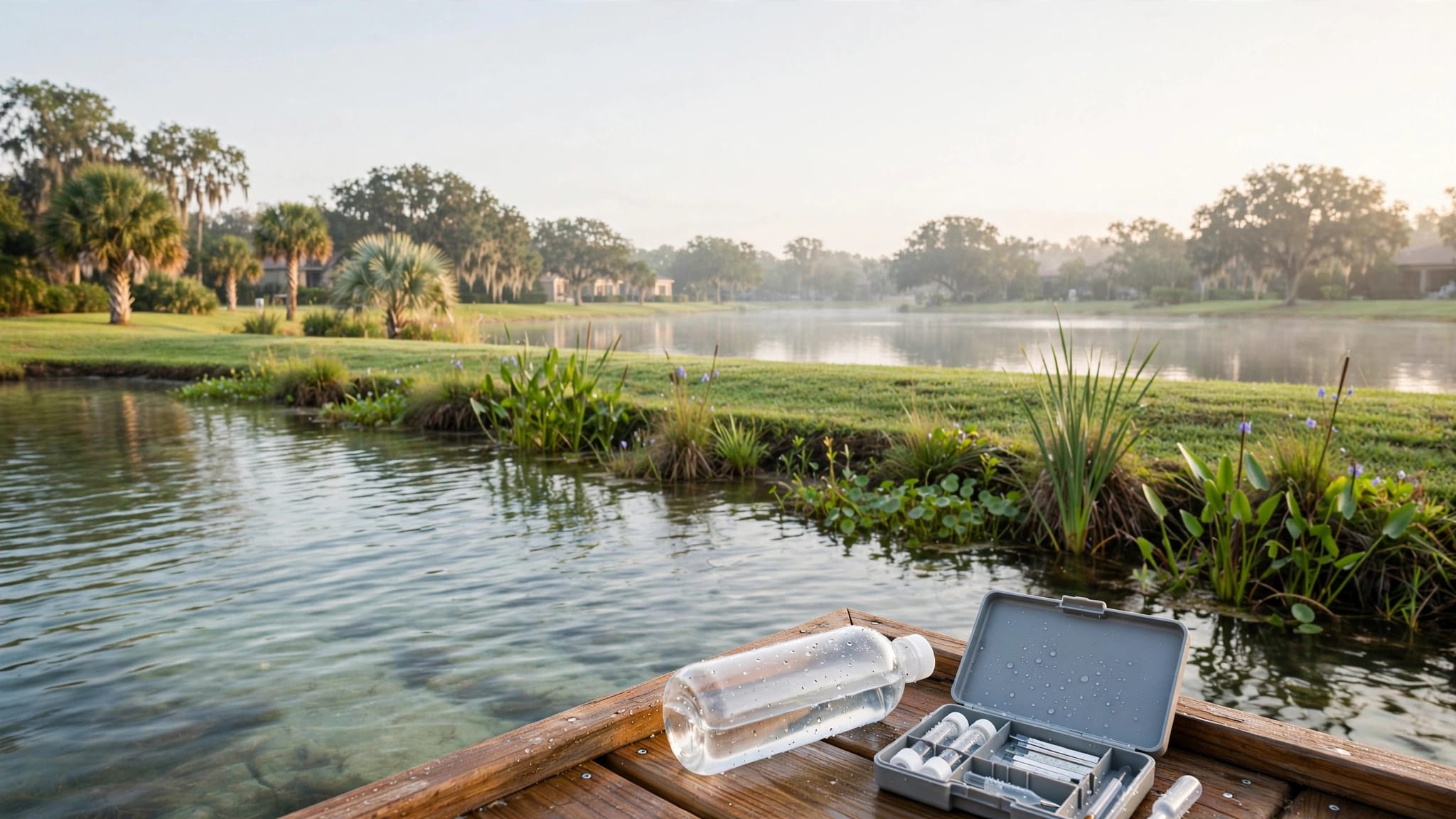
- Preserve the sample correctly. Sterile containers, proper cooling, accurate labels, and timely delivery affect the result. Pool test kits and household water strips don't replace a laboratory E. coli test.
- Document field conditions. Record recent rain, water level, odor, discoloration, animal activity, visible discharge, and the exact collection time.
- Interpret the result with the right standard. A lab report should be reviewed alongside the lake's use and any direction from the Florida Department of Health, the Florida Department of Environmental Protection, or another responsible agency.
One sample may answer an immediate question, but repeated samples can help determine whether a problem is isolated or ongoing. If results remain elevated, the board needs source investigation and corrective work, not repeated testing without a plan.
What an HOA should do after a positive result
The first response is to limit exposure. Close swimming or wading areas, post clear notices, and keep children and pets away from affected sections until the board receives direction on next steps. If the lake has no approved recreational use, the HOA should still communicate the restriction to residents and workers.
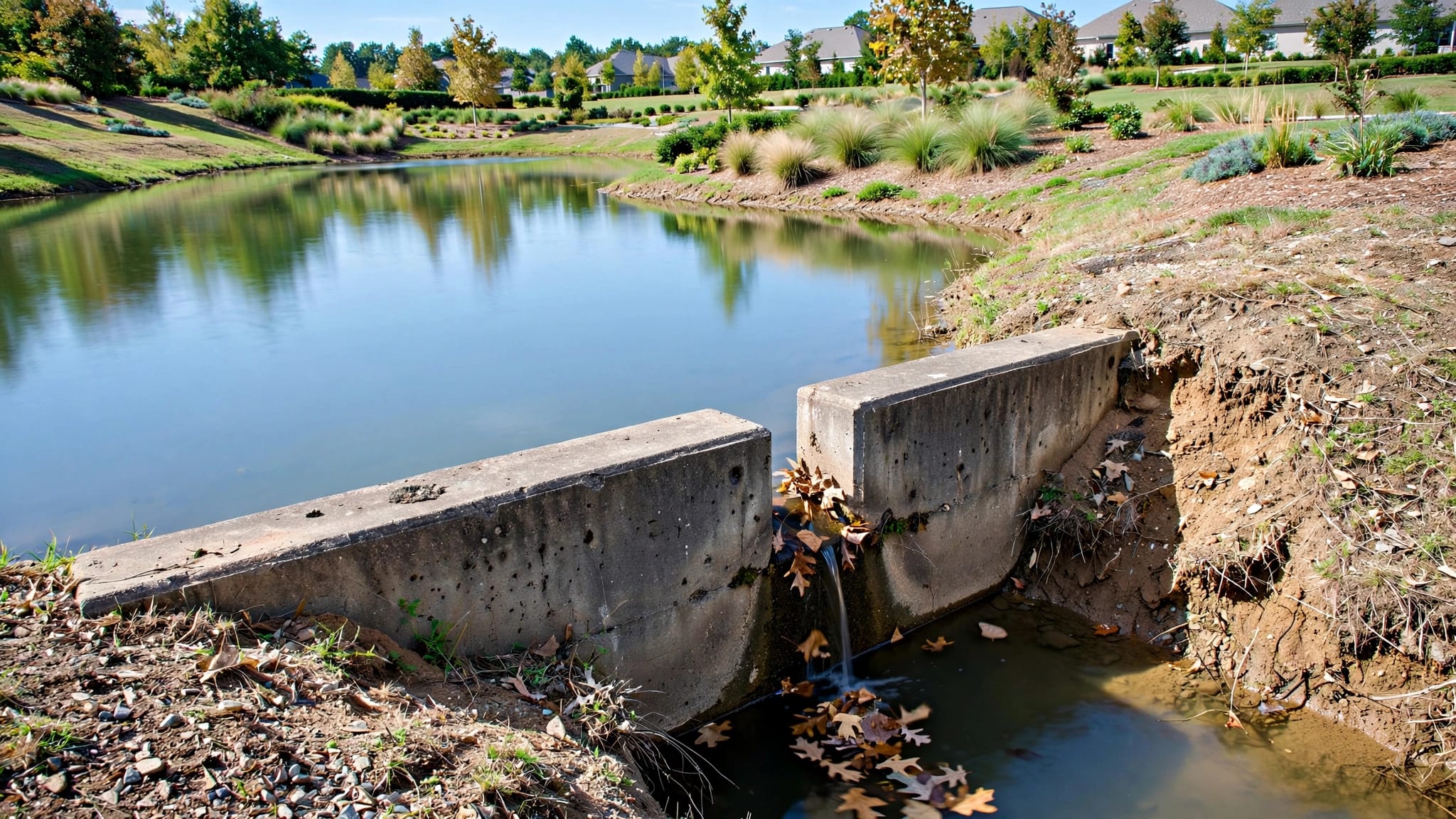
Next, investigate the source. A lake maintenance professional can inspect drainage patterns, outfalls, shoreline conditions, visible discharges, and access points. Plumbing, sewer, septic, and lift station concerns may require the utility owner, a licensed plumber, an environmental consultant, or a government agency.
Don't add algaecide, dye, or other lake products and assume the bacteria problem is solved. Aeration can support circulation and dissolved oxygen, but it isn't a disinfectant. Seabreeze's information on lake and pond aeration systems explains where aeration fits into broader lake care.
After the suspected source is corrected, follow the laboratory or agency's instructions for additional sampling. Keep the reports, notices, photos, service records, and communications in the HOA's files. Those records show what the board observed and when it acted.
Build testing into a practical lake maintenance plan
Routine lake maintenance doesn't mean ordering an E. coli test every month. It means watching for conditions that justify one and keeping the lake's use, access, and drainage system under review.
A regular inspection can identify blocked inlets, damaged banks, excessive debris, algae growth, erosion, and new discharge points. A board can compare its schedule with guidance on how often Florida HOA lakes should be serviced, then add event-based bacterial testing when conditions call for it.
HOAs should ask maintenance contractors how they handle water-quality concerns. The service agreement should state who performs visual inspections, who coordinates laboratory work, how emergencies are reported, and what documentation the board receives. A clear HOA lake maintenance contract can prevent confusion after a storm or suspected spill.
For communities in Southwest Florida, Seabreeze Lake Maintenance provides lake and pond management for HOAs, gated neighborhoods, golf courses, apartment communities, and commercial properties. The company holds Commercial Applicator License #CM28291 and State-Licensed Specialty Contractor #SCC131152136. Boards can request a site review through Get a Free Lake Health Assessment when they need help evaluating lake conditions and deciding whether testing belongs in the response.
Keep E. coli decisions tied to real lake conditions
Florida HOA lake testing should respond to how a lake is used and what has happened around it. Routine sampling may make sense for frequent recreational contact, while a sewage failure, flood, or illness report calls for immediate evaluation.
A clear lake isn't proof of safe water, and a green lake isn't proof of E. coli. Professional sampling, source investigation, resident communication, and documented follow-up give the board a sound response when risk changes. The right test at the right time protects people without treating every retention pond as a swimming facility.
Recent Posts