What HOA Boards Should Know About Lake Maintenance Contracts
HOA lake work is not a side task. It affects curb appeal, flooding risk, safety, and budget control.
That matters even more for retention ponds and lakes in gated communities, golf courses, and multi-lake properties. One missed issue can spread fast across the entire site.
Strong lake maintenance contracts give the board a clear plan, a clear price, and fewer surprises. They also help board members compare vendors without guessing what is, or isn't, included.
Start with what the agreement is meant to control.
Why HOA lake maintenance contracts matter
A lake is a living system. Rain brings runoff, wind pushes debris, and heat can trigger algae growth in days. Weeds spread. Shorelines break down. Water quality shifts. Then residents start asking why the lake looks worse than it did last month.
That is why a contract matters. It should do more than list a few treatments. It should define how the waterbody is inspected, what gets treated, how often work happens, and how the vendor responds when conditions change.
For HOAs, that structure is more than convenient. It protects the property's appearance and helps prevent bigger repair bills later. It also gives the board a paper trail when residents ask what was done and when.
In Florida, the vendor's qualifications matter too. If treatments, shoreline work, or specialty services are part of the scope, ask for the proper licenses and insurance. Seabreeze Lake Maintenance holds Commercial Applicator License #CM28291 and State-Licensed Specialty Contractor #SCC131152136, which is the kind of credential set boards should expect to see on file.
A lake contract should read like a map, not a guess.
What a strong contract should spell out
A good agreement should make the work easy to understand. If the language is vague, the board may be paying for a promise instead of a service.
The clearest contracts spell out the basics in plain language:
| Contract item | What to look for | Why it matters |
|---|---|---|
| Inspection schedule | How often the site is checked | Problems get caught early |
| Weed and algae control | Which growth is treated and how | Keeps the lake usable and presentable |
| Water quality support | Testing, monitoring, or treatment steps | Helps prevent repeat issues |
| Aeration service | Install, repair, or ongoing maintenance | Supports circulation and oxygen levels |
| Shoreline and erosion work | Stabilization, repairs, or plantings | Protects banks and nearby property |
| Debris removal | Leaves, trash, and storm cleanup | Keeps the lake from looking neglected |
| Reporting | Photos, notes, or board updates | Gives the HOA proof of service |
| Response timing | How fast the vendor comes back | Limits damage after storms or flare-ups |
The best contracts also explain what happens after heavy rain, high heat, or a sudden weed surge. That matters because lake work is not always predictable. A plan that works in April may need a different pace in August.
If the contract leaves out service frequency, response time, or follow-up visits, ask for more detail before signing.
How to compare bids without getting burned
Low monthly pricing can look good on paper. Still, a cheap bid often leaves out important work, then adds it back later as extra charges.
That is why boards should compare more than price. Look at visit frequency, labor, treatment limits, disposal costs, and any added fees for storm cleanup or emergency service. A slightly higher bid may cover more ground and save money over the year.
Use the same questions with every vendor:
- What is included in each visit?
- Are algae treatments and aquatic weed control separate line items?
- How are storm debris, emergency calls, or weekend service billed?
- Does the board receive photos or written notes after each visit?
- What changes trigger a revised scope or price?
The answers tell you a lot. A vendor that answers clearly usually has a better system behind the scenes. A vendor that stays vague may be hiding gaps in the proposal.
If your board wants a site walk and a clear proposal, Get a Free Quote and book a call and lake inspection.
When aeration and water quality belong in the plan
Some lakes need more than surface treatment. If water turns green fast, smells stale, or seems sluggish after warm weather, aeration may belong in the contract.
Aeration helps circulate water and supports better conditions for the entire system. For properties that need a stronger water-quality plan, lake and pond aeration systems are often part of a longer-term solution, not just an add-on.
That matters for multi-lake sites. One pond may need frequent treatment, while another needs shoreline work or erosion control first. A good contract recognizes those differences. It should not treat every basin like a copy of the next one.
Retention ponds also have a job beyond appearance. They manage runoff, and they must keep working through storms and dry spells. So the contract should match the function of each waterbody, not just its look.
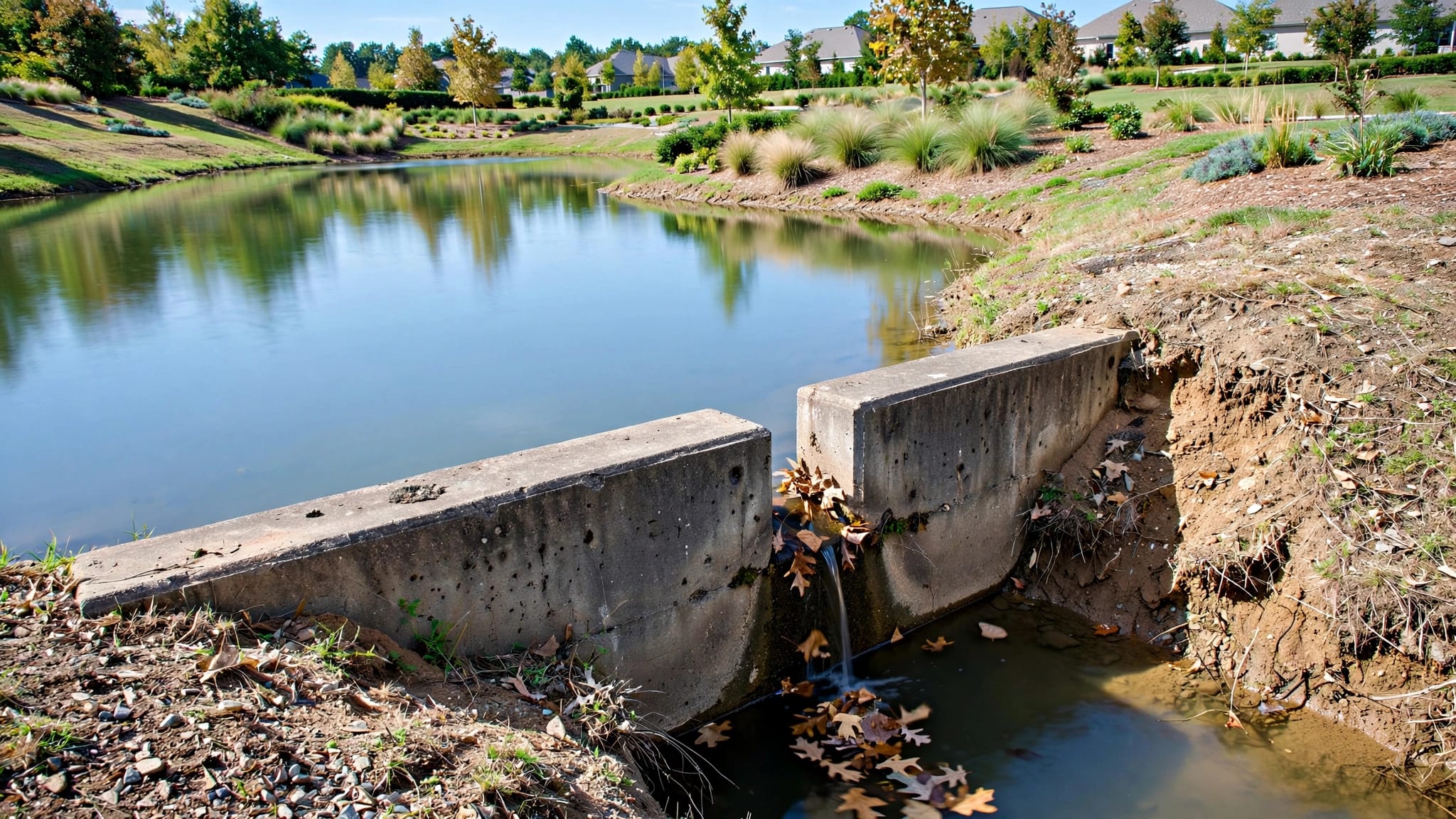
Shoreline care belongs in the same conversation. Erosion, bare banks, and unstable edges can lead to bigger problems later. When the contract includes shoreline stabilization, the board gets a clearer picture of long-term care instead of patchwork fixes.
Red flags HOA boards should watch for
Some proposals look polished but leave too much unsaid. Those are the ones that cause trouble later.
Watch for these warning signs:
- The scope says "as needed" instead of naming specific services.
- The contract has no visit schedule or service calendar.
- Chemical treatments are listed without clear plant or algae targets.
- The vendor cannot explain how storm cleanup is handled.
- There is no proof of insurance, licensing, or specialty credentials.
- The board gets no reports, photos, or service records.
These gaps matter because they leave room for disputes. If the vendor says a task was "covered" but the board cannot verify it, the relationship gets tense fast.
A better contract keeps everyone aligned. It tells the board what will happen, and it tells the vendor what success looks like. That makes reviews easier, and it makes renewal decisions cleaner too.
A better contract makes board decisions easier
HOA boards do not need to become lake experts. They do need a contract that makes the work plain.
When the scope is clear, the schedule is set, and the reporting is consistent, lake care becomes easier to manage. The board can compare vendors with confidence, track results, and protect the property without constant guesswork.
That is the real value of lake maintenance contracts . They turn an unpredictable problem into a managed part of the community budget.
Conclusion
Lake work can look simple from the sidewalk, but it rarely stays simple for long. Weed growth, algae, shoreline loss, and storm debris all need steady attention.
The best contracts spell out the work, the timing, the response plan, and the records the board should expect. When those pieces are in place, HOA leaders can make cleaner decisions and avoid costly surprises.
A strong agreement does more than maintain a lake. It helps the whole community stay ahead of the next problem.
Recent Posts