Riprap vs. Living Shorelines for Florida Community Lakes
A shoreline can look stable until one storm exposes a weak bank, washes soil into the lake, or leaves grass hanging over open water. For Florida HOAs, golf courses, and gated communities, that damage affects safety, appearance, drainage, and long-term maintenance costs.
Riprap vs. living shorelines is not a choice between a bad option and a perfect one. Rock works well in some high-energy areas, while native plants often provide better habitat and appearance. The right solution depends on water movement, slope, access, existing erosion, and how residents use the lake.
Key Takeaways
- Riprap provides immediate physical protection where waves, discharge, or steep slopes create heavy erosion.
- Living shorelines use native plants and gradual grades to stabilize soil while supporting habitat.
- A hybrid design often fits community lakes with both gentle banks and concentrated flow points.
- HOA boards should review drainage, water levels, maintenance access, and approval requirements before installation.
- Regular inspections prevent small shoreline defects from becoming expensive repairs.
Why Florida Community Lake Shorelines Erode
Florida retention ponds and community lakes face several stressors at once. Heavy rain can send fast runoff through drainage swales and pipe outlets. Wind pushes waves across open water, while changing water levels expose wet soil, roots, and newly planted areas.
Turf grass can also create problems when it reaches the water's edge. Mowers may disturb the bank, and short grass has shallow roots compared with native shoreline vegetation. Foot traffic, fishing access, pets, and storm debris add more pressure.
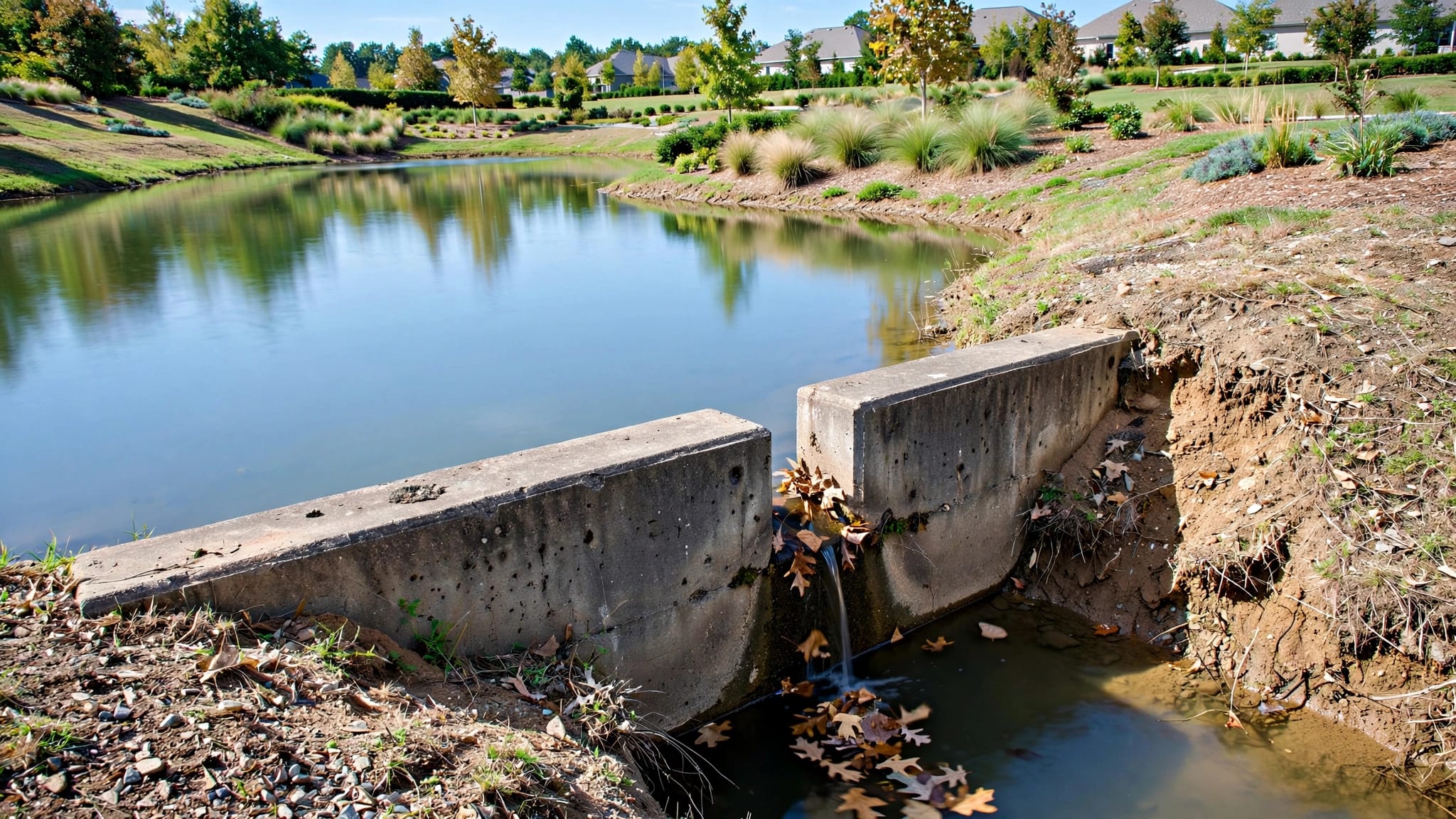
Water movement matters most at specific locations. A pipe outlet, culvert, weir, or narrow connection between lakes can concentrate flow against one section of shoreline. That area may erode even when the rest of the bank looks healthy.
Erosion also changes the lake's shape. Soil can enter the water, reduce depth near the edge, cloud the water, and cover newly established plants. In some locations, a collapsing bank can expose irrigation lines, damage paths, or threaten fencing and other property features.
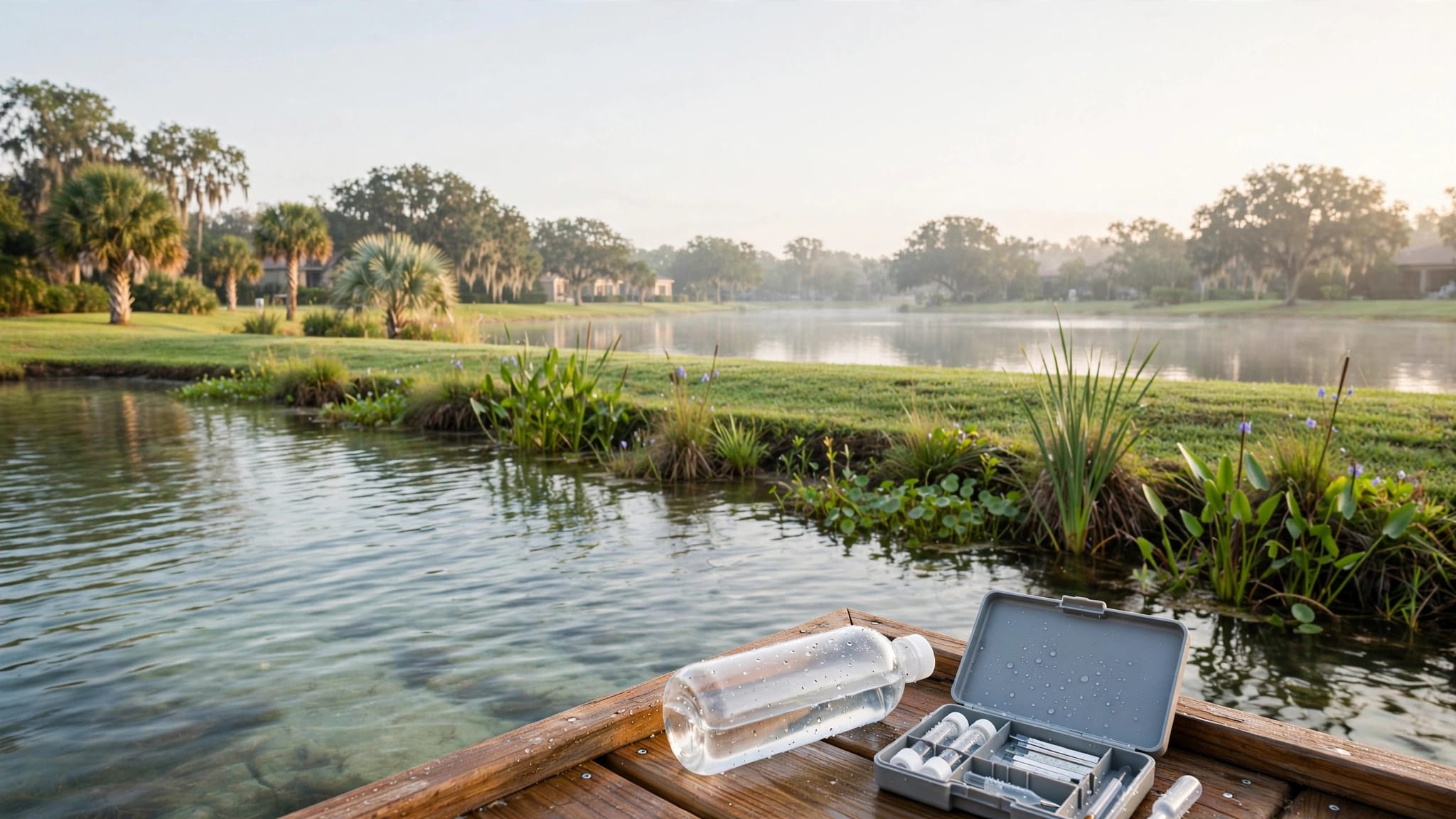
Before choosing rock or plants, managers need to identify the cause. A shoreline inspection should review the bank angle, high-water marks, drainage outlets, vegetation, water level changes, and signs of undercutting. Repairing the visible edge without addressing the water movement can leave the same problem in place.
How Riprap Protects a Lake Bank
Riprap is a layer of durable rock placed along an eroding shoreline. The stones absorb and interrupt wave energy, protect soil from flowing water, and hold the bank in place when the installation has the right grade and foundation.
This approach provides visible protection soon after installation. Riprap is often a practical fit near stormwater outlets, steep banks, bridge crossings, culverts, and other spots where water hits the shoreline with force. It can also protect an access point that receives regular foot traffic.
Rock has limits, however. A loose layer placed over unstable soil can shift, settle, or allow water to move beneath it. Installation may require proper grading, a stable base, and attention to drainage behind the rock. Larger stones can also create access and mowing challenges.
Bare rock changes the appearance of a community lake. It can look harsh beside manicured turf, and it provides less plant habitat than a vegetated edge. Riprap may also reflect wave energy toward nearby banks if the layout does not account for the full shoreline.
Maintenance still matters after installation. Crews need to inspect for displaced stone, exposed soil, sediment buildup, invasive plants, and damaged areas after major storms. Debris can collect between rocks, especially near outlets and corners.
Riprap is strongest where immediate structural protection matters most. It shouldn't become the default treatment for every bank simply because the material is familiar.
What a Living Shoreline Adds
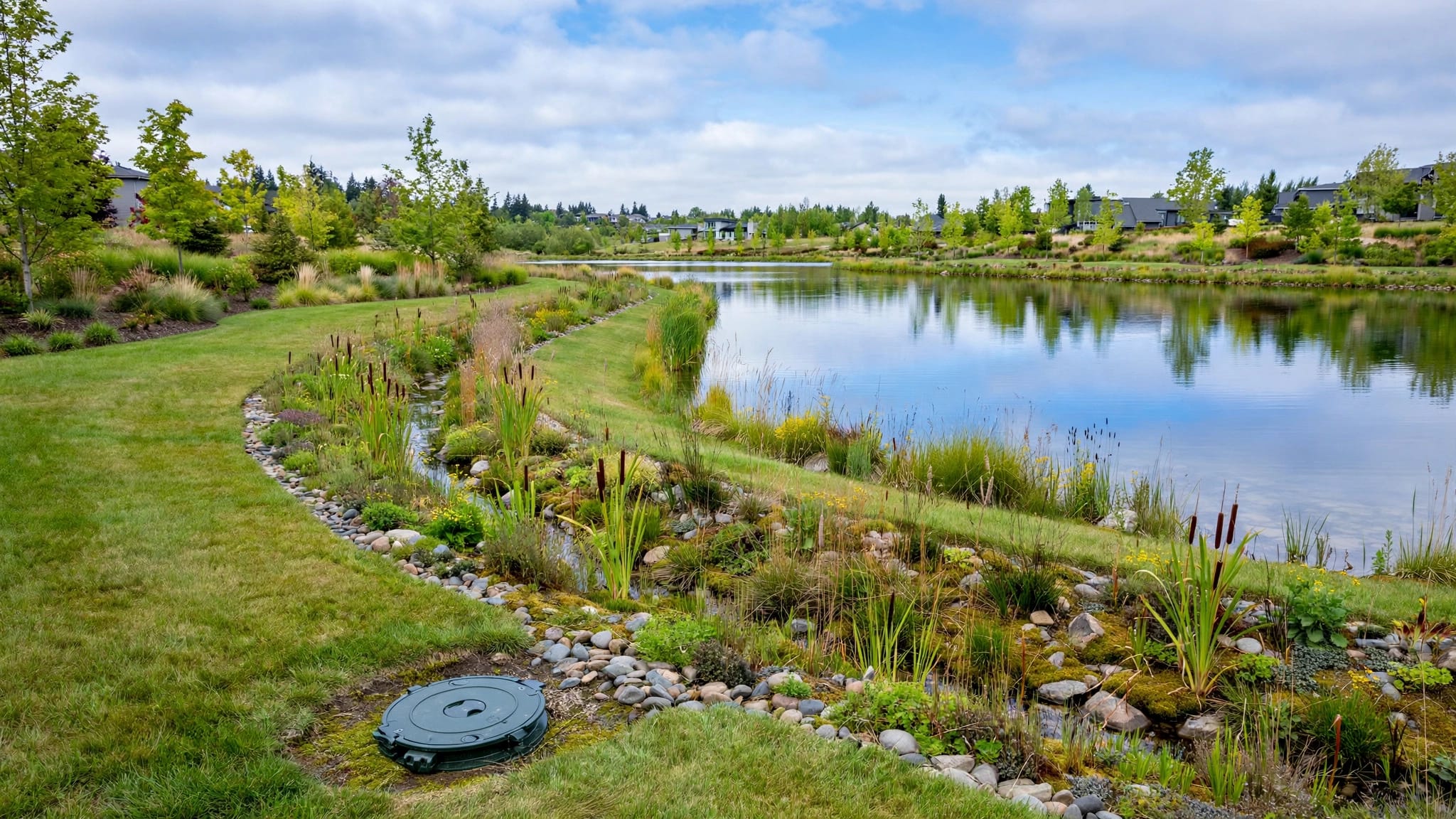
A living shoreline combines native plants with a stable bank design. In a community lake, the work may include a gently graded edge, a littoral planting zone, erosion-control materials, and plants suited to changing water levels.
Native roots hold soil together below the surface. Stems and leaves slow water near the edge, while planted areas can reduce the direct force of small waves. The result is a shoreline that uses vegetation as part of its erosion-control system.
Living shorelines also improve the visual transition between turf and open water. Native plants can give a retention pond a deliberate, maintained appearance instead of leaving a hard line between grass and water. They provide cover for wildlife and create a more functional shallow-water zone.
Plant selection must match the site. Some sections stay wet for long periods, while others dry out between rain events. Water depth, sunlight, mowing practices, water chemistry, and expected water-level changes all affect plant performance. Suitable choices may include pickerelweed, duck potato, soft rush, or other Florida natives, depending on site conditions.
A planted shoreline takes time to establish. Residents and landscape crews need clear boundaries so new plants aren't cut down or treated as weeds. Invasive aquatic plants can also compete with desired vegetation, so routine lake maintenance remains necessary.
Living shorelines are less suitable as the only treatment at a concentrated discharge point or a sharply eroding, high-energy bank. Plants may need protection while they establish, and severe flow can remove soil before roots develop.
Property managers can review littoral planting services when a community needs native vegetation and shoreline restoration as part of its lake plan.
Riprap vs. Living Shorelines: Which Fits Your Property?
The best comparison starts with the site's physical conditions, not with a preference for rock or plants. A broad lake with gentle waves may support a planted edge. A narrow bank below a pipe outlet may need rock, grading, or a combined design.
| Decision factor | Riprap | Living shoreline |
|---|---|---|
| Main strength | Immediate bank protection | Vegetation, habitat, and soil stabilization |
| Best fit | Outfalls, steep banks, high-flow areas | Gentle slopes and low-to-moderate wave energy |
| Appearance | Hard, visible rock edge | Natural planted transition |
| Establishment time | Immediate physical coverage | Plants need time to root and fill in |
| Maintenance | Check stone, debris, and exposed soil | Control weeds, protect plants, and monitor coverage |
| Main concern | Poor installation can shift erosion elsewhere | Strong flow can damage plants before establishment |
Riprap may be the better choice when water leaves a drainage pipe at high speed. The bank may need a stable rock apron that spreads flow before it reaches the lake. In that situation, planting alone could fail.
A living shoreline may fit a large section of a residential lake where the bank has a moderate slope and no concentrated discharge. Native plants can soften the edge, support the littoral zone, and reduce repeated turf repairs.
Many properties need both methods. Rock can protect the outlet or most exposed corner, while native planting stabilizes the surrounding bank. A planted transition beside riprap can also reduce the hard visual effect of a fully armored shoreline.
Community use should shape the design. A golf course may need clean access for mowing and cart paths. An HOA may need a buffer that discourages residents from walking into unstable areas. Apartment communities may need stronger protection near sidewalks, fences, and common spaces.
Property managers should also review the planned buffer width, mowing limits, and planting zones. This guide to HOA lake buffer width can help boards discuss how much space the shoreline needs for stable vegetation and practical maintenance.
A shoreline treatment should control the water movement causing erosion, not only cover the soil that has already washed away.
How to Plan Shoreline Stabilization
A lake contractor should inspect the full problem area before recommending materials. The assessment should include these steps:
- Trace the water movement. Check storm drains, pipe outlets, swales, culverts, and low areas that direct runoff toward the bank.
- Review the bank condition. Look for slumping soil, exposed roots, undercut edges, bare patches, sediment deposits, and displaced rock.
- Match the treatment to the use. Account for mowing, fishing, walking, cart traffic, pets, irrigation, and access for future inspections.
- Confirm project requirements. The association or property owner should check local, county, and water management district requirements before work begins.
- Set a maintenance schedule. Inspect the repaired area after heavy rain and include it in routine lake maintenance visits.
Florida communities also need responsible aquatic management around shoreline work. Herbicide applications, invasive plant control, and vegetation removal require proper handling. Seabreeze Lake Maintenance holds Commercial Applicator License #CM28291 and State-Licensed Specialty Contractor #SCC131152136.
A shoreline plan should connect erosion control with water quality, aquatic weed management, and drainage. Treating these as separate problems can leave one issue feeding another. For example, sediment from an eroding bank may encourage shallow-water weed growth, while unmanaged vegetation can hide a failing edge.
Boards and property managers can Get a Free Quote to schedule a lake inspection and discuss repair options. A site review can clarify whether the property needs riprap, native planting, a hybrid solution, or routine maintenance first.
Maintenance After Installation
Neither approach is permanent without inspections. Riprap needs checks after heavy storms, especially near outlets and exposed corners. Look for stone that has moved, soil showing through the rock, and water cutting behind the installation.
Living shorelines need early care while plants establish. Crews should monitor plant survival, remove invasive growth, keep mowers outside planting zones, and replace areas damaged by flooding or foot traffic. Plant coverage can change as water levels rise and fall.
Routine lake maintenance also helps managers catch problems before they spread. During visits, crews can inspect shorelines, remove debris, monitor aquatic vegetation, and identify changes in water movement. Small repairs are usually easier to manage than a long section of bank failure.
A clear maintenance record helps HOA boards and golf course managers track recurring trouble spots. Photos, inspection dates, storm observations, and repair notes can support better decisions during budget planning.
Conclusion
Riprap gives Florida community lakes strong, immediate protection where water hits hard. Living shorelines offer a planted, habitat-friendly option for banks with suitable grades and manageable wave energy. Many retention ponds and multi-lake properties benefit from a carefully planned combination of both.
The right answer in the riprap versus living shoreline discussion comes from the site's drainage, slope, water movement, appearance goals, and maintenance plan. A stable shoreline begins with identifying why the bank is failing, then choosing materials and plants that fit the way the lake actually works.
Recent Posts