Florida Lake Permits for Community Lake Treatments
A lake can sit behind a private gate and still fall under Florida water regulations. For HOAs, golf courses, and multi-lake communities, the need for a permit depends on the water body's connections, the treatment method, and the work planned.
Routine weed control is different from dredging, shoreline construction, or releasing treated water. Knowing that difference helps a community avoid delays, fines, and treatment problems that spread across an entire drainage system.
Why private community lakes may still need permits
Florida lake permits are not based only on who owns the property. A privately owned retention pond may connect to another pond, a canal, a storm drain, or a downstream waterway. That connection can affect which rules apply.
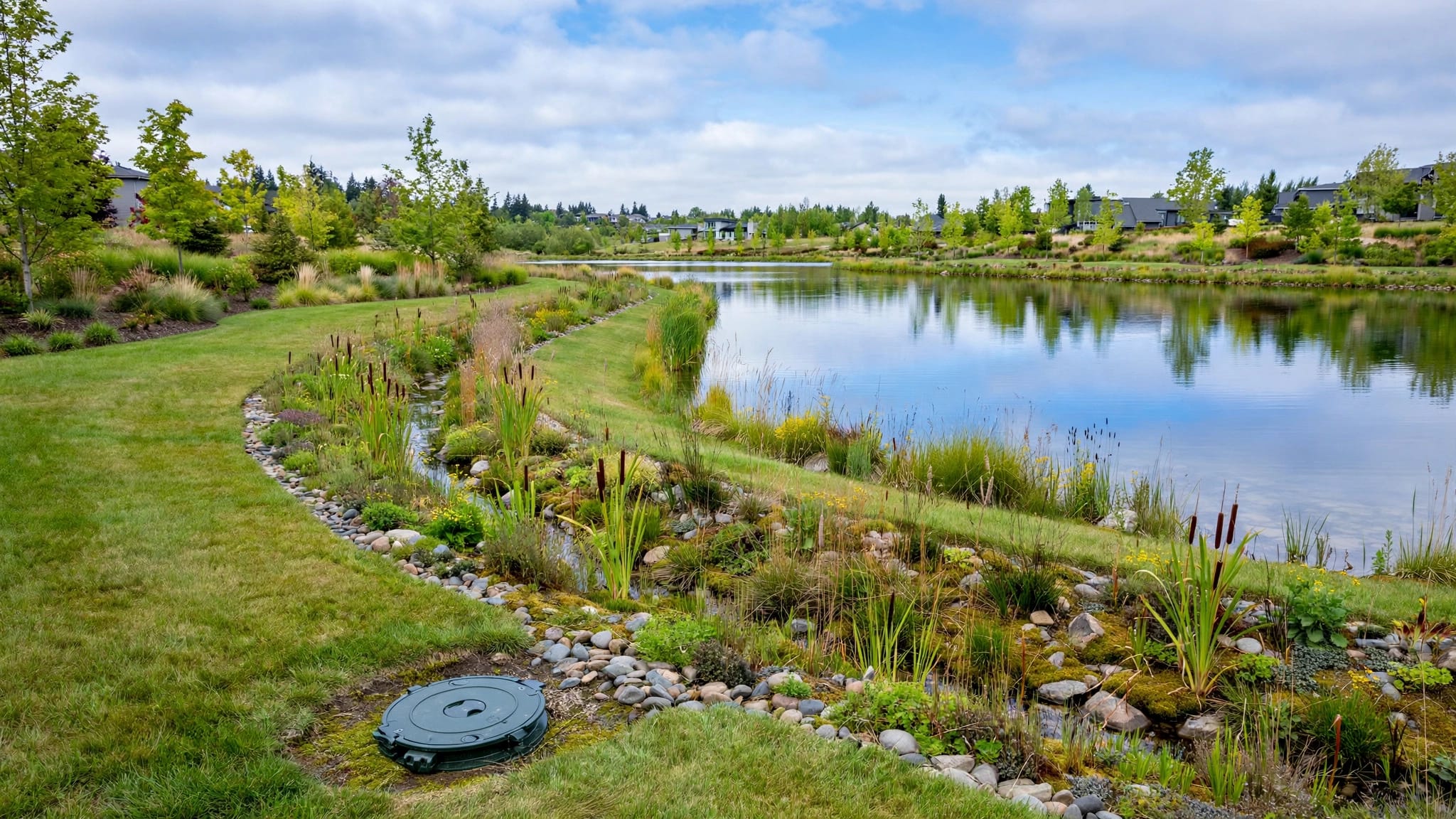
The pond's purpose matters, too. Many community lakes are part of a permitted stormwater system. They collect runoff, hold water during heavy rain, and release it through a designed control structure. Changes to the pond, outfall, banks, or water levels may affect that system.
A gated neighborhood does not automatically qualify for an exemption. Public access is only one factor. The following questions matter more:
- Is the lake isolated, or does it connect to other waters?
- Is it part of an approved stormwater or environmental resource permit?
- Will the work add, remove, or move soil?
- Will equipment or chemicals affect an outlet or downstream water?
- Does the project involve aquatic plants, algae, fish, shoreline vegetation, or sediment?
- Does the product label include water-use restrictions?
An HOA board should review the community's original site plans and stormwater documents before approving major lake work. Those records may identify easements, control structures, wetland areas, permitted discharge points, or maintenance obligations.
A basic herbicide treatment may follow a different process than a shoreline project. However, both should begin with an inspection and a review of the lake's regulatory setting.
When aquatic plant treatments need state approval
Aquatic weed control is the most common area where communities ask about permits. Florida regulates the control of aquatic plants in waters of the state, and the Florida Fish and Wildlife Conservation Commission, or FWC, is involved in aquatic plant management requirements.
Treatment of invasive or nuisance plants may require an aquatic plant management permit, an authorization, or confirmation that a particular exemption applies. The answer depends on the location, plant species, treatment method, and water connection.
Common plants that may require careful review include water hyacinth, water lettuce, hydrilla, and torpedo grass. Mechanical removal can also raise permit questions because harvesting changes the water body and creates material that must be handled properly.
The pesticide itself creates a second compliance layer. The Florida Department of Agriculture and Consumer Services licenses pesticide applicators. A licensed applicator must follow the product label, including application rates, weather restrictions, water-use limitations, and any required posting or notification.
A pesticide license allows a qualified professional to apply a product. It does not automatically replace a separate aquatic plant management permit.
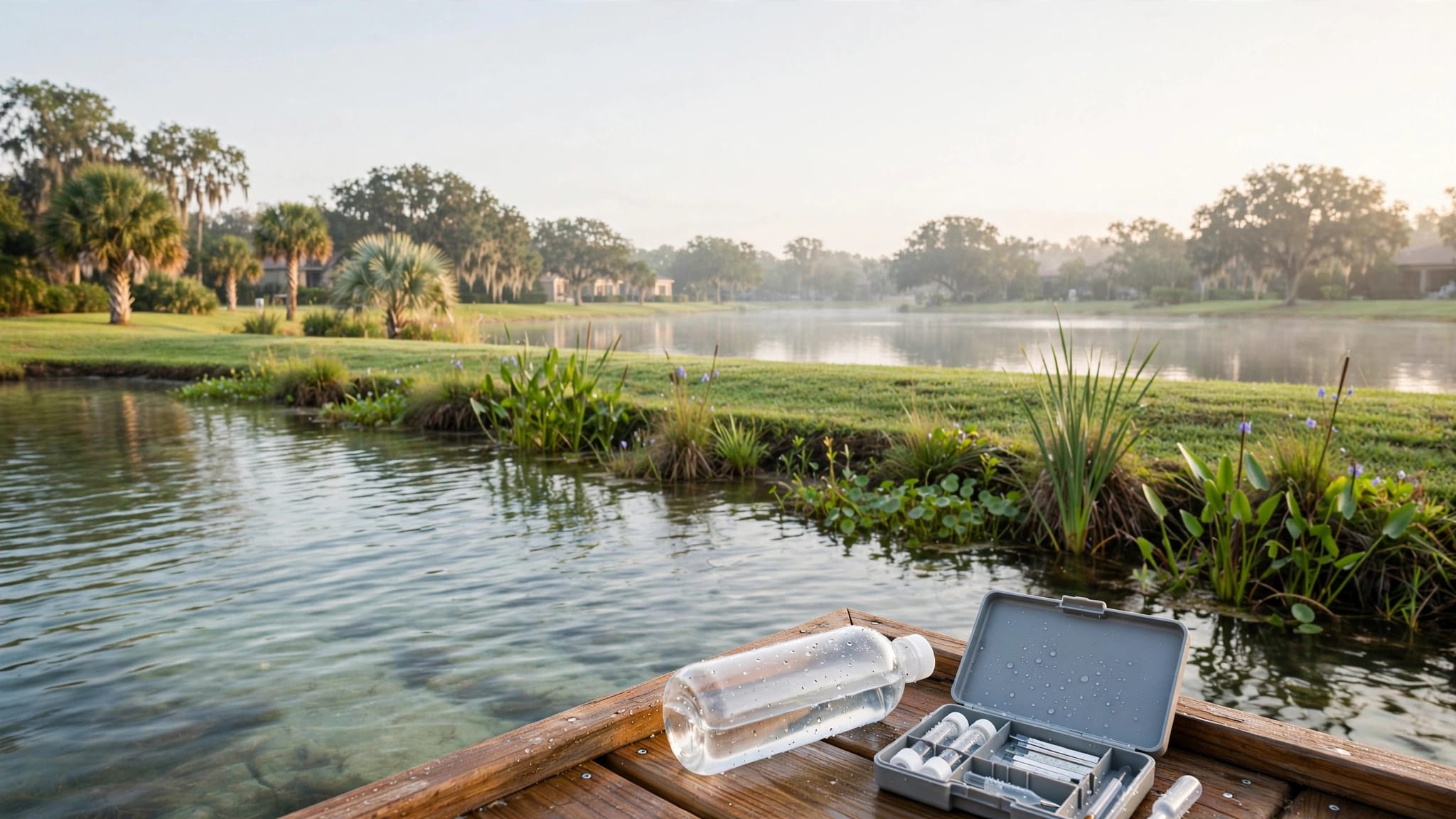
Algae treatments need the same careful review. Some algae control products are approved for aquatic use, but the applicator still must follow the label and consider dissolved oxygen, fish health, water movement, and downstream discharge. A sudden algae bloom can also point to nutrient or circulation problems that chemicals alone won't solve.
Seabreeze Lake Maintenance holds Commercial Applicator License #CM28291 and State-Licensed Specialty Contractor #SCC131152136. Before treatment begins, the community should ask which license, permit, or written agency determination covers the planned work.
For a broader look at treatment planning, communities can review these integrated aquatic weed and algae control services.
When a private retention pond may follow a different path
Some isolated, man-made ponds have fewer permitting requirements than connected lakes. Still, an HOA should not assume that a private retention pond needs no review.
A pond can appear isolated while receiving water through underground pipes, swales, culverts, or a shared drainage network. An overflow structure may send water into another lake during a storm. Those details can change the permit analysis.
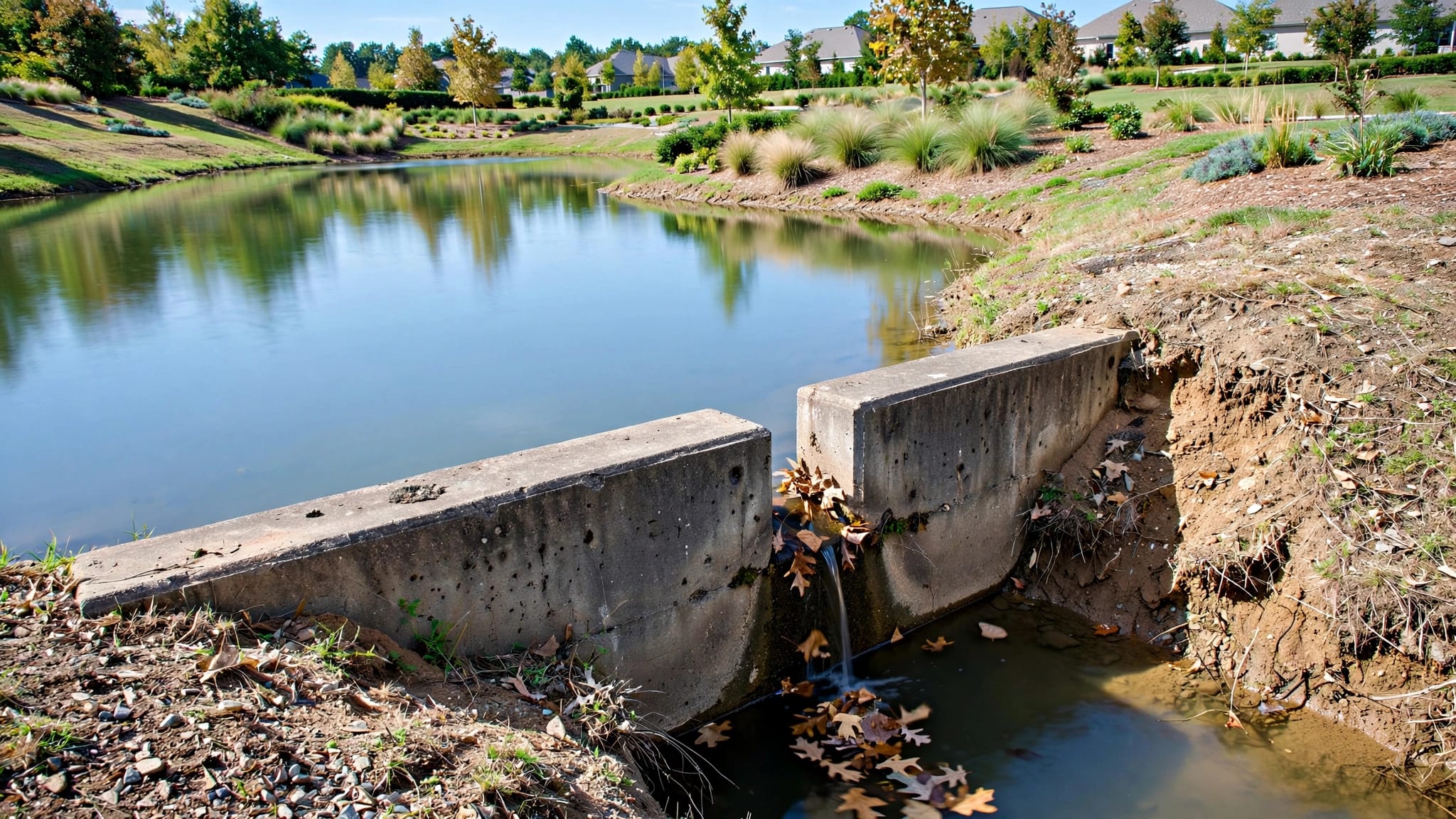
The original stormwater approval may also include maintenance conditions. For example, a community might need to keep an outfall clear, preserve a designed bank slope, or maintain a required storage area. Filling shallow areas, placing rock along a bank, or changing the control structure could interfere with those conditions.
Routine applications for aquatic weeds often require less review than construction work, but the property manager still needs a clear record. The treatment company should identify the target plant, product, application area, and any water-use restrictions. It should also confirm whether the lake falls under an aquatic plant management permit.
The safest approach is written confirmation. A community can ask the applicable agency, water management district, or qualified contractor whether the proposed work requires approval. Keep that response with the lake's maintenance records.
That extra step matters when board members change or a resident asks why a product was applied. It also gives the next contractor accurate information instead of forcing them to guess.
Different lake projects can require different permits
Community lake maintenance includes much more than chemical treatment. Each type of work can trigger a different approval process.
| Planned work | Main compliance question | Possible approval or review |
|---|---|---|
| Herbicide treatment | Is the product labeled for aquatic use, and does the lake require aquatic plant authorization? | FWC aquatic plant management review, licensed applicator compliance |
| Mechanical weed removal | Will harvesting disturb the bottom, banks, or connected waters? | Aquatic plant review, disposal requirements, possible environmental review |
| Dredging or excavation | Will the project remove sediment or change lake depth and contours? | Water management district environmental resource permit, FDEP or federal review |
| Shoreline stabilization | Will rock, riprap, plants, or fill be placed below the normal water line? | Environmental resource, local, or federal permits |
| Aerator installation | Does the installation involve electrical work, anchors, or structural changes? | Local electrical or building approval, plus site-specific environmental review |
| Drawdown or discharge | Will water levels change or treated water leave the property? | Water management district, FDEP, or other discharge review |
The table shows why the word "treatment" needs a clear definition. Applying an approved aquatic product is not the same as excavating a lake. Neither task should be approved from a short description alone.
Shoreline work deserves special attention because it can affect wetlands, habitat, erosion patterns, and neighboring properties. A contractor may need to coordinate with the Southwest Florida Water Management District, South Florida Water Management District, FDEP, the local government, or the U.S. Army Corps of Engineers, depending on the property's location and the project's scope.
Aeration is usually a maintenance improvement rather than a construction project, but electrical connections and submerged installations still need proper review. The permit question should be answered before ordering equipment or scheduling installation.
What HOA boards should verify before treatment
A board or property manager can make the approval process easier by gathering the right information first. The provider should receive a current lake map, the property address, and any available stormwater or environmental documents.
Ask for the treatment plan in writing. It should describe the target problem, proposed product or removal method, treatment area, expected restrictions, and follow-up inspection. If the lake connects to another basin, the plan should account for water movement and downstream areas.
Before authorizing the work, confirm these details:
- Identify every pond, outfall, canal, culvert, and overflow structure connected to the system.
- Review the original stormwater or environmental resource permit, if the community has one.
- Confirm the contractor's active Florida licenses and the applicator's qualifications.
- Ask whether an aquatic plant management permit, exemption, or agency authorization applies.
- Review the product label for irrigation, swimming, fishing, pet, livestock, and post-treatment restrictions.
- Confirm how the contractor will document the date, weather, product, rate, area treated, and water conditions.
- Set a resident notification plan when signs, temporary access limits, or water-use restrictions are required.
A community should also ask who holds the permit and who keeps the records. In some arrangements, the property owner applies for approval. In others, a qualified contractor handles the application or maintains the authorization. The contract should identify that responsibility.
No contractor should promise that a permit is unnecessary without checking the lake's facts. The same treatment can follow a different process at two neighboring communities.
Plan permit checks into regular lake maintenance
Permits should not be treated as an emergency task after weeds cover the shoreline. A regular inspection gives the community time to identify invasive plants, blocked outfalls, erosion, algae, and water-level problems before the work becomes larger.
Most stable Florida HOA lakes need routine service, with the interval adjusted for plant growth, rainfall, stormwater use, and lake condition. Communities can review this guide on how often to service Florida community lakes when building a maintenance schedule.
During each visit, the contractor should record changes in vegetation, water clarity, shoreline condition, and structures. Those records help separate a normal treatment from a project that needs engineering or agency review.
A health assessment is a practical starting point when a board doesn't know which permits apply. Seabreeze Lake Maintenance can inspect the lake, review visible connections and problem areas, and discuss a maintenance plan through Get a Free Lake Health Assessment.
Conclusion
The need for Florida lake permits depends on more than private ownership or a community gate. Water connections, stormwater documents, invasive plant control, chemical labels, shoreline changes, and discharge plans all affect the answer.
Routine aquatic treatments still require licensed application and careful records. Dredging, excavation, shoreline stabilization, drawdowns, and structural changes may require separate approvals.
When a community reviews its lake before work begins, the board can choose the right contractor, protect residents and wildlife, and avoid treating a permit problem as a maintenance emergency.
Recent Posts