Filamentous Algae vs Chara in Community Lakes
A green surface mat can make a well-maintained community lake look neglected within days. Yet the material may be filamentous algae , Chara, or another aquatic growth that needs a different management plan.
That distinction matters for HOA boards, golf courses, and property managers. The wrong treatment can waste money, leave the real cause untouched, or create oxygen problems for fish. Learning how filamentous algae and Chara differ is the first step toward safer lake maintenance.
Why Identification Matters in Community Lakes
Retention ponds and community lakes collect stormwater, sediment, fertilizer runoff, grass clippings, leaves, and other nutrients. Sunlight and warm water then create conditions where aquatic growth can spread quickly. Southwest Florida's long warm season can extend that growth period even further.
Filamentous algae are made of long, hair-like strands. The strands can form loose floating mats that resemble wet cotton, green fabric, or pond scum. Wind often pushes these mats against shorelines, fountains, culverts, and drainage structures. Gas bubbles may collect inside the algae, making the mats rise to the surface.
Chara is a type of large, complex algae that grows underwater. Many people mistake it for a rooted aquatic weed because it has stems and whorled branches. It often forms dense beds across the bottom of shallow water. Chara may also be called muskgrass or stonewort.
The difference affects how a lake professional inspects the pond, selects a treatment, and plans follow-up visits. A surface mat may require a different approach than a submerged Chara bed. Water depth, plant density, weather, water chemistry, fish populations, and nearby irrigation intakes also affect the decision.
Residents should avoid pulling unknown growth from a lake or applying a store-bought algaecide. Disturbing the growth can spread fragments or break apart mats. Unapproved products can also create risks for fish, wildlife, pets, irrigation systems, and people who use the shoreline.
A trained applicator can identify the growth at the water's edge and below the surface. A proper inspection also checks whether the issue covers one cove or most of the pond. That information helps prevent a broad treatment when a targeted response is more suitable.
How Filamentous Algae Looks
Filamentous algae usually appears as:
- Loose, string-like strands that feel slimy or soft
- Bright green, yellow-green, or brownish mats near the surface
- Floating clumps that collect along windward banks
- Algae attached to rocks, shorelines, vegetation, or structures
- Bubbles trapped within the mat during sunny weather
A mat can look solid from a distance, but it often tears apart easily when lifted. Large accumulations may block the view of the water and trap leaves or other debris.
How Chara Looks and Feels
Chara usually grows below the surface and stays attached to the pond bottom. Its branchlets grow in whorls around the stem, giving it a plant-like appearance. The surface may feel rough or gritty because Chara can collect calcium carbonate.
When crushed, Chara often produces a garlic-like or musky odor. Its dark green color and stiff texture also separate it from the softer strands of filamentous algae. Dense Chara beds may create a carpet across shallow areas, especially where sunlight reaches the bottom.
Filamentous Algae and Chara Compared
The following comparison helps community managers recognize the main differences before requesting treatment.
| Feature | Filamentous algae | Chara |
|---|---|---|
| Growth form | Long, thread-like strands | Branched, plant-like underwater growth |
| Usual location | Surface, shoreline, or attached structures | Pond bottom and shallow submerged areas |
| Texture | Soft, slimy, and cotton-like | Coarse, stiff, and sometimes gritty |
| Movement | Often floats or drifts into mats | Usually remains anchored to the bottom |
| Common appearance | Green surface scum or floating clumps | Dark green underwater beds |
| Odor | Fresh or swampy as it decays | Often musky or garlic-like when crushed |
| Main concern | Surface appearance and oxygen loss during decay | Dense submerged growth and restricted access |
Filamentous algae can grow rapidly when nutrients enter the water. Fertilizer runoff, decomposing leaves, organic sediment, and warm sunny weather can all support growth. The algae may also return when the underlying nutrient conditions remain unchanged.
Chara often benefits from clear water and strong sunlight reaching shallow bottom areas. It can establish where the bottom has enough space for attachment. Once a thick bed develops, it can interfere with fishing access, shoreline views, drainage inspection, and recreational use.
Neither growth should be judged by appearance alone. Some algae may provide temporary habitat, and some submerged growth can stabilize sediment. However, dense growth near homes, golf course play areas, stormwater structures, or public access points requires a management decision based on the property's needs.
The most useful question is not which growth looks worse. The useful question is which growth is present, where it is growing, and what conditions are allowing it to return.
What a Community Lake Inspection Should Check
A lake inspection should cover more than the visible green area. A technician needs to examine the shoreline, shallow bottom, open water, inflow points, outfalls, fountains, aeration equipment, and areas where wind concentrates debris.
First, the technician identifies the growth by hand and by location. A surface mat that breaks apart easily points toward filamentous algae. A rough, anchored bed with whorled branches points toward Chara. Mixed growth can occur, so one section of the lake may not represent the entire pond.
Next, the inspection considers water movement and oxygen conditions. Thick algae can produce oxygen during daylight, but decomposing material consumes oxygen. A sudden die-off can place additional demand on the water, especially during cloudy weather or warm nights. Fish gasping near the surface is an urgent warning sign.
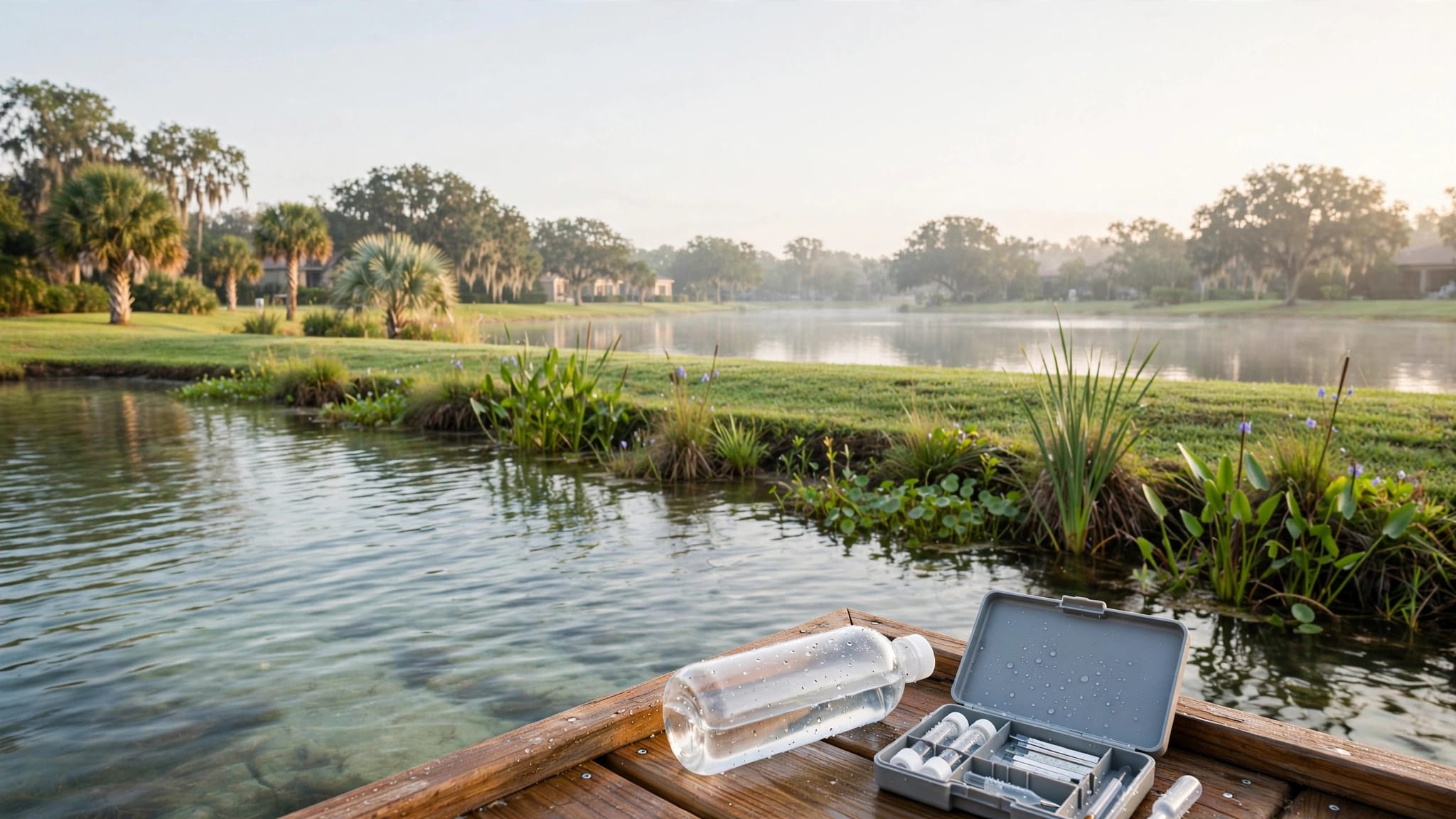
Water quality testing may include dissolved oxygen, pH, alkalinity, hardness, and nutrient conditions. The exact testing plan depends on the lake and its use. A retention pond beside homes may need a different assessment than a golf course lake with irrigation equipment and several connected water bodies.
The inspection should also document:
- Growth location and estimated coverage
- Water depth and shoreline access
- Fish activity or signs of stress
- Stormwater inlets and erosion
- Irrigation intakes and fountains
- Recent rainfall, fertilization, or landscape work
- Existing aeration and circulation equipment
These observations help a lake manager choose a targeted response. They also create a baseline for comparing the lake after treatment.
A green mat is a symptom. The lasting solution depends on identifying the growth and the conditions feeding it.
For HOA boards, photos and written service reports help residents understand why a treatment was selected. They also give the property manager a record of recurring problem areas.
Treatment Approaches for Filamentous Algae and Chara
Aquatic algae control requires a product and application method approved for the specific site. A licensed applicator considers the label, water use restrictions, fish presence, water chemistry, weather, and nearby property features before treatment.
Filamentous algae may respond to a targeted algaecide treatment when the growth is actively present. Removing floating material can also improve appearance and reduce decaying organic matter, but physical removal alone rarely corrects the conditions that caused the bloom.
Chara may require a submerged vegetation treatment directed at the affected beds. Dense growth can need follow-up visits because one application may not reach every section evenly. Treating a large area at once can also create excess decaying material and place pressure on dissolved oxygen.
Copper-based products are commonly used in aquatic algae management, but the correct product and rate depend on water chemistry and the label. Copper toxicity can vary with water hardness and other site conditions. A property manager should never select a treatment based only on the name of the algae.
Diquat, endothall, and other aquatic products have different uses, restrictions, and target organisms. A licensed professional must determine whether a product is permitted and appropriate for the water body. Application records and required notices also matter for community properties.
Seabreeze Lake Maintenance operates with Commercial Applicator License #CM28291 and State-Licensed Specialty Contractor #SCC131152136. A licensed service provider can coordinate treatment timing, resident communication, safety precautions, and follow-up inspections.
Community managers should notify residents about treatment areas and any temporary restrictions that apply. They should also keep pets away from treated shorelines when instructed and prevent residents from adding their own chemicals to the lake.
A treatment plan works best when it includes follow-up. Staff should check whether the growth has declined, whether new areas are developing, and whether dead material needs removal. If algae keeps returning, the property may need broader water-quality management rather than repeated spot treatments.
Preventing Repeat Growth Across Multiple Lakes
A single pond can often be managed with a focused inspection. Multi-lake communities and golf courses need a property-wide plan because water may move through connected basins, drainage channels, and control structures.
Routine maintenance should track algae, aquatic weeds, shoreline erosion, debris, water clarity, and equipment performance. Weekly or biweekly visits can identify a small patch before it becomes a shoreline-wide complaint.
Nutrient control also matters. Landscape crews should keep fertilizer, grass clippings, and leaves out of the water. Eroded soil can carry nutrients into the pond, so damaged shorelines and bare drainage areas deserve attention. Aeration and circulation may improve oxygen distribution, although they don't eliminate algae by themselves.
Properties with recurring issues can review integrated algae and aquatic weed control as part of a broader maintenance program. A consistent schedule usually provides better control than emergency treatment after a lake has already become covered.
Board members can also compare current conditions with past service reports. Repeated growth in the same cove may point to a stormwater inlet, poor circulation, shallow sediment, or a shoreline maintenance problem.
If the lake shows several warning signs, review these signs your lake needs professional maintenance before the issue affects more of the property. A written plan helps the board budget for maintenance instead of reacting to each visible bloom.
A Practical Decision for HOAs and Golf Courses
When the growth is uncertain, take a clear photo and record its location before anyone disturbs it. Note whether the material floats, feels rough, stays anchored, or gathers along one bank. Those details can speed up the identification process.
Next, ask for an inspection that covers the entire water body rather than treating the most visible patch immediately. A professional should explain the diagnosis, treatment area, safety instructions, expected follow-up, and possible causes of recurrence.
For a community with several ponds, request a map-based service plan. The plan should identify each lake, its problem areas, access points, stormwater connections, aeration equipment, and inspection history.
When recurring algae affects curb appeal or resident concerns, property managers can Get a Free Lake Health Assessment from Seabreeze Lake Maintenance. An inspection can help the community decide whether it needs targeted algae control, routine maintenance, aeration, shoreline work, or a combination of services.
Conclusion
Filamentous algae usually forms soft, floating mats, while Chara grows as a rough, anchored bed beneath the water. Because they respond differently to management, accurate identification should come before treatment.
For retention ponds and community lakes, long-term control depends on inspections, responsible applications, nutrient management, and regular follow-up. When a green mat appears, the right response starts with knowing what is growing and why.
Recent Posts