Can Septic System Leaks Affect Community Lake Water Quality?
Yes. A septic system leak can affect a community lake if wastewater reaches the shoreline, a stormwater inlet, or groundwater that connects with the lake. The size and type of impact depend on the leak, the site's drainage, and how residents use the water.
For HOAs, golf courses, and gated communities, the concern goes beyond an unpleasant odor. Wastewater can introduce bacteria and nutrients, while a clear-looking lake may not reveal what is present. The right response starts by identifying the likely source and testing for the specific risk.
Key Takeaways
- Septic system leaks may carry bacteria and nutrients into nearby retention ponds and lakes.
- A foul odor, sewage-like discharge, or a failed system near a drainage path warrants investigation, but does not prove contamination.
- E. coli testing may be appropriate after a suspected wastewater event, especially where residents contact the water.
- Sampling should reflect the property's drainage and connected lakes, not only the easiest spot to reach.
- Treating algae or odor in the lake won't repair a septic system or stop wastewater at its source.
How septic system leaks can affect community lake water quality
A septic system typically treats household wastewater through a tank and a soil-based drainfield. If a tank, pipe, or drainfield fails, wastewater may reach the ground surface, move through soil, or enter nearby drainage. Whether it reaches a lake depends on conditions such as soil, groundwater levels, rainfall, and site layout.
Bacteria may create a contact risk
Wastewater can contain disease-causing organisms. Testing for E. coli can help assess whether fecal contamination may be present, but a visible change in the water is not required for bacteria to be a concern. A lake can look clear and still warrant testing after a nearby septic failure.
For community managers, the relevant question is whether people may come into contact with the water. Residents may wade, fish, paddle, or let pets enter areas that were intended mainly for stormwater retention. A potential exposure changes how the incident should be handled.
Nutrients can affect the lake over time
Wastewater can also carry nitrogen and phosphorus. These nutrients may contribute to algae growth and persistent water-quality problems if they enter a lake. The effect depends on the quantity, the lake's existing nutrient levels, and other inputs such as fertilizer runoff or decaying vegetation.
A new algae patch or recurring odor can have many causes, so neither one confirms a septic leak. Still, wastewater belongs on the list of possible sources. Learn more about wastewater and septic leaks as phosphorus sources.
Why the property layout matters
A gated community or golf course may contain several ponds, lakes, outfalls, and drainage connections. Water entering one basin can sometimes move through a connected system, so the nearest lake is not always the only place worth examining. The path depends on the property's grading, pipes, swales, and stormwater design.
Rainfall can change that path. Flooding or heavy runoff may carry wastewater from a failed system toward a pond, while high groundwater can affect how quickly water moves through the soil. These are reasons to consider the whole drainage area when investigating a reported leak.
A lake's intended use matters, too. A retention pond with limited access has a different exposure profile from a lake where residents swim or launch kayaks. Golf-course ponds and shared community lakes also need to be assessed in the context of their access points and connected drainage.
Signs that warrant attention, but don't prove contamination
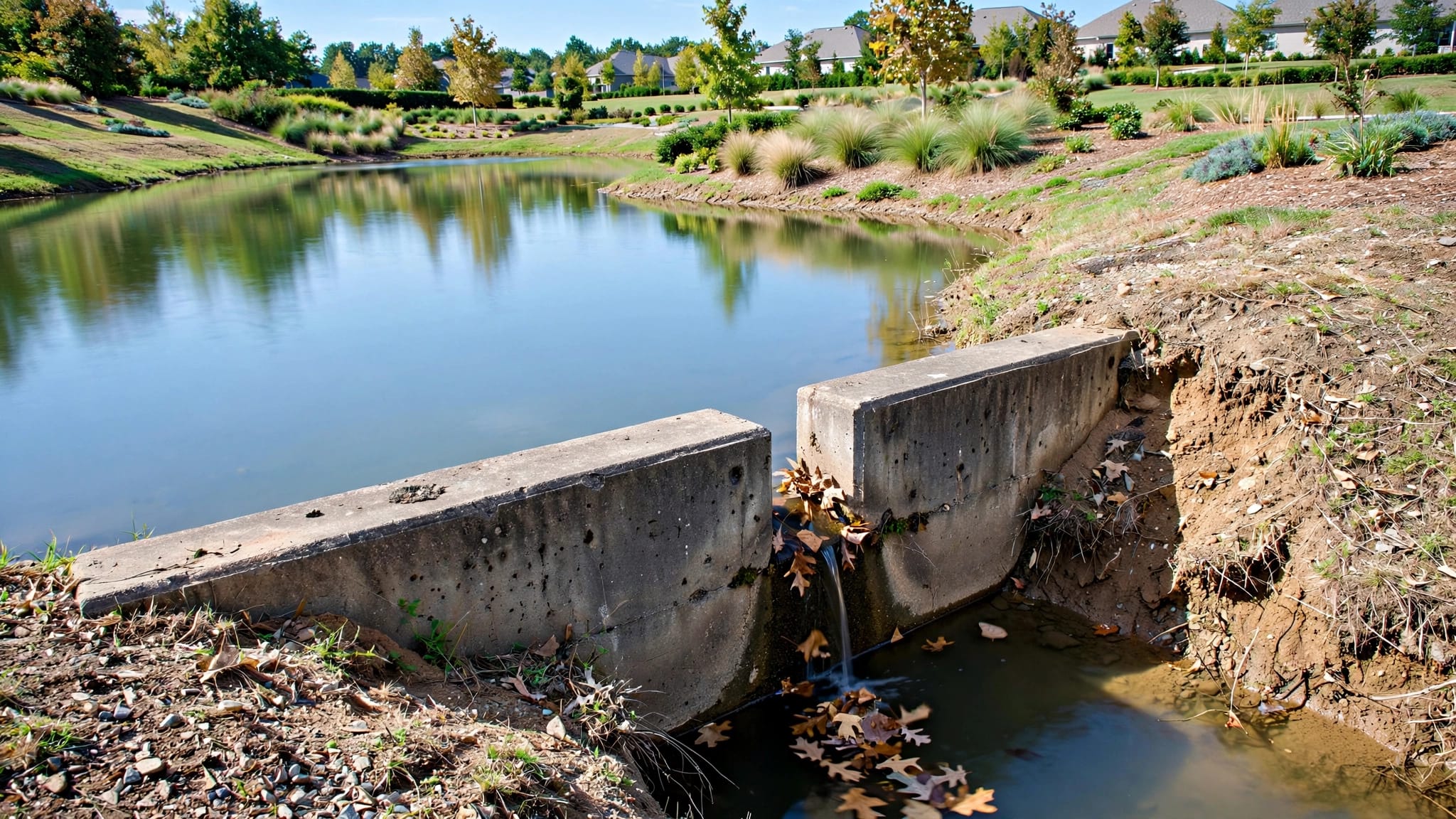
Some observations should prompt a closer look, particularly when they appear near a septic system, drainage inlet, or outfall. These include a sudden sewage odor, wastewater-like material along the shore, or cloudy water entering a lake after flooding. A reported septic failure on property that drains toward a pond is also a reason to investigate.
Take note of where and when the sign appeared. A problem concentrated at one inlet after a storm may point to a different pathway than a persistent odor beside a shoreline. In multi-lake properties, recording nearby outfalls and the direction of drainage can help narrow down the likely source.
These clues aren't a substitute for testing. Brown water may contain sediment, and algae can result from several nutrient sources. Likewise, odor alone cannot establish the presence of E. coli. For more indicators that may support investigation, see these signs of wastewater contamination in a lake.
When lake testing may be appropriate
Routine bacterial testing isn't automatically necessary for every retention pond. Testing becomes more relevant when a septic failure, sewage spill, flooded system, or illness report raises a specific concern, or when people regularly contact the water.
Match the test to the concern
If the question is whether fecal contamination may be present, discuss bacterial testing, including E. coli, with a qualified laboratory or environmental professional. A general water-quality panel may measure nutrients or other conditions, but those results don't answer the same question as bacterial testing.
Likewise, a lake's appearance can't confirm that it's safe for contact. An algaecide may control certain algae, but it doesn't disinfect water affected by sewage. The purpose of testing is to investigate the suspected hazard, not to produce a reassuring number without context. Learn more about E. coli testing after sewage exposure.
Interpret results in context
Laboratory reports may express bacteria results in colony-forming units per 100 milliliters, written as CFU/100 mL. Interpretation depends on the laboratory method, the water's use, and relevant state or local criteria. There isn't one universal number that applies to every Florida HOA lake.
Other measurements answer different questions. Florida DEP uses a surface-water pH range of 6.0 to 8.5 standard units, and commonly uses 20 µg/L for chlorophyll-a, though lake-specific criteria can differ. Those measurements don't establish whether sewage bacteria are present. Total phosphorus criteria also vary by lake, while no single statewide HOA threshold applies to total nitrogen.
What to do after a suspected septic leak
First, protect people from possible exposure. If sewage or a failed septic system may have affected a lake that residents can enter, restrict access to the suspected area while the concern is assessed. Communicate the location and nature of the issue to the property manager, HOA board, or maintenance lead.
Next, document what was reported and observed. Record the date, location, recent rainfall, odor or discoloration, nearby inlets, and any known septic failure. Photos can help show whether the condition changes or appears at a particular drainage point. Keep the original observations separate from assumptions about the cause.
Investigate the source and the water separately
A septic professional should assess the system itself and address repairs. Lake sampling can help determine whether water quality has changed, but it doesn't fix a leaking tank or drainfield. These are related tasks with different purposes.
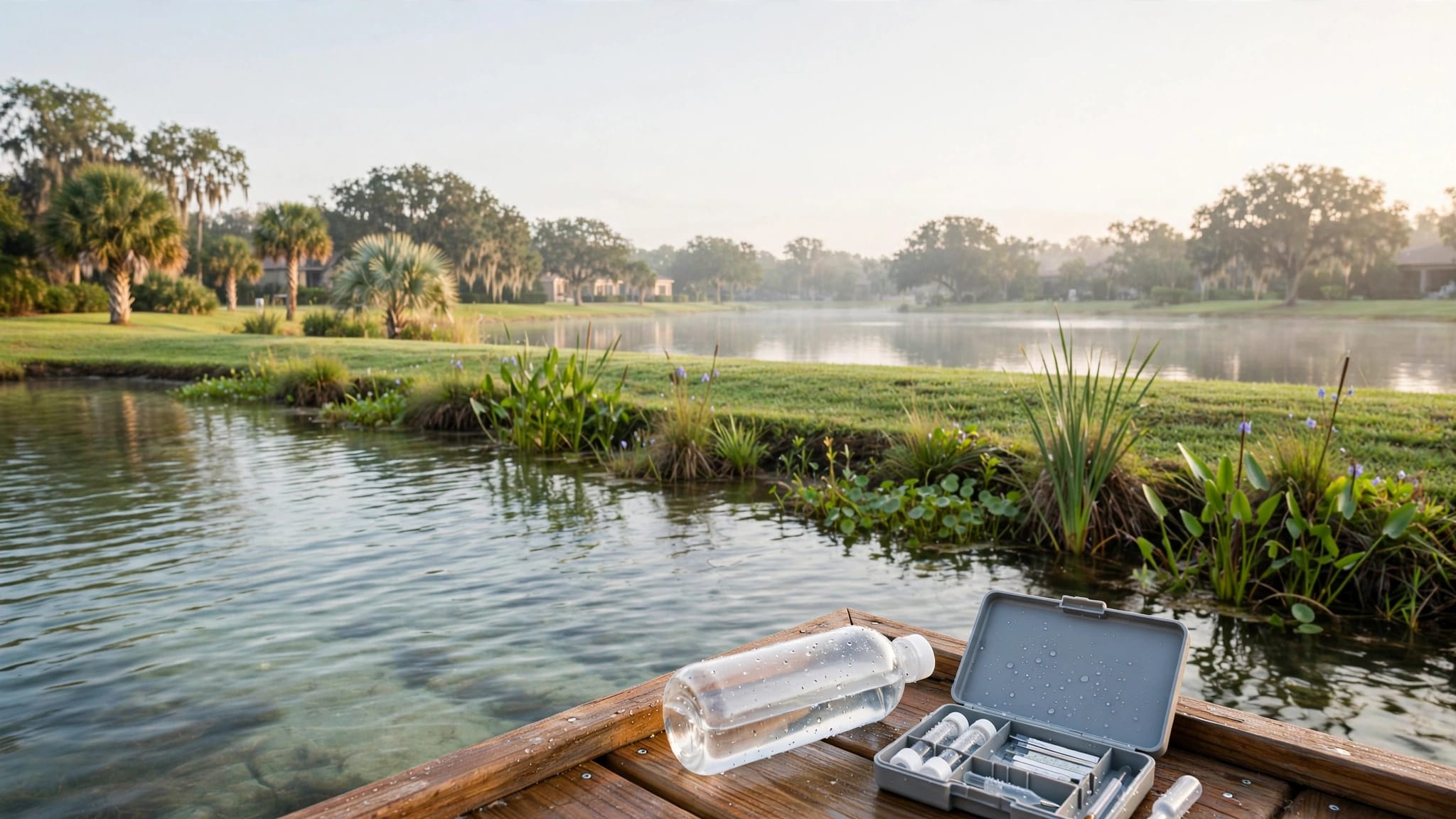
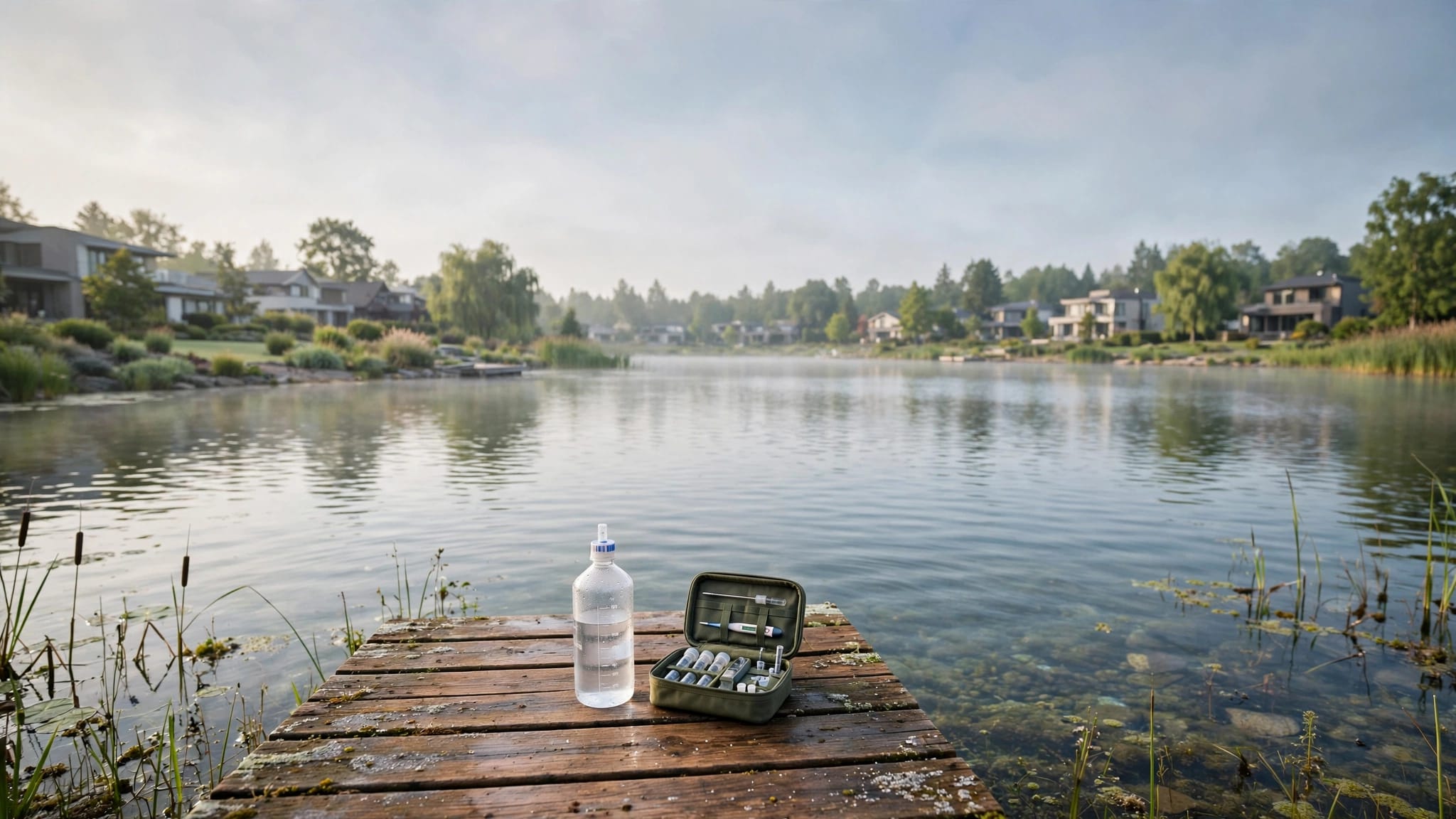
For a contamination investigation, a sampling plan may include the suspected release point, nearby outfalls, connected lakes, and an unaffected comparison location. Depending on conditions, samples from multiple depths or sediment may also be useful. A surface sample from one shoreline could miss a problem elsewhere. See guidance on proper water sampling for contamination investigations.
Keep a clear record
For an HOA or golf course, maintain a simple incident record with observations, communications, test results, and follow-up actions. That record can help distinguish a one-time event from a recurring source and show whether conditions improve after the septic repair.
If residents report illness after contact, or a sewage discharge is visible, involve the appropriate health or environmental authorities. Avoid directing residents to use or enter visibly affected water while the concern is being assessed.
Why treating the lake alone won't fix the problem
Lake maintenance can address conditions within the water, such as certain algae or circulation issues. It cannot repair a septic tank, drainfield, or pipe. If wastewater continues to enter the drainage system, a lake treatment may leave the source untouched and the problem may return.
The same principle applies to nutrients. If testing or recurring conditions point to an ongoing wastewater input, source investigation matters more than repeatedly responding to algae alone. Nutrients may also come from fertilizer, stormwater, erosion, or plant debris, so management should consider the whole site rather than assume every bloom has the same cause.
Seabreeze Lake Maintenance works with communities on lake health, water-quality management, inspections, and routine maintenance. We hold Commercial Applicator License #CM28291 and State-Licensed Specialty Contractor #SCC131152136. A lake inspection can help assess visible conditions and drainage concerns, while septic system diagnosis and repair require the appropriate septic professional. Get a Free Lake Health Assessment to arrange a call and lake inspection.
FAQ
Can a lake look normal after a septic leak?
Yes. Bacteria and nutrients may not cause an immediate visible change. A clear surface doesn't rule out contamination, especially after a reported septic failure or wastewater release near the drainage area.
Does every retention pond need routine E. coli testing?
No. Testing isn't automatically needed on a standing schedule for every retention pond. It may be appropriate when residents contact the water, a septic or sewage incident occurs, flooding raises concern, or illness is reported after exposure.
Will treating algae make water safe after sewage exposure?
No. Algae treatment does not disinfect water contaminated by sewage. If wastewater exposure is suspected, address the source and assess the relevant water-quality risk rather than relying on an algae treatment.
Protecting Community Lake Water Quality
Septic system leaks can affect community lakes, but the route and impact depend on the system, site drainage, and lake use. Odor, cloudy inflow, or a nearby failure should prompt a measured response, not an assumption that contamination is confirmed.
For HOAs and golf courses, the practical priority is to address the source, limit exposure when needed, and test for the concern at hand . That approach is more useful than treating visible symptoms while wastewater may still be entering the system.
Recent Posts