A Board-Friendly Guide to Trophic State in Managed Lakes
A lake can look clear from shore while nutrient pressure and oxygen stress build below the surface. For HOA boards, golf courses, and property managers, understanding lake trophic state helps turn water-quality results into practical maintenance decisions.
Trophic state describes a waterbody's nutrient level and biological productivity. It is useful as a broad view of lake condition, but no single test or appearance tells the full story. The clearest picture comes from comparing multiple indicators, site conditions, and results over time.
What lake trophic state means for a board
Trophic state gives a board a way to discuss how nutrients and biological growth affect a lake. Nutrients such as phosphorus and nitrogen support aquatic plants and algae. When nutrient inputs rise, algae pressure or nuisance vegetation may also increase, although the response depends on conditions in that particular waterbody.
A trophic-state discussion is most useful when it points to a decision. Is the lake changing? Is the change limited to one area or happening across the basin? Do the measurements suggest a nutrient concern, poor circulation, or sediment entering after rain? Those questions help a board distinguish a recurring management issue from a short-lived change.
The concept isn't a stand-alone diagnosis. A label cannot identify where nutrients came from, explain why a shoreline is eroding, or determine which treatment a lake needs. Instead, use it to organize the evidence and decide what the next inspection or test should address.
For managed communities, that distinction matters. Retention ponds receive stormwater, while other lakes may serve more than one function. Each basin has its own drainage area, depth, shoreline, and maintenance history, so one average for an entire property can hide important differences.
Why each lake needs its own context
On a multi-lake property, two ponds can respond differently to the same weather. One may receive runoff from fertilized turf, while another collects water from roads or rooftops. A basin with an eroding bank can also receive sediment that doesn't affect a neighboring lake.
Consider the pond's job and drainage area
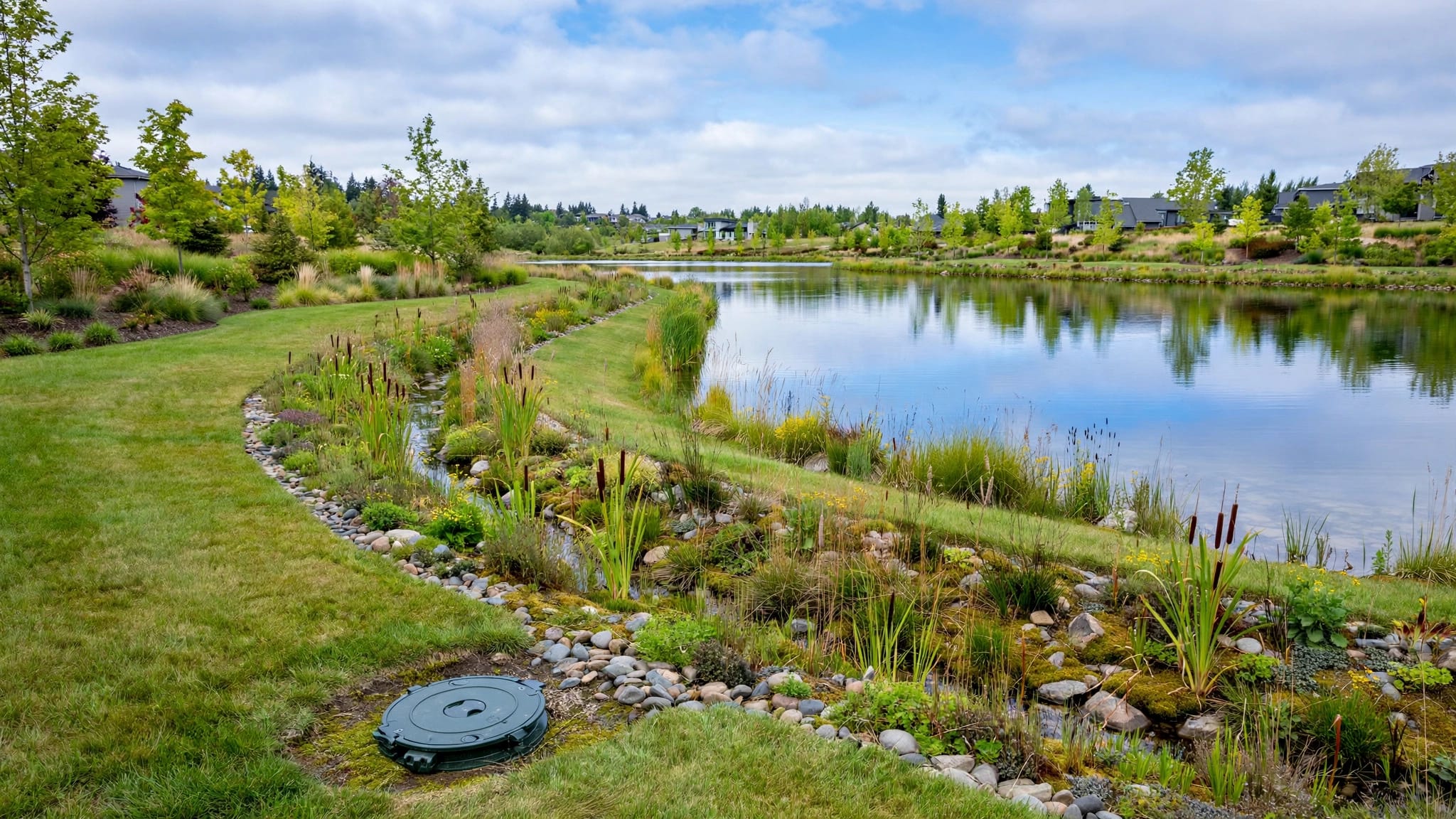
A retention pond is part of a stormwater system, not a koi pond. Its inlets, outlets, water levels, and surrounding landscape influence what enters the water and how conditions change. Golf course lakes may also receive drainage from turf areas, while community lakes can collect runoff from roads, roofs, lawns, and landscaped slopes.
For this reason, boards should review results lake by lake. Record the waterbody name, visible inflows and outflows, recent maintenance, and nearby changes such as construction or shoreline repair. This context helps identify whether a change may be linked to rainfall, a drainage route, or a specific part of the property.
Separate a local symptom from a property-wide trend
A bloom along one shoreline doesn't automatically mean every basin has the same problem. Wind can move floating material to one side, and an inlet can concentrate sediment in a small area. Conversely, several lakes with rising nutrient indicators may point to a broader source across the property.
A community lake management guide for HOA boards can help boards place algae and weed work within a wider maintenance plan. Each lake still needs its own records and observations.
Read water-quality indicators together
No single reading explains a lake's condition. Water-quality tests become more useful when the board reviews related measurements alongside what staff see at the shoreline.
Pair nutrient results with algae indicators
Phosphorus is often a limiting nutrient in freshwater systems, so an increase can support heavier algae growth. Nitrogen can also add to nutrient pressure, particularly when runoff, fertilizer, or decaying vegetation enters the water.
Chlorophyll-a is a marker associated with algae levels in the water column. If phosphorus is high while chlorophyll-a is rising, that combination can point to increasing algae pressure. It still doesn't identify the nutrient source or confirm what management response is appropriate.
For background on common sources and effects, see what high phosphorus can mean for Florida HOA lakes. Boards can also review the role of water-quality testing in lake management when setting up a monitoring plan.
Use clarity and oxygen to investigate conditions
Turbidity describes how cloudy the water is. A rise after rain may point toward runoff, erosion, or nearby construction. However, cloudy water can also involve algae, organic debris, or disturbed bottom material, so clarity alone can't establish the cause.
Dissolved oxygen adds another part of the picture. Low oxygen with murky water may be associated with poor circulation, decay, or excess organic matter. Oxygen also changes through the day: algae and plants add oxygen in daylight, while aquatic life and decomposition use it around the clock. Early morning readings often capture lower daily oxygen levels.
Temperature, pH, alkalinity, and conductivity can provide more context. For example, temperature affects how much oxygen water can hold, while alkalinity helps explain pH stability. The best interpretation comes from reading these measures together, not treating any one number as a verdict.
Build a record the board can compare
A single sample captures conditions at one time and place. A series of samples can reveal whether a lake is stable, improving, or changing with weather and maintenance.
Keep sampling details consistent
Use the same lake names, sampling stations, depths, dates, and record format each time. Note whether a sample came from an inlet, open water, a shallow cove, or near an aerator. If the location or depth changes, document it because the results may not be directly comparable.
Include units in board reports. Phosphorus may appear in parts per billion, while dissolved oxygen is commonly reported in milligrams per liter. Clear units and sampling details reduce the chance that a number will be misunderstood.
A water-quality baseline for a new HOA lake gives future readings a useful reference point. Baselines should include field observations, not only laboratory results.
Record conditions around each sample
Rainfall, water level, temperature, recent treatments, aerator operation, and visible algae can affect how a result should be read. A sample collected after a storm may reflect runoff conditions that differ from those during a dry stretch. Likewise, surface water may not match conditions deeper in the pond.
Photos from repeatable viewpoints can help the board compare changes in water color, plant growth, shoreline condition, and debris. The goal is a dependable record, not a complicated spreadsheet. When the same concern appears repeatedly, the trend deserves a closer look.
Connect lake conditions to management choices
A useful assessment doesn't stop at identifying a symptom. It helps the board ask what may be driving the change and which management actions fit the site.
Look for nutrient sources around the basin
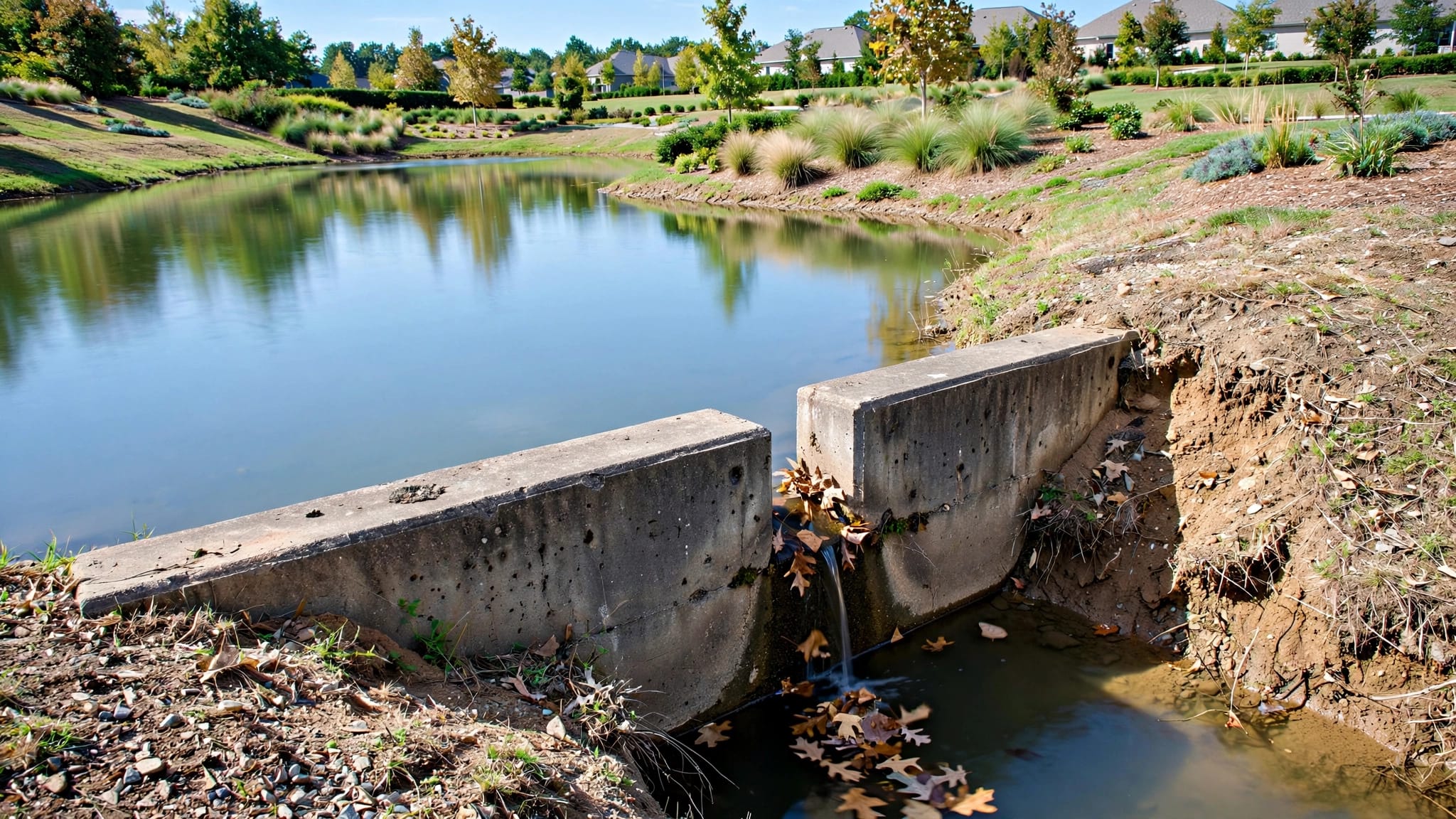
Potential inputs include fertilizer runoff, stormwater, eroding banks, organic debris, and nutrients already stored in sediment. Walk the shoreline and note inlets, outfalls, exposed soil, accumulated leaves, and areas where water carries sediment into the lake. A site inspection can reveal clues that a lab result cannot.
A separate nutrient budget for each waterbody can help organize likely inputs and ongoing maintenance. Boards can use a guide to building a lake nutrient budget to track sources and compare them with water-quality trends.
Match the response to the cause
Aeration can improve circulation and oxygen, but it doesn't remove every nutrient source. If fertilizer or eroded soil continues to enter the lake, aeration alone won't address that input. Similarly, treating visible algae without considering nutrient pressure can leave the conditions for another bloom in place.
Management may involve more than one type of work, such as water-quality monitoring, targeted algae or weed control, aeration inspection, or shoreline stabilization. The right mix depends on the lake and the issue. Seabreeze Lake Maintenance holds Commercial Applicator License #CM28291 and State-Licensed Specialty Contractor #SCC131152136 for relevant lake and shoreline work.
Turn lake reports into board decisions
Board members don't need to interpret every test as aquatic scientists. They do need reports that connect results to locations, trends, and next steps. A clear report should identify which lake was sampled, where and when the sample was taken, what changed, and whether follow-up is recommended.
Ask what changed and what evidence supports it
When reviewing a report, ask whether the result differs from the lake's own baseline. Then consider visible conditions, recent rain, nearby activity, and the other measurements taken at the same time. Guidance on interpreting HOA lake test results can help connect pH, oxygen, clarity, and nutrient readings with observations.
Avoid making a major decision from one isolated number. A repeated decline in clarity or repeated algae pressure carries more weight when it appears alongside relevant nutrient, oxygen, or field observations.
Set a clear follow-up process
Boards can assign responsibility for recording lake conditions, sharing unusual observations, and bringing recurring issues to a property manager or lake professional. When an issue appears after a storm, fertilization event, construction, or equipment failure, record that timing. It may help explain a later change in the water.
For site-specific review, get a free lake health assessment from Seabreeze Lake Maintenance. An inspection and water-quality discussion can help connect test results with lake conditions across the property.
Key Takeaways
- Trophic state is a broad lens for understanding nutrient pressure and biological growth, not a stand-alone diagnosis.
- Interpret nutrients, chlorophyll-a, oxygen, turbidity, and field observations together.
- Track every lake separately, using consistent sample locations, depths, dates, and units.
- Review drainage routes, rainfall, erosion, and maintenance history when conditions change.
- Address likely nutrient sources as well as visible algae or vegetation.
Frequently Asked Questions
Does one test determine a lake's trophic state?
No. One sample represents conditions at a particular place and time. A more useful assessment compares several indicators and observations, then looks at results over time.
Why might a clear-looking lake still need attention?
Some changes begin below the surface or appear in test results before they become obvious from shore. Oxygen can also differ by depth, so surface appearance alone doesn't describe the whole water column.
Should every lake on a property use the same management plan?
Each lake has its own drainage area, shoreline, depth, and use. A property-wide strategy can set shared goals, but monitoring and maintenance choices should reflect conditions in each basin.
Make Trophic State Useful to Your Board
Lake trophic state helps boards frame questions about nutrient pressure, algae, and changing water quality. Its value comes from combining measurements with repeatable records and observations from the site.
When a lake changes, the strongest next step is to understand the pattern and investigate likely causes. That gives the board a sounder basis for maintenance decisions than appearance or a single test result alone.
Recent Posts