How to Build a Lake Nutrient Budget That Works
A lake can look clear while nutrients build below the surface and feed future algae growth. For HOAs, golf courses, and gated communities, a lake nutrient budget helps connect water-quality results with the sources affecting each basin.
The process is more useful when you treat every lake as its own system. Drainage patterns, shoreline conditions, water depth, aeration, maintenance history, and surrounding land use can differ across the same property. Start with a separate record for each lake, then use consistent measurements to decide what needs attention.
Key Takeaways
- Build one nutrient budget for each lake, not one average for the entire property.
- Track nitrogen and phosphorus inputs from fertilizer, stormwater, erosion, organic material, and internal sediment sources.
- Record inflows, outflows, water levels, drainage areas, maintenance work, and visible lake conditions.
- Pair nutrient results with dissolved oxygen, chlorophyll-a, pH, temperature, clarity, and field observations.
- Use trends and property-specific action levels instead of reacting to one test result.
- Correct nutrient sources before relying on repeated algae or weed treatments.
- Treat aeration as part of a broader water-quality plan. Aeration can improve circulation and oxygen, but it doesn't remove every nutrient source.
What a Lake Nutrient Budget Measures
A nutrient budget is an organized account of what enters a lake, what leaves, and what remains available for biological growth. Most plans focus on nitrogen and phosphorus because both can support algae and excessive plant growth.
The budget doesn't need to produce a false sense of precision. Its purpose is to show where nutrients may be coming from, which lakes carry the greatest risk, and whether conditions improve after corrective work.
Separate records for every basin
A multi-lake property should give every waterbody its own file and identification code. A lake near a fertilized golf course fairway may have a different nutrient pattern than one receiving runoff from residential streets.
Each record should include the lake name, approximate size, depth, connected basins, drainage area, inlets, outfalls, aeration equipment, shoreline condition, and known maintenance history. A consistent HOA lake maintenance planning system makes it easier for boards, managers, and contractors to review the same information.
Never combine results from several lakes into one property-wide average before reviewing each basin. An average can hide one lake with high phosphorus, poor oxygen, or a recurring discharge problem.
Record what enters and leaves
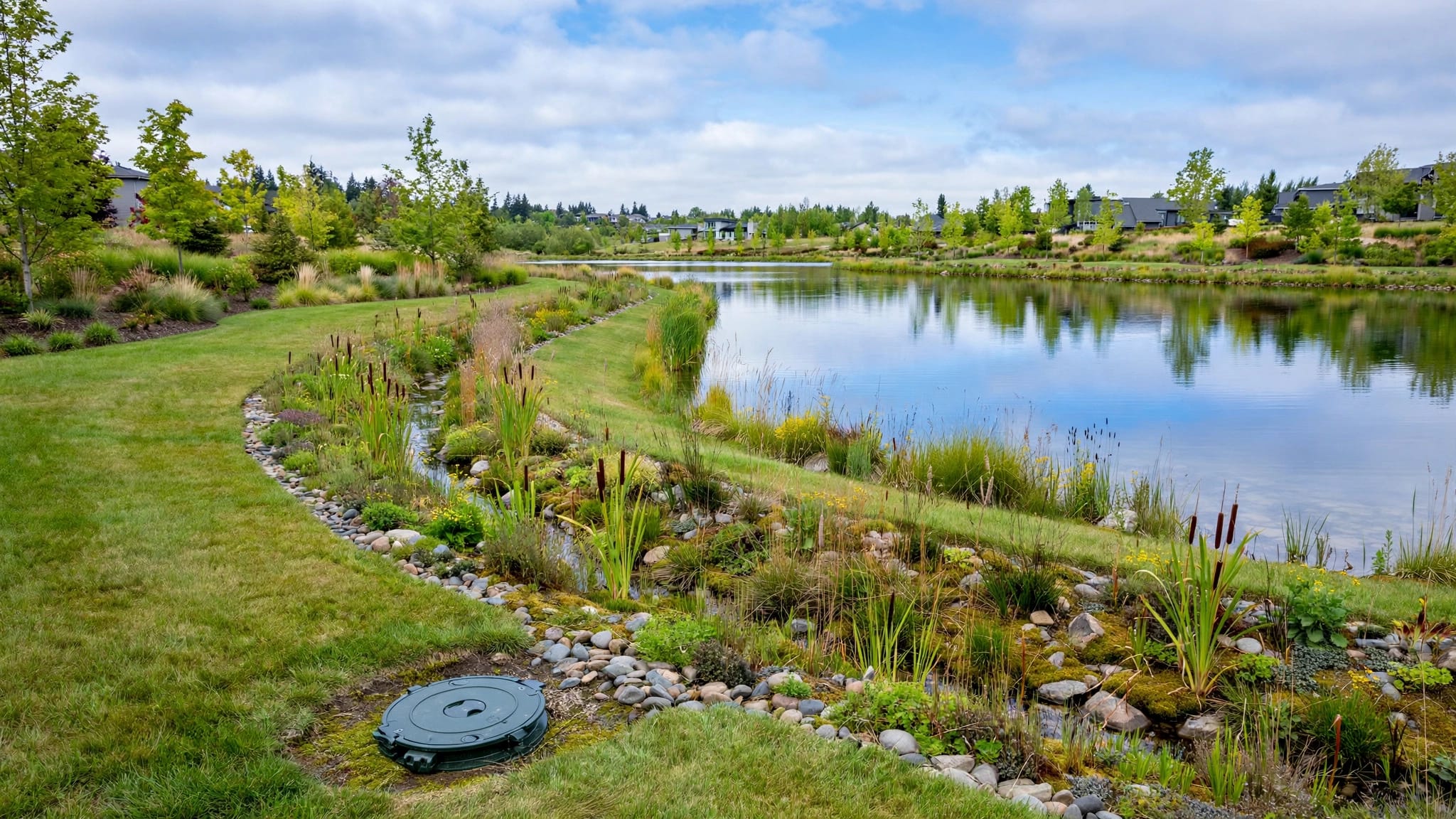
Map storm drains, swales, culverts, irrigation returns, spillways, control structures, and low points where water may cross a shoreline. Include areas where fertilizer, grass clippings, soil, pet waste, or decaying vegetation can wash into the basin.
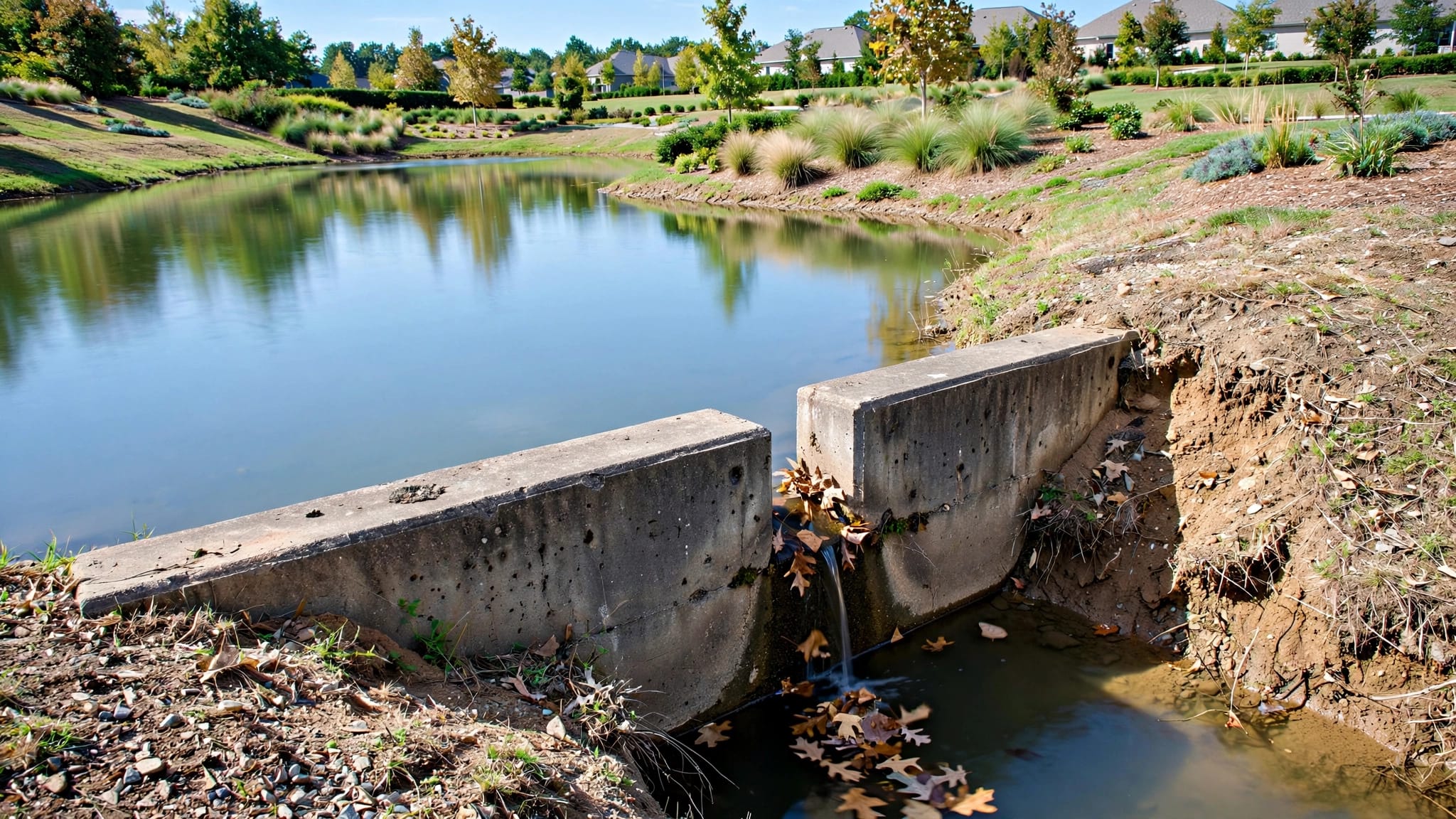
Also record water leaving the lake. Outfalls and overflow structures can move nutrients into connected lakes or downstream wetlands. A control structure inspection should review how water enters, moves through, and exits each retention pond.
Build a Property-Wide Lake Profile
Before estimating nutrient inputs, create a practical map of the property. Use site plans, drainage drawings, maintenance records, aerial imagery, and field inspections to confirm how water actually moves.
Florida rain can change a lake's nutrient load quickly. A single storm may carry material from turf, roads, parking areas, and exposed soil into a retention pond.
Mark sampling and inspection locations
Choose repeatable stations for every lake. Useful locations may include a deep-water point, an inflow, an outfall, an aerator, a recurring algae area, and a shoreline access point.
A random sample from the bank may not represent the whole lake. For a golf course, the sampling plan may also need stations near irrigation returns, drainage inlets, cart paths, or areas with heavy plant growth.
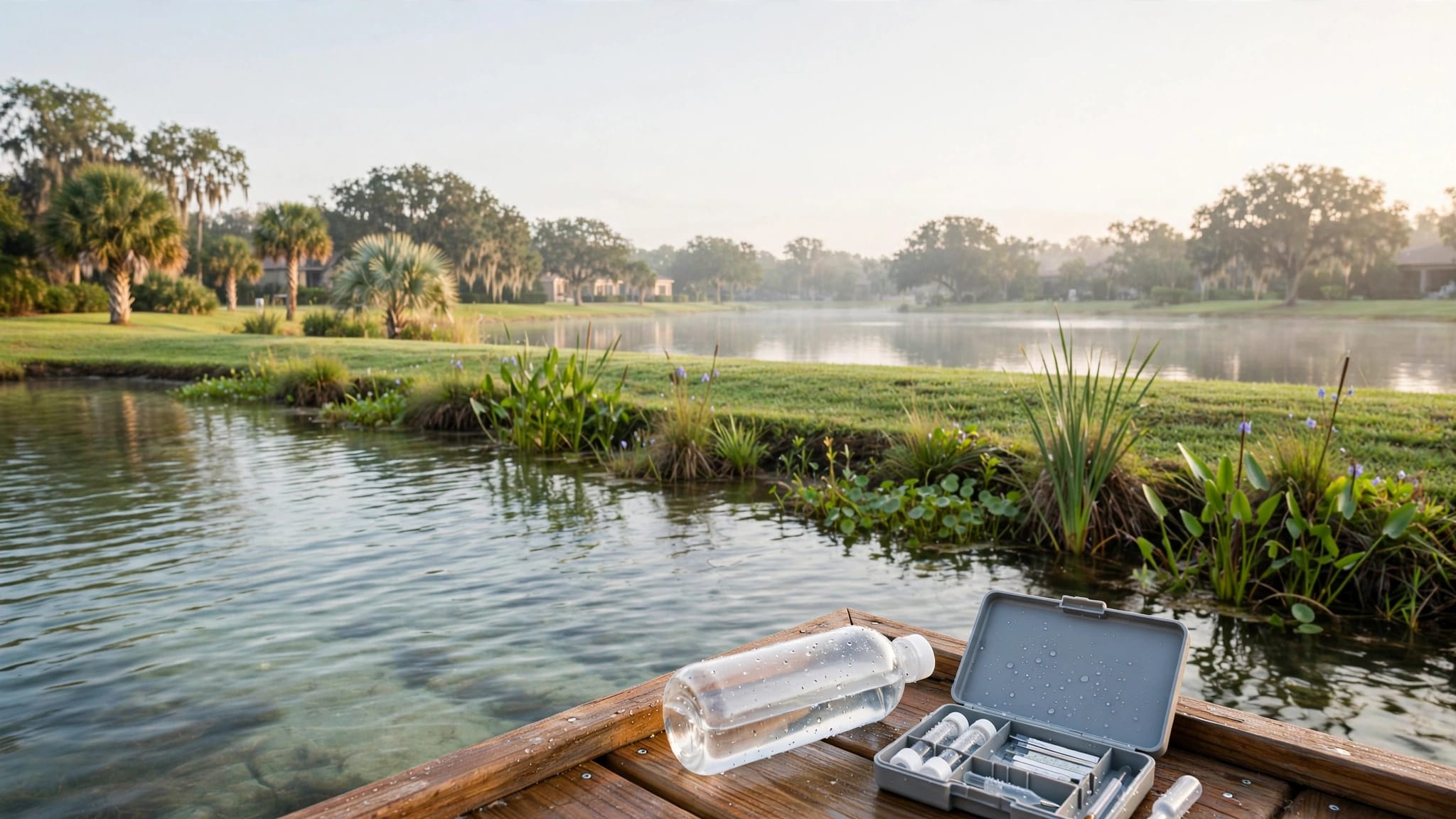
Record the station location, water depth, weather, recent rainfall, water level, and equipment operating status. Photos taken from the same viewpoints can show changes that laboratory results alone may miss.
Describe the lake's surrounding land use
List the land uses around each basin. Include turfgrass, landscaped areas, homes, roads, parking lots, maintenance yards, construction zones, dog-walking paths, and natural shoreline vegetation.
Then note whether the lake receives irrigation water, reclaimed water, groundwater, or runoff from another basin. These details help explain why one lake responds differently from another after the same storm or treatment.
Identify Nutrient Inputs
A useful budget lists likely sources before assigning corrective work. Some inputs are easy to see, while others require water testing, drainage review, or inspection below the waterline.
Track fertilizer and stormwater runoff
Fertilizer can move from turf to storm drains during one storm. Record fertilizer schedules, application areas, no-fertilizer zones, irrigation overspray, and any maintenance practices that leave granules or clippings on pavement.
The same review should cover lawn service near drains, landscaped slopes, golf course turf, and resident-managed areas. This guide to fertilizer runoff and HOA lakes explains why a clean-looking landscape can still contribute to nutrient buildup.
Include pet waste stations and collection practices where applicable. Pet waste can add nutrients and bacteria, especially when it sits near a drainage path before heavy rain.
Look for erosion and internal sources
Bare soil, eroded banks, construction runoff, and damaged swales can carry sediment into a lake. Sediment may contain phosphorus and organic material that continues affecting water quality after the original runoff event.
A lake can also receive nutrients from decaying leaves, dead aquatic vegetation, bottom muck, or long-standing sediment deposits. If high phosphorus continues after obvious runoff sources are addressed, the investigation may need to examine internal loading from the lake bottom.
Managing phosphorus in Florida HOA lakes can help property managers connect algae pressure with runoff, erosion, and shoreline conditions.
Pair the Budget With Water-Quality Trends
A nutrient budget becomes useful when it connects potential sources with measurements. Test results should answer a management question, such as whether runoff is affecting a lake, whether conditions change after rain, or whether a corrective action is working.
Track more than nitrogen and phosphorus
A broader water-quality review may include:
- Total nitrogen and total phosphorus
- Chlorophyll-a
- Dissolved oxygen at the surface and deeper water
- Water temperature and pH
- Conductivity, clarity, or turbidity
- Water level, odor, algae coverage, and aquatic weed growth
Rising chlorophyll-a can indicate increasing algae biomass before a bloom becomes obvious. Low dissolved oxygen may point to poor circulation, high organic matter, dense algae, or warm-weather stress.
Florida doesn't use one universal total-nitrogen action number for every HOA retention pond. A single statewide reference also shouldn't be applied without considering the lake's type, color, use, baseline, and applicable criteria. Use Florida HOA lake water quality thresholds as a starting point for writing property-specific triggers.
Sample consistently and document events
Collect baseline samples at consistent stations and similar times when possible. Repeat testing during hot, calm weather, after visible algae growth, when odors appear, or when fish show stress.
Document heavy rainfall, long dry periods, water-level changes, construction, fertilizer applications, and aquatic treatments before interpreting the result. The same nutrient value can mean something different after a major storm than it does during a stable baseline period.
When reviewing HOA lake water test results, compare the latest report with previous results and field observations. A trend is usually more useful than one isolated number.
Turn Findings Into Maintenance Actions
The budget should lead to decisions that reduce future nutrient loading. It shouldn't become a spreadsheet that records problems without assigning responsibility or follow-up.
Address sources before repeated treatments
If runoff enters through a storm drain, inspect the contributing area. If a bank is eroding, correct the drainage or stabilize the shoreline. If fertilizer reaches pavement, adjust application practices and clean the affected surface before rainfall.
Also inspect blocked inlets, damaged outfalls, standing debris, exposed soil, and low shoreline areas. The Florida HOA lake control structure inspection provides a useful framework for reviewing drainage structures along with water and shoreline conditions.
Aquatic treatments may still be appropriate, but repeated treatment won't solve an active nutrient source. Large areas of dying vegetation can also add decomposing organic matter and increase oxygen demand.
Use aeration for the problem it can address
Poor circulation can leave nutrients near the surface or allow them to settle in the bottom layer. Aeration may improve oxygen distribution and water movement, especially when a lake has stagnant areas, odors, or recurring low-oxygen conditions.
However, aeration doesn't remove excess nutrients, repair erosion, clear clogged outfalls, or replace aquatic weed control. Inspect compressors, diffusers, fountains, electrical components, airflow, bubbling patterns, and target areas around the lake.
If one cove remains stagnant while another area has strong movement, the system may need a placement or performance review. Nutrient control and oxygen management should support each other without being treated as the same solution.
Keep the Budget Current
A nutrient budget should change when the property changes. New landscaping, construction, irrigation adjustments, shoreline work, drainage repairs, or a new aeration system can alter the way nutrients move through the site.
Review each lake after major storms, unusual algae growth, fish stress, odor complaints, visible erosion, or changes in water level. Add a note when a sample follows a treatment or a significant maintenance event.
The maintenance record should show:
- The suspected nutrient source
- The evidence supporting that conclusion
- The action assigned to the HOA, golf course, landscaper, or contractor
- The date of the work
- Follow-up test results and photographs
- Any change in algae, clarity, oxygen, odor, or shoreline condition
Sampling does not need to happen on an identical schedule for every lake. Stable basins may need less laboratory testing, while lakes with recurring algae, drainage problems, or poor circulation may need additional checks.
FAQ About Lake Nutrient Budgets
Should every lake on a property use the same nutrient target?
No. Each lake has its own drainage area, depth, water source, sediment, maintenance history, and surrounding land use. Use common recordkeeping methods, but compare each basin with its own baseline and applicable water-quality criteria.
A lake receiving golf course runoff may need a different investigation than one surrounded by homes and streets. Property-wide patterns still matter, but they should not replace basin-level review.
Does aeration reduce the nutrient budget?
Aeration can improve circulation and oxygen conditions, but it doesn't remove every nutrient entering the lake. It also doesn't correct fertilizer runoff, erosion, clogged drainage structures, or phosphorus stored in sediment.
Use aeration data alongside nutrient results, oxygen profiles, algae observations, and equipment inspections. If nutrients remain high, continue investigating the source.
Does a nutrient budget replace bacteria testing?
No. Nutrient monitoring and bacterial testing answer different questions. E. coli testing may be appropriate when residents swim, wade, paddle, or regularly enter the water, or after a sewage failure, flooded septic system, illness report, or similar contamination concern.
Most retention ponds aren't swimming areas, so routine bacterial testing isn't automatically needed for every lake. However, the HOA should limit contact and seek qualified guidance when an event changes the water's risk.
Conclusion
A well-built lake nutrient budget helps a community move beyond surface appearance and isolated test results. Separate records, source mapping, consistent sampling, and documented follow-up show which lakes need attention and why.
For HOAs, golf courses, and gated communities in Southwest Florida, Seabreeze Lake Maintenance provides lake inspections, water-quality management, aeration support, aquatic vegetation control, and shoreline services. The company holds Commercial Applicator License #CM28291 and State-Licensed Specialty Contractor #SCC131152136. Communities can Get a Free Lake Health Assessment to review multiple lakes and build a practical maintenance plan.
Recent Posts