Water Quality Meter Calibration for HOA Lake Sampling
A lake can look calm and clear while conditions below the surface are changing quickly. For HOAs, gated communities, golf courses, and other multi-lake properties, water quality meter calibration helps turn field readings into information a manager can trust.
This process applies to retention ponds and managed lakes, not koi ponds. A calibrated multiparameter meter or sonde can help crews track dissolved oxygen, temperature, depth, and pH when the instrument supports it. The most useful results come from consistent stations, careful handling, and complete records.
Prepare for HOA Lake Sampling
Calibration starts before the crew reaches the shoreline. A rushed setup can create questionable readings, even when the lake itself has not changed.
Confirm the meter and probe are ready
Inspect the meter, cable, probe, and housing before each field visit. Look for fouling, damaged membranes, trapped air, cracked components, loose connections, or plant material caught around the sensors. Remove debris according to the manufacturer's care instructions.
Check the battery, storage condition, display, and data-recording function. If the meter shows an error during startup or calibration, record the message and resolve it before collecting data. Don't treat a warning as a minor inconvenience. A faulty probe can make a complete lake profile difficult to interpret.
The instrument should measure at least:
- Dissolved oxygen
- Water temperature
- Depth
- pH, when available
Additional sensors may provide conductivity or other useful measurements. However, the selected parameters should match the question the HOA needs to answer. A fish-stress event may require a different assessment than recurring algae, cloudy water, or poor circulation.
Gather field and documentation supplies
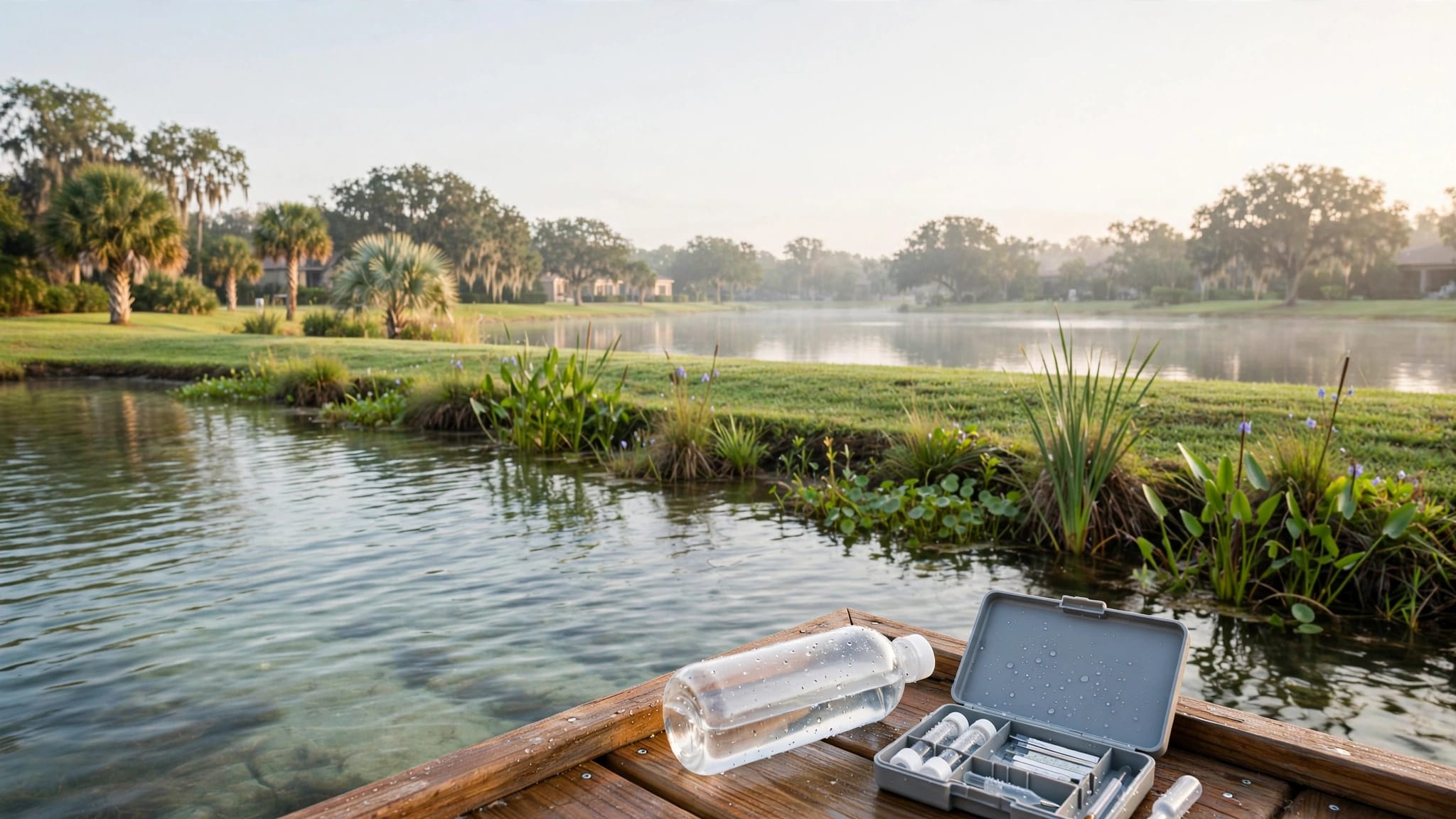
Bring clean sampling containers when laboratory testing is part of the visit. Field crews may also need labels, a cooler with ice when required, chain-of-custody forms, a field sheet, a phone or camera, and any equipment required to lower and retrieve the probe safely.
Label laboratory bottles before leaving the station. Record the lake name, station, depth, date, collection time, collector, and requested analysis. Follow the laboratory's container, rinsing, preservation, and holding-time instructions.
Keep the meter log separate from general maintenance notes, but connect both records to the same lake and station names. That makes it easier to compare field readings with recent treatments, rainfall, aeration changes, and shoreline observations.
Follow a Consistent Water Quality Meter Calibration Process
Water quality meter calibration must follow the equipment manufacturer's instructions. Different instruments use different procedures, sensor types, calibration checks, and maintenance requirements. Never substitute a general setting or standard for the one specified in the meter's manual.
Calibrate before collecting lake data
Complete calibration before the first sample or profile of the day. Use the correct calibration materials for the instrument and confirm that they are suitable, current, and stored properly. The procedure may differ for dissolved oxygen, pH, conductivity, and other sensors.
Rinse the probe as directed between calibration steps. Avoid touching sensitive membranes or allowing air bubbles to remain where they can affect the reading. Give each sensor enough time to stabilize according to the manufacturer's instructions.
Record the calibration time, method, standards used, operator, and any error messages. If the instrument cannot complete calibration, stop and troubleshoot it before entering the water. A meter that fails calibration should not produce the official data for an HOA report.
Inspect the probe again at the station
Transport can introduce debris, moisture, or air around the sensors. Inspect the probe again when you arrive at the lake. Rinse it as directed, then confirm that the display responds normally before lowering it.
Calibration doesn't replace field judgment. If the water contains heavy algae, suspended sediment, floating debris, or unusual surface material, note those conditions before starting. They may affect the probe and help explain unusual readings.
A calibration record without a probe-condition check leaves out one of the most common causes of unreliable field data.
When water quality meter calibration is complete, keep the instrument settings and sampling method consistent. Don't change the process from one lake to another unless the equipment manual, site conditions, or testing objective requires it.
Choose Representative Stations Across the Property
One sample can't describe every basin on a large HOA or golf course property. Each lake has its own drainage area, depth, circulation pattern, shoreline vegetation, and maintenance history.
Select stations that answer the management question
Use the same station for repeat measurements whenever possible. A deep-water location often gives the clearest picture of temperature and dissolved oxygen changes through the water column. It can help identify stratification or oxygen loss near the bottom.
A single deep station may not be enough. An inlet, outfall, aerator, fountain, recurring algae area, or stagnant cove may need its own station. Golf courses may also need locations near irrigation returns, drainage structures, or areas with heavy plant growth.
At a multi-lake property, sample representative lakes rather than assuming one basin reflects all the others. Give every lake a clear name or identification number, and map the station locations. Consistent locations make trends easier to recognize.
Consider weather, treatments, and recent events
Record recent rainfall, wind, water level, visible algae, aquatic weeds, odors, water color, and wildlife activity. Note whether a fountain or aerator was running. Also document recent herbicide, algaecide, dye, beneficial bacteria, or other treatment applications.
Sampling immediately after a treatment may answer a different question than a baseline test. The field record should state whether the visit occurred before or after corrective work. A sample taken after heavy rain may also differ from one collected during a dry period.
For routine comparisons, collect data at similar stations and, when practical, similar times of day. Water conditions change throughout the day, so time belongs in every record.
Take a Complete Water-Column Profile
A surface reading can miss low oxygen or other changes near the bottom. A profile gives the board or property manager more useful information about circulation and conditions below the surface.
Lower the probe carefully
Lower the probe to the planned depth without stirring sediment from the bottom. Avoid scraping the bank, dragging the sensor through dense vegetation, or collecting only floating scum unless the test specifically targets that material.
At each depth, allow the reading to stabilize before recording it. Log dissolved oxygen in mg/L, percent saturation when provided, temperature, and depth. Record pH or other available parameters in the same sequence.
Watch for differences between surface and deeper water. A warm upper layer and oxygen-poor bottom layer may point to limited mixing, excess organic material, or other conditions that need investigation. The readings don't identify the cause by themselves, but they show where to look next.
Repeat the surface dissolved oxygen reading
After completing the profile, return the probe to the surface and repeat the dissolved oxygen measurement. This provides a practical quality check on the field run.
EPA National Lakes Assessment guidance uses a difference of 0.5 mg/L or less between the first and final surface dissolved oxygen readings as a useful check. Treat that comparison as a quality-control reference, not as a universal pass or fail rule for every field situation.
If the two surface readings differ by more than that amount, review the notes before accepting the profile. Check for changing wind, aerator operation, probe fouling, trapped air, poor stabilization, or an error in the recorded depth. Repeat the measurement when possible, and document what happened.
Record Results in a Way the HOA Can Use
Data becomes valuable when people can compare it with earlier visits. A single number rarely explains why a lake changed.
Connect readings with field observations
Every field sheet should include the date, time, lake name, station, depth, equipment used, and operator. Add weather conditions, recent rain, wind, water level, odors, algae, weeds, fish activity, water clarity, and visible shoreline problems.
Photograph the station and unusual conditions when appropriate. A photo of surface scum, an inlet carrying sediment, or fish gathering near the bank can add context that a meter reading cannot provide.
Store results in a shared file that board members, community managers, and lake professionals can review. Organize records by lake and station instead of combining every basin into one property-wide average.
Check unusual results before acting
Repeat a reading that looks inconsistent with nearby depths or earlier visits. Confirm the probe stabilized and that the recorded depth matches the planned station. Review whether an aerator, fountain, recent storm, treatment, or maintenance activity could explain the difference.
Don't judge lake health by appearance alone. Clear water can still have poor circulation or excess nutrients. Green water doesn't prove a bacterial problem, and visible plant growth doesn't automatically mean the lake requires broad treatment.
If laboratory testing is needed, collect and handle samples according to the laboratory's requirements. Never reuse bottles intended for nutrient or bacteria analysis. Holding times and preservation rules can affect the result.
Turn Calibrated Readings Into a Maintenance Decision
A low dissolved oxygen reading is a warning, not a complete diagnosis. The cause may involve poor circulation, organic matter, algae, nutrients, depth, weather, or equipment performance.
Compare the profile with the physical lake. Inspect inlets, outfalls, aerators, fountains, drainage paths, shoreline vegetation, erosion, and areas where debris accumulates. A bottom oxygen decline in one basin may call for a different response than cloudy water entering through a stormwater inlet.
Routine monitoring works best when paired with diagnostic testing. Weekly observations can reveal changes in appearance, odor, debris, and equipment operation. Additional laboratory work may help when algae returns after treatment, fish show stress, water remains cloudy, or one lake behaves differently from the others.
Seabreeze Lake Maintenance serves Southwest Florida communities, golf courses, and multi-lake properties. Its team works under Commercial Applicator License #CM28291 and State-Licensed Specialty Contractor #SCC131152136. When a board needs help deciding whether a lake requires testing, aeration review, treatment, or a broader inspection, a site assessment can connect the readings to the property conditions.
Frequently Asked Questions
How often should an HOA calibrate its water quality meter?
Calibrate the meter before field data collection according to the manufacturer's instructions. Meters for dissolved oxygen, pH, conductivity, and temperature also require routine care and calibration checks based on the equipment and its use.
A community with recurring algae, fish stress, fluctuating water levels, or drainage problems may need more frequent monitoring. Stable lakes may need less laboratory testing, but the meter should still be checked before collecting official readings.
What should an HOA do when readings look unusual?
Repeat the measurement before leaving the station when possible. Check the probe for fouling, damaged membranes, trapped air, debris, or poor stabilization. Review recent weather, aeration operation, treatment records, and the exact sampling depth.
If the result remains unusual, record it rather than deleting it. A qualified lake-management provider or laboratory can help determine whether the issue reflects a real lake condition or a sampling problem.
Should every lake on a property use the same sampling station?
Each lake should have its own mapped station or stations. Use consistent locations for repeat comparisons, but add targeted stations near inlets, outfalls, aerators, deep areas, coves, or recurring problem zones.
One basin may need a deep-water profile while another needs an inlet investigation. Applying one station plan to every lake can hide the source of a problem.
For help reviewing lake conditions and choosing the right next step, Get a Free Lake Health Assessment from Seabreeze Lake Maintenance.
Conclusion
Reliable lake sampling starts with a calibrated instrument, a repeatable station plan, and careful field notes. Check the probe, follow the manufacturer's instructions, allow readings to stabilize, and repeat the surface dissolved oxygen measurement after completing the profile.
For HOAs and golf courses, the strongest maintenance decisions come from trends rather than isolated numbers. Consistent data helps separate circulation problems, runoff, algae, treatment effects, and shoreline issues before they become expensive property concerns.
Recent Posts