Florida HOA Lake Control Structure Inspection Checklist
A control structure can look intact while a blocked pipe or eroded outfall puts the entire community at risk. A Florida HOA lake inspection should examine how water enters, moves through, and leaves every retention pond or lake.
This checklist is for gated communities, golf courses, HOAs, and multi-lake properties. It covers stormwater structures, shorelines, water quality, equipment, records, and follow-up actions. It does not apply to koi ponds.
Why lake control structure inspections matter
Community lakes often perform several jobs at once. They collect stormwater, protect nearby homes and roads, support drainage, and shape the appearance of the property. A failed inlet or outlet can affect water levels across connected basins after one heavy storm.
Small conditions also become expensive when nobody records them. A narrow erosion channel can grow into a washout. Floating weeds can cover an outlet. Sediment can reduce storage capacity near an inlet. Poor circulation may cause recurring algae, odor, or fish stress.
For that reason, inspection work should cover more than aquatic treatments. A complete program includes:
- Drainage structures and water movement
- Shoreline condition and erosion
- Algae, weeds, debris, and water appearance
- Aerators, fountains, pumps, and electrical components
- Safety concerns near sidewalks, cart paths, homes, and playgrounds
- Photos and written records for every lake
Property managers can use this Florida HOA lake inspection checklist to create consistent observations across the property.
What controls the inspection schedule?
Florida doesn't use one inspection schedule for every HOA lake. The correct frequency depends on the permit, approved operation and maintenance plan, as-built drawings, stormwater function, lake condition, and local requirements.
Start with the permit and maintenance plan
Review the property's permits, specific conditions, drainage plans, inspection forms, and maintenance responsibilities. A lake may look decorative while functioning as part of a permitted stormwater system.
As-built drawings can show the intended elevation, flow path, pipe locations, weirs, outfalls, and emergency overflow areas. They also help crews identify structures hidden by vegetation or sediment. Keep those documents with the inspection file and review as-built plans for lake inspections before assigning repair work.
Add routine and post-storm checks
Southwest Florida guidance commonly supports monthly or quarterly visual inspections, with added checks after major rainfall. A stable basin may need less frequent professional service than a lake with recurring algae, erosion, fast plant growth, or poor circulation.
One cited pond plan calls for quarterly inspections during the first year, followed by inspections in February and September. That schedule applies to that system, not every Florida lake. The same plan calls for an inspection 24 to 48 hours after rainfall exceeding one inch in 24 hours during the first year.
Wet-season visits should focus on inflows, water levels, debris, muddy water, and new erosion. Use a Florida lake maintenance calendar to coordinate seasonal reviews.
Florida HOA lake inspection checklist
Walk one lake or retention pond at a time. Give each basin a consistent name or number, then use the same inspection route during every visit.
Confirm the site and water level
Record the lake name, date, weather, recent rainfall, approximate water level, and inspection locations. Note whether the water appears higher or lower than expected.
Compare conditions with previous photos and the approved plans. Look for standing water outside the basin, unusually low levels, new discharge paths, or water collecting behind an embankment.
Inspect accessible areas near:
- Inlets and stormwater pipes
- Outfalls and overflow channels
- Sidewalks, cart paths, and roads
- Homes, playgrounds, docks, and fences
- Aerators, fountains, irrigation intakes, and electrical equipment
Never walk onto a soft slope, saturated bank, floating vegetation mat, or restricted structure during a routine inspection.
Check the surface and shoreline
Look for floating weeds, algae mats, litter, foam, oil sheen, dead fish, unusual odors, and areas of stagnant water. Record algae coverage using consistent categories, such as less than 25 percent, 25 to 50 percent, or more than 50 percent of the visible surface.
Note water appearance as clear, blue-green, milky or tan, brown, or tea-colored. These observations don't replace testing, but they help identify changes that deserve follow-up.
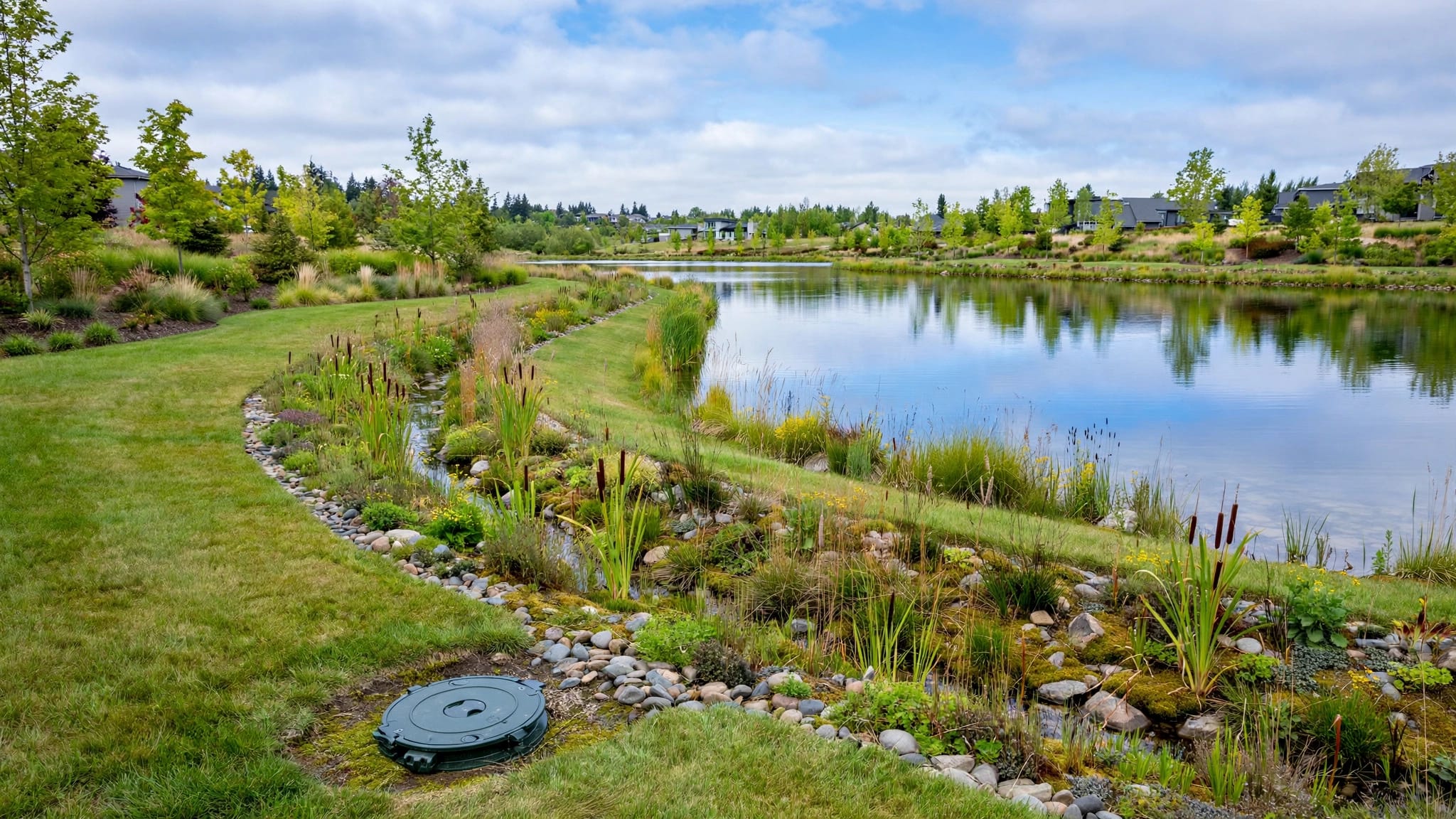
Walk the visible shoreline from safe locations. Document bare soil, rills, gullies, slumping, undercut banks, exposed roots, washouts, and damaged littoral plants. Pay close attention to areas below inflow pipes, near outfalls, and beside high-use paths.
Inspect every control structure
Control structures determine how quickly water enters, leaves, or moves between basins. Their condition can affect flooding, erosion, water quality, and the stability of connected lakes.
Review inlets, culverts, and conveyance paths
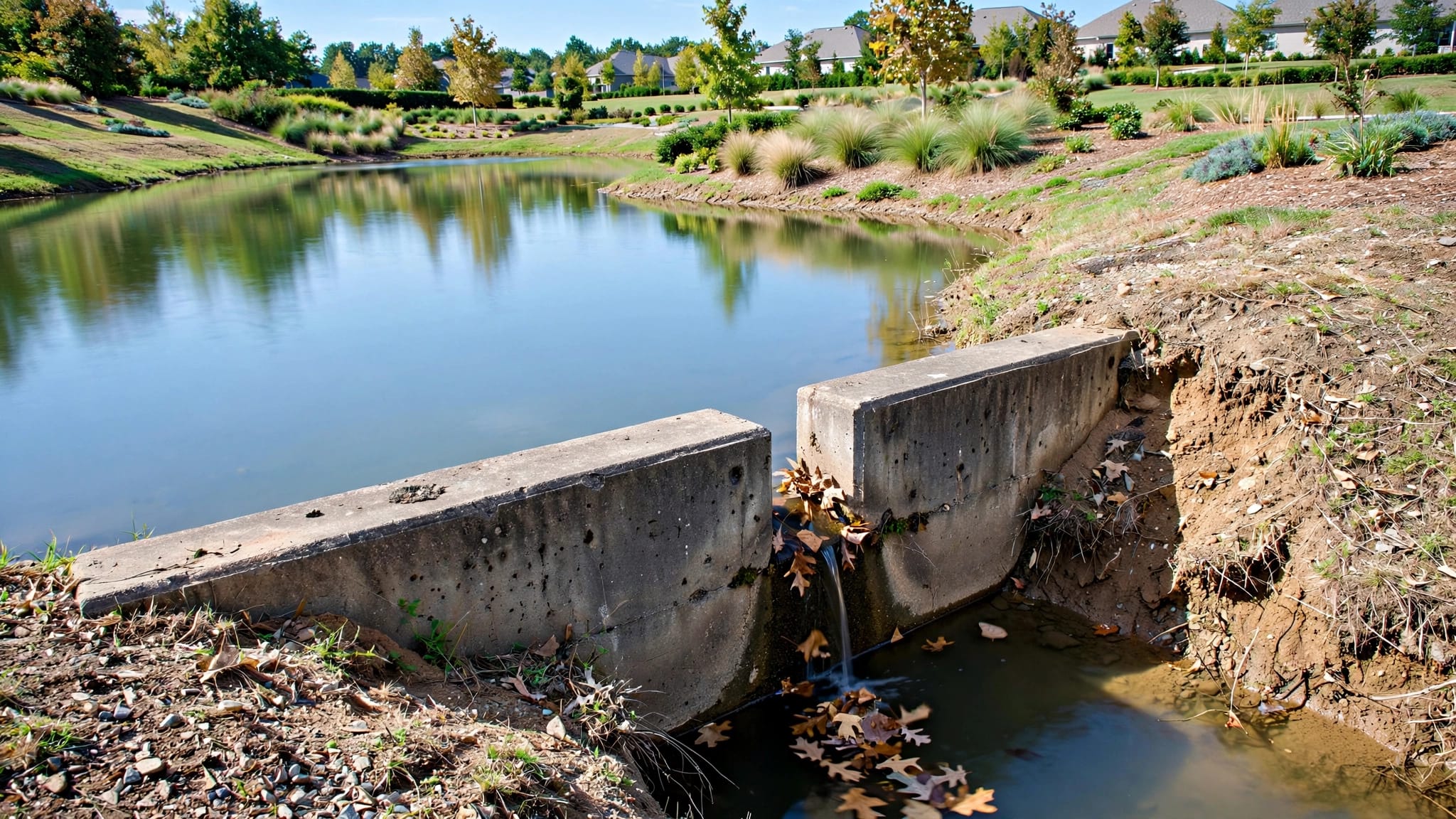
Inspect visible inlets, culverts, pipes, catch basins, manholes, flumes, trash racks, oil skimmers, and discharge channels. Look for:
- Leaves, trash, sediment, and aquatic vegetation blocking flow
- Cracked or displaced pipe sections
- Exposed joints or undermined soil
- Corrosion, broken grates, or damaged screens
- Erosion around the inlet or outlet
- Water bypassing the designed route
UF/IFAS guidance cited in the inspection materials recommends retaining at least 50 percent conveyance capacity at all times. Crews shouldn't clear a structure blindly if doing so could release accumulated sediment or create a safety problem.
Review HOA lake culvert and weir maintenance when a community has connected basins or recurring flow concerns.
Examine weirs, gates, orifices, and overflow areas
Check weirs, gates, orifices, risers, overflow pipes, and emergency spillways for damage, blockage, unusual water pressure, or signs of overtopping. Compare the observed water level with the structure's expected operating range when that information is available.
Look for fresh scour below a discharge point. Erosion near an outlet can indicate excessive velocity, poor stabilization, or a changed flow path. New low spots near an embankment may also show that water is moving where it shouldn't.
Major structural repairs may require an engineer, drainage contractor, or approval from the responsible authority. Chemical treatment won't correct a failed pipe, damaged weir, or unstable embankment.
Review water quality, vegetation, and equipment
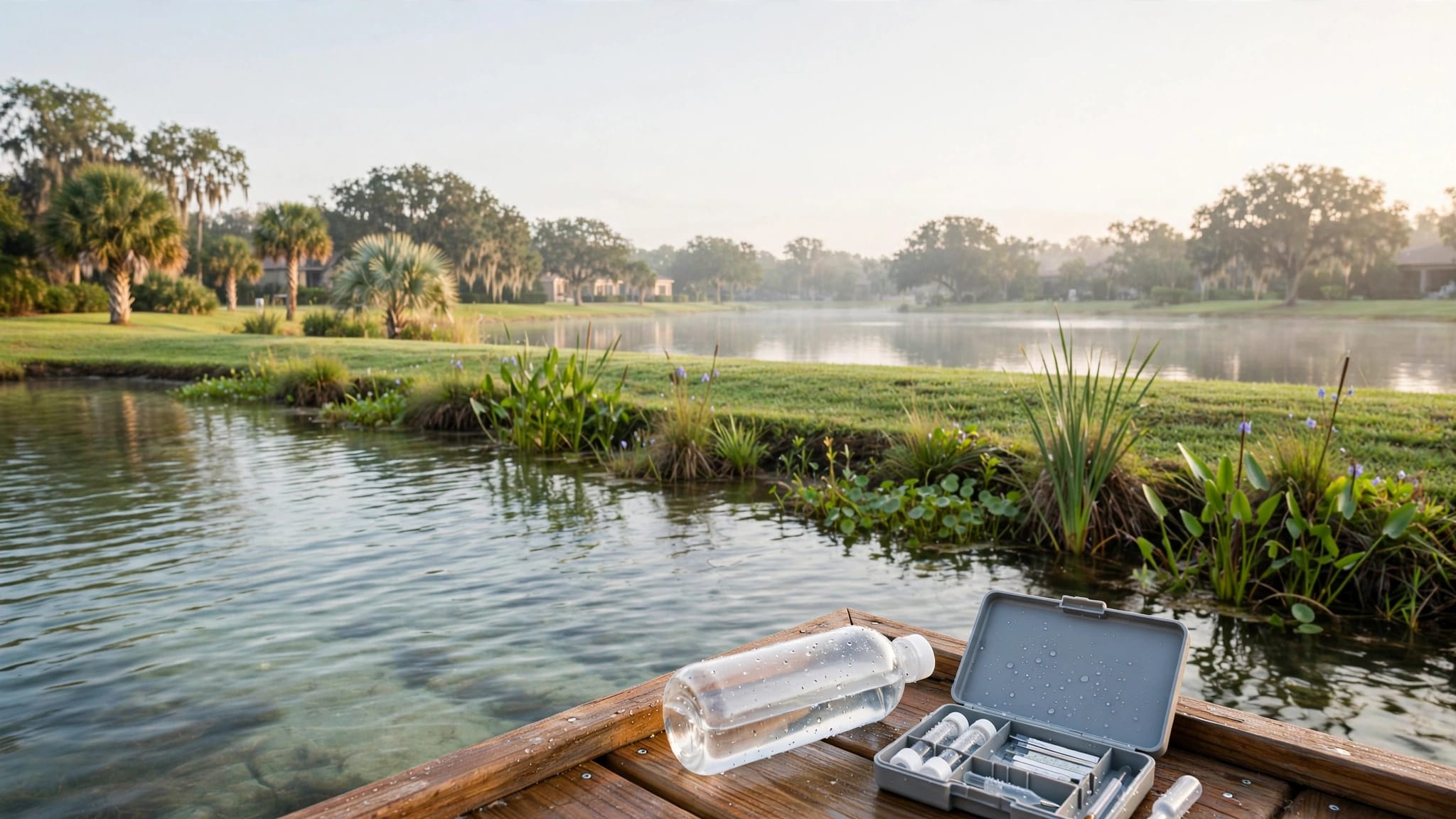
A clean-looking surface doesn't prove that a lake is functioning well below the waterline. Recurring algae, odor, cloudy water, fish gasping, or dead fish can justify diagnostic testing.
Connect visible symptoms to likely causes
Record whether the lake has poor circulation, nutrient-rich runoff, bare soil, excessive fertilizer near the bank, or a blocked inflow. High phosphorus and rising chlorophyll-a can point to algae pressure. Low dissolved oxygen can indicate weak circulation or excessive organic demand.
Routine monitoring is useful when conditions remain stable. When algae returns after treatment, fish appear stressed, or water stays cloudy, compare routine pond monitoring versus diagnostic testing before repeating the same treatment.
Check aeration and shoreline plants
Inspect compressors, diffusers, fountains, pumps, electrical connections, spray patterns, and visible tubing. Record weak bubbling, unusual noise, dead units, poor circulation in corners, or a fountain that operates unevenly.
Review planted shoreline areas for bare soil, damaged vegetation, invasive growth, and plants hiding an outlet or erosion scar. A healthy littoral zone can help stabilize a bank, but overgrown vegetation shouldn't block a control structure or prevent safe access.
The property's treatment records should identify the lake, date, applicator, target issue, product used, weather, and observed result. Seabreeze Lake Maintenance operates under Commercial Applicator License #CM28291 and State-Licensed Specialty Contractor #SCC131152136.
Document findings and assign next steps
A good inspection report lets an HOA board compare the same lake over time. Take photos from fixed, safe locations. Photograph the shoreline, water surface, inlets, outfalls, aerators, fountains, and each problem area.
Each report should include:
- Lake name or map number
- Inspection date, weather, and recent rainfall
- Approximate water level
- Structure location and observed condition
- Photo numbers
- Work completed during the visit
- Recommended follow-up and target date
- Person or contractor responsible for the next action
Classify each finding as routine monitoring, maintenance follow-up, or urgent escalation. A blocked trash rack may need prompt removal. Fresh erosion beside a pipe may require a site assessment. A damaged embankment, unsafe access point, or rapidly rising water level deserves immediate attention.
Keep inspection reports with permits, as-built drawings, treatment logs, storm reports, contractor invoices, and repair records. Consistent files help new board members understand what happened and support better budget decisions.
Adjust the checklist for each property
A multi-lake community shouldn't treat every basin the same way. One pond may receive heavy runoff from roads, while another sits beside a golf course irrigation area. A third may have a sensitive outlet or a history of algae blooms.
Golf courses should pay close attention to playable areas, cart paths, irrigation intakes, fertilizer runoff, and high-visibility lakes. HOAs should prioritize ponds near homes, sidewalks, playgrounds, dog-walking routes, and low shoreline areas.
After a tropical storm or major rainfall, use retention pond response procedures after storms. Inspect debris, washouts, muddy water, blocked structures, new low spots, and damaged fencing before normal service resumes.
Treatment decisions should also follow the property's permits and approved plan. Review Florida lake treatment permit requirements before changing vegetation, shorelines, discharge routes, or water levels.
Key takeaways
- Inspect each lake by name or map number, not as one generic community water feature.
- Follow the permit, operation and maintenance plan, and as-built drawings.
- Check control structures after major rainfall and record water levels, debris, erosion, and flow.
- Use fixed photo locations to identify gradual shoreline and vegetation changes.
- Treat recurring algae, odor, cloudy water, or fish stress as possible water-quality concerns.
- Escalate structural damage, unstable banks, unsafe access, and unusual water movement quickly.
- Keep inspection, treatment, storm, and repair records together.
Florida HOA lake inspection FAQ
How often should an HOA inspect a retention pond?
The schedule depends on the permit, maintenance plan, stormwater design, and lake condition. Monthly or quarterly visual inspections are common planning points, with extra checks after major rain. Properties with recurring algae, fast plant growth, erosion, connected basins, or sensitive structures may need more frequent visits.
What should be checked after heavy rain?
Inspect water levels, inlets, outlets, pipes, culverts, weirs, overflow areas, debris, muddy water, fresh erosion, washouts, and new low spots. If rainfall exceeds one inch in 24 hours, a first-year inspection plan may call for a review 24 to 48 hours afterward.
When should an HOA request professional testing or repairs?
Request additional evaluation when visual symptoms continue after routine work, including repeated algae, fish stress, foul odor, cloudy water, low circulation, or recurring erosion. Structural repairs should be reviewed by the appropriate qualified professional or responsible authority.
For a community that needs a lake-by-lake review, Get a Free Lake Health Assessment to arrange an inspection with Seabreeze Lake Maintenance.
Conclusion
A reliable Florida HOA lake inspection follows water movement, not only surface appearance. When boards inspect control structures, shorelines, equipment, and water quality on a consistent schedule, they can address small changes before they become drainage failures or expensive repairs.
The strongest maintenance records identify every basin, show conditions through dated photos, and assign a clear next action. That approach helps communities, golf courses, and property managers protect lake function, safety, and curb appeal throughout Florida's wet and dry seasons.
Recent Posts