How Culverts and Weirs Affect HOA Lake Health
A lake system can look calm on the surface while the water below is telling a different story. In HOA retention ponds and multi-lake communities, culverts and weirs control where water goes, how fast it moves, and what gets carried with it. When those structures work well, HOA lake health is easier to protect. When they don't, small issues spread from one basin to the next.
That matters in gated communities, golf courses, and other shared properties where one problem can show up across several connected lakes. A clogged culvert or a badly set weir can shift water levels, stir up sediment, and feed algae problems you didn't expect.
Why culverts and weirs matter in connected HOA lakes
A culvert is the passage that lets water move under a road, berm, or path. A weir is a control point that holds water to a certain level and lets excess water spill out. Together, they shape how a lake system behaves after rain, during dry spells, and throughout the year.
In a connected HOA system, these structures do more than manage water depth. They also influence circulation, nutrient movement, and shoreline wear. If one lake sends water into another, it can also send fine sediment, floating debris, and plant fragments with it.
That is why a single bad outlet can affect more than one pond. One lake may stay too high. Another may drop too low. A third may receive water that is full of silt and nutrients.
| Structure | Main job | What it changes in an HOA system | What goes wrong when neglected |
|---|---|---|---|
| Culvert | Moves water between areas | Flow rate, drainage, and sediment transfer | Backups, clogs, erosion, and uneven lake levels |
| Weir | Holds water at a set height | Water depth, overflow, and shoreline exposure | Flooding, low water, weak circulation, and bank stress |
The takeaway is simple. These are not background parts. They are control points, and the whole system feels the effect when one slips out of tune.
The structure itself is only part of the story. Cleaning, sizing, and regular checks decide whether it supports the lake or stresses it.
How culverts change water movement and water quality
Culverts move water, but they also move trouble. If a culvert is too small, blocked by trash, or packed with leaves and silt, water backs up. That backup can raise lake levels on one side and leave the other side with weaker flow.
When flow slows down, sediment settles where it shouldn't. Over time, that builds shallow shelves near the inlet or outlet. Those shelves warm up faster, and warm, still water is a good place for algae to take hold.
Strong storm flow creates the other problem. Water rushing through a culvert can scour the banks on either side, cut channels into turf, and wash loose soil into the lake. That soil adds nutrients, and nutrients often lead to more algae.
Culverts also affect oxygen. Water that barely moves loses energy and mixes less often. That can leave pockets of poor water quality near the shoreline or in coves. In those spots, lake and pond aeration systems can help support better circulation and reduce stress on the waterbody.
For HOA managers, the main point is this: a culvert is not only a drain path. It is part of the lake's circulation system, and circulation has a direct link to clarity, odor, and plant growth.
What weirs do to lake levels and shoreline edges
A weir looks simple, but it has a big job. It sets the normal water level for a pond or lake, then lets extra water pass during rain events. That makes it useful for flood control and for keeping connected lakes at workable depths.
Still, height matters. If a weir sits too high, water can rise too close to turf, sidewalks, or structures. If it sits too low, the lake may drop, leaving a muddy edge and exposed plant roots. Neither condition helps the shoreline.
Weirs also shape how water leaves the basin. A smooth overflow can protect banks. A rough spill with debris or a broken edge can cut into soil and send cloudy water downstream. That cloudiness often carries nutrients with it, which can worsen algae growth in the next lake.
In HOA systems, a weir should match the rest of the drainage setup. If one lake drains fast and the next one holds water too long, the whole chain starts to feel out of balance. That is why a weir should never be treated as a set-it-and-forget-it part.
A stable water level is more than a neat appearance. It protects plantings, limits erosion, and keeps the shoreline from swinging between flood and drought stress.
Warning signs that a culvert or weir needs attention
Most lake problems start small. The warning signs are easy to miss until they show up in plain sight.
- Water stays high after rain, or drains far too slowly.
- One side of a connected lake looks clear while the other turns cloudy.
- Grass or soil is washing out near the outlet.
- Floating weeds, branches, or trash collect at the structure.
- The shoreline near the inlet looks cut, undercut, or uneven.
- Algae seems worse in one basin than in the rest of the system.
These signs often point to blocked flow, poor grading, or a structure that no longer fits the site. Sometimes the fix is simple, like removing debris or sediment. Other times, the issue starts with design and needs a closer look.
HOA boards should also watch for changes after heavy rain. If the same area floods every time, or if the same pond keeps dropping too low, the structure is probably telling you something. The sooner you read that signal, the less likely you are to face shoreline repair, turf loss, or water quality problems later.
Maintenance that keeps HOA lake health on track
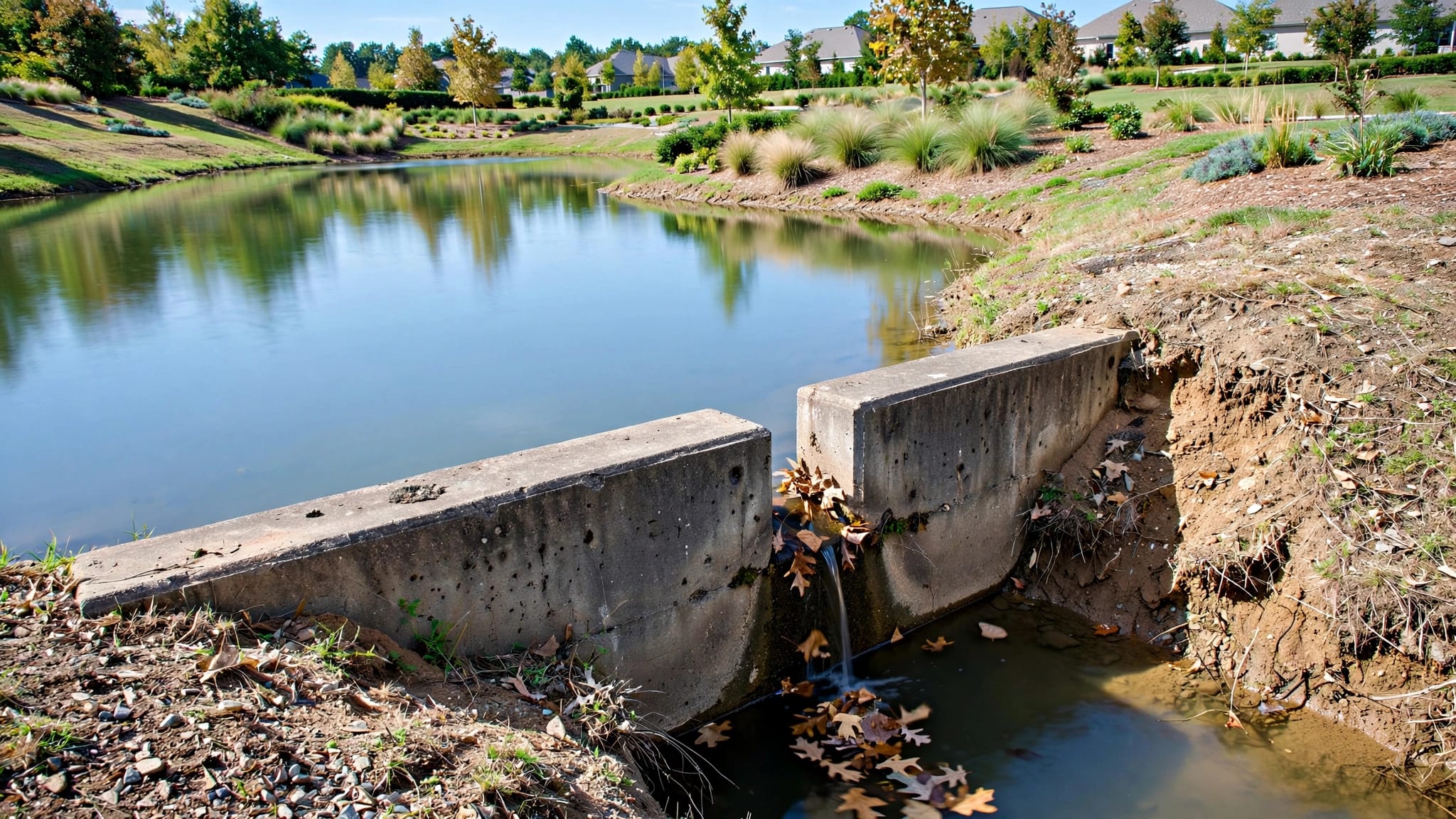
Good maintenance starts with inspection. A team should check the inlet, outlet, bank condition, and any visible buildup around the structure. They should also look for broken concrete, shifted pipe sections, or signs that water is cutting around the culvert instead of moving through it.
After that, the work is about consistency. Debris needs to come out before it forms a dam. Sediment needs to be removed before it narrows the opening. Vegetation near the structure should stay trimmed so it doesn't trap flow or hide damage.
For communities with recurring algae or weak circulation, structure care should be part of a broader lake plan. That may include water quality checks, shoreline stabilization, algae control, and aeration. When those pieces work together, the whole system is easier to manage and less likely to spring surprises after a storm.
Seabreeze Lake Maintenance works on retention ponds and lakes in gated communities and other multi-lake properties, with Commercial Applicator License #CM28291 and State-Licensed Specialty Contractor #SCC131152136. If your community sees standing water, erosion, or a clogged outlet, Get a Free Quote for a lake inspection and a clear plan.
Conclusion
Culverts and weirs may not be the most visible parts of a lake system, but they have a direct hand in its health. They control water level, guide flow, and shape what moves between connected ponds.
When they stay clean, sized right, and checked often, HOA lake health is easier to protect. When they fail, the damage usually shows up in water quality, shorelines, and repair costs. A well-kept structure supports the whole system, and in a multi-lake community, that makes a big difference.
Recent Posts