Why Florida HOA Lakes Stay Murky Without Algae Blooms
A lake can look cloudy for weeks and never turn bright green. That surprises a lot of HOA boards, because algae gets blamed first. Yet Florida HOA lake water quality problems often start with sediment, runoff, or weak circulation.
Retention ponds and community lakes in gated neighborhoods face heat, rain, wind, lawn debris, and constant nutrient input. Golf courses see the same pressure, plus irrigation runoff and heavier use around the shoreline. So the water may stay dull and murky even when no algae bloom shows up.
The real question is simple: what is keeping the water suspended in the first place?
Murky water and algae blooms are not the same problem
Algae blooms change the water color. Murky water changes the water clarity. Those are related, but they are not the same thing.
A lake can look cloudy because tiny soil particles are floating in it. It can also look brown from decaying leaves, tea-colored runoff, or stirred-up bottom muck. In other cases, dead algae stay in the water after a treatment, and the lake still looks dirty even though the bloom is gone.
That is why a simple glance can be misleading. A pond may look bad without having an active bloom. It may also have low clarity while nutrients sit in the background, waiting for hotter weather or a storm to trigger a bloom later.
Cloudy water is often a symptom, not the problem itself.
Florida sun makes the issue easier to spot, because bright light shows every bit of haze. Still, the water may not be unhealthy in the same way a green bloom is unhealthy. It just has something in it that should not be there, or it lacks the conditions that let particles settle.
What stirs up cloudy water in Florida communities
Most murky lakes in HOA settings have more than one cause. That is why the problem can hang around for months if nobody looks at the whole picture.
A few common sources show up again and again:
- Stormwater runoff carries sand, soil, fertilizer, and grass clippings from roads, roofs, and lawns.
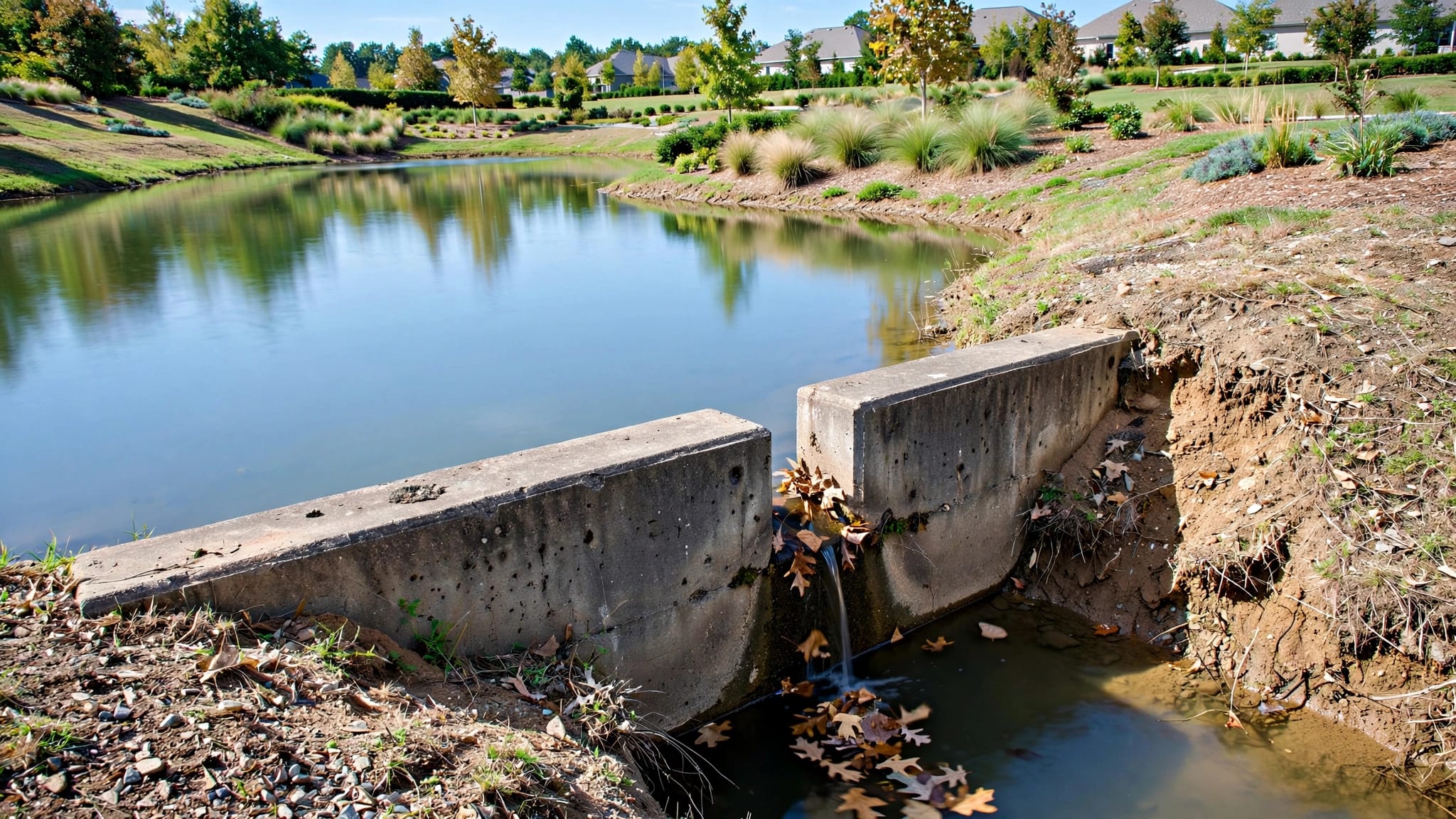
- Bare or eroding shorelines release fine dirt every time rain hits the bank.
- Decaying plant material breaks down into tiny particles that cloud the water.
- Irrigation overspray pushes extra nutrients and dirt toward the pond edge.
- Bottom disturbance from fish, geese, or maintenance work can stir up settled sediment.
One rain event may not seem like much. The trouble comes when the same runoff path keeps feeding the lake over and over. Tiny particles stay suspended longer than most people expect, especially in still water.
Florida weather makes that worse. Heavy afternoon storms hit hard, then the sun bakes the shoreline dry again. That cycle loosens soil, weakens plant roots, and sends more material into the water. In a community with several connected lakes, the problem can move from one basin to the next.
This is why lake care in HOAs is less about a single treatment and more about controlling what enters the system.
Low oxygen keeps the water from clearing
A lake needs movement if it's going to clear on its own. When water sits still, fine particles drift around longer. Bottom sludge can also release more nutrients and organic matter back into the water.
Heat makes this harder in Florida. Warm water holds less oxygen, and that can slow the natural breakdown of debris. Without enough circulation, the lake can stratify. The top layer and bottom layer stop mixing well, so the water loses balance.
That is one reason lake and pond aeration systems matter so much for Florida retention ponds. Aeration adds movement, supports oxygen levels, and helps the lake behave more like a living system instead of a stagnant basin.
Aeration also works best when it is part of a bigger plan. It helps water move, but it does not stop runoff by itself. It reduces stress on the lake, yet it still needs help from shoreline care and debris control. In other words, it is one tool in a larger maintenance plan.
If a community lake stays cloudy after storms, weak circulation is often part of the reason. The water may look quiet on the surface while the deeper layers keep feeding the haze below.
Shorelines, plant edges, and hidden sediment sources
Many people focus on the middle of the lake and miss the edge, where a lot of problems start.
A shoreline with bare spots, collapsed banks, or thin ground cover keeps bleeding soil into the water. Over time, that soil settles in some places and stays suspended in others. The result is a lake that never seems to fully clear.
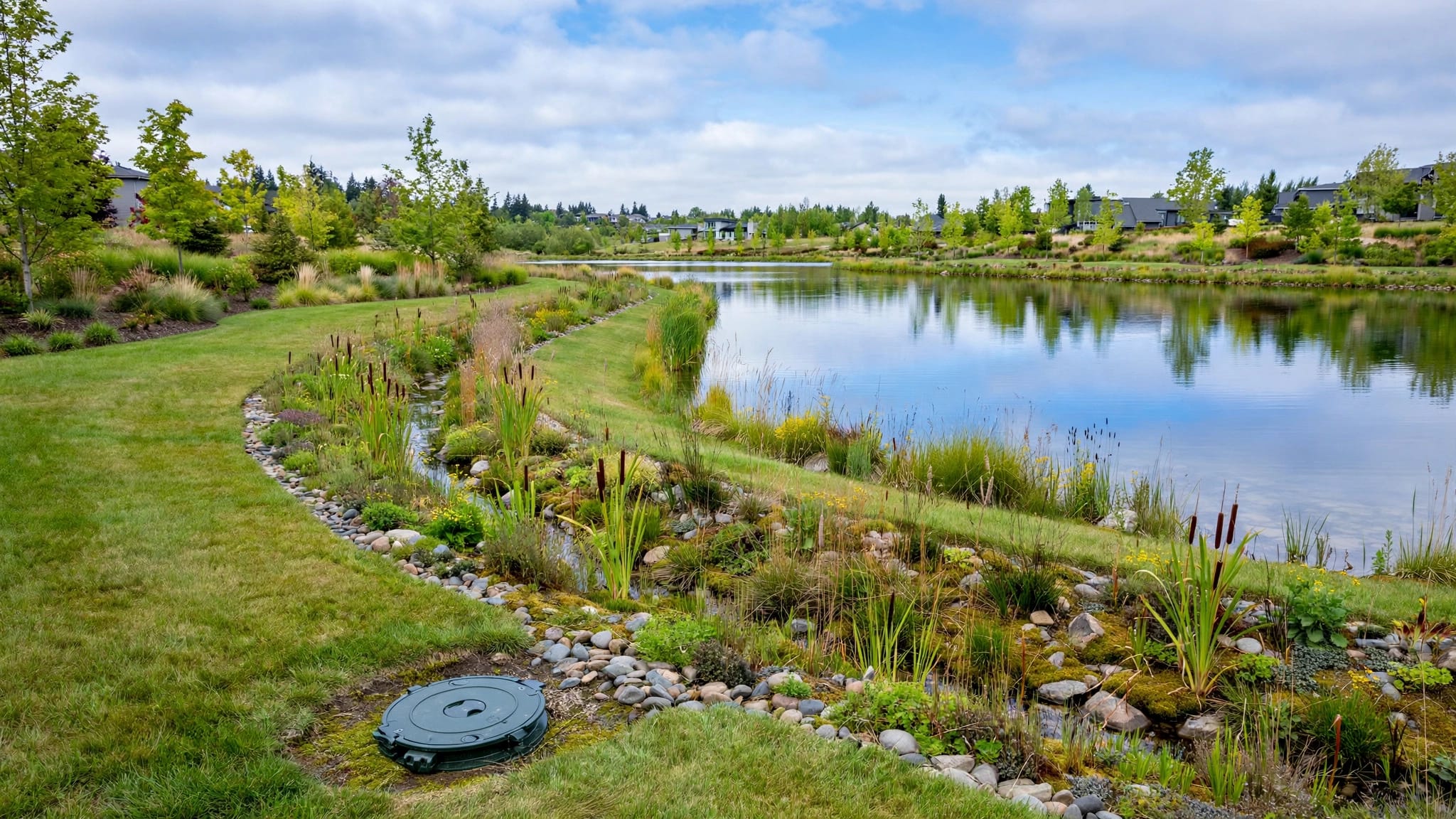
Well-managed littoral plants help hold the edge together. They slow wave action, catch loose sediment, and give the bank some structure. Poorly managed plant edges can do the opposite if dead growth piles up and breaks apart. The key is balance. A healthy shoreline buffer is not just about appearance, it helps keep the water stable.
That balance matters in retention ponds and golf course lakes, where water levels rise and fall. A bank that looks fine in March may start shedding dirt after a wet summer. Once erosion begins, the water quality problem grows quietly.
Debris adds to the issue too. Leaves, grass clippings, twigs, and mulch all break down into finer material. The smaller that material gets, the longer it can hang in the water column. So even when the surface looks calm, the lake may still carry the load from the shoreline.
What steady Florida HOA lake water quality looks like
Clear water is not the only sign of a healthy lake, but it is a good one. Better clarity usually comes from consistent care, not one-time fixes.
That care starts with routine checks after storms. It also includes removing debris before it sinks, watching for bank erosion, and handling plant growth before it turns into decay. When needed, targeted aquatic weed control or algae treatment can help, but those steps work best when the root causes are under control.
A strong maintenance plan usually includes:
- regular inspections of shoreline and water conditions
- debris removal after heavy wind or rain
- erosion control at weak bank sections
- aeration where circulation is poor
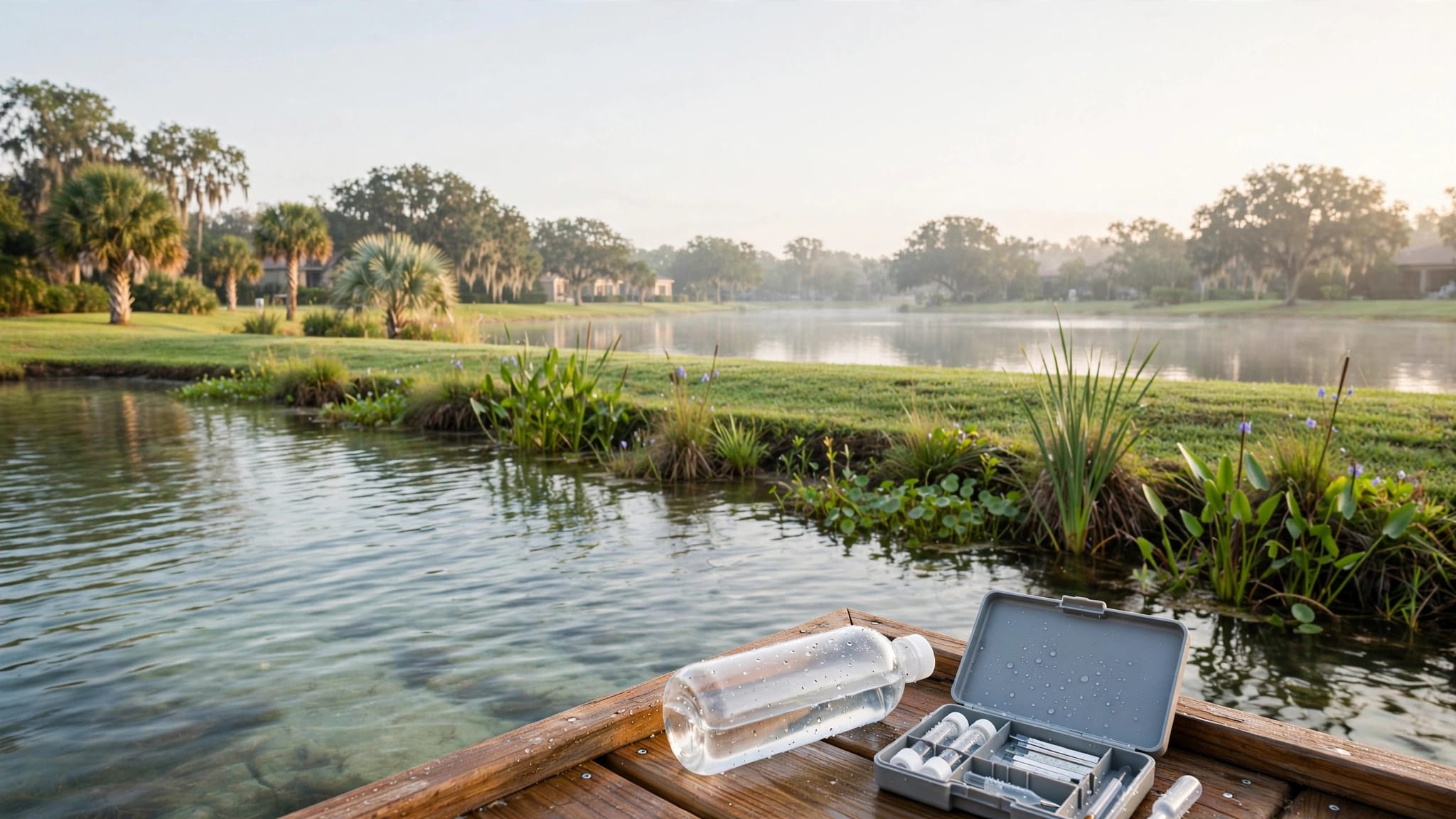
- water quality monitoring over time
A lake that stays cloudy for weeks needs more than a quick patch. It needs a close look at the whole system, from runoff paths to oxygen levels.
If your community lake keeps turning murky after rain or stays dull through the dry season, Get a Free Quote for a lake inspection. Seabreeze Lake Maintenance works with retention ponds and lakes in gated communities, golf courses, commercial properties, and other multi-lake sites in Southwest Florida, with Commercial Applicator License #CM28291 and State-Licensed Specialty Contractor #SCC131152136.
Conclusion
A Florida lake can look dirty without a single algae bloom. That usually means suspended sediment, runoff, weak circulation, shoreline erosion, or decaying debris is doing the damage.
The good news is that murky water usually has a cause you can trace. Once you know whether the problem starts on the bank, at the surface, or deeper in the water, the fix gets much easier.
For HOA boards, golf course managers, and community property teams, the real goal is stable lake water quality , not a short-lived clear-up after the next storm.
Recent Posts