How Storm Drains Pollute Florida HOA Lakes
A heavy Florida rain can turn a clear neighborhood lake cloudy before lunch. In many Florida HOA lakes , the storm drain system acts like a fast-moving conveyor belt, sending yard waste, fertilizer, dirt, oil, and trash straight into the water.
That creates a problem for gated communities, golf courses, and multi-lake properties. The water may drain away quickly, but the damage stays behind in the form of algae, odors, slime, and shoreline wear.
The good news is that this problem follows a pattern. Once you see how runoff moves, you can spot the weak points sooner and keep the lake healthier year-round.
Why storm drains become a direct pipe to your lake
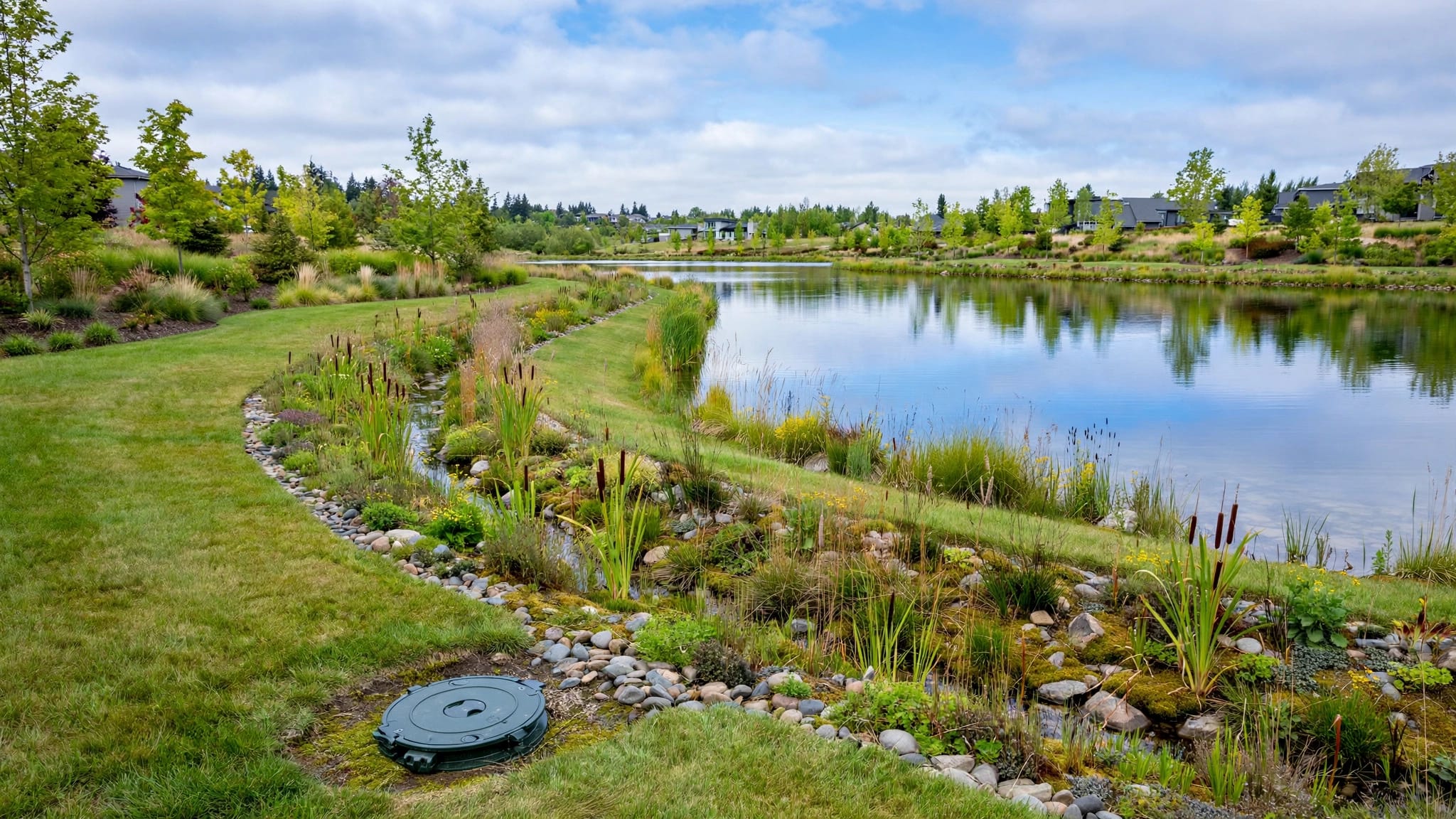
Storm drains in planned communities are built to move water off streets and common areas fast. They are not built to clean it. Rain washes across roads, parking lots, cart paths, and landscaped edges, then heads into curb inlets and catch basins.
Along the way, it picks up whatever sits on the surface. That includes fertilizer pellets, grass clippings, soil, pet waste, cigarette butts, and oily residue from vehicles. When the drain network leads to a retention pond or lake, all of that ends up in the same place.
A storm drain is a collector, not a filter.
That matters more in Florida because rain can arrive hard and often. One afternoon storm can send weeks of buildup into a lake all at once. In HOA settings, the risk grows when large lawn areas, medians, and cart paths sit uphill from the water.
Golf communities face the same issue. Fertilized turf, sand traps, and irrigated landscapes all shed material during storms. The lake gets the runoff whether the community notices it or not.
The result is simple. The pond may look like part of the drainage system, but it also becomes the final stop for pollution. Once that happens, every storm adds to the load.
What washes in after a Florida storm
Runoff does not carry one type of pollutant. It carries a mix, and each part causes its own trouble. Some items create algae growth. Others cloud the water or feed bacteria.
Here are the most common materials that end up in HOA lakes after stormwater flows through a neighborhood:
- Fertilizer and lawn chemicals, which add nitrogen and phosphorus to the water.
- Soil and sand, which cloud the lake and settle as muck on the bottom.
- Oil, grease, and tire residue, which come from roads, driveways, and parking areas.
- Grass clippings, palm debris, and mulch, which break down and use oxygen as they decay.
- Pet waste and other bacteria sources, which can create odor and health concerns.
The problem gets worse in warm water. Florida heat speeds up decay, so the waste that enters the lake does not just sit there. It starts feeding the next round of algae and slime.
That is why one rainy week can set off a longer issue. The lake gets hit with nutrients, fine sediment, and organic debris at the same time. Then sunlight and heat finish the job.
If a community sees the first signs early, cleanup is easier. If it waits, the water can shift from dull to green fast.
How pollution shows up in retention ponds and HOA lakes
The first signs are usually visual. Water that once looked clear starts to take on a green tint or a brown haze. Small patches of algae can spread along the edges, especially where runoff enters.
Odor is another clue. Organic waste uses oxygen as it breaks down, and low-oxygen water often smells stale or swampy. Residents may notice it near walking paths, fishing spots, or around clubhouse views.
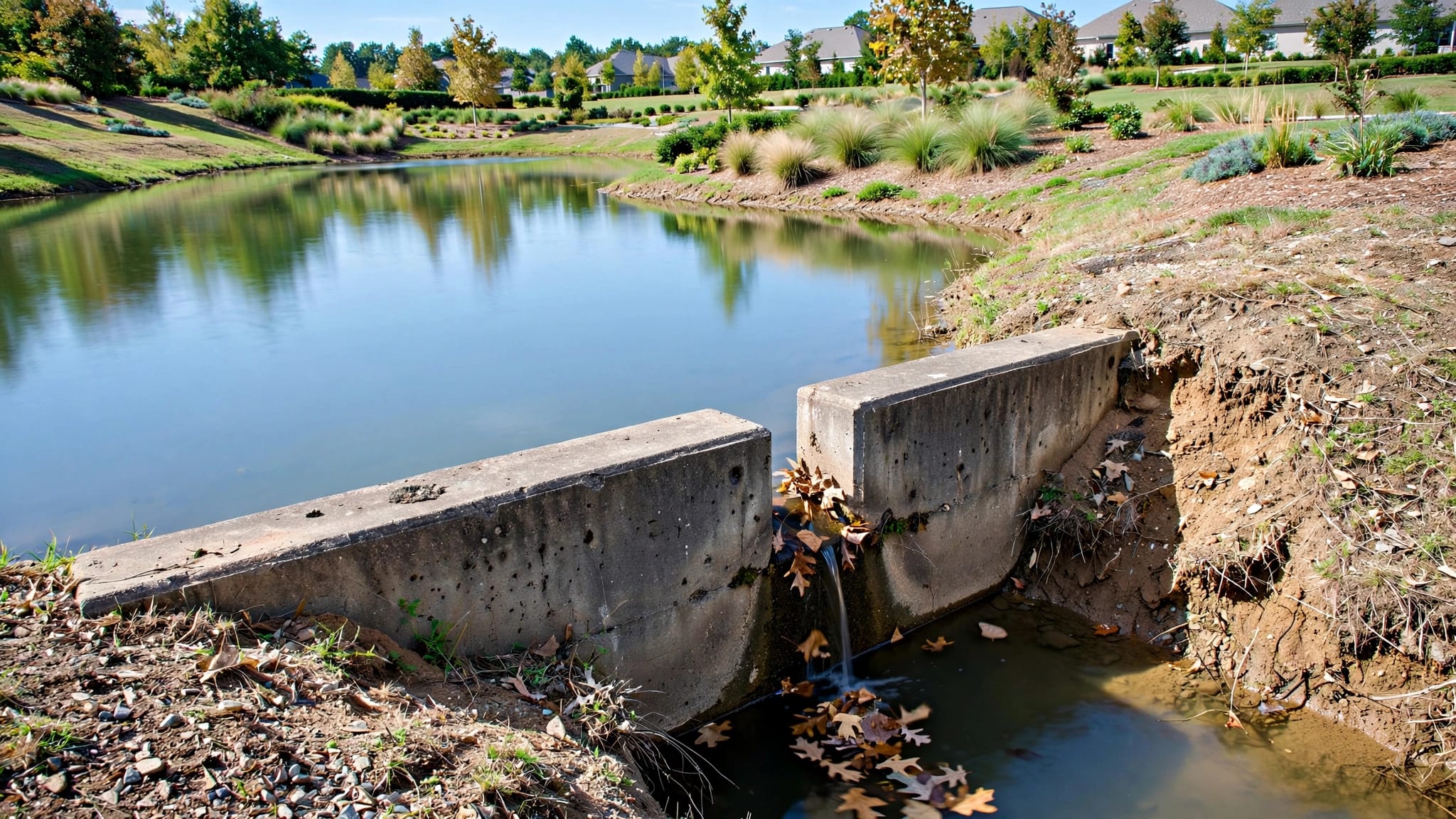
Shorelines tell their own story. When runoff keeps hitting the same bank, erosion starts to show. Bare soil slides into the lake, and the edge loses its shape. That gives weeds an easy foothold and makes the shoreline less stable.
A few other warning signs are common too:
- Slippery edges near water access points.
- Floating mats of algae after rain.
- Muck buildup in shallow coves.
- Fish stress during hot weather.
- Clogged fountains or poor circulation around inlets.
For communities that care about property value, these changes matter. A lake often sits at the center of a neighborhood view. When it looks neglected, the whole property feels older.
The damage can also be uneven. One lake in a multi-lake property may stay fairly clear while another turns green every storm season. That often means one basin gets more runoff, more fertilizer, or more debris than the others.
The fix starts with understanding where the water enters and what it brings with it.
How HOA lake maintenance cuts off the problem
Good lake care does more than treat algae after it shows up. It lowers the amount of pollution that reaches the water in the first place. That takes regular inspections, debris removal, and a plan for the areas that feed the lake.
A maintenance crew should look at the inlets, shorelines, and low spots around the basin after heavy rain. Those are the places where trash and sediment collect first. Removing debris early keeps it from sinking and breaking down in the water.
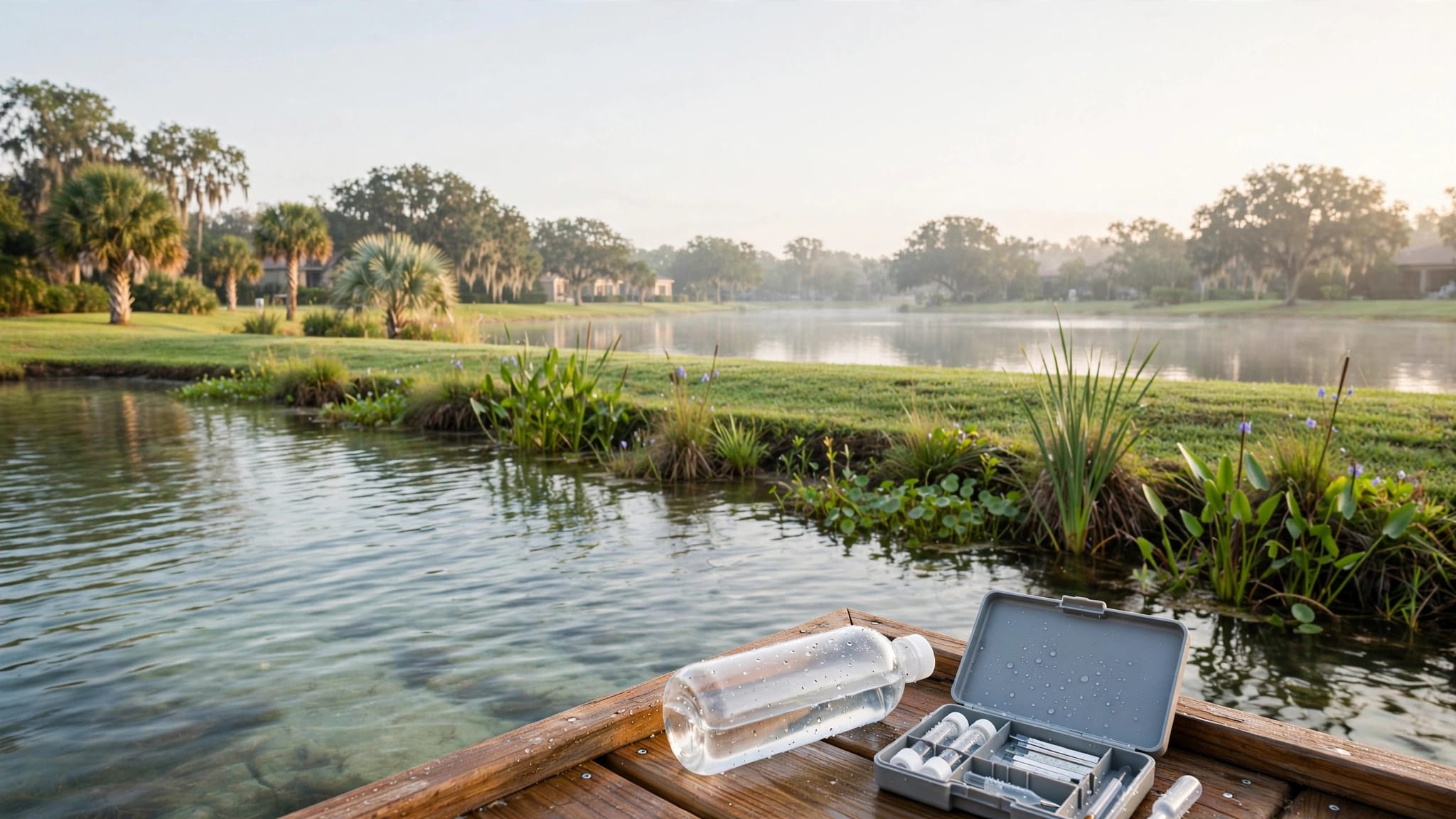
Water quality also needs attention. When a lake takes on too many nutrients, oxygen drops and algae can spread fast. In those cases, benefits of pond aeration become easy to see, because better circulation helps support healthier water and can reduce stagnant zones.
That work often pairs with aquatic weed control, algae treatment, and shoreline stabilization. If the bank is eroding, more soil enters the lake. If the water stays still, the problem builds even faster. So the lake, the bank, and the drainage paths all need attention at the same time.
In Florida, compliance matters too. Treatments should be handled by a team with a Commercial Applicator License #CM28291 and a State-Licensed Specialty Contractor #SCC131152136 . That gives HOA boards and property managers confidence that the work is done the right way.
Routine maintenance is especially important for gated communities and golf courses. These properties often have several connected ponds, so one bad outlet can affect more than one lake. A small issue upstream can show up as algae on the other side of the property.
If your community wants to stay ahead of the next storm season, it helps to schedule a site visit before the water turns. Get a Free Quote for a lake inspection and a plan that fits your property.
Keeping Florida HOA lakes healthier after storms
Storm drains do their job fast, but they do not clean the water they move. That is why runoff becomes such a stubborn source of pollution in Florida HOA lakes. It brings in nutrients, debris, and sediment, then leaves the lake to handle the mess.
Communities that stay ahead of the problem watch the whole system, not just the water surface. Clean inlets, stable shorelines, better circulation, and regular lake maintenance all work together. When those pieces stay in place, the lake has a much better chance of staying clear after each storm.
The real lesson is simple. A calm lake can still be collecting trouble every time it rains. The sooner a community treats runoff like a lake issue, the easier it is to protect the water, the shoreline, and the property around it.
Recent Posts