Build a Lake Emergency Response Plan for Your Community
A retention pond can become a property, safety, or drainage problem within hours after heavy rain or equipment failure. A clear lake emergency response plan helps an HOA, golf course, or gated community move from the first warning to a safe, documented response.
The plan should treat every basin as part of a working system, not as a decorative pond. Map each waterbody, assign responsibilities, define warning levels, and prepare response steps for storms, spills, algae, erosion, and power outages.
Build a Lake Emergency Response Plan Around Each Basin
A multi-lake property needs more than one general emergency procedure. Each lake may have a different drainage function, owner, access route, shoreline condition, and maintenance requirement.
Map the water system and its purpose
Give every lake, pond, canal, outfall, inlet, and wetland area a name or map number. Record whether each waterbody functions as a retention pond, detention area, amenity lake, golf course feature, or another stormwater facility.
Retention and detention ponds handle water differently. A retention pond generally holds a permanent pool, while a detention area may temporarily store water and release it at a controlled rate. That difference affects inspections, water levels, outlet checks, vegetation work, and storm response.
Your map should show:
- Inlets, outfalls, culverts, control structures, and overflow routes
- Aerators, fountains, pumps, irrigation intakes, and electrical panels
- Emergency access roads, gates, keys, and safe shoreline entry points
- Areas where water can move from one basin to another
- Homes, sidewalks, cart paths, playgrounds, docks, and other exposed areas
A lake management system can help organize these locations, responsibilities, and response categories in one working document.
Record ownership, access, and known hazards
Review the declaration, plat, easements, maintenance agreements, permits, and service contracts before assigning emergency work. The HOA may maintain one pond while a master association, golf club, developer, condominium association, or other party controls another.
Record the responsible party for each basin. Also document steep banks, soft ground, exposed pipes, unstable shorelines, recurring algae, blocked inlets, and areas that residents should not enter.
Use Three Response Levels
A simple classification prevents every complaint from becoming an emergency. It also keeps serious hazards from being buried among routine service requests.
Mark urgent problems clearly
An urgent issue threatens people, property, drainage, equipment, or water quality. Examples include:
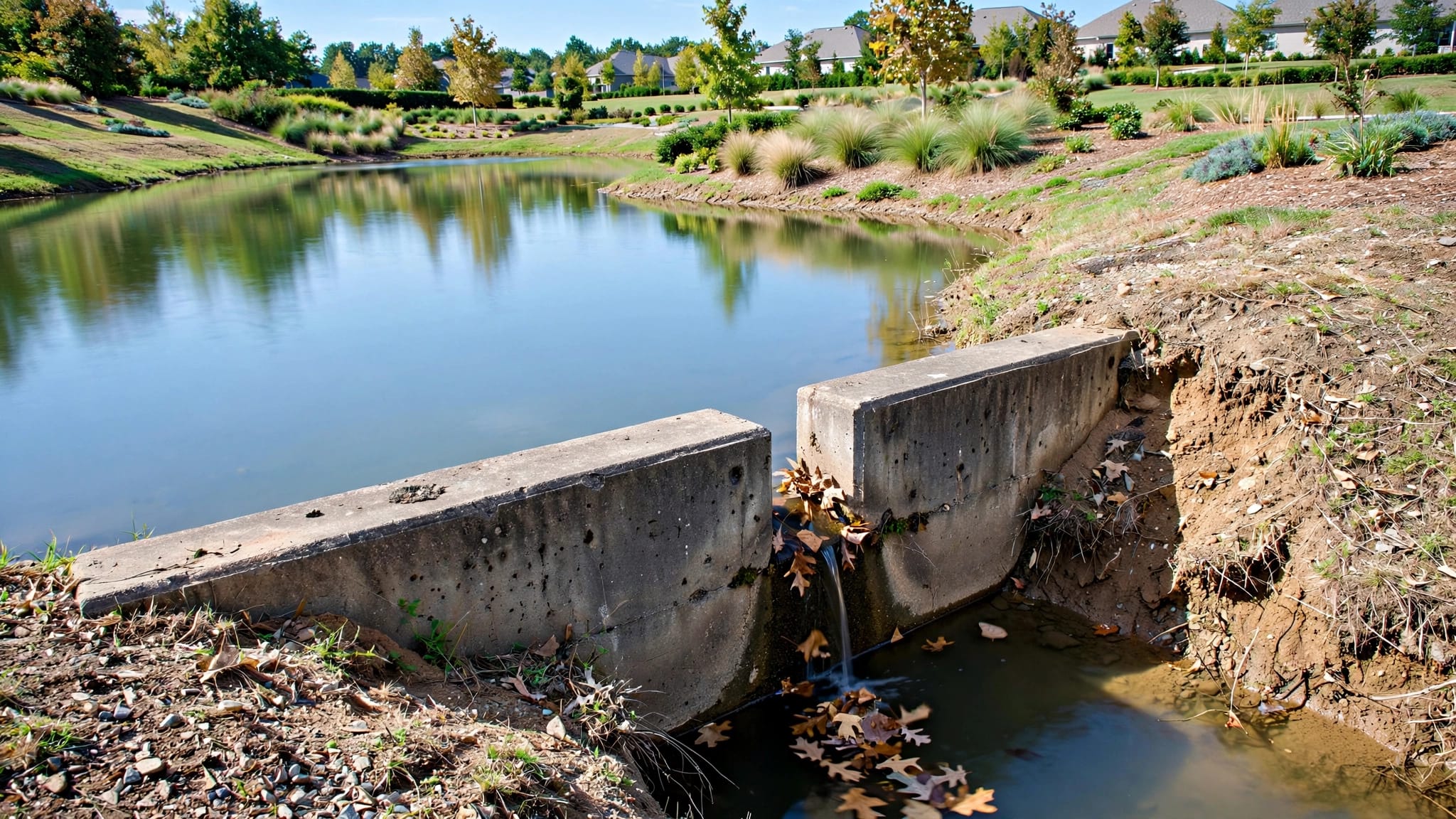
- A major shoreline washout or active erosion
- Exposed electrical equipment or a damaged aerator cable
- A blocked outlet before forecast rain
- A dangerous obstruction near a path or roadway
- Fast-spreading algae, fish stress, or severe odor
- A failed aerator during an active water-quality problem
- A chemical, fuel, fertilizer, or cleaning-product spill
The property manager should receive the report immediately. Restrict access when needed, preserve safe emergency access, and call 911 when there is an immediate threat to life or property.
Separate scheduled work from routine monitoring
Scheduled issues need timely correction but may not require emergency dispatch. These include routine weed control, debris removal, equipment checks, minor erosion, and follow-up inspections.
Routine monitoring covers conditions that need photographs or documentation but no immediate action. A small plant patch or minor change in water clarity may fit this category if the site remains safe.
Urgent conditions can worsen within days, especially when rain, wind, nutrient runoff, or poor circulation continues. The response level should be updated if conditions change.
Assign Duties Before an Incident
A plan fails when several people assume someone else is handling the call. Write down who detects the problem, who makes decisions, who contacts the contractor, and who communicates with residents.
Give the property manager a central role
The manager or golf course superintendent can coordinate the initial response, maintain the current contact list, open gates, and confirm which lake is affected. The board president or designated board member should handle board notifications and major spending decisions.
The plan should list current contact information for:
- Property management and board leadership
- The lake maintenance company
- Emergency services and utility providers
- The irrigation or aeration contractor
- Spill response or environmental professionals
- Insurance representatives and key vendors
For non-emergency reports, residents and staff should provide the lake number, location, time observed, short description, and photographs when taking them is safe.
Define contractor qualifications and authority
The lake contractor should know which work it can begin and which work requires approval. Treatment, structural repairs, shoreline stabilization, electrical work, and contaminated-water response may involve different specialists.
When selecting a provider, verify insurance, treatment records, safety procedures, and applicable credentials. Commercial Applicator License #CM28291 and State-Licensed Specialty Contractor #SCC131152136 are examples of license information a property should keep in its vendor file when applicable to the work.
The service agreement should also explain reporting, emergency availability, access requirements, pricing for urgent work, and who approves additional repairs. A Florida HOA lake service RFP guide can help a community define those expectations before an incident occurs.
Prepare Checklists for Common Emergencies
A useful emergency plan gives staff practical instructions for the first minutes, the first inspection, and the recovery period. It should not depend on memory during a stressful event.
Respond to storms, flooding, and erosion
After heavy rain or a storm, inspect the areas that receive concentrated runoff first. Check inlets, outlets, culverts, control structures, and overflow routes for blockages or damage.
Look for fresh washouts, new channels, exposed soil, bank slumping, new low spots, cloudy water, floating debris, and trash along the downwind shoreline. Photograph each condition from a fixed location when possible.
Keep residents away from unstable banks and flooded access points. Do not remove a blockage from a dangerous location without proper equipment and training. A Florida lake maintenance calendar can help coordinate storm inspections with seasonal service.
Handle water-quality events carefully
A surface algae mat, unusual odor, fish distress, or sudden water-color change requires identification before treatment. Adding more product without confirming the cause may create additional water-quality concerns and may not correct nutrient runoff, poor circulation, or organic loading.
Aeration can support oxygen levels and water movement, but it does not remove the nutrients that feed algae. The response may also require shoreline review, fertilizer control, debris removal, circulation checks, or water-quality testing.
For a spill, keep residents, pets, employees, and contractors away from the affected area. Call 911 for immediate danger, then notify the property manager and appropriate environmental contacts. Do not dilute, pump, move, or treat contaminated water unless qualified responders direct those actions.
Follow the property's HOA lake chemical spill response plan for containment, equipment decisions, documentation, testing, and clearance.
Plan for power and equipment failures
A power outage can stop circulation across several lakes, but each basin may respond differently. Keep a lake-by-lake inventory of aerators, fountains, compressors, electrical panels, disconnects, and backup-power connections.
Record which systems support areas with recurring odor, low circulation, heavy organic loading, or past fish stress. Do not change pump or aerator operation during a suspected contamination event unless emergency responders or an environmental professional gives direction.
A written backup power plan for lake aeration should identify equipment, connection points, access needs, fuel procedures, and responsible personnel.
Set Inspection and Documentation Routines
Emergency readiness begins with regular observation. Consistent records help staff distinguish a new problem from a long-term condition and show whether a response worked.
Use a practical inspection schedule
Many communities use monthly professional service as a baseline, then adjust for weather, plant growth, stormwater demands, and the history of each basin. A property with several connected lakes may need different service frequencies for different areas.
A workable schedule includes:
- Weekly checks for weeds, algae, odor, litter, and obvious erosion
- Monthly checks for water level, shoreline condition, inlets, outlets, aeration, and fixed-location photographs
- Additional inspections after heavy rain, tropical weather, or flooding
- Seasonal reviews of plant growth, bank stability, equipment, and water-quality trends
The Florida HOA lake inspection checklist can help property managers standardize these observations across multiple waterbodies.
Keep an incident file for every basin
Each incident record should include the date, time, lake number, person reporting the issue, weather conditions, photographs, actions taken, people notified, contractor findings, and next review date.
Keep maps, insurance documents, treatment records, safety data sheets, equipment manuals, previous reports, and invoices together. After a treatment or emergency, inspect the shoreline, damaged vegetation, exposed soil, access points, odors, water clarity, and equipment condition.
A post-treatment lake inspection checklist can support the follow-up process and help document when normal access can resume.
Communicate Clearly During and After the Response
Residents need enough information to stay safe without receiving uncertain technical conclusions. The property manager should issue short updates when access changes, treatment occurs, equipment fails, or inspections are underway.
A notice should identify the affected lake or area, explain any temporary restriction, state what residents should avoid, and provide the correct reporting contact. Do not promise a reopening time until the responsible professional confirms that conditions are safe.
After the event, review what happened. Ask whether staff found the problem quickly, whether emergency access worked, whether contacts were current, and whether the lake map showed all relevant connections. Update the plan after major construction, drainage changes, new chemical storage, lake connections, or equipment replacements.
If your community needs help identifying risks before an incident, Get a Free Lake Health Assessment can connect the property with Seabreeze Lake Maintenance for a lake inspection and planning discussion.
Key Takeaways
- Identify every lake, retention pond, inlet, outlet, and connected drainage feature separately.
- Confirm ownership, maintenance responsibility, access rights, and emergency entry routes.
- Classify issues as urgent, scheduled, or routine monitoring.
- Give the property manager, board, contractor, and emergency responders defined duties.
- Prepare separate procedures for storms, erosion, spills, water-quality problems, and power failures.
- Inspect weekly, monthly, after major storms, and seasonally according to site conditions.
- Record photographs, notifications, contractor findings, repairs, and follow-up dates.
- Review the plan at least annually and after major property changes.
Frequently Asked Questions
What should a lake emergency response plan include?
It should include a current property map, lake identification system, ownership and responsibility information, emergency contacts, access instructions, equipment locations, known hazards, response categories, notification procedures, documentation requirements, and recovery steps.
Are all community lakes treated the same way?
No. One basin may handle stormwater while another supports a golf course, common-area view, irrigation system, or approved amenity. Depth, drainage connections, shoreline condition, equipment, resident exposure, and prior water-quality problems can also differ. Response procedures should match each lake.
Should residents be allowed to enter a retention pond?
A community should follow its governing documents, site rules, posted restrictions, and safety requirements. Retention ponds may have steep banks, soft sediment, submerged structures, sudden drop-offs, or stormwater pollutants. The plan should identify which waterbodies have no recreational access and which areas have approved paths or platforms.
How quickly should a community respond to algae or fish distress?
Report the condition immediately to the property manager or lake professional, especially if the problem is expanding, produces strong odor, or affects fish. Keep people and pets away from suspicious water until the cause and safe response are known. Avoid adding treatment without professional assessment.
Conclusion
A community lake emergency response plan works best when it is specific to each basin. Clear maps, assigned duties, inspection records, access controls, and event checklists help a property respond before a blocked outlet, damaged shoreline, spill, or equipment failure becomes a larger problem.
Regular maintenance still provides the strongest protection. When staff document small changes and act on urgent findings, HOA lakes, golf course ponds, and retention systems are easier to keep safe, functional, and attractive.
Recent Posts