Backup Power for Multi-Lake Aeration Systems
A power outage can stop circulation across several lakes at once, but each basin may respond differently. Planning reliable backup power aeration systems starts with the lakes themselves, not with a single generator size or a property-wide average.
Retention ponds and community lakes support drainage, appearance, fish habitat, and property value. A gated community, golf course, or HOA needs a plan that protects these functions while accounting for depth, equipment type, water quality, and storm conditions. The first step is a lake-by-lake power inventory.
Start with a lake-by-lake power inventory
A multi-lake property should never be treated as one oversized pond. Separate basins often have different depths, shapes, volumes, water uses, and circulation problems. One lake may be a shallow stormwater pond, while another has a deep central basin that depends on bottom diffusion.
A written inventory gives the board and maintenance team a clear picture of what must keep operating during an outage.
Record equipment, access, and operating schedules
Assign every lake a name or identification number. Then connect the lake to its equipment records, photos, work orders, and water-quality readings.
The inventory should identify:
- Surface aerators, compressors, diffusers, control panels, and air lines
- Equipment locations and the electrical panels that serve them
- Diffuser zones, valve locations, and airline routes
- Normal operating hours and seasonal schedule changes
- Service access for technicians and emergency inspections
- Any shared equipment serving more than one basin
Power access belongs in the first survey. A compressor cabinet near an electrical panel may support one layout, while a remote lake may need a different arrangement. Long airline runs can increase pressure loss and make repairs harder.
A current map also prevents confusion when a storm damages one zone but leaves another operating.
Identify each lake's role and risk
A lake's function affects its backup priority. A highly visible entrance lake may draw resident complaints quickly if circulation stops. A deep lake with low bottom oxygen may face greater water-quality stress, even if the surface looks normal.
Consider each basin's depth, shade, stormwater inputs, organic loading, shoreline use, and history of algae, odor, or fish stress. A golf course lake near playing areas may require a different response than a remote retention pond.
Lake-by-lake aeration planning helps connect those conditions to equipment placement, operation, and maintenance.
Use water-quality data to set backup priorities
Backup power decisions should follow measured conditions instead of appearance alone. A strong fountain spray does not prove that every area of a lake has enough circulation. Likewise, a quiet shoreline does not always mean an emergency.
Dissolved oxygen, water temperature, lake depth, and past problem areas can help determine which equipment deserves priority during a prolonged outage.
Check dissolved oxygen at more than one depth
Surface water can appear healthy while oxygen levels decline near the bottom. This is common in deeper basins where heat, organic matter, and limited mixing affect lower water.
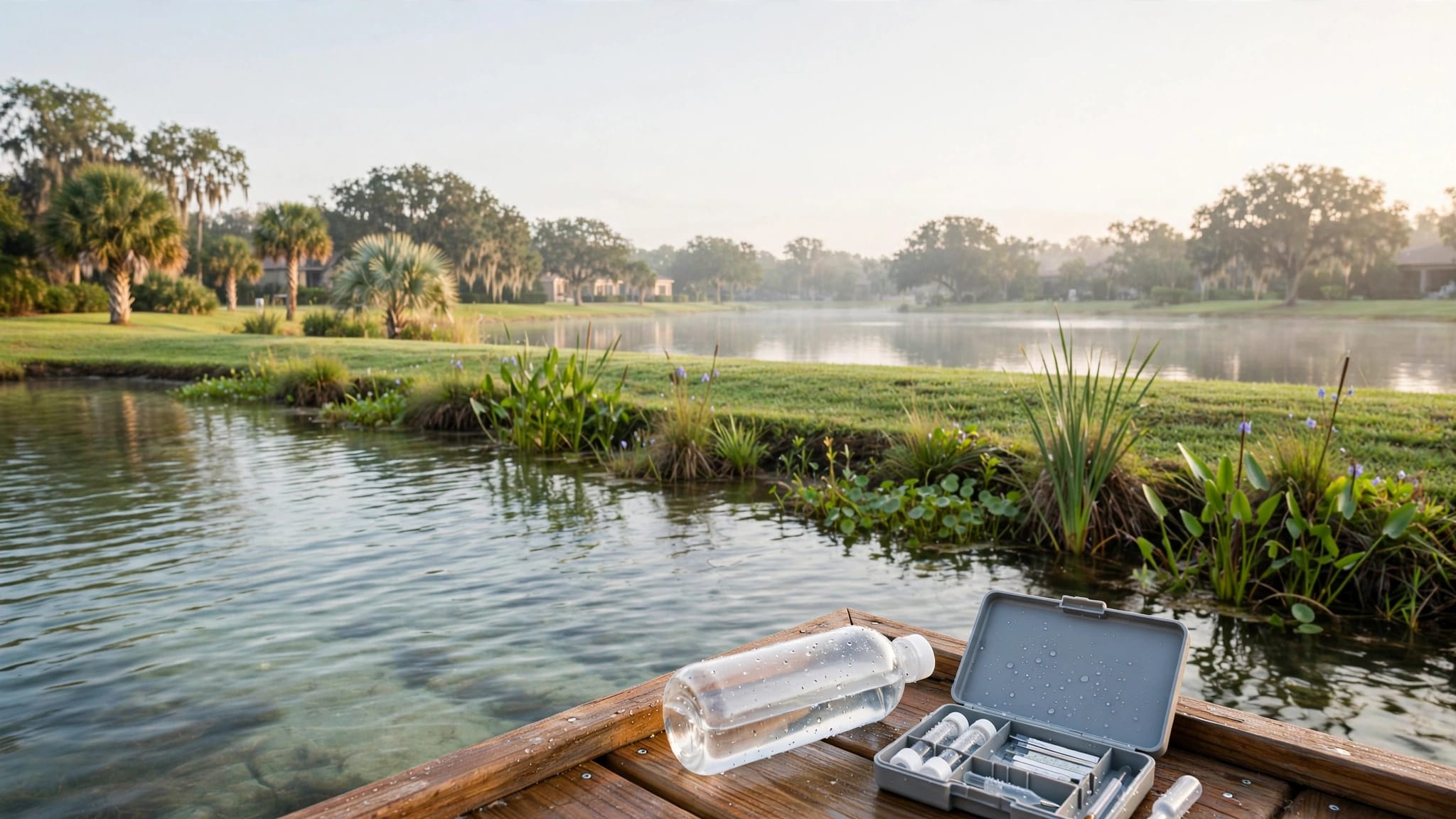
Take readings at consistent locations and depths. Include deep areas, coves, stagnant corners, and sites with limited wind-driven circulation. Morning readings can be useful because oxygen often reaches its lowest daily level before sunlight supports new photosynthesis.
Record water temperature with each reading. Keep the results with the lake's equipment and outage records so the board can compare conditions over time.
Using dissolved oxygen profiles to guide aeration gives property managers a stronger basis for ranking backup needs.
Give priority to sensitive basins
A community doesn't always need to power every aerator at full output during an outage. Priority planning may place the deepest diffuser zone first, followed by a lake with a history of low oxygen, then less sensitive basins.
That priority can change during hot, windless weather, after heavy rain, or when algae activity increases. Seasonal conditions also matter because warm water holds less dissolved oxygen and stormwater can add nutrients and organic material.
The plan should state who can change the priority order. Property managers, maintenance staff, and the lake contractor should know which readings or visible conditions require a faster response.
Match backup power to the aeration equipment
Surface aerators and bottom-diffused systems have different operating requirements. The backup plan must support the actual equipment in place, including its controls and startup behavior.
Replacing equipment or buying a power source based only on motor horsepower can create an unreliable system. Compressor output at operating pressure, line losses, zone controls, and startup demand all matter.
Plan for surface aerators and bottom diffusers
Surface aerators sit at or near the waterline. They move and splash water near the top, making their effect visible from shore. That can help address surface stagnation around entry features, shorelines, or docks.
Bottom-diffused systems place the compressor on shore and send air through airlines to submerged diffuser stations. They can circulate deeper water when the lake has adequate depth and the diffuser layout reaches the basin.
A backup system must account for the equipment's location and connection points. It should also protect the zones that reach the areas most likely to lose oxygen.
Comparing surface and bottom-diffused aeration systems can help a board review coverage, access, appearance, and maintenance before approving changes.
Separate critical loads from optional loads
A multi-lake property may have several electrical loads connected to lake maintenance. Some support essential circulation, while others can wait during a limited outage.
The written plan should identify which compressors, pumps, controls, and aerators receive backup power first. It should also show whether one source supports several lakes or whether each basin has an independent system.
Independent zones can allow technicians to keep priority areas operating while another zone receives service. Staged startup may reduce strain on the power source, but the sequence must match the equipment manufacturer's requirements and the contractor's design.
Do not assume that a larger backup source is automatically better. Oversized equipment can add cost and complexity, while an undersized source may fail to support the loads that matter most.
Build an outage operating plan
Backup power only helps when people know how to use it. A community should document the response before an outage occurs, especially when several lakes share equipment or service personnel.
The plan should cover activation, inspection, runtime, communication, and return to normal utility power.
Match runtime to actual demand
A fixed schedule across every lake can waste power in one basin and leave another short on circulation. Many Florida lakes may benefit from late-evening through early-morning operation, especially during hot, windless conditions, but that pattern isn't universal.
Use oxygen readings, weather, algae activity, water color, odor, fish behavior, and service records when adjusting runtime. A deep lake with low bottom oxygen may need longer operation or better diffuser placement. A shallow lake may need a different schedule and circulation method.
Energy savings should come from proper sizing, clean equipment, zone controls, and measured scheduling. Reducing runtime without checking water quality can create a larger maintenance problem later.
Optimizing aeration schedules and energy consumption can help communities review runtime without treating every basin the same.
Restart systems carefully after an outage
A system that has been offline for an extended period may need a controlled restart. Starting full output immediately can move oxygen-poor bottom water too quickly and stress fish in a stagnant lake.
A qualified technician may recommend a staged increase over several days while checking oxygen and water conditions. The proper response depends on lake depth, equipment type, outage duration, and the measured condition of the water.
After normal power returns, verify that timers, breakers, valves, compressors, and diffuser zones are operating correctly. A compressor can run while a blocked airline or damaged diffuser prevents effective circulation.
Prepare for lightning, flooding, and hurricanes
Florida storms can interrupt utility power, damage controls, flood compressor cabinets, move surface units, and deposit debris around shore connections. These risks belong in the backup plan, not in a separate emergency file that no one reviews.
Storm preparation should protect people first and equipment second.
Inspect before restoring damaged equipment
Property staff should not restore power to flooded or visibly damaged equipment. A qualified technician must inspect electrical components, cabinets, wiring, connections, and controls before the system returns to service.
Lightning can damage equipment without leaving obvious exterior signs. Flooding can affect components inside a cabinet even after the water recedes. Debris can block intake areas, cover access points, or pull on airline connections.
The storm checklist should identify who reports an outage, who checks each lake, and who has authority to request service. Keep emergency contact information with the property map and equipment records.
Check the lake as well as the cabinet
A visual inspection of the power equipment is not enough. Confirm that surface units remain in position, airlines are intact, diffuser zones are producing air, and no debris has blocked circulation.
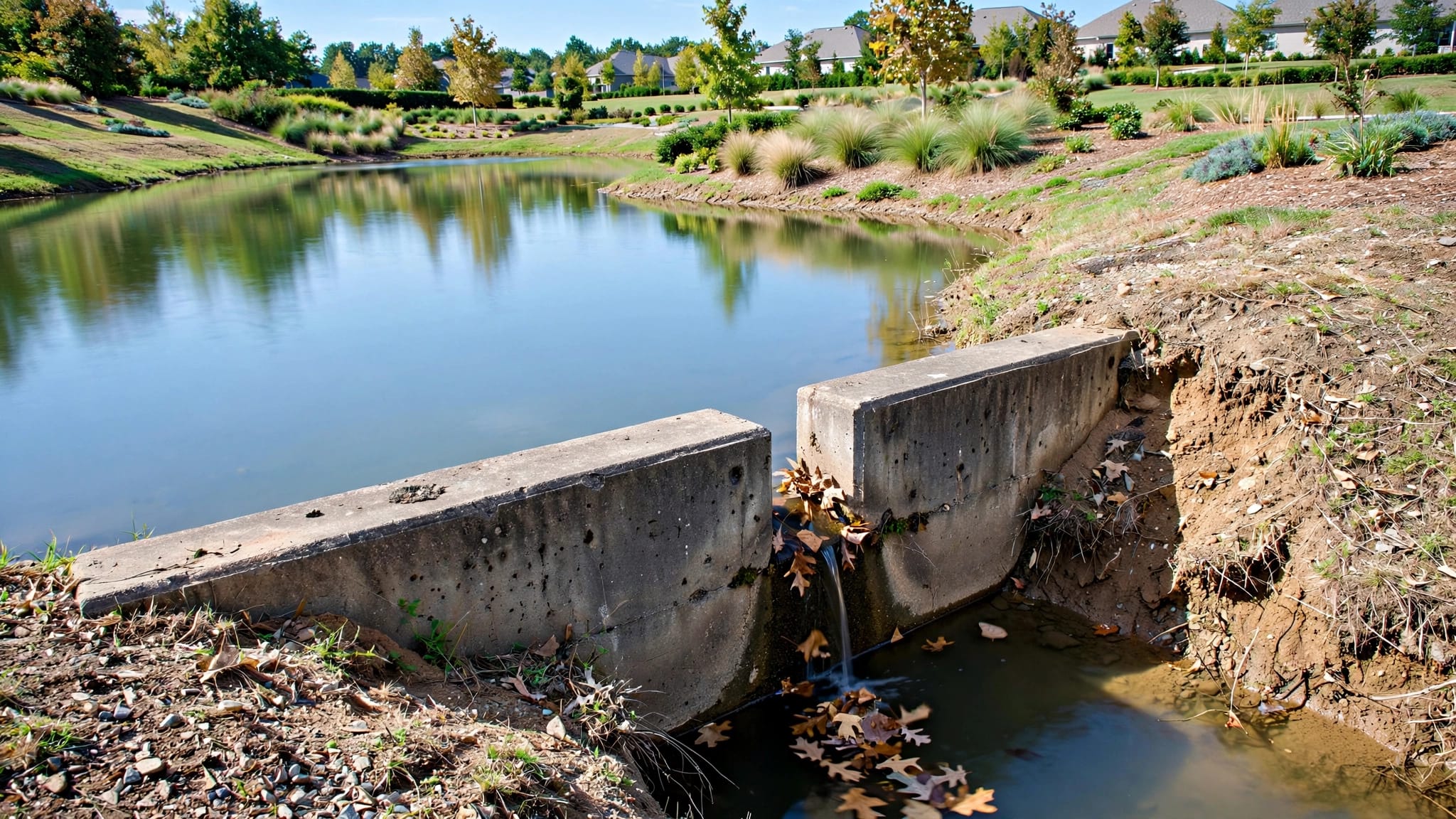
Heavy rain can also add sediment, nutrients, and organic material to retention ponds. Those changes may increase oxygen demand after the power is restored. Record unusual odor, fish behavior, water color, erosion, and new debris around inlets or outfalls.
Aeration is only one part of lake care. Shoreline repairs, weed control, sediment management, and stormwater maintenance may also be needed when conditions change.
Put the plan into a board-ready scope
A board should receive more than a recommendation to "add backup power." The scope should show what the property owns, what the backup system supports, and how the plan will be maintained.
Clear documentation makes approval easier and protects continuity when board members, managers, or contractors change.
Include measurable work limits
A board-ready scope should identify:
- Each lake covered by the plan
- Existing aeration equipment and its location
- Priority zones during a power outage
- Electrical and service-access conditions
- Inspection, testing, and maintenance responsibilities
- Required maps, labels, operating instructions, and records
- Conditions that trigger schedule or equipment changes
The scope should also separate backup-power work from other lake needs. Aeration does not remove nutrients, repair erosion, control runoff, or replace aquatic weed management.
Before buying more equipment, investigate recurring algae, odor, poor oxygen readings, or weak circulation. Those symptoms may also point to sediment, nutrient loading, damaged components, or an ineffective layout.
Document licenses and ongoing responsibility
The selected contractor should understand community lakes, retention ponds, stormwater functions, and multi-lake service logistics. Seabreeze Lake Maintenance serves Southwest Florida communities and works under Commercial Applicator License #CM28291 and State-Licensed Specialty Contractor #SCC131152136.
The final documentation should include labeled valves, marked diffuser locations, updated equipment maps, inspection records, and operating instructions. It should also state who tests the system after storms and who reviews water-quality data before changing runtime.
A written maintenance plan turns backup power from a one-time purchase into a dependable property process.
Key Takeaways
- Treat every lake as a separate basin with its own depth, shape, water-quality conditions, and equipment needs.
- Rank backup priorities using dissolved oxygen readings, temperature, basin depth, stormwater inputs, and past problems.
- Match backup power to the actual aerators, compressors, controls, zones, and startup requirements.
- Use seasonal schedules and measured runtime changes instead of applying one schedule across the property.
- Inspect equipment after lightning, flooding, hurricanes, and extended outages before restoring power.
- Keep current maps, labels, service records, operating instructions, and emergency contacts available to the property team.
- Treat aeration as part of a broader lake plan that can include nutrient control, weed management, erosion repair, and stormwater maintenance.
Frequently Asked Questions
Do all lakes in a gated community need the same backup system?
No. Lake depth, shape, volume, equipment type, water quality, and stormwater function can vary across the same property. A shared approach may work for similar basins, but the design should follow measured conditions rather than acreage alone.
Should a community run every aerator during an outage?
Not always. The priority may be to keep sensitive deep zones or high-risk basins operating first. Runtime and zone selection should follow dissolved oxygen readings, weather, equipment capacity, and the condition of each lake.
Can backup power prevent algae or fish stress?
Backup power can help maintain circulation during an outage, but it isn't a complete lake solution. Nutrients, sediment, runoff, damaged components, and poor diffuser placement can still affect water quality. Monitoring and broader maintenance remain necessary.
What should happen after a long outage?
Inspect the power equipment, controls, airlines, valves, surface units, and diffuser zones before restarting. If a lake has been stagnant, a qualified technician may recommend a staged restart while monitoring oxygen and water conditions.
How can an HOA begin planning?
Start with a current lake map, equipment inventory, operating records, and dissolved oxygen profiles. A property manager or board can then Get a Free Lake Health Assessment to review lake conditions, aeration equipment, circulation, and backup priorities.
Conclusion
Reliable backup power aeration systems begin with accurate information about every lake on the property. Depth, basin shape, oxygen readings, equipment type, power access, and storm exposure should guide the priorities.
A strong plan keeps the most sensitive areas operating, gives staff clear response steps, and records what happens after each outage. For HOAs, gated communities, and golf courses, that preparation protects water quality, property appearance, and the long-term maintenance budget.
Recent Posts