How to Schedule HOA Lake Treatments Around Florida Rainfall
Rain can change a clear community lake within days. Stormwater may carry fertilizer, soil, grass clippings, and debris into retention ponds, creating conditions that support algae and aquatic weed growth.
For most communities, HOA lake treatments should begin with monthly service, then adjust around rainfall, plant growth, runoff, and the lake's role in the stormwater system. A stable pond may need routine visits, while a lake with recurring algae or heavy inflows may need added checks after storms.
Key Takeaways
- Monthly service is a practical baseline for many stable Florida HOA lakes.
- Heavy rain should trigger an inspection, not an automatic chemical treatment.
- Post-storm checks should cover debris, turbidity, water levels, erosion, inlets, outlets, and aeration.
- Lakes with recurring algae, fast weed growth, or heavy nutrient loads may need biweekly service or storm-related spot checks.
- Treatment decisions must account for the target plant, water movement, dissolved oxygen, fish, wildlife, downstream discharge, and surrounding use.
- Multi-lake properties need separate profiles because each basin may respond differently to the same storm.
- Clear records help boards track treatment results, budget accurately, and respond to residents.
Why Rainfall Changes HOA Lake Treatment Timing
Rainfall affects more than water levels. It changes what enters the lake and how water moves through it. That makes weather an important part of a responsible maintenance schedule.
Runoff adds nutrients and debris
Stormwater can carry soil, fertilizer, leaves, grass clippings, and other material from roads, roofs, lawns, and landscaped areas. Those materials may increase nutrient levels and support algae or aquatic weed growth.
Heavy inflows can also raise water levels, move sediment, and expose weak points along the shoreline. A lake that looks healthy before a storm may show cloudy water, floating debris, or erosion afterward.
The Florida lake maintenance calendar provides a useful seasonal framework for planning inspections, repairs, weed control, and storm-related monitoring.
Rain does not automatically mean treatment
A storm alone isn't a reason to apply an algaecide or herbicide. Treatment should follow an inspection that identifies the problem, its location, and the likely cause.
Warm rainwater and cloudy runoff can reduce circulation in shallow areas. When oxygen movement declines, algae may spread more easily. However, a green appearance can also point to nutrient input, poor circulation, or decaying vegetation. The reasons HOA lakes turn green after rain can help boards understand why rainfall and algae often appear together.
A Rainfall-Based Florida HOA Scheduling Framework
The most reliable schedule combines routine visits with weather-based inspections. It doesn't treat every lake or every month the same way.
Use the dry season for inspections and repairs
Florida's drier months provide a useful window for identifying issues before frequent summer storms arrive. Crews can inspect exposed shoreline areas, drainage structures, aeration equipment, and locations where water repeatedly enters the lake.
Look for bare soil, small erosion channels, exposed roots, leaning trees, damaged banks, blocked inlets, and leaking irrigation lines. These problems may be easier to see when water levels are lower.
Dry-season planning may also include shoreline stabilization, debris removal, aeration repairs, and a review of recurring algae or weed locations. Fixing a drainage or shoreline problem early can reduce the amount of material entering the water during the wet season.
Keep monthly service as the baseline
For many stable HOA lakes, monthly professional service catches early algae, weeds, debris, odor, water-quality concerns, and shoreline damage. That frequency also gives the board a consistent record of changing conditions.
Routine service should cover more than visible vegetation. The provider should review water levels, inlets, outlets, aeration, shoreline condition, and signs of erosion. Fixed photo locations make gradual changes easier to compare.
A property manager can perform visual checks between professional visits. Residents may notice a surface problem first, but waiting for a complaint can allow the source to remain active through several storms.
Increase monitoring during heavy-rain periods
Rainy-season service should become more responsive when a property has heavy runoff, connected ponds, fast plant growth, or a history of algae blooms. A stable lake may remain on monthly service, while another basin may need biweekly visits or spot checks after storms.
The correct schedule depends on lake size, nutrient load, surrounding turf, public visibility, water movement, and stormwater function. Guidance on how often HOA lakes need service supports using monthly visits as a baseline, then increasing attention when conditions demand it.
What to Check After Heavy Rain
A post-storm inspection helps separate a short-term appearance issue from a condition that needs treatment or repair.
Inspect inflows, outfalls, and shoreline areas
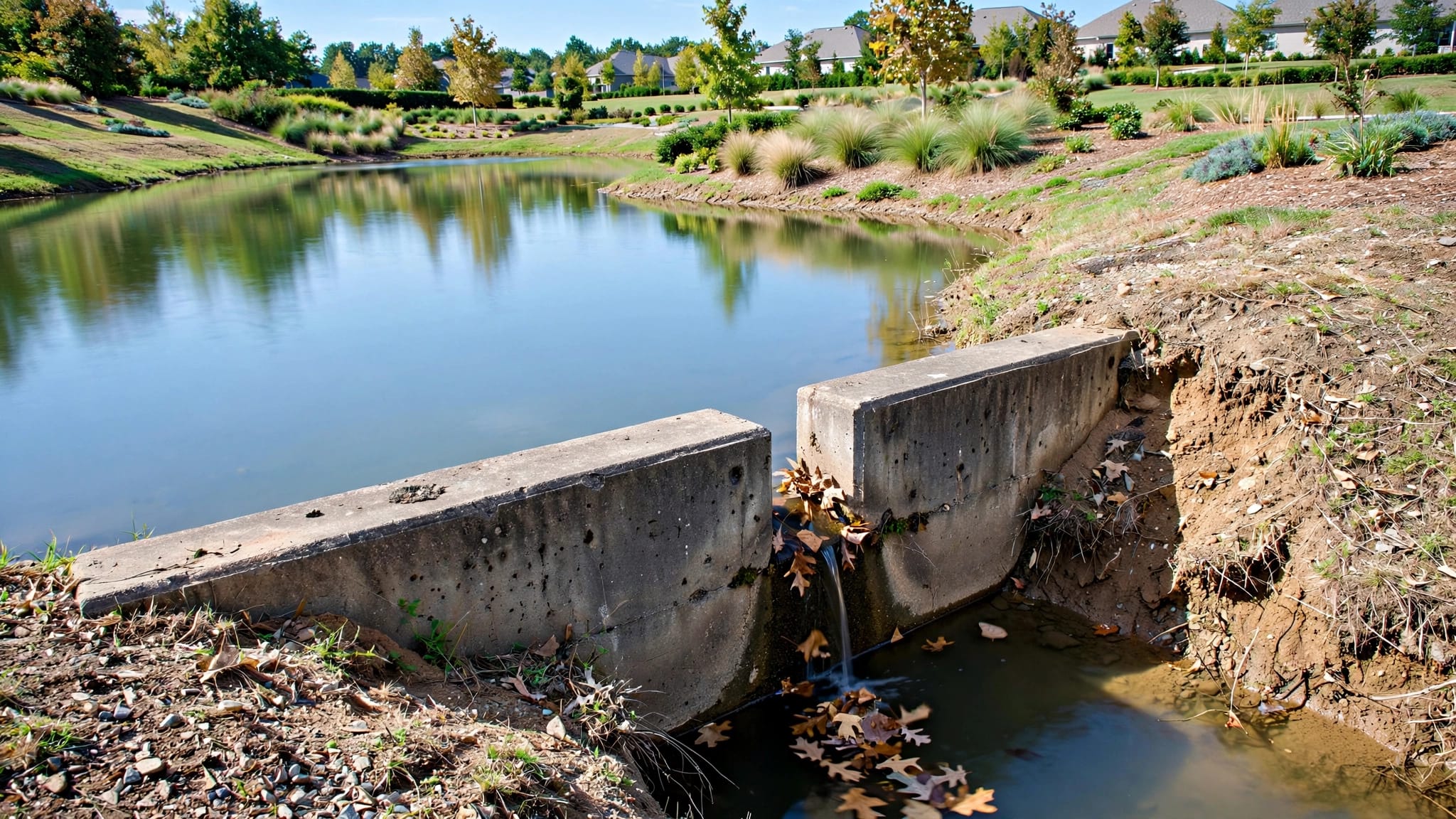
After significant rainfall, check for branches, trash, grass clippings, sediment deposits, clogged structures, washouts, and new low spots. Pay close attention to areas near stormwater inlets, outfalls, culverts, roads, homes, and walking paths.
Cloudy water may indicate suspended sediment or a new drainage problem. A sudden change in water level can point to a blocked structure or altered flow. Along the bank, look for slumping soil, exposed roots, turf loss, and concentrated runoff channels.
The Florida HOA lake inspection checklist recommends weekly observation of surface conditions and monthly review of shorelines, water levels, structures, aeration, and fixed-location photos. Heavy rain requires an added check for debris, turbidity, washouts, clogged structures, and new damage.
Check aeration and water movement
Aeration equipment should be operating as intended after storms. A fountain may appear active while another area remains stagnant, especially on a property with several lakes or irregular basins.
Record unusual odors, surface scum, fish stress, dead fish, or areas where water appears still. These signs may justify water-quality testing or a closer inspection before treatment.
Aeration supports circulation and oxygen movement, but it doesn't replace source control or plant identification. If runoff continues to bring nutrients into the lake, a treatment may provide only temporary relief.
How to Decide Whether Treatment Is Appropriate
The goal of HOA lake treatments is controlled management, not automatic chemical use. Each application should fit the waterbody and the conditions around it.
Identify the plant and affected area
Aquatic weeds can look similar while requiring different management decisions. A qualified applicator should identify the target plant, estimate its coverage, and document where it is growing.
The review should also note desirable littoral plants, fish habitat, shoreline access, stormwater structures, and areas used by residents or golf course staff. Broad treatment across an entire lake can damage plants that the community intends to keep.
Retention ponds require added care because they collect runoff and may connect to another pond, canal, storm drain, or downstream waterway. The differences between retention and detention ponds can affect maintenance planning and treatment decisions.
Consider weather, oxygen, and discharge
Weather matters before and after an application. The applicator should consider recent rainfall, forecast conditions, water movement, dissolved oxygen, fish health, and the possibility of downstream discharge.
Decaying vegetation can reduce oxygen, especially when a large amount of algae or weed mass dies at once. For that reason, treatment scope and follow-up should match the size of the affected area and the lake's condition.
A licensed professional should follow product directions and applicable requirements. Florida communities should also review whether the lake connects to other water bodies or functions as part of a permitted stormwater system. The guidance on Florida permits for lake treatments covers why site connections and discharge deserve attention.
Build Separate Schedules for Multiple Lakes
A gated community with several lakes shouldn't manage every basin with one generic calendar. Rain may affect each waterbody differently because of its drainage area, depth, shoreline condition, and connection to other ponds.
One lake may collect fertilizer runoff near a golf course. Another may receive heavy flow from a road or neighborhood inlet. A third may have recurring algae near a clubhouse, while a fourth needs erosion repairs rather than plant control.
Map every lake, inlet, outfall, aerator, fountain, and low shoreline area. Then record the conditions found at each location. This gives the board, property manager, landscape team, and lake contractor a shared reference.
A practical schedule can assign monthly service to stable basins and added post-storm checks to higher-risk areas. That approach uses maintenance resources where rainfall creates the most pressure.
Document Treatments and Contract Expectations
Written records help a board see whether the lake is improving, holding steady, or declining. They also make future treatment decisions more consistent when board members or vendors change.
Records should include:
- The lake and affected area
- The target plant or algae condition
- Recent weather and water conditions
- Treatment date and application details
- Photos taken from consistent locations
- Aeration status and water-quality concerns
- Follow-up observations and recommended repairs
A clear service agreement should state the routine visit frequency, storm-response process, treatment scope, reporting format, debris removal responsibilities, and emergency contact procedure. It should also explain whether the contractor handles shoreline inspections, aeration checks, water-quality support, and repairs.
Treatment and site work should be handled by properly qualified professionals. Seabreeze Lake Maintenance holds Commercial Applicator License #CM28291 and State-Licensed Specialty Contractor #SCC131152136. Boards can also review guidance on documenting aquatic herbicide applications when setting recordkeeping expectations.
FAQ About Rainfall and HOA Lake Treatments
Should an HOA schedule treatment before a major storm?
Usually, the board should not schedule treatment based on the storm forecast alone. The applicator should review the target condition, weather, water movement, surrounding use, and product directions before setting a date.
How soon should a lake be checked after heavy rain?
A post-storm inspection should occur once the property can be accessed safely. The review should focus on debris, erosion, turbidity, water levels, drainage structures, and new algae or weed growth.
Does every Florida HOA lake need weekly service?
No. Monthly service is a reasonable starting point for many stable lakes. Weekly or biweekly attention may fit properties with fast plant growth, heavy nutrient loads, frequent algae, high visibility, or repeated stormwater problems.
Can rain wash out an aquatic treatment?
Rainfall can change water movement and may affect conditions around an application. A licensed applicator should decide how weather affects timing, treatment scope, and follow-up. The HOA should keep records of weather and observed results rather than assuming that every storm requires immediate retreatment.
Who should choose the treatment?
A qualified aquatic applicator should identify the problem and recommend a response. The decision should account for plant type, waterbody function, desirable vegetation, fish and wildlife, residents, pets, irrigation, and downstream connections.
Conclusion
For most Florida communities, monthly service is the right starting point for HOA lake treatments. Rainy-season pressure, heavy runoff, recurring algae, and fast weed growth may require added inspections or biweekly attention.
The strongest plan separates routine service from post-storm checks and actual treatment decisions. When each lake has its own profile, records stay current, and licensed professionals review changing conditions, small problems are easier to manage before they become expensive repairs.
Recent Posts