Why Florida HOA Lakes Turn Green After Heavy Rain
Heavy rain can change a clear lake in days. For HOA boards, property managers, and golf course crews, that quick shift usually points to runoff, nutrients, and low oxygen working together.
Florida HOA lakes, especially retention ponds and community lakes, react fast because stormwater moves across lawns, drives, roofs, and walkways before it reaches the water. That runoff carries more than rain.
When a lake turns green after a storm, the water is often telling you something about the land around it. The good news is that the cause is usually easy to spot once you know where to look.
Heavy Rain Floods a Lake With More Than Water
A storm does not just add volume. It also stirs up the entire system around the lake. In gated communities and multi-lake properties, that matters because one heavy rain can wash in fertilizer, soil, leaves, and grass clippings from several directions at once.
This is why Florida HOA lakes often look fine before a storm, then go cloudy or green soon after. The rain pushes surface water into the basin, and that water carries nutrients algae can use right away.
A few common rain effects show up again and again:
| Rain effect | What it brings | Why the lake changes |
|---|---|---|
| Lawn runoff | Fertilizer and organic matter | Feeds algae growth |
| Soil wash-in | Fine sediment | Makes water cloudy and releases trapped nutrients |
| Drainage flow | Leaves, mulch, and yard debris | Adds decay and consumes oxygen |
| Fast water movement | Disturbed bottom material | Re-suspends muck and hidden nutrients |
The lake may look greener, but the real change often started on land. After the storm, the pond or retention lake acts like a collection bowl for whatever the rain picked up along the way.
Why Algae Shows Up So Quickly After Storms
Algae needs three things to take off, sunlight, nutrients, and warm water. Florida gives it the last one for free most of the year. After heavy rain, the first two often show up in larger amounts.
Stormwater can also disturb the bottom of the lake. That stirs up nutrients that were sitting in the sediment. Once those nutrients mix back into the water, algae gets a fresh food source.
After heavy rain, the lake usually doesn't need more water. It needs balance.
Low oxygen makes the problem worse. Warm rainwater and cloudy runoff can reduce circulation, especially in shallow HOA lakes. When the water stops moving, algae has an easier path to spread.
That is one reason lake and pond aeration systems matter so much in Florida HOA lakes. Better circulation helps keep oxygen moving through the water and makes the lake less friendly to sudden algae blooms.
A lake does not turn green because of rain alone. It turns green because the rain changes the conditions algae likes best.
The Hidden Sources Feeding the Bloom
The storm usually reveals a problem that was already there. Rain does not create nutrients out of nowhere. It picks them up and sends them into the lake.
On HOA and golf course properties, the most common sources are easy to miss during dry weather:
- Lawn fertilizer from nearby turf areas
- Decaying leaves and clippings that sit in swales or along the shoreline
- Pet waste washed from common areas and sidewalks
- Geese and waterfowl waste near open shorelines
- Muck and sediment that settle in shallow zones
Construction dust, mulch, and irrigation overspray can add to the load too. In some communities, one lake gets hit harder because it sits lower than the others or collects more drainage from the site.
That is why two lakes in the same neighborhood can react differently after the same storm. One may stay clear, while the other turns bright green. The difference is often the amount of nutrient runoff each lake receives.
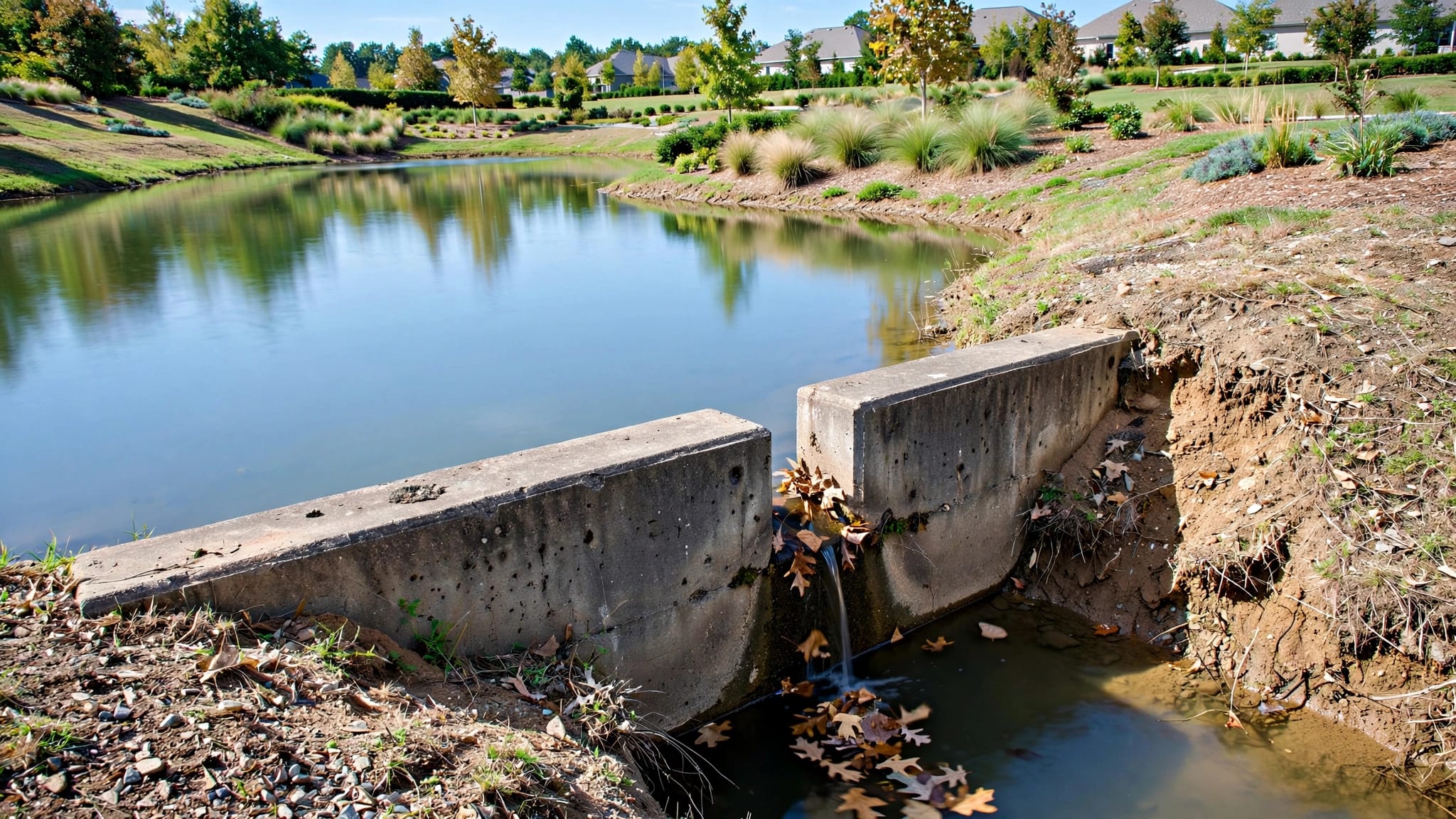
The shoreline matters as well. Bare edges and eroded banks let more soil slip into the water. Once that happens, the lake starts cycling its own fuel. The runoff brings nutrients in, and the stirred sediment keeps them moving.
What HOA Managers Should Do After Heavy Rain
A fast response can limit the damage. The goal is to see what changed, stop more material from entering, and decide whether the lake needs treatment.
- Walk the shoreline first. Check inlets, culverts, spillways, and low spots where runoff enters.
- Look for debris and erosion. Leaves, grass, and washed-out soil are clues that the lake took a nutrient hit.
- Check the water color and smell. Bright green water, surface scum, or a sour odor can point to algae or low oxygen.
- Document the change. Photos help track how quickly the lake shifted after the storm.
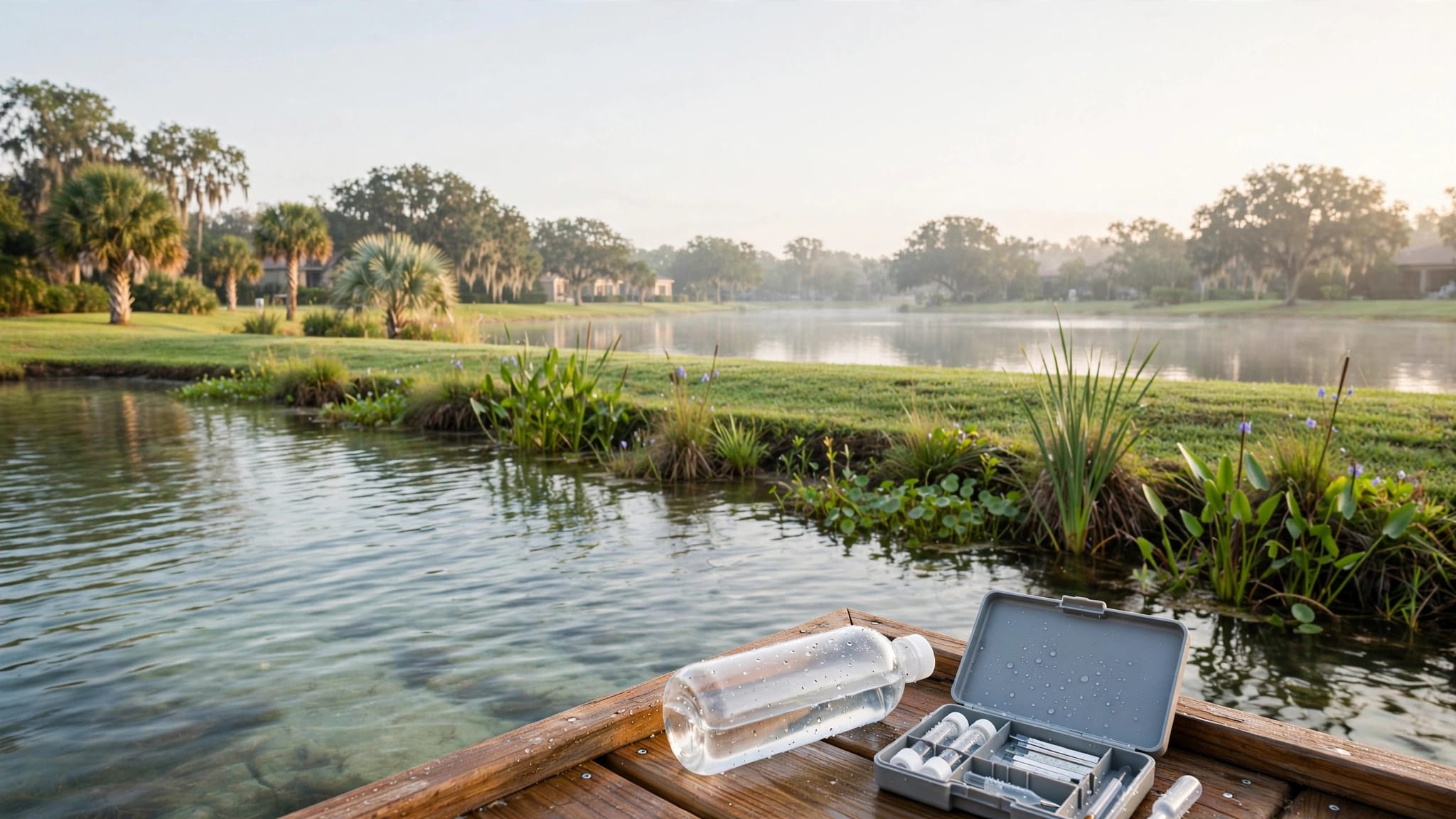
- Schedule testing or treatment if needed. A lake that stays green after the water settles may need aeration, algae control, or both.
If your community wants a faster answer after a storm, Get a Free Quote for a lake inspection and treatment plan. A short site visit can show whether the issue is runoff, nutrients, oxygen loss, or a mix of all three.
The sooner you inspect the lake, the easier it is to stop a small bloom from spreading across the whole water body.
Keeping Florida HOA Lakes Clear Between Storms
The best defense starts before the rain. Routine care gives a lake more stability, so one storm does not push it into a green cycle.
That means watching the shoreline, managing nutrient input, and keeping water moving. Aeration helps with oxygen. Shoreline stabilization helps with erosion. Routine weed and algae control helps keep small problems from building into larger ones.
A green lake after rain is often a symptom, not the whole problem.
Multi-lake properties need this kind of attention even more. When one basin gets overloaded, it can affect the look and function of the whole community. Regular inspections help catch those changes early, before residents start asking why one pond turned while the next one stayed clear.
Work like this should be handled by a team that understands Florida water bodies and the rules that go with them. Seabreeze Lake Maintenance holds Commercial Applicator License #CM28291 and State-Licensed Specialty Contractor #SCC131152136, which matters when treatments, aeration, or shoreline work are part of the plan.
Conclusion
When a Florida HOA lake turns green after heavy rain, the storm is usually exposing a bigger water quality issue. Runoff brings in nutrients, sediment stirs up from the bottom, and warm water gives algae a quick path to spread.
That is why the fix is rarely one single product. The strongest results come from watching the shoreline, managing drainage, and keeping the water moving between storms.
If your lake changes color every time the rain rolls through, that pattern is worth paying attention to. In Florida HOA lakes, the water often tells the story before the residents do.
Recent Posts