What Causes Fish Kills in Florida HOA Lakes
A fish kill in a Florida HOA lake can happen fast, but the trouble usually builds for days or weeks. Warm weather, heavy rain, runoff, and decaying plants can push a lake past its limit before anyone notices.
That matters in retention ponds and shared community lakes because one bad event affects curb appeal, odors, and resident trust. It can also point to a larger water-quality problem that keeps coming back.
For HOA communities, golf courses, and other multi-lake properties, the cause is rarely a mystery once the water is checked. The real challenge is spotting the early signs and fixing the condition before fish start dying.
Why Florida HOA lakes are so vulnerable
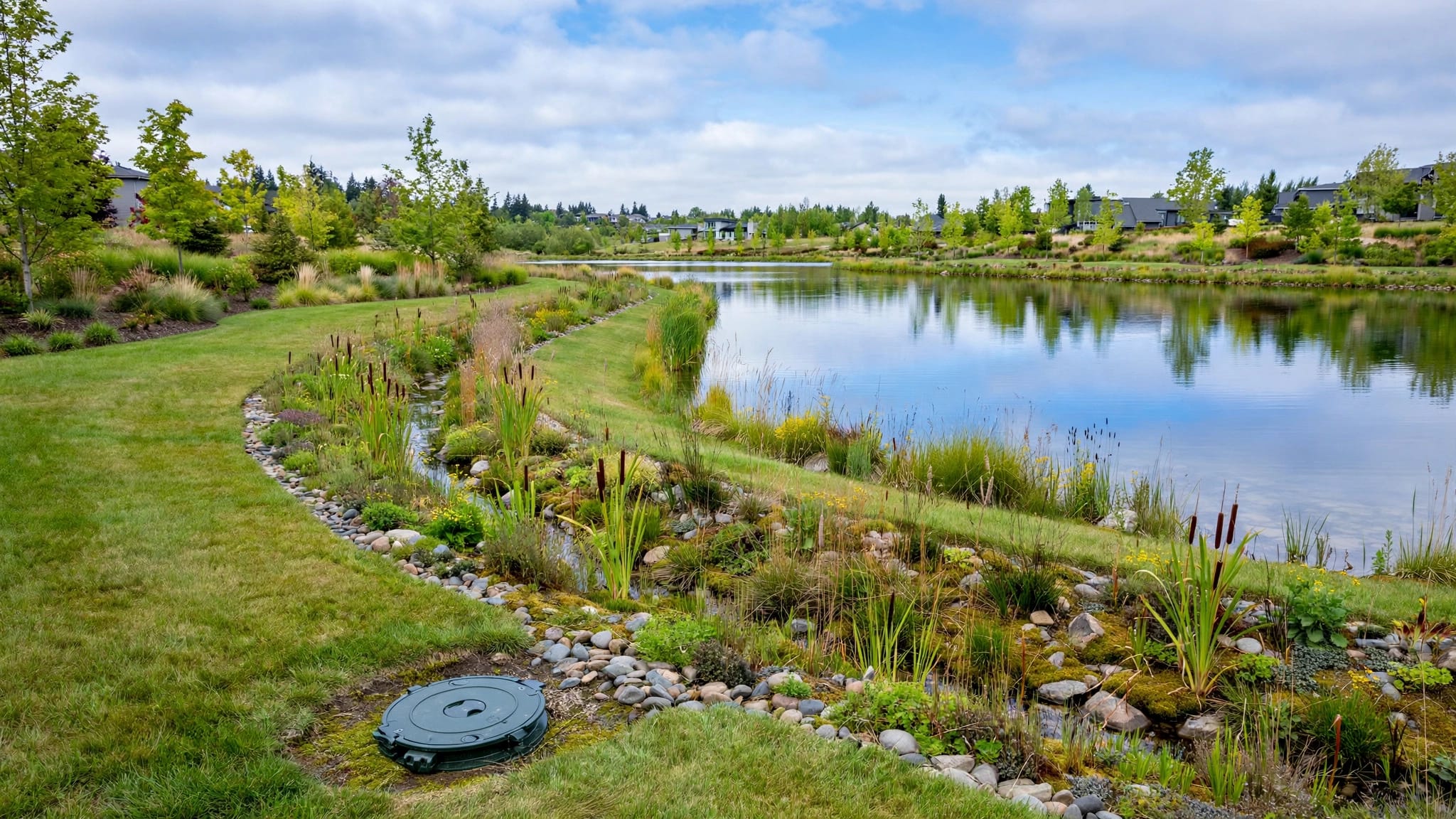
Florida lakes live under pressure all year. They sit in hot weather, collect stormwater, and catch fertilizer, leaves, grass clippings, and soil from nearby lots and roads.
That mix creates a rough environment for fish. Water warms up quickly, oxygen levels drop faster, and plants grow hard when nutrients are high. A calm-looking pond can change in a single afternoon.
HOA lakes also tend to be shallow and connected to drainage systems. That makes them useful for storm control, but it also makes them sensitive. A small change in runoff can affect the whole water body.
In gated communities, one lake problem often shows up in the next lake too. That is why routine monitoring matters across the full property, not just at one visible pond.
Low oxygen is the most common cause
Low dissolved oxygen is the biggest reason for fish kills in Florida HOA lakes. Fish need oxygen in the water, and warm water holds less of it. During hot stretches, the margin gets thin.
Nighttime makes it worse. Plants and algae use oxygen after dark, then release some of it during the day. If the lake already has a heavy plant load, fish can wake up in trouble.
A sudden algae crash can also strip oxygen from the water. When a bloom dies, bacteria break it down and consume oxygen fast. Fish often die near the surface because that is where they try to breathe.
Wind, circulation, and depth matter too. A still lake with little movement is like a room with a small window. It can work for a while, then the air gets stale.
This is why lake and pond aeration systems are often part of a long-term fix for community lakes. Aeration helps move water, support oxygen levels, and reduce the chance of another emergency.
Most fish kills start before anyone sees dead fish. The water usually gives warning signs first.
Nutrients, algae, and decaying vegetation
Fertilizer runoff is a major problem in HOA lakes. Rain washes nitrogen and phosphorus into the water from lawns, landscaping, and nearby streets. Those nutrients feed algae and invasive plant growth.
At first, the lake may look greener or thicker than usual. Later, the bloom collapses or the weeds die back all at once. Then the decay process begins, and oxygen drops even more.
Dead plant matter on the bottom also causes trouble. As leaves, algae, and muck break down, they pull oxygen from the water and create odors. A lake that smells like rotten eggs or stale mud often has a buildup problem.
Floating weeds can add another layer of risk. They block sunlight, trap heat, and slow circulation. When they die off in patches, the water gets hit with a fresh load of decaying material.
That is why fish kills in Florida HOA lakes often follow a season pattern. Heavy growth in spring and early summer can set up an oxygen crash later in the heat.
Storm runoff, temperature swings, and chemical stress
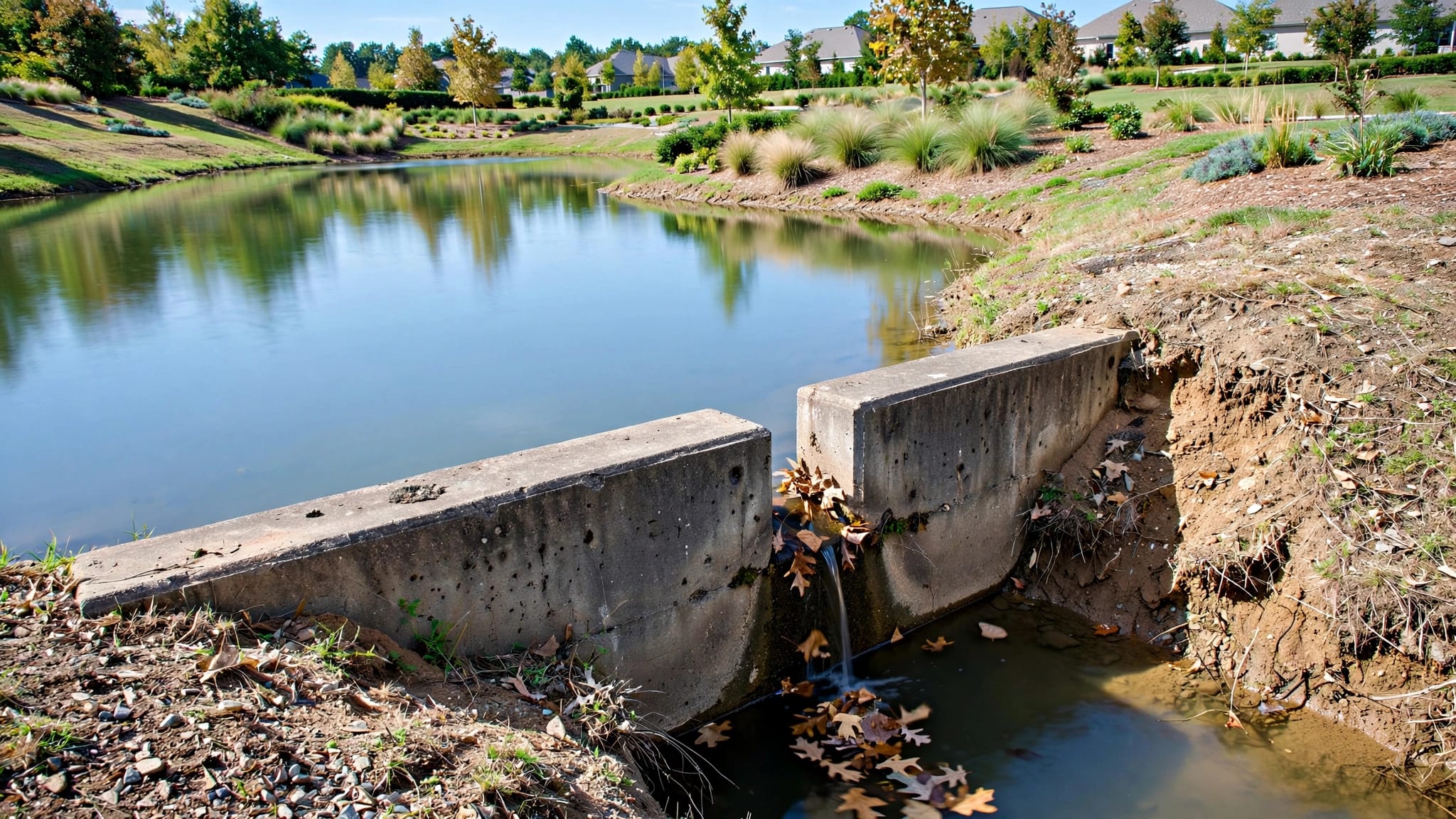
After a strong storm, the water can change fast. Rain brings in cloudy runoff, extra nutrients, and sometimes contaminants from driveways, roofs, parking areas, and turf. The lake turns over, and fish have to adjust immediately.
Temperature swings can be just as rough. A shallow pond warms fast in the sun and cools fast after a storm. Fish do not handle sudden changes well, especially when they already face low oxygen.
Chemical stress can play a role too. Herbicides, algaecides, and other treatments can trigger a problem if they are applied at the wrong time or in the wrong amount. That does not mean treatment should be avoided. It means timing, product choice, and lake conditions matter.
This is one reason professional lake care is so important in community settings. Seabreeze Lake Maintenance works with HOA communities, golf courses, and commercial properties under Commercial Applicator License #CM28291 and State-Licensed Specialty Contractor #SCC131152136. That level of oversight matters when several lakes, drainage paths, and plant zones all connect.
How to spot a fish kill before it spreads
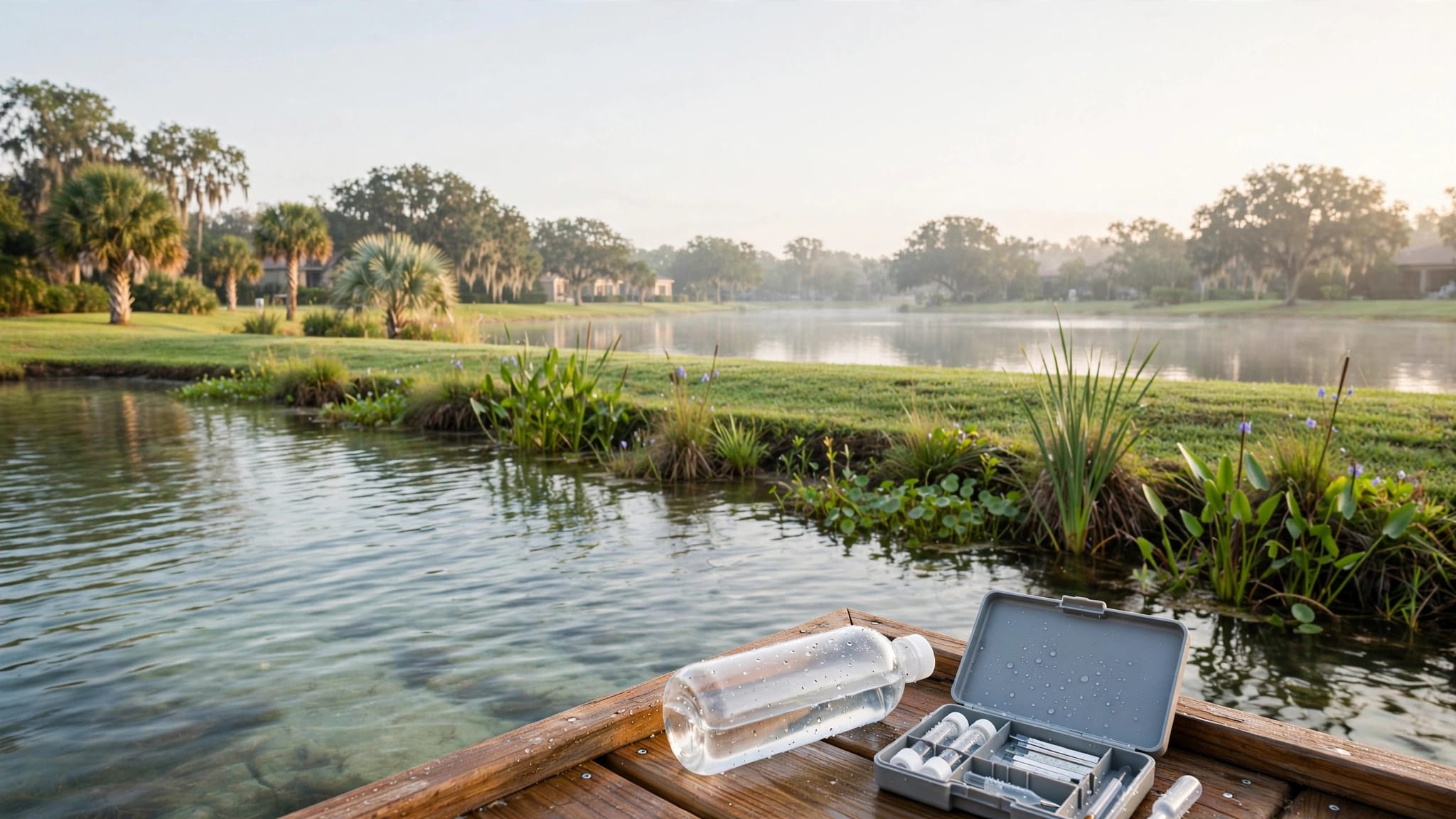
The earliest warning signs are often subtle. A lake may look fine from a distance, yet fish are already stressed near the shore or around vegetation.
Watch for these signs:
| What you see | What it may mean | Why it happens |
|---|---|---|
| Fish gasping at the surface | Oxygen is dropping | Fish move where the water is easiest to breathe |
| Fish crowding in one area | Water quality is uneven | Wind, shade, or aeration may be limited |
| Sudden cloudy or pea-green water | An algae bloom is building or collapsing | Nutrients are feeding rapid growth |
| Bad odor, especially after rain | Decay is increasing | Plant matter and muck are using oxygen |
| Dead fish after a storm | Runoff or turnover may have triggered stress | The lake changed faster than the fish could handle |
A clear lake can still be unhealthy. In fact, some of the worst oxygen problems happen when the water does not look alarming yet.
Residents often notice the smell first. By then, the lake has usually been stressed for some time.
What communities should do before the next kill
The best response starts before fish die. HOA boards and property managers can lower risk with consistent lake care and quick attention to change.
A solid plan usually includes these steps:
- Check the lake often. Look for color changes, surface films, odor, and fish behavior after storms or heat waves.
- Control nutrient inputs. Keep fertilizer, clippings, and soil out of drainage paths as much as possible.
- Manage plant growth early. Treat nuisance weeds and algae before they turn into a decay problem.
- Use aeration where it fits. Movement helps protect water quality in shallow, still lakes.
- Act fast when conditions change. A new odor or sudden bloom is a warning, not a small detail.
For properties with multiple lakes, the bigger picture matters. One pond can be fine while another is headed toward a crash. That is why routine inspections, water-quality checks, and a clear maintenance schedule save more than the lakes themselves. They help protect the whole community.
If your lake has shown stress, odors, or dead fish, Get a Free Quote and book a call and lake inspection with Seabreeze Lake Maintenance.
Conclusion
Fish kills in Florida HOA lakes usually come down to oxygen loss, runoff, algae decay, or sudden stress after weather changes. The lake often gives warning signs first, even when residents don't notice them right away.
For HOA boards and golf course managers, the key is simple. Watch the water, catch changes early, and keep a steady maintenance plan in place. In community lakes, prevention costs far less than cleanup after a kill.
Recent Posts