Florida HOA Lake Inspection Checklist for Property Managers
A Florida lake can look fine on Monday and turn into a complaint magnet by Friday. Heat, rain, runoff, and fast plant growth make that happen more often than most property managers expect.
That is why a Florida HOA lake inspection needs a real checklist, not a quick glance from the cart path. This matters for retention ponds and lakes in gated communities and other multi-lake properties, not koi ponds. It also helps to work with a team that holds Commercial Applicator License #CM28291 and State-Licensed Specialty Contractor #SCC131152136, especially when the property depends on safe, clean, and well-kept water.
Why Florida HOA lake inspections matter
Florida lakes do more than sit in the middle of a neighborhood. They collect stormwater, shape the first impression at the entrance, and affect how residents feel about the whole property.
When inspections slip, small problems grow fast. A thin line of weeds can spread across a shoreline. A little algae can turn water green after a hot week. A low spot in the bank can wash out during one heavy storm.
For HOA communities and golf courses, that means inspection work affects more than appearance. It affects safety, drainage, and repair costs too. Managers who inspect on a routine schedule catch trouble before it becomes obvious to residents.
A good inspection also helps with vendor communication. If you know what changed since the last visit, you can ask for the right service instead of guessing. That saves time and keeps treatment work focused.
A practical checklist for each lake visit
Use the same route each time so changes stand out. Walk the shoreline where possible, check the water from several angles, and note anything that looks different from the last visit.
| Inspection area | What to look for | Why it matters |
|---|---|---|
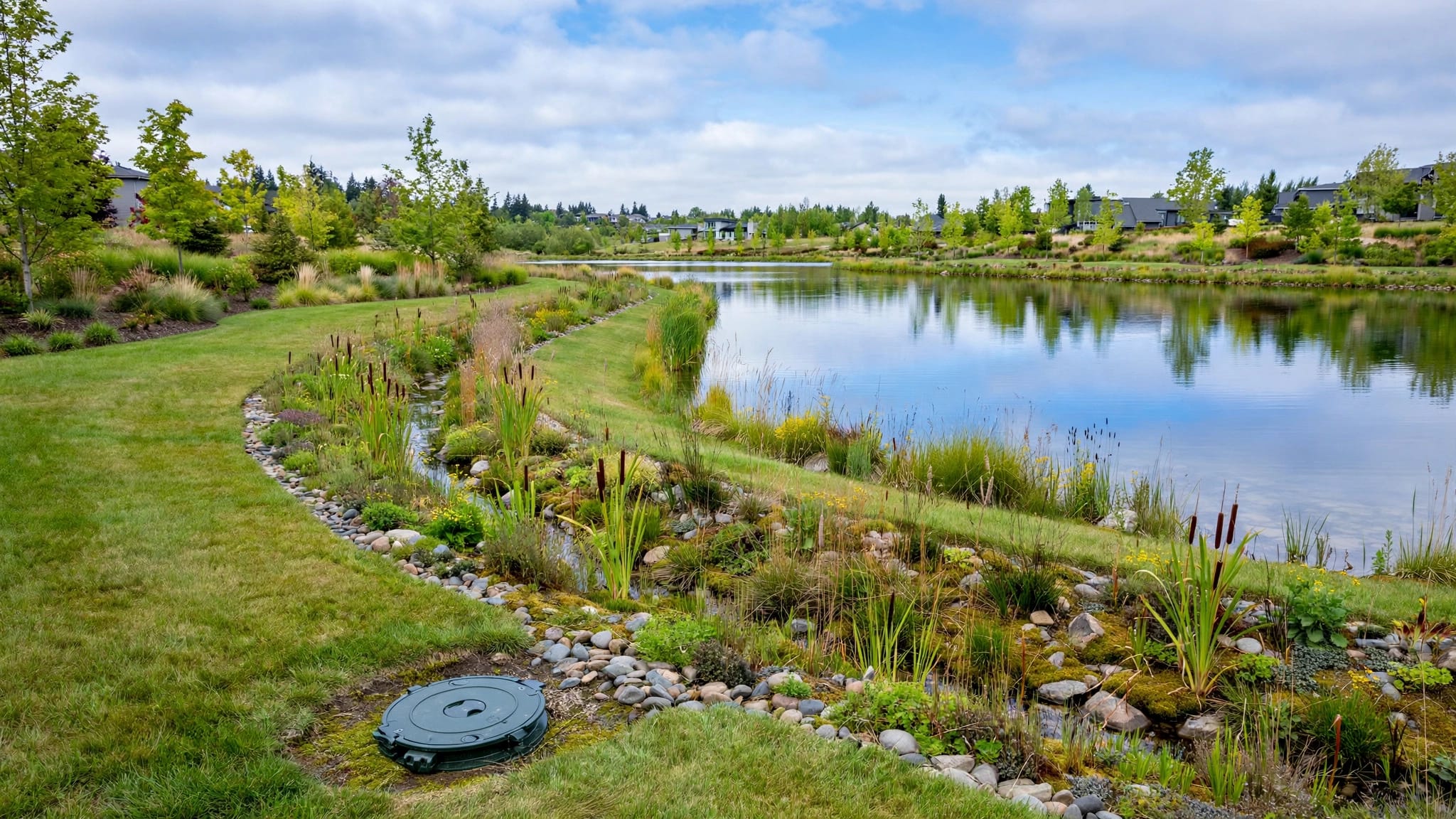
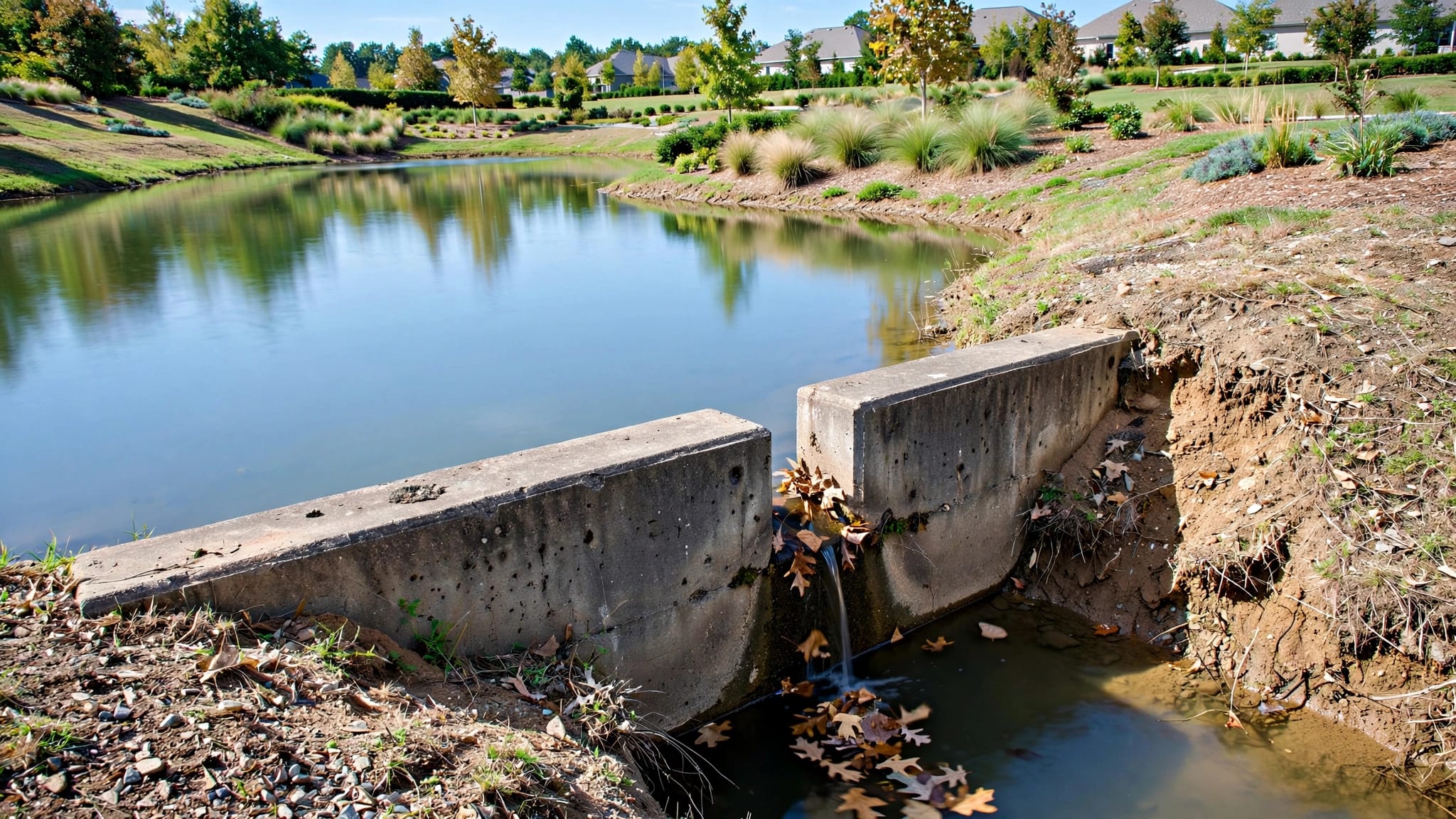
| Shoreline and banks | Erosion, sink spots, bare soil, undermined edges | Weak banks lead to washouts and costly repairs |
| Vegetation at the edge | Overgrown weeds, invasive plants, missing littoral plants | Plants can protect a shoreline or crowd it, depending on the mix |
| Water surface | Algae mats, floating weeds, scum, trash, odor | Surface changes often point to nutrient or oxygen issues |
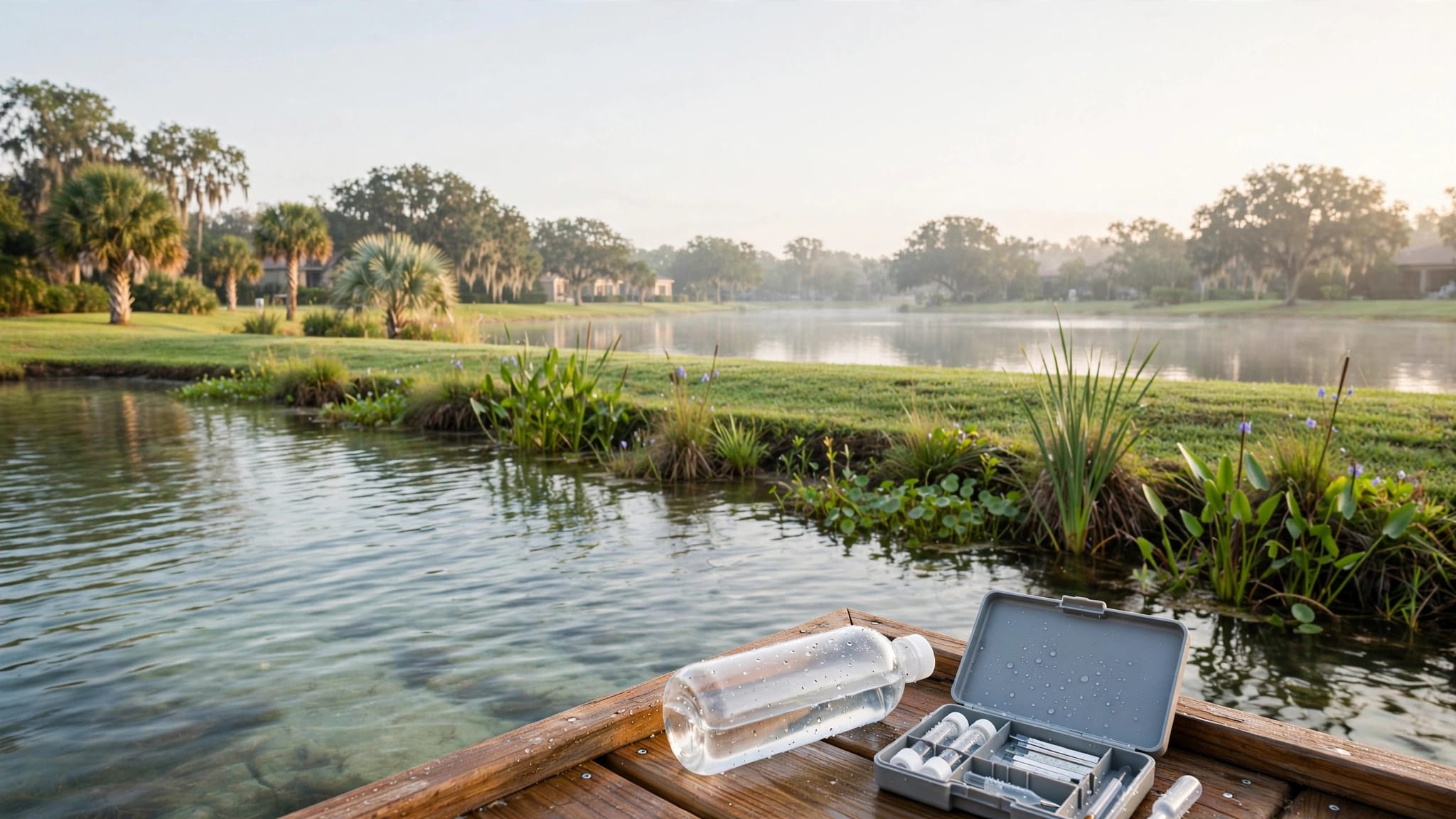
| Water clarity and color | Murky water, sudden color shifts, unusual staining | These changes can signal runoff, algae, or sediment movement |
| Inlets and outlets | Clogs, standing water, sediment buildup, blockages | Water has to move properly for the system to work |
| Aeration and fountains | Broken spray patterns, dead units, low bubble output | Poor circulation can stress water quality fast |
| Debris and litter | Branches, palm fronds, mulch, grass clippings, trash | Debris can block flow and make a property look neglected |
| Nearby landscape | Fertilizer wash-in, bare slopes, irrigation overspray | What happens on land usually shows up in the lake |
That table covers the basics, but the real value comes from patterns. If one lake always shows more algae after mowing day, the issue may be clippings or runoff. If one shoreline erodes after storms, the bank may need repair before the next rainy season.
Also watch how the water smells and sounds. Stale odor, surface film, and dead fish can point to oxygen problems that need quick attention. A lake often gives warning signs before it fails.
A good inspection log is a memory aid. It turns a casual walk into a record you can act on.
How Florida weather changes what you inspect
Florida weather changes lake conditions fast, so the checklist should shift with the season.
During the rainy months, focus on inflow points, washed-in soil, and fertilizer runoff. Heavy rain can bring a load of nutrients into the system in one afternoon. That often feeds algae and weed growth later.
In hot months, look closer at water color, surface scum, and oxygen stress. Warm water holds less oxygen, so fish stress and odor issues can show up sooner. Calm water also gives algae a better chance to spread across the surface.
After a storm, check for more than debris. Fallen limbs, torn bank edges, and damaged pumps can hide under the surface. Even a short tropical system can shift sediment and clog a drain.
Dry spells matter too. Low water can expose shoreline problems and make erosion easier to spot. It can also reveal areas where irrigation is leaking into a lake or where a slope is losing ground.
Because Florida weather changes so quickly, managers should use the same checklist year-round, then add seasonal items when conditions call for it. That keeps the inspection focused without making it long and hard to follow.
Red flags that need fast attention
Some issues can wait for the next routine visit. Others need a response right away.
- Sudden algae bloom : A fast color change or thick green mat means the lake needs a closer look.
- Shoreline collapse : Cracked soil or a slumping bank can get worse after the next rain.
- Dead fish or strong odor : These signs often point to oxygen stress or poor water quality.
- Clogged drainage points : Blocked inlets and outlets can change water movement across the whole site.
- Heavy weed spread : Floating or rooted weeds can take over an area if crews wait too long.
- Storm debris near pumps or fountains : Anything that interferes with equipment can lead to more damage.
When one of these shows up, document it with photos and notes. Then send the issue to the right vendor or maintenance lead the same day. That small habit prevents a lot of back-and-forth later.
If your property needs a site visit and lake inspection, Get a Free Quote to book a call with Seabreeze Lake Maintenance.
How often to inspect, log, and follow up
The right schedule depends on the size of the property, the number of lakes, and how much change each pond sees. Even so, most HOA and golf course properties work best with a layered approach.
| Frequency | What to check |
|---|---|
| Weekly | Surface weeds, algae, odor, litter, obvious erosion |
| Monthly | Shoreline condition, water level, inlets, outlets, aeration, photos from fixed spots |
| After heavy rain or storms | Debris, washouts, turbidity, clogged structures, new low spots |
| Seasonally | Growth trends, bank stability, long-term water quality changes |
The weekly pass can stay simple. The monthly inspection should be more detailed and documented with the same camera angles each time. After storms, focus on what changed, not just what is visible at first glance.
Good records matter because they show trends. A lake that slowly gets greener each month gives you a different picture than one that spikes after a storm. Photos, dates, and short notes make it easier to defend service decisions and budget requests.
For properties with several lakes, use the same format across every water body. That way, one lake does not get more attention just because it is easier to see from the clubhouse.
Conclusion
A strong Florida HOA lake inspection checklist keeps managers ahead of shoreline damage, weed growth, algae, and drainage issues. It also makes each visit more useful, because you are comparing the same points over time instead of guessing what changed.
For gated communities, golf courses, and other multi-lake properties, the goal is simple, catch small problems before they turn into expensive ones. Consistent inspections, clear notes, and fast follow-up give you a cleaner lake system and fewer surprises for residents.
Recent Posts