What Causes Muck Buildup in Florida HOA Lakes
Muck in a Florida HOA lake rarely shows up all at once. It starts with a little leaf litter, a little runoff, and a little dead algae, then turns into a soft, dark layer that smells worse every month. For retention ponds and community lakes, that layer can hurt water flow, feed weeds, and make the whole property look neglected.
Most of the time, the problem is not one thing. It is a mix of heat, rain, sediment, and poor circulation, all working together. Once you know what feeds the muck, it gets easier to choose the right fix.
Why Florida HOA lakes build muck so fast
Florida weather speeds up decay. Warm water keeps organic material breaking down for longer stretches of the year, so leaves and weeds do not sit around for long before they start turning into sludge. Heavy rain adds another push, because it washes more debris and soil into the basin.
That matters even more in HOA communities. Many lakes are really stormwater ponds, so they collect whatever the neighborhood sheds from roofs, roads, lawns, and landscaped areas. Fine sand, silt, fertilizer, and tiny bits of plant matter all end up in the same place.
A lake with slow water movement acts like a settling tank. The heavy material sinks, lighter material drifts, and the bottom keeps getting thicker. Over time, Florida HOA lake muck becomes part sludge, part decayed plant matter, and part trapped sediment.
This is a different problem from a koi pond or a small decorative water feature. HOA lakes and retention ponds are larger, collect more runoff, and need a plan that fits that scale.
The main sources of sludge in community lakes
Most muck comes from everyday stuff that people barely notice. One leaf here and one clump of grass there do not look like much. Add months of rain and heat, and the bottom starts filling in.
Common sources include:
- Leaves, seed pods, palm fronds, and other yard debris
- Grass clippings and mulch washed from nearby turf
- Fertilizer-rich runoff that feeds algae
- Dead algae and dying aquatic weeds
- Soil from eroding banks and bare spots
- Waterfowl waste and fish waste
- Fine sand or silt tracked in from walkways and roads
Golf course communities often see even more clippings and soil fines, because mowing and irrigation can move material toward drainage paths. In multi-lake properties, one pond can also pass problems to the next through pipes, swales, or overflow routes.
Muck is usually a symptom, not the whole problem. If the basin keeps getting fed, the layer comes back.
The cycle is simple. Nutrients feed algae. Algae dies and sinks. Plant debris breaks down. The bottom gets richer in sludge, and the water gets more stressed. That is why a lake can look calm on top and still have a thick, soft floor below.
Lake design problems that trap muck
Design plays a big role in how fast muck builds up. A basin with shallow shelves, dead corners, or weak circulation gives debris a place to settle. Quiet water does not move solids back into suspension, so the bottom keeps collecting material.
Shoreline shape matters too. Long, sheltered edges often gather leaves and floating weeds. Narrow coves can become catch points for algae mats and floating debris. If the lake has poor circulation, those spots turn into slow-moving pockets where decay happens faster.
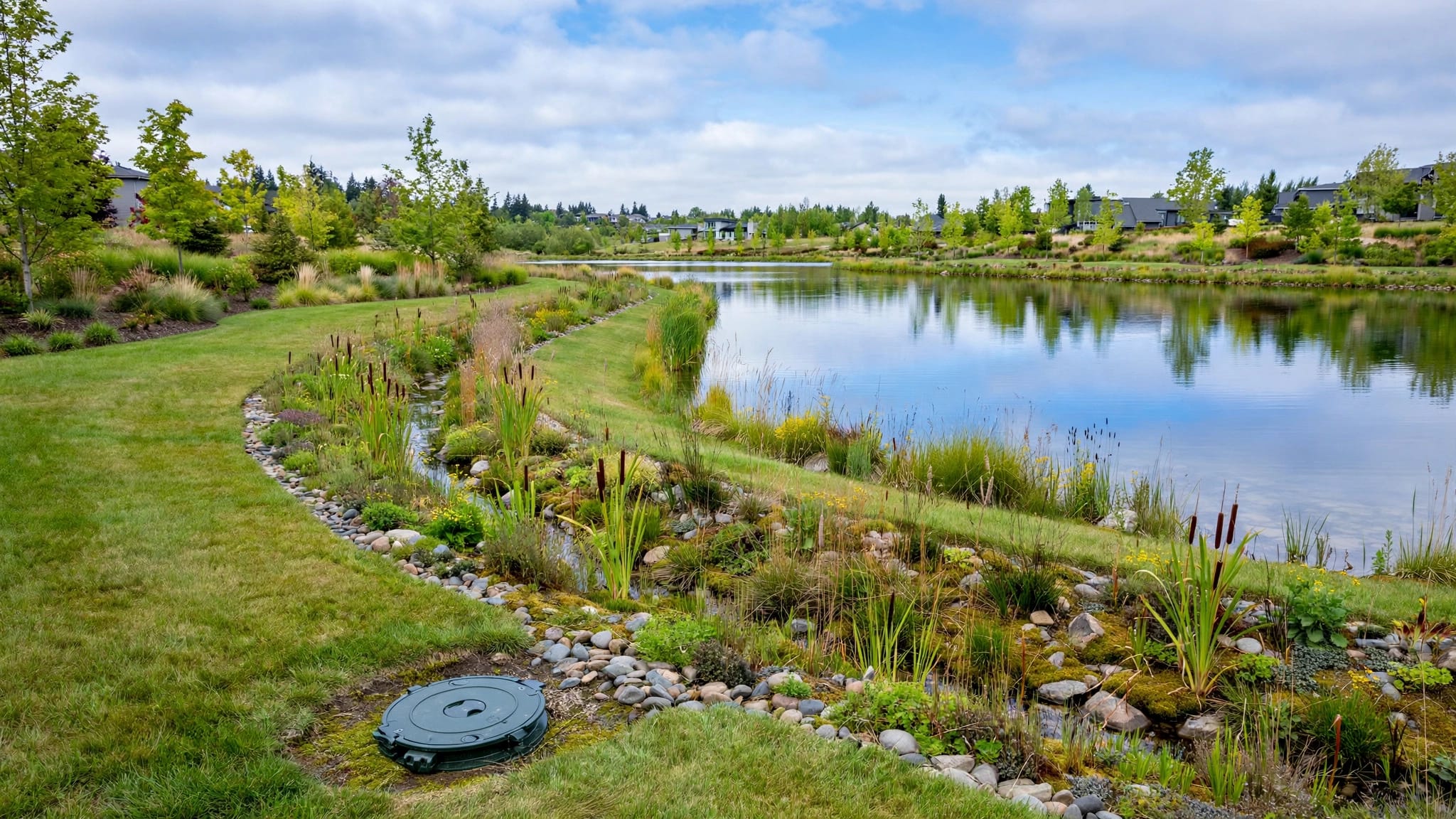
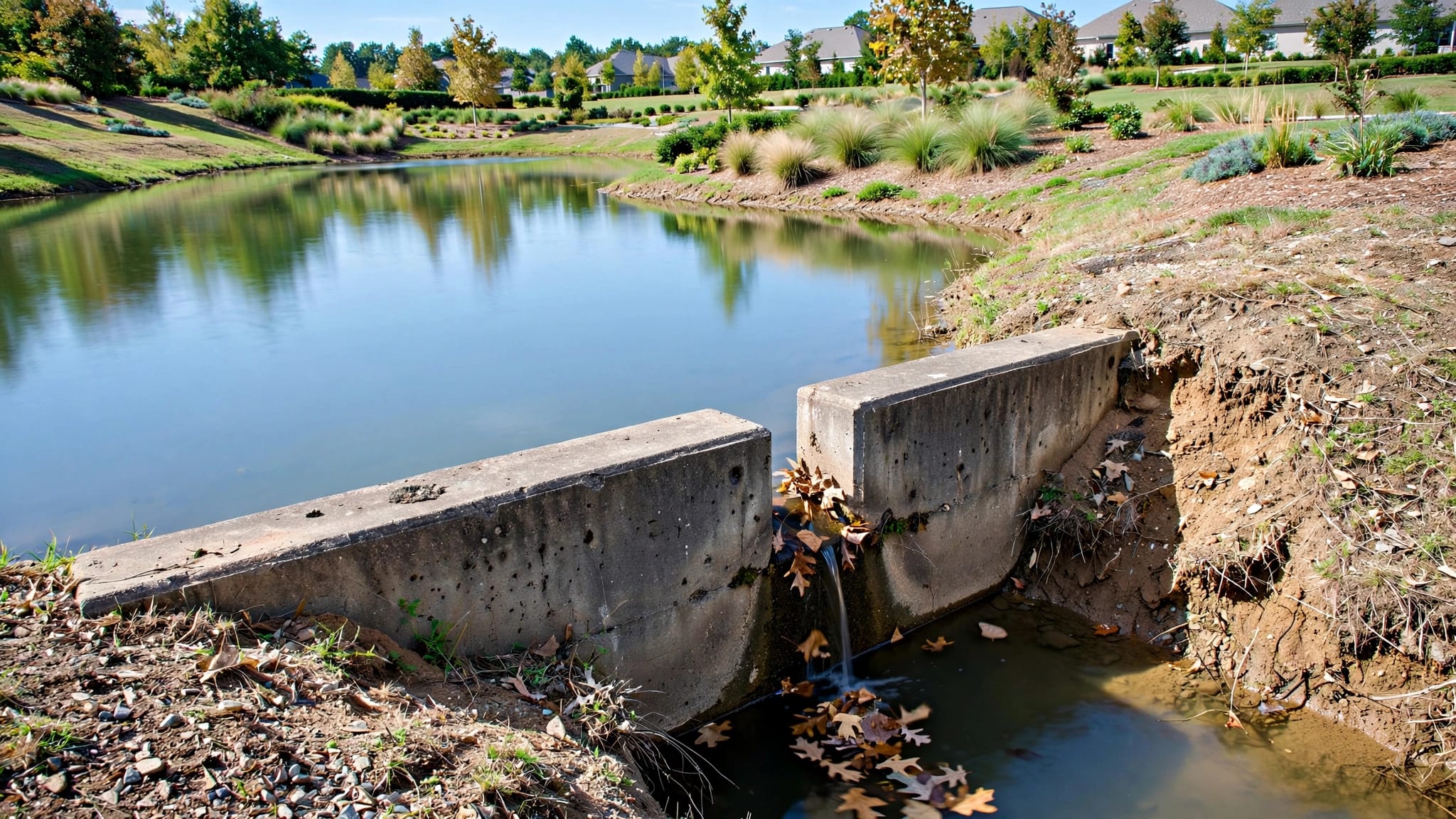
Erosion is another big one. When banks are bare or poorly stabilized, rain cuts into them. That soil slides into the water and becomes part of the sediment layer. Even a neat-looking shoreline can hide a slow erosion problem.
That is where lake and pond aeration systems help. They move water, reduce stale zones, and make it harder for muck to settle in quiet pockets. Aeration also supports better water quality, which can slow the cycle of algae growth and decay.
In HOA and golf course settings, aeration works best when it is part of a larger plan. It should go hand in hand with erosion control, shoreline stabilization, and regular debris removal.
Warning signs the muck layer is growing
Some lakes give off clear signs before the bottom gets too far gone. Others hide the problem until the shoreline starts feeling soft or the water turns dull after every rain.
Watch for these signs:
- Soft, muddy edges when you walk near the bank
- Dark brown or black sediment along the shoreline
- Rotten-egg smell on hot days or calm mornings
- Stringy algae or weeds moving into shallow water
- Cloudy water after even a light storm
- Floating debris that keeps gathering in the same spots
A lake does not need to look filthy to have a serious muck issue. Surface water can stay fairly clear while the bottom turns spongy and dark. That is why routine checks matter so much in gated communities and multi-lake properties.
If the shoreline starts changing shape, that is another clue. Banks that slump, crack, or lose grass cover often send more soil into the pond. The muck problem then grows faster than most boards expect.
What helps an HOA lake recover
The right fix depends on the source. If the basin is full of leaves and grass clippings, regular debris removal may slow the buildup. If the shoreline is washing out, erosion control and shoreline stabilization should come first. If the water stays still and stale, aeration may be the missing piece.
For lakes with a deeper sediment layer, a surface cleanup is usually not enough. The community may need a larger restoration plan that includes removal of settled material, water quality work, and better controls around the edge of the lake. Treating algae alone will not solve a basin that keeps receiving new runoff.
Good maintenance also means looking at the whole property. Drainage, turf care, shoreline cover, and inlet conditions all affect the lake. In other words, the pond is often telling you what the land around it is doing.
Because this work can involve herbicides, equipment, and shoreline changes, it should be handled by a crew with a Commercial Applicator License #CM28291 and State-Licensed Specialty Contractor #SCC131152136 .
If your board needs a lake inspection, Get a Free Quote and set up a site visit.
Conclusion
Florida HOA lake muck usually comes from a mix of heat, runoff, erosion, and dead plant matter. When those forces keep feeding a pond, the bottom changes long before the surface looks bad.
The best results come from fixing the source, not just cleaning the symptom. If your lake is getting darker, softer, or smellier, the problem is already telling you where water and debris are collecting.
A healthier community lake starts with steady care, a clear plan, and the right fix for the site.
Recent Posts