How Fertilizer Runoff Affects Florida HOA Lakes
A neat lawn can hide a lake problem waiting to happen. In Florida, fertilizer runoff can move from turf to storm drains in a single storm, then settle into the lakes that shape your community.
That matters most for retention ponds and neighborhood lakes in gated communities, golf courses, and other multi-lake properties. Once nutrients build up, the water can turn cloudy, algae can spread, and maintenance costs can rise fast.
The good news is simple. When you understand how the runoff works, you can stop a lot of damage before it starts.
Why fertilizer runoff is such a problem in Florida HOA lakes
Florida gives runoff a clear path. Heavy rain, flat land, sandy soil, and paved surfaces all help fertilizer wash away quickly. What looks like a small amount on a sidewalk or cart path can end up in the lake after one storm.
That is why fertilizer runoff in Florida is such a common lake issue for HOAs. Community lakes collect water from roofs, roads, parking lots, and landscaped beds. If fertilizer is applied near a drain, ditch, or swale, the nutrients often move straight into the water.
Warm weather makes the problem worse. Algae grows faster in warm water, and Florida has plenty of that. When nitrogen and phosphorus enter a pond or lake, they feed plant growth the same way fertilizer feeds turf.
For HOA boards, this creates a loop. The landscape looks better for a short time, then the lake gets hit later. The damage shows up where few people planned for it, which makes the problem easy to miss until the water changes color.
A little nutrient runoff can change a lake fast when the water is shallow and warm.
These issues are especially common in retention ponds. Those ponds are designed to catch water, so they also catch what the water carries.
What happens when nutrients hit the water
Once fertilizer reaches the lake, the change does not happen all at once. First, the water may look a little hazy. Then algae starts to take over, often in streaks, mats, or bright green patches.
That bloom blocks sunlight and changes the water balance. As algae dies off and breaks down, it uses oxygen. Fish and beneficial aquatic life can struggle when oxygen drops, especially in the early morning hours.
Florida lakes also deal with a second problem, heat. Warm water holds less oxygen than cool water. So when fertilizer runoff feeds extra algae, the lake loses oxygen faster than it can replace it.
Common signs include:
- Green or cloudy water that looks different from the rest of the property.
- Surface scum or mats that collect along shorelines and in corners.
- Musty odors that show up after algae dies off.
- More mosquito-friendly edges where stagnant, plant-choked water lingers.
- Thick muck or sediment that builds up over time.
These changes are not just cosmetic. They can also affect fountains, pumps, irrigation intakes, and shoreline health. A lake that looks tired often needs more than a quick cleanup.
For communities with several lakes, one bad basin can spread stress to the others. Water moves. Nutrients move with it. That is why small runoff issues can become property-wide problems if nobody tracks them.
How HOA lakes and golf communities feel the damage
The first complaint usually comes from what people see. A bright, clean lake can turn dull, then green, then patchy. Residents notice, golfers notice, and board members hear about it at the next meeting.
The costs show up in several ways:
- Higher maintenance demand because algae and weeds need more frequent control.
- More resident complaints about smell, color, and unsightly shorelines.
- More wear on equipment when pumps, fountains, or irrigation systems pull in debris.
- More pressure on budgets because a lake problem often needs more than one treatment.
Property value also comes into play. Buyers notice water quality. So do guests, members, and prospective residents. A lake is often one of the first features people see from the road or clubhouse.
Golf communities feel the same pressure. A pond by the tee box or green is part of the view, but it can also be part of the drainage system. When fertilizer runoff reaches those ponds, the course can end up with algae, shoreline weeds, and water that looks neglected.
That is where routine lake maintenance matters. Water quality work is not only about looks. It helps protect the function of the whole property.
How boards can cut runoff before it reaches the lake
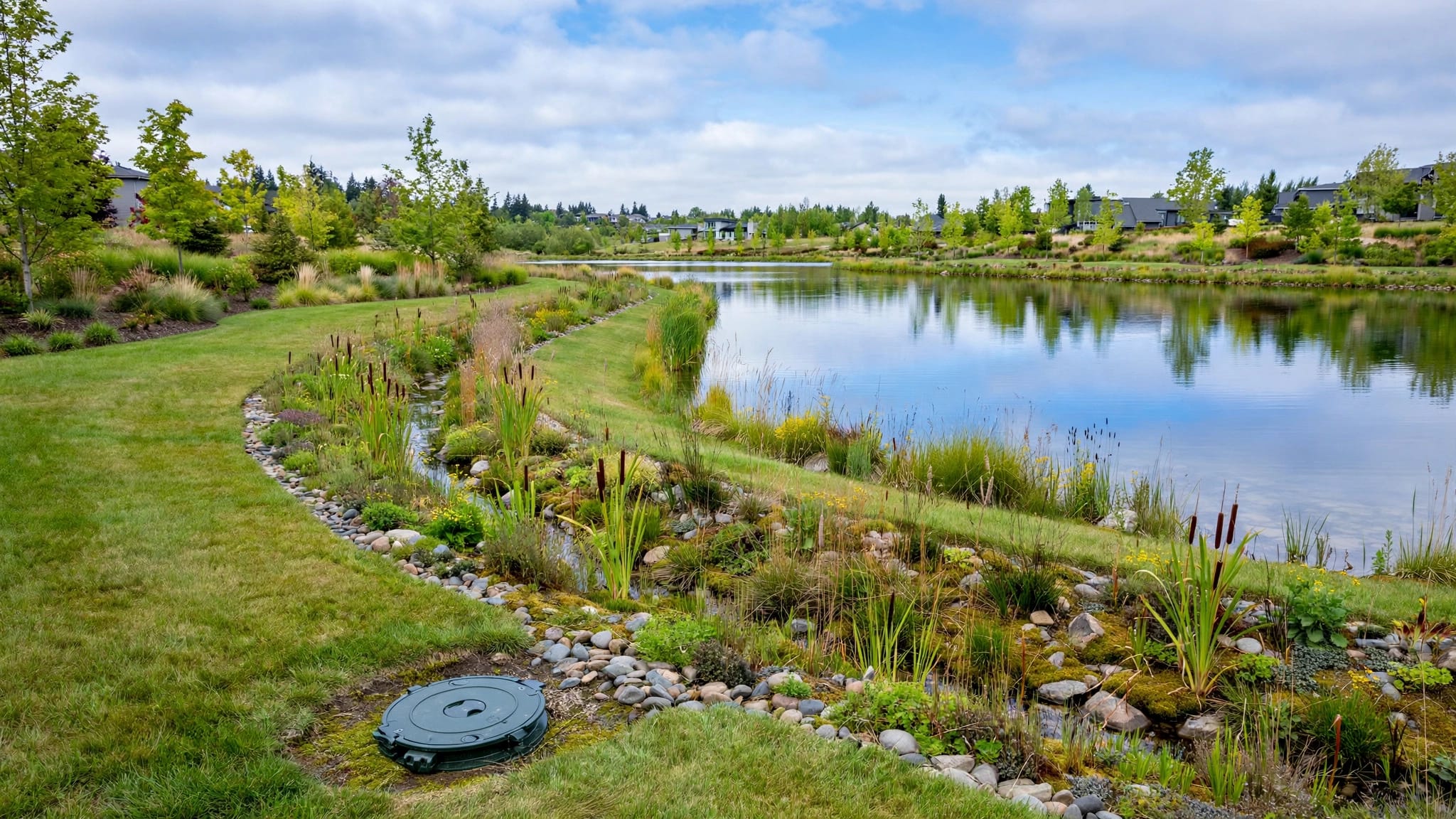
The best fix starts on land. If less fertilizer leaves the lawn, less reaches the pond. That sounds simple, but it takes a steady plan.
Here is a quick look at common runoff sources and better habits.
| Common runoff source | What it can do | Better habit |
|---|---|---|
| Fertilizer before heavy rain | Washes nutrients into drains fast | Apply on dry days and watch the forecast |
| Granules on sidewalks or cart paths | Moves straight to storm drains | Sweep it back onto turf |
| Overfed turf and landscape beds | Sends extra nutrients into the lake | Use the right amount for the soil and plant type |
| Bare shorelines and weak edges | Lets runoff enter the water directly | Add planting, stabilization, or erosion control |
The takeaway is simple. Small application habits make a big difference over time.
Boards and managers can also reduce runoff with a few steady practices:
- Use trained applicators who understand Florida conditions and local rules.
- Keep fertilizer away from water edges and hard surfaces.
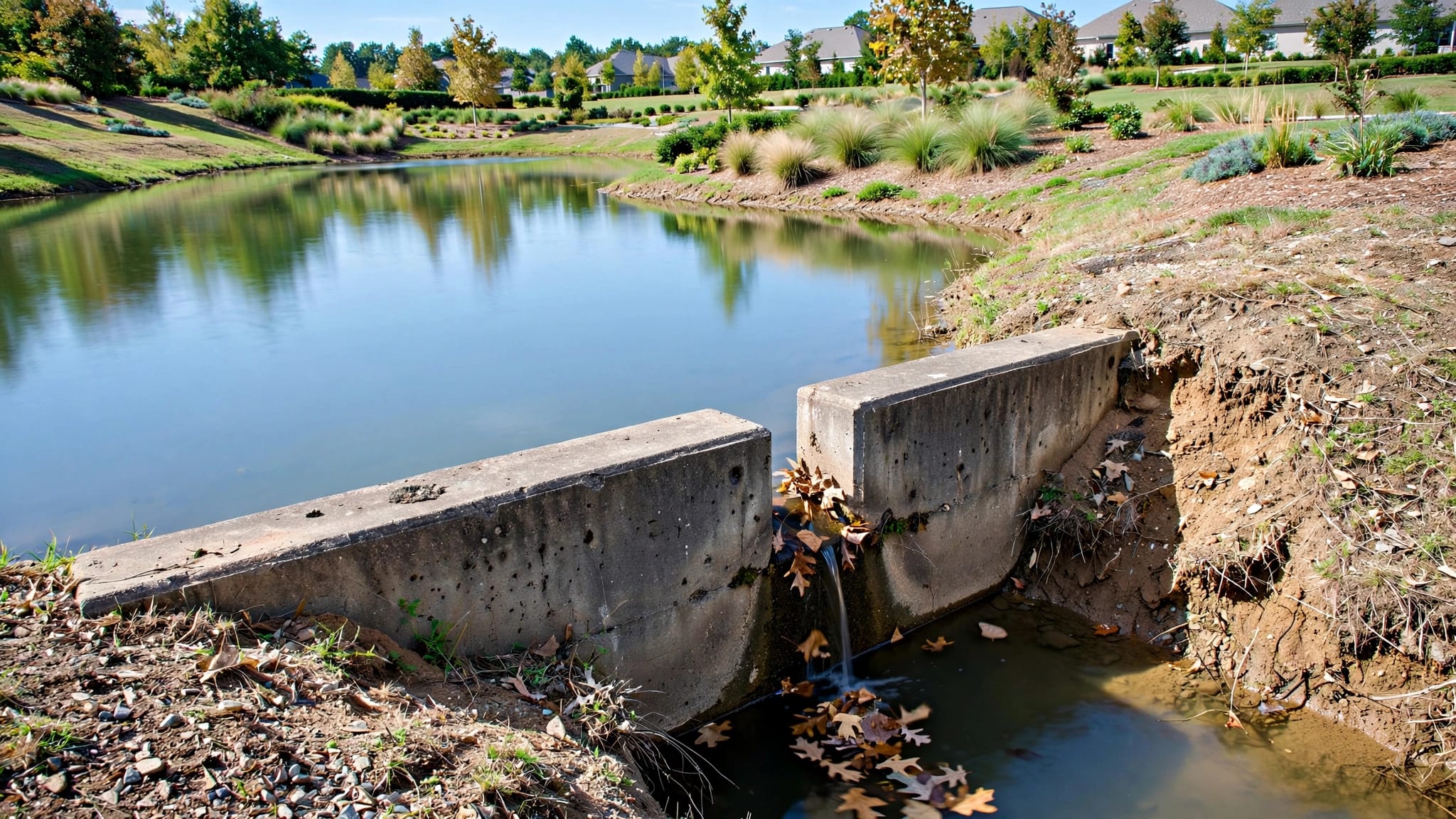
- Check drains, swales, and outfalls after storms.
- Maintain shoreline buffers with plants that slow water before it reaches the lake.
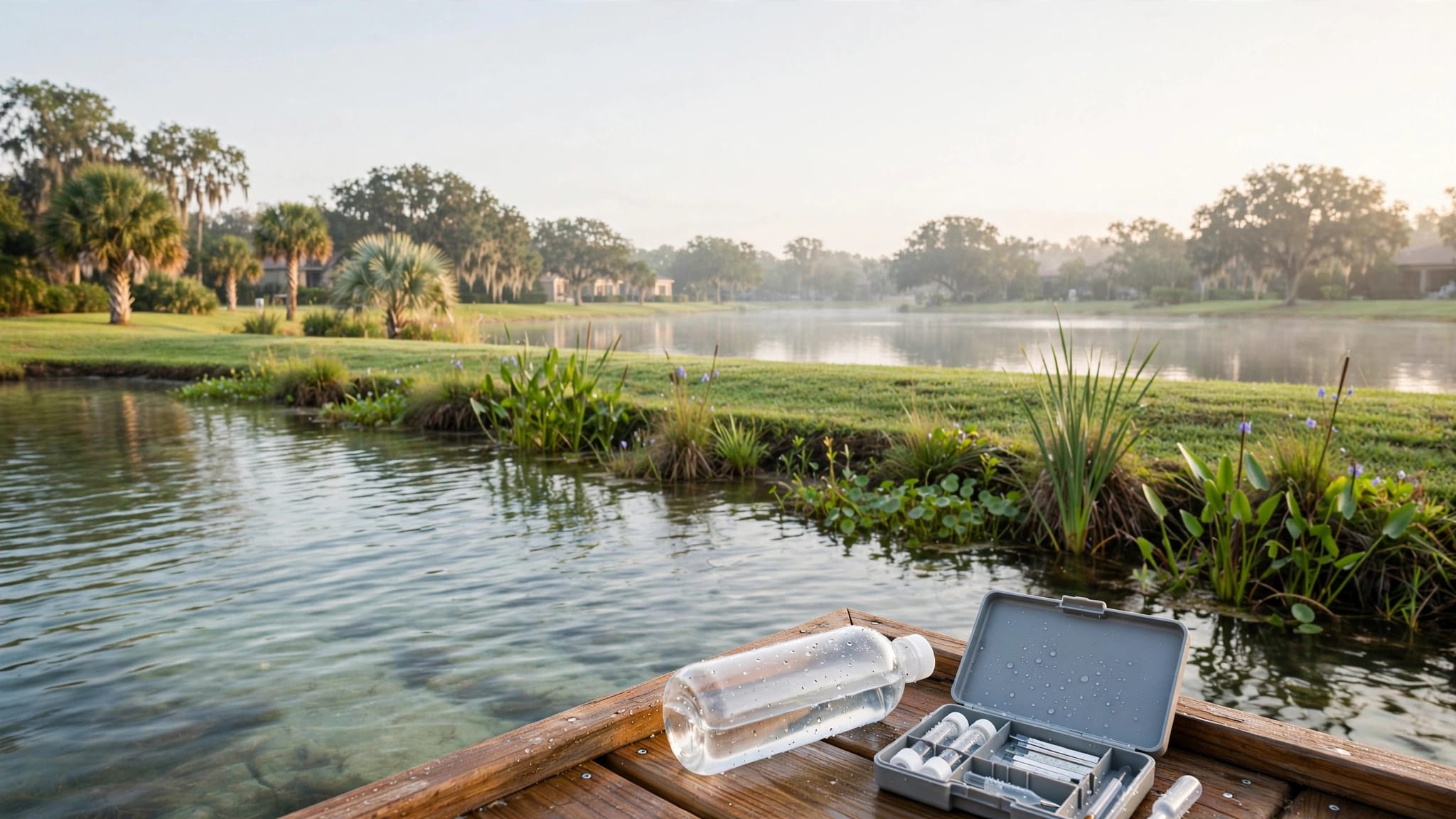
- Test water quality regularly so changes show up early.
- Treat all connected lakes together instead of fixing one basin at a time.
A balanced plan matters more than a one-time treatment. Lakes change with rainfall, mowing, irrigation, and seasonal growth. If those pieces are not managed together, runoff keeps finding the same path.
When routine lake maintenance matters
Some lake problems start with fertilizer runoff, but they grow because no one catches them early. That is where routine care makes the biggest difference. Water testing, algae control, aeration, shoreline work, and debris removal all help break the cycle before the lake gets too far gone.
For Florida HOA lakes and other multi-lake properties, the work should fit the site, not a generic schedule. A retention pond next to homes needs a different plan than a pond beside a fairway. The same goes for lakes with poor flow, heavy irrigation return, or steep banks that shed rain into the water.
Seabreeze Lake Maintenance works with retention ponds and lakes in gated communities, golf courses, and other multi-lake properties. The team holds Commercial Applicator License #CM28291 and State-Licensed Specialty Contractor #SCC131152136 .
If your community needs a site visit, Get a Free Quote and schedule a lake inspection. These services are for retention ponds and neighborhood lakes, not koi ponds.
Conclusion
A healthy-looking lawn can still send the wrong message to a lake. In Florida, fertilizer runoff can turn clear water cloudy, feed algae, and push maintenance costs higher before many residents notice the cause.
The biggest lesson is simple. What happens on the turf does not stay on the turf. When boards, managers, and applicators control runoff early, the lake stays cleaner, the shoreline looks better, and the whole property holds its value longer.
Recent Posts