What Causes Rotten Egg Smells in Florida HOA Lakes
A rotten egg smell around a community lake usually gets noticed fast. In Florida HOA lakes, that odor often points to low oxygen, decaying organic matter, or both.
Warm weather makes the problem worse. So do storm runoff, heavy plant growth, and still water along the shoreline. For gated communities, golf courses, and other multi-lake properties, the smell is often a sign that the lake needs attention, not perfume.
Why Florida HOA lakes start to smell like sulfur
That sharp smell usually comes from hydrogen sulfide gas . It forms when bacteria break down organic material in water that lacks oxygen.
In plain terms, the bottom of the lake starts working without fresh air. Dead plants, algae, leaves, and muck settle there, then break down slowly. As that happens, the water can give off a sulfur smell that drifts across docks, sidewalks, and nearby homes.
A rotten egg smell is often a warning that the lake bottom has gone low in oxygen and organic buildup is taking over.
Florida's climate speeds this up. Hot water holds less oxygen, and many HOA lakes sit still for long stretches. That combination makes odor problems show up faster, especially in summer and after heavy rain.
Low oxygen is the main trigger
When a lake has enough oxygen, natural bacteria break down material in a cleaner way. When oxygen drops, the process changes. Other bacteria take over, and some of them produce sulfur compounds.
That is why one area of a lake can smell worse than another. Deep pockets, shaded coves, and spots with little water movement often turn sour first. The smell may rise more at dawn, after calm weather, or when the water stirs.
Organic buildup feeds the cycle. Once muck settles on the bottom, it traps more debris and gives bacteria more to work with. Over time, the lake can smell stale even when the surface looks calm.
For many community lakes, lake and pond aeration systems are one of the best ways to restore oxygen and reduce odors at the source. Aeration keeps water moving, which helps break up the low-oxygen zones where sulfur smells start.
Florida heat, runoff, and nutrients make the smell stronger
Florida weather gives lake problems a head start. Heat speeds up plant growth and decay, while heavy rain washes extra material into the water. That means more food for odor-causing bacteria.
Runoff is a big part of the story in HOA communities. Fertilizer, grass clippings, soil, leaf litter, and pet waste can all end up in the lake after a storm. Once they settle, they become part of the muck layer on the bottom.
Algae also plays a role. A bloom can look harmless at first, but when it dies, it adds another round of decaying material. The lake may then smell worse than it did before the bloom appeared.
This is why rotten egg odors often rise after a stretch of rain or lawn work nearby. The water gets a fresh load of nutrients, then the decay process picks up speed. In shallow community lakes, that cycle can happen again and again if the source isn't controlled.
Stagnant water and sludge create odor pockets
Not every part of a lake behaves the same way. Some areas have better wind exposure, deeper water, or more circulation. Others sit still and collect sludge.
Shallow shelves, narrow fingers of water, and protected corners are common trouble spots. These places trap leaves, dead weeds, and fine sediment. When that material sits long enough, the odor can get trapped there too.
Plant decay makes the smell stronger. Cattails, algae mats, floating weeds, and shoreline vegetation all break down in the water. If that dead material is left in place, it becomes part of the sludge layer and keeps feeding the problem.
A fountain may improve the look of the water, but it does not always solve a deep oxygen issue. Odor control depends on what's happening below the surface. If the bottom stays anaerobic, the smell can keep coming back.
Signs the smell is more than a passing nuisance
A brief odor after a storm is one thing. A smell that returns every week is another.
Watch for these signs:
- The odor is strongest near one shoreline or cove.
- The water looks murky, tea-colored, or dark near the bottom.
- Fish gasp at the surface or avoid one area.
- Black muck collects along the edge.
- The smell gets worse in hot, still weather.
These clues often point to a lake that needs more than surface cleanup. They can mean the bottom has too much organic buildup, or the water lacks enough circulation to stay healthy.
For HOA boards, that matters beyond the smell itself. Odors create complaints, reduce comfort around common areas, and make the property feel less cared for. In a community setting, that can turn into a bigger maintenance issue fast.
How HOA communities can reduce rotten egg smells
The best fix depends on what is causing the odor, but the first step is always the same, find the source.
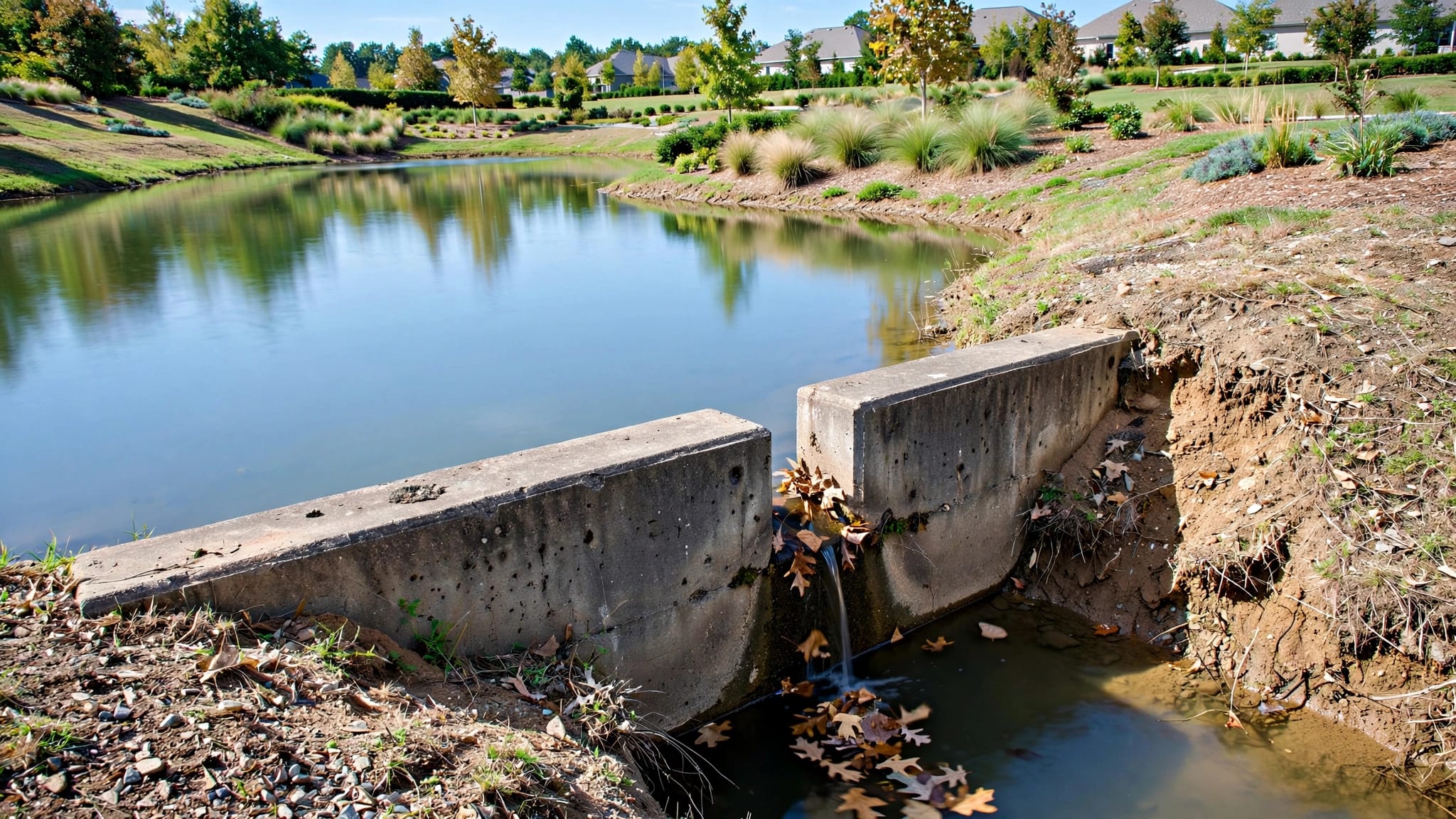
Start with the shoreline and drainage paths. If fertilizer, leaves, or grass clippings wash into the lake, the odor problem will keep returning. Then look at circulation. Areas with no movement often need help from aeration or other water management tools.
Routine maintenance also matters. Debris removal, algae control, water quality checks, and sediment management all support a healthier lake. The goal is to cut off the material that feeds the smell before it settles on the bottom.
Here are the most useful steps for many HOA lakes:
- Reduce runoff from turf, sidewalks, and drains that empty into the lake.
- Remove dead plants and floating debris before they break down.
- Improve circulation in stagnant areas.
- Treat algae and weeds before they die back in large mats.
- Track odor changes after storms, mowing, and warm spells.
When a smell keeps coming back, it usually means the lake needs a broader plan, not a one-time treatment. That is where a professional inspection helps. Seabreeze Lake Maintenance works with community lakes, golf courses, and other managed water bodies, and it holds Commercial Applicator License #CM28291 and State-Licensed Specialty Contractor #SCC131152136.
If your HOA needs a lake inspection and a plan for odor control, Get a Free Quote.
Conclusion
A rotten egg smell in a Florida HOA lake usually starts with low oxygen and decaying organic matter. Heat, runoff, sludge, and stagnant water all make the problem worse.
The odor is more than an annoyance. It often means the lake is carrying too much buildup below the surface, and that issue will keep returning until the water moves better and the nutrient load drops.
If the smell keeps coming back, the lake is sending a clear signal. It needs attention before the odor becomes the part everyone remembers.
Recent Posts