Retention vs Detention Ponds Florida HOAs Need to Know
A blocked outfall can change a community pond from a working stormwater system into a property problem after one heavy rain. That's why the question of retention vs detention ponds Florida communities often ask matters to HOA boards, property managers, and golf course operators.
These ponds may look similar from a roadway, but they handle water differently. The difference affects inspections, vegetation control, erosion repairs, water levels, and long-term maintenance costs. Before choosing a service plan, your community needs to know what each waterbody was designed to do.
retention vs detention ponds Florida: the practical difference
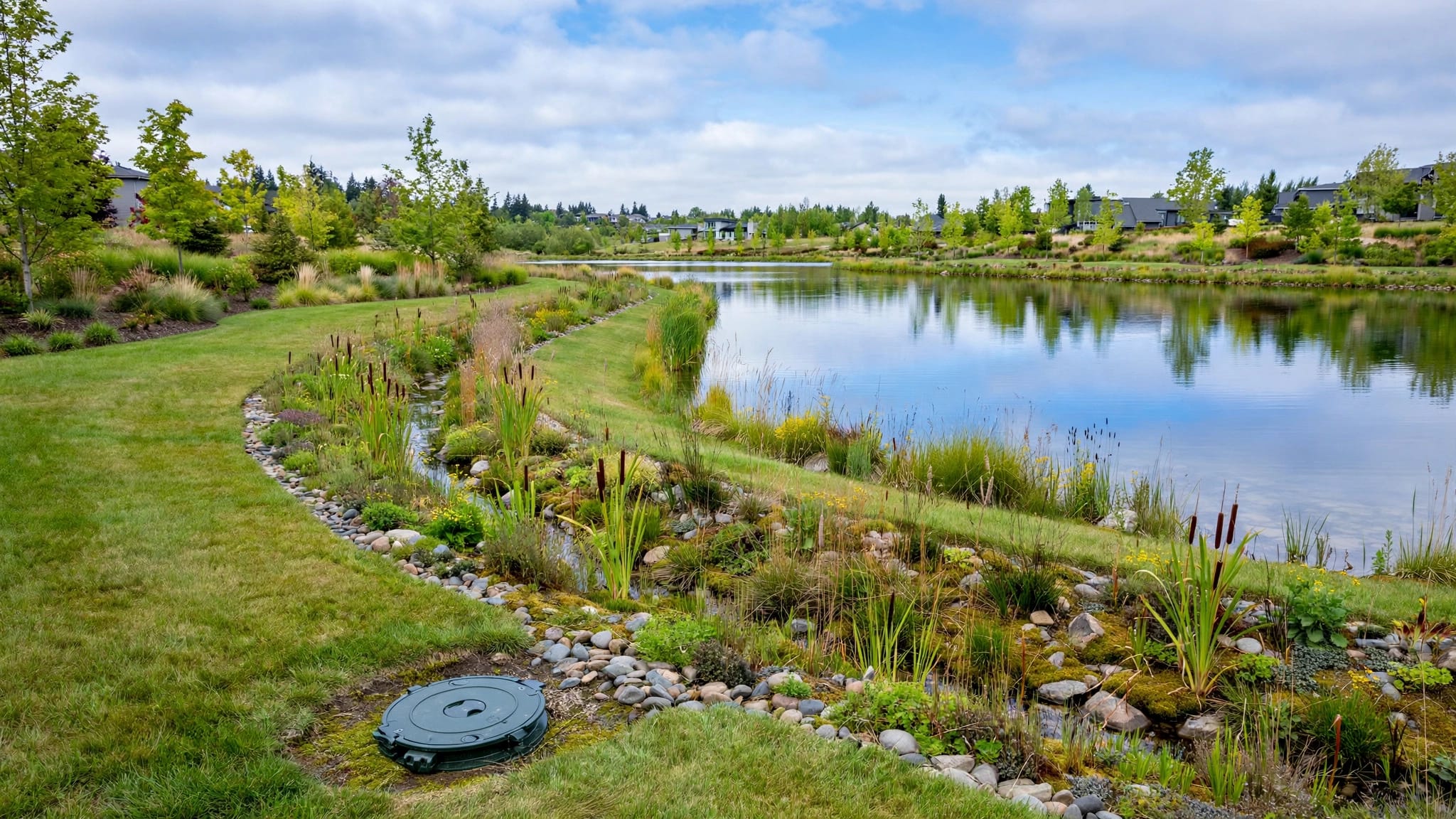
A retention pond is designed to keep water on-site for a longer period. It typically has a permanent pool, and stormwater remains in the pond while it infiltrates into the ground, evaporates, or leaves through an approved system. Many Florida communities use these ponds to manage runoff from roads, roofs, driveways, sidewalks, and landscaped areas.
A detention pond temporarily stores stormwater and releases it at a controlled rate. Some detention areas drain almost completely after a storm. Others have a permanent pool and function as wet detention systems. The design depends on the approved plans, soil conditions, drainage area, control structures, and requirements set by the local water management district or municipality.
The names can cause confusion. A community may call a pond a retention pond even when it has an outlet structure that releases water slowly. The permit drawings and drainage plans provide the clearest answer.
| Feature | Retention pond | Detention pond |
|---|---|---|
| Main purpose | Holds and treats stormwater on-site | Stores stormwater temporarily |
| Typical water level | Often has a permanent pool | May be dry between storms or maintain a lower pool |
| Water movement | Infiltration, evaporation, or approved discharge | Controlled discharge through an outlet |
| Common maintenance concerns | Algae, aquatic weeds, water quality, shoreline growth | Clogged control structures, erosion, sediment, weeds |
| HOA priority | Maintain storage capacity and water quality | Maintain storage, release rates, and outlet function |
The most important point is simple: the pond's design controls its maintenance needs . A retention pond with a blocked overflow structure can flood surrounding areas. A detention pond with excessive vegetation or sediment can lose storage capacity and release water improperly.
A pond can look attractive while its stormwater function is failing. Water level, outlet condition, and shoreline stability matter as much as appearance.
How community ponds manage Florida stormwater
Florida's intense rainstorms place a heavy load on community drainage systems. During the wet season, runoff carries soil, fertilizer, grass clippings, leaves, oil residue, and other pollutants into stormwater ponds. Without regular care, that material can feed algae, encourage invasive plants, and reduce the pond's usable capacity.
Retention ponds often rely on a permanent water body with a shallow littoral zone. Littoral plants can help stabilize soil and absorb nutrients when they are correctly selected and maintained. However, uncontrolled cattails, torpedograss, water lettuce, hydrilla, or other invasive growth can block access and spread across the pond.
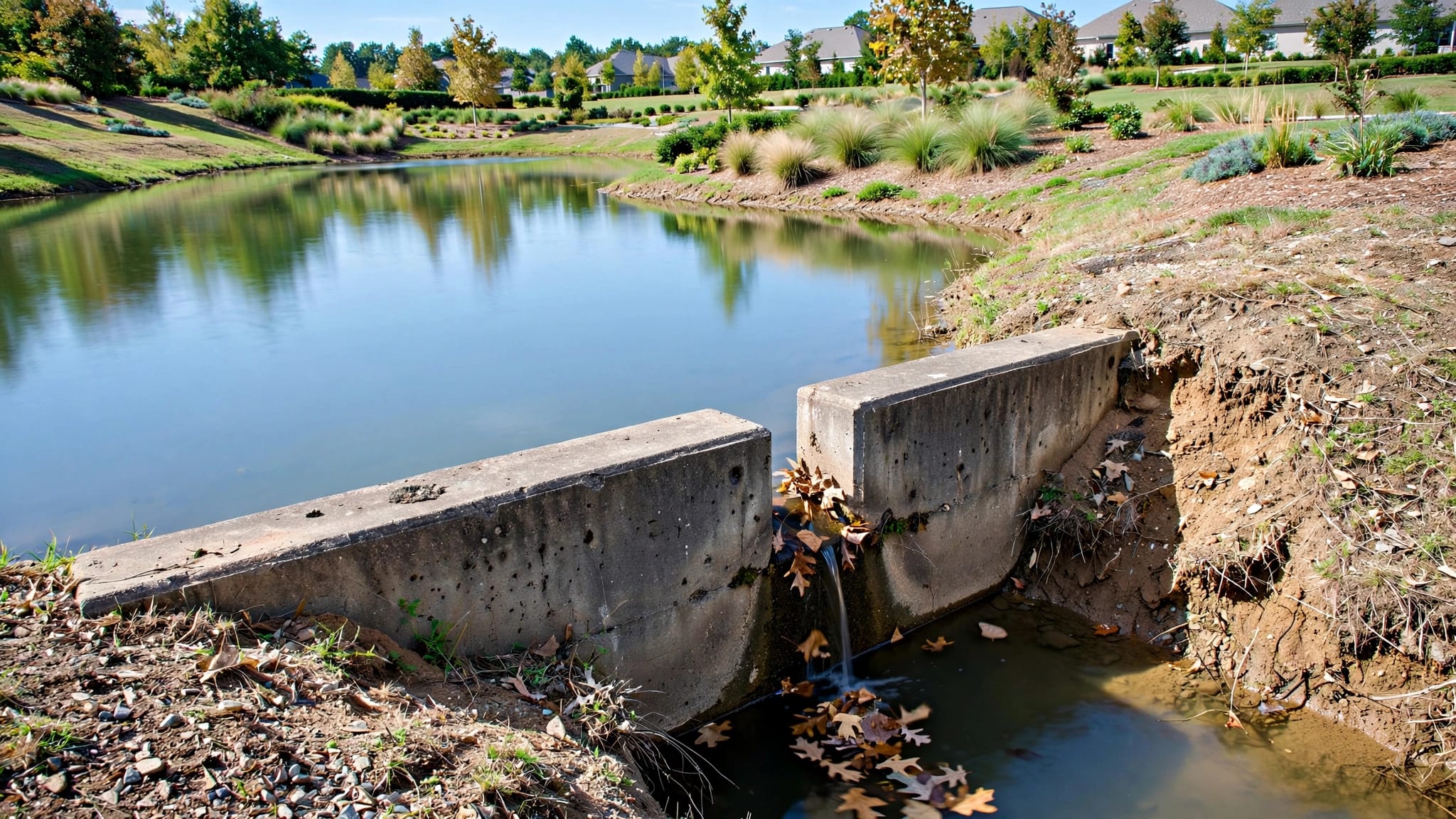
Detention ponds depend more heavily on their inlet and outlet structures. Storm drains, control boxes, weirs, risers, pipes, and overflow areas must remain open. Grass, branches, trash, and sediment can interfere with water movement. Erosion around an inlet or discharge point can also expand during repeated storms.
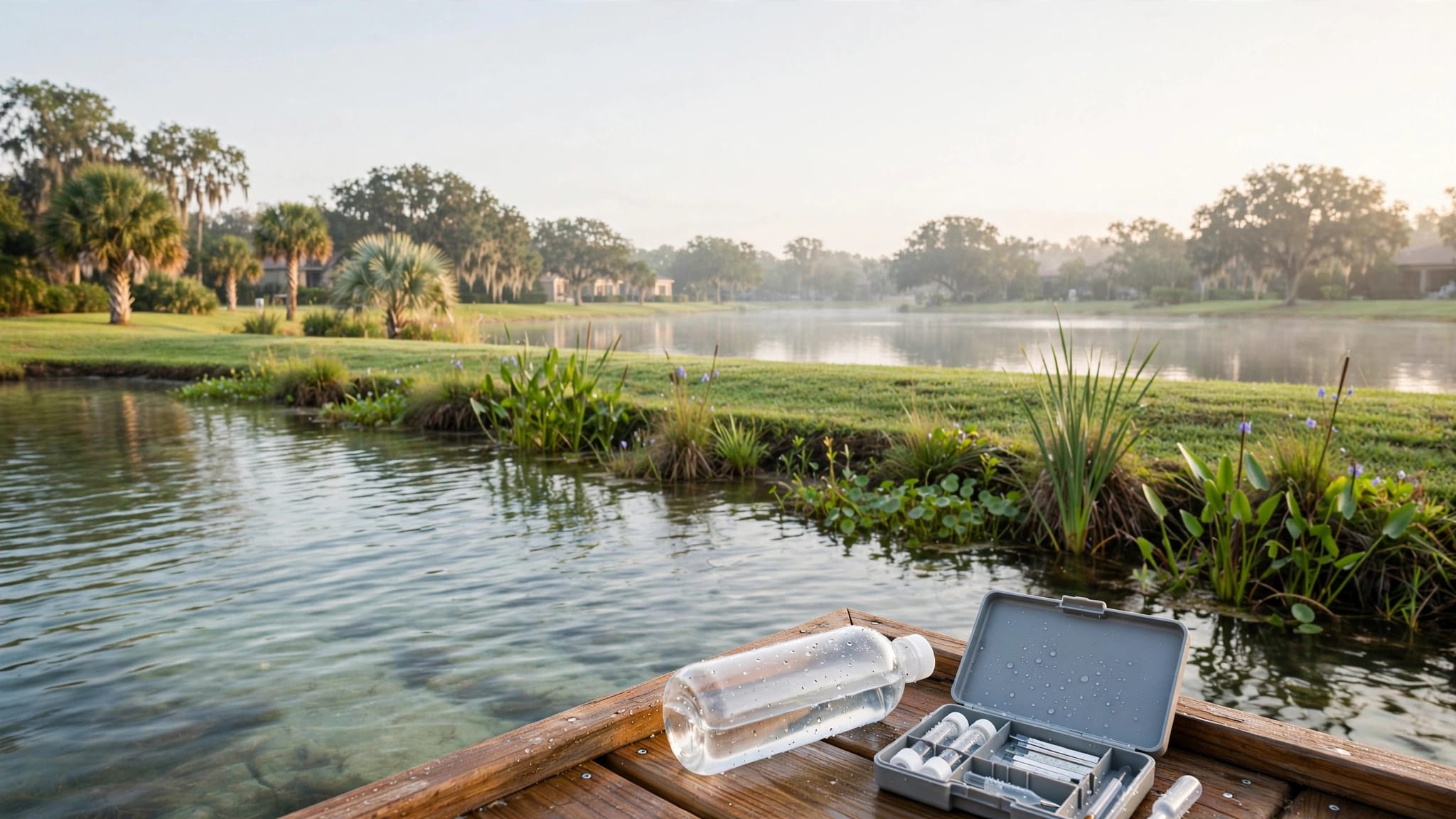
Water quality affects both systems. Excess nutrients can create green water, surface scums, foul odors, or recurring algae blooms. Aeration may help improve circulation and dissolved oxygen, but it doesn't replace proper nutrient control, vegetation management, or structural inspections.
For a community with several lakes, each waterbody may need a different plan. A pond beside a busy entrance may require more frequent debris removal. A golf course lake may receive greater nutrient loading from turf and irrigation runoff. A pond near homes may need closer attention to shoreline safety and resident access.
What retention and detention ponds need throughout the year
Florida pond maintenance should follow seasonal conditions rather than a fixed routine that ignores weather. During the dry season, lower water levels can expose erosion, damaged banks, invasive plants, and clogged structures. These months are also useful for inspecting areas that heavy vegetation may hide during the summer.
When the rainy season begins, water levels can rise quickly. Maintenance crews should check stormwater inflows, outfalls, overflow paths, shoreline washouts, floating debris, and signs of unusual water movement. A blocked control structure can become a serious concern when several inches of rain arrive in a short period.
A routine service visit may include:
- Inspecting water levels, shorelines, inlets, outfalls, and control structures.
- Identifying aquatic weeds, algae, invasive plants, and areas of low circulation.
- Removing floating debris before it reaches pipes, structures, or spillways.
- Checking for erosion, exposed roots, animal damage, and failing banks.
- Reviewing water clarity, odor, color, and visible signs of poor water quality.
- Documenting conditions with photographs and written service notes.
Treatment decisions also require care. Aquatic herbicides and algaecides must match the plant, waterbody, weather, and surrounding use. Improper treatment can damage desirable plants, reduce oxygen as vegetation decays, or create risks for fish and wildlife. Licensed professionals should handle commercial aquatic treatments according to product directions and applicable requirements.
Seabreeze Lake Maintenance provides seasonal stormwater pond maintenance for Florida properties that need wet-season and dry-season planning. A schedule may be weekly, biweekly, monthly, or customized by pond size, vegetation pressure, nutrient load, and public use.
Maintenance mistakes that create larger HOA problems
The biggest maintenance mistake is treating every pond the same. A retention pond, detention basin, decorative community lake, and golf course waterbody can have different drainage functions and risks. Applying the same treatment and inspection schedule to each one can leave important problems unnoticed.
Another common mistake is focusing only on visible weeds. Aquatic vegetation may be a symptom of excess nutrients, shallow water, poor circulation, or runoff entering the pond. Removing the plant without addressing the underlying condition often leads to repeated growth.
HOAs should also avoid allowing grass clippings, leaves, mulch, and landscape debris to collect near drains. These materials can wash into the pond during rain and add nutrients that support algae. Landscape contractors should understand where yard waste must stay clear of stormwater inlets and shorelines.
Structural issues require prompt attention. Watch for:
- Water flowing around, rather than through, a control structure.
- Sinkholes, cracks, slumping soil, or wet areas on an embankment.
- Fresh erosion near pipes, inlets, outfalls, or overflow areas.
- A water level that remains unusually high or low.
- Broken grates, exposed pipes, damaged fencing, or unsafe access points.
Routine maintenance crews can identify and document these conditions, but major structural repairs may require an engineer, drainage contractor, or approval from the responsible authority. Chemical treatment won't correct a failed pipe or damaged embankment.
A documented inspection also helps an HOA board track changes over time. Photos taken from consistent locations can show shoreline loss, expanding weed beds, algae recurrence, and changes around stormwater structures. That record supports better budgeting and gives vendors clear information when repairs are needed.
Property managers can use this Florida HOA lake inspection checklist when reviewing community lakes and stormwater ponds. The process applies to gated neighborhoods, golf courses, apartment communities, and other multi-lake properties.
How to choose the right Florida pond maintenance plan
Start by collecting the site plan, stormwater permit documents, pond names, approximate sizes, and known control structures. If the community has several waterbodies, create a separate maintenance profile for each one. The records should identify whether each area is retention, detention, wet detention, or another stormwater feature.
Next, match the service frequency to actual conditions. A monthly visit may work for a stable pond with low vegetation pressure. Weekly or biweekly service may be better for ponds with rapid algae growth, heavy runoff, frequent public use, or repeated debris problems.
The contract should describe more than "pond maintenance." It should state whether the vendor will provide aquatic weed control, algae treatment, water-quality monitoring, aeration checks, debris removal, shoreline inspections, erosion control, and photo reports. Emergency response after major storms should also be clear.
Qualifications matter when treatments and shoreline work are part of the scope. Seabreeze Lake Maintenance holds Commercial Applicator License #CM28291 and State-Licensed Specialty Contractor #SCC131152136 . HOA boards should ask every vendor for current licenses, insurance, references, and a clear list of included services.
A well-written HOA lake maintenance contract connects the work plan to each pond's function. It should also explain reporting, treatment notices, pricing, repair limits, and who handles work outside routine maintenance.
A practical decision guide for HOA boards
The retention vs detention ponds Florida discussion becomes easier when the board asks a few direct questions:
- Does the pond hold a permanent pool, drain after storms, or do both at different times?
- Where are the inlets, outlets, overflow routes, risers, weirs, and control boxes?
- What do the approved plans and permits require?
- Which pond has recurring algae, weeds, erosion, sediment, or debris issues?
- How quickly can staff report an abnormal water level or blocked structure?
- Does the proposed vendor have the licenses and experience needed for aquatic treatments and shoreline work?
The answers will reveal whether the community needs basic landscape attention, a full lake management program, structural assessment, or a combination of services. A service provider should inspect the property before recommending treatments or pricing a long-term contract.
For communities in Southwest Florida, a professional site review can identify problems before they affect roads, homes, cart paths, sidewalks, or common areas. Boards and property managers can Get a Free Lake Health Assessment to schedule a lake inspection with Seabreeze Lake Maintenance.
Conclusion
Retention and detention ponds may share the same green shoreline, but they don't manage stormwater in the same way. Retention systems focus on holding and treating water, while detention systems depend on temporary storage and controlled release.
For Florida HOAs, the correct plan starts with the approved design and continues with regular inspections, licensed treatments, clear documentation, and timely repairs. When a community understands each pond's function, maintenance decisions become more precise, stormwater problems are easier to catch, and shared property stays safer and cleaner.
Recent Posts