Irrigation Intake Protection During Lake Treatments
A lake treatment can solve an algae or weed problem, but poor planning can disrupt the irrigation system that keeps community landscapes alive. Irrigation intake protection starts before an applicator opens a product container.
Retention ponds in gated communities, golf courses, HOAs, and multi-lake properties need a site-specific plan. The right steps protect pumps, screens, turf, residents, pets, and nearby wildlife while allowing the treatment to work. Start by mapping the intake, identifying the target plant, and coordinating treatment timing with irrigation operations.
Why irrigation intakes need protection during lake treatments
An irrigation intake usually sits below the water surface, where it can pull in treated water, loose vegetation, sediment, or floating debris. A treatment that looks controlled from the shoreline may affect the intake zone if water movement carries material toward the pump.
Aquatic herbicides also have product-specific restrictions for irrigation. The label may require a temporary irrigation shutdown, a waiting period, or other precautions. Those requirements depend on the product, application rate, plant being treated, and intended water use. A provider should never guess at the restart time.
Mechanical problems can develop even without chemical exposure. As submerged weeds weaken, pieces may break loose and collect around intake screens. Dense growth can also restrict circulation near the pump. A clogged screen reduces flow, increases strain on the system, and may cause an irrigation failure when turf needs water most.
Community managers should also account for the entire lake system. Water may move through pipes, culverts, fountains, spillways, or connecting canals. An intake in one basin can draw water affected by a treatment in another basin, especially on properties with multiple retention ponds.
A treatment plan is incomplete until it shows where the intake is, when irrigation will stop, and who will approve the restart.
Inspect and map every intake before treatment
The applicator and irrigation contractor need accurate site information before treatment begins. Walk the shoreline and identify each intake, pump station, floating pump, intake screen, valve, control panel, and access point. Record the locations on a property map that maintenance staff can use.
Inspect the water around each intake for visible weeds, algae mats, trash, sediment, and loose plant fragments. Check whether the screen is already restricted. A treatment shouldn't begin with a partially blocked intake because weakened plants and debris can make the obstruction worse.
Property managers should gather these details before the service visit:
- Which lakes supply irrigation water?
- Which intake serves each turf zone or building?
- Does the system draw water continuously or on a set schedule?
- Can staff shut down the pump at the control panel?
- Do lakes connect through pipes, swales, or overflow structures?
- Are fountains, aerators, fish habitats, or recreational areas nearby?
- Does reclaimed water enter any of the basins?
A current HOA lake inspection checklist can help managers track water levels, inlets, outlets, debris, shoreline changes, and irrigation-related concerns during routine inspections.
The inspection should include a photo of each intake and its surrounding water. Fixed photographs make it easier to compare conditions after storms, treatment visits, and seasonal growth changes. If staff can't safely reach a submerged intake, they should leave the inspection to trained personnel.
Coordinate treatment timing with irrigation operations
Irrigation intake protection depends on communication. The lake management company, irrigation contractor, golf course superintendent, HOA manager, and property staff should agree on the work window before treatment starts.
The pump should remain off when the product label requires a shutdown. Staff should also avoid automatic irrigation cycles during the restricted period. A controller that starts overnight can pull treated water into the irrigation lines without anyone seeing the intake area.
Treatment timing matters for other reasons, too. Heavy rain can change water levels and move treated water through connected basins. Strong wind can push floating material toward an intake. Active pumping can pull water across the treatment area and alter where the product travels.
A practical communication plan should state:
- Which lake or treatment zone will receive the application.
- Which intake pumps must remain off.
- The date and time of the shutdown.
- The person responsible for locking out or disabling the system.
- The product label instructions that control irrigation use.
- The conditions staff must confirm before restarting.
- Who will inspect the intake after treatment.
For golf courses, the plan must fit irrigation demand, mowing schedules, play, and maintenance access. For residential communities, managers should account for irrigation timers, landscape contractors, resident notices, and common-area safety.
Reclaimed water adds another planning concern. Nutrients entering through reclaimed irrigation can support recurring algae and aquatic weed growth. Managers can review how reclaimed irrigation affects HOA lakes when evaluating water quality and treatment frequency across connected basins.
Use the right treatment method near an intake
Not every aquatic weed or algae problem should receive the same treatment. The applicator needs to identify the plant, estimate the treatment area, consider water movement, and select a product approved for that use.
A targeted treatment may reduce risk near an intake because it limits the treated area and reduces the amount of vegetation that weakens at one time. However, dense growth may need a phased plan. Treating a large area all at once can create heavy plant decay and increase the amount of loose material near screens.
Submerged plants deserve close attention. Coontail, for example, can form dense underwater growth near irrigation areas. Managers can review coontail growth near irrigation intakes to help staff recognize the plant and report its location before service.
The applicator should also inspect fountains and aerators. These systems can move water through a treatment zone, spread fragments, or pull debris toward a nearby pump. Temporary adjustments may help, but staff should follow the treatment provider's instructions rather than changing equipment without coordination.
Mechanical removal can help when debris has already collected around a screen or when a small amount of vegetation threatens the intake. Yet removal alone may not control the underlying growth. Mature weeds often have established roots and dense stems, which can make treatment less effective if the provider doesn't account for plant age and coverage. See why mature aquatic weeds resist lake treatments for factors that affect treatment results.
The safest method depends on the lake, the plant, the intake design, and the water-use requirements. Product labels always control application and irrigation restrictions.
Protect the pump, screen, and water quality after application
Irrigation intake protection continues after the applicator leaves the property. Staff should inspect the intake before restarting the pump and continue checking it during the days that follow.
Look for floating fragments, dead vegetation, algae clumps, unusual turbidity, and reduced water flow. If the lake contains heavy weed coverage, inspect more often because plant material can shift with wind and rain. Remove debris only with equipment and procedures appropriate for the intake design.
A restart inspection should confirm that:
- The intake screen is clear.
- The pump area has no visible blockage.
- The water meets the product label requirements for irrigation.
- No connected basin carries treated water toward another active intake.
- Automatic irrigation schedules match the approved restart time.
- Staff know whom to contact if flow drops or water changes.
Do not restart based on appearance alone. Clear-looking water may still fall within a product's restricted-use period. The applicator should document the approved restart conditions, and the irrigation contractor should confirm that the pump operates normally.
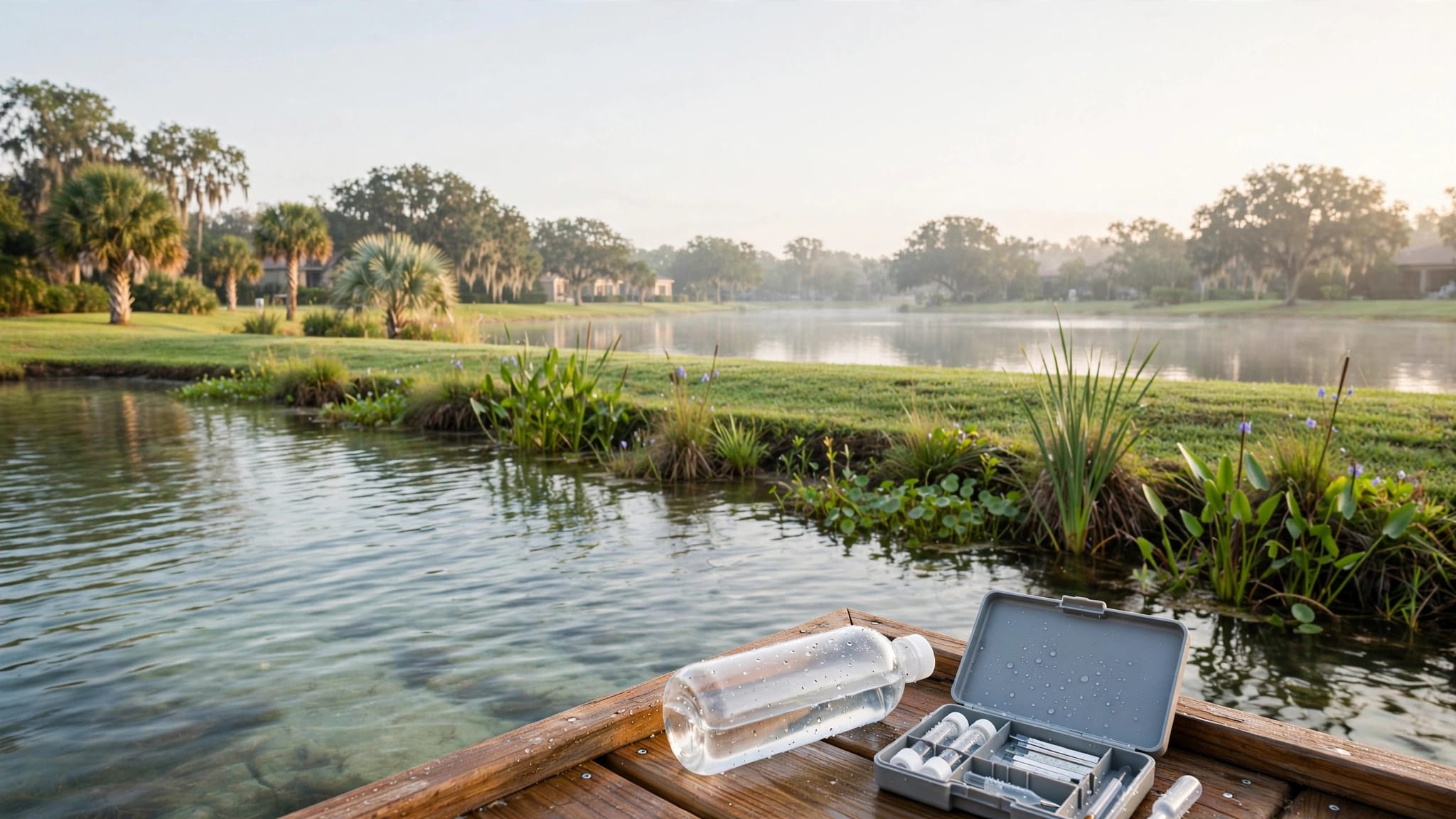
Water quality monitoring may also help on larger properties. A provider can compare appearance, odor, water clarity, dissolved oxygen, and nutrient concerns when the treatment plan requires closer observation. Fish stress, sudden odor, or large amounts of decaying vegetation warrant prompt attention.
Build intake protection into the maintenance schedule
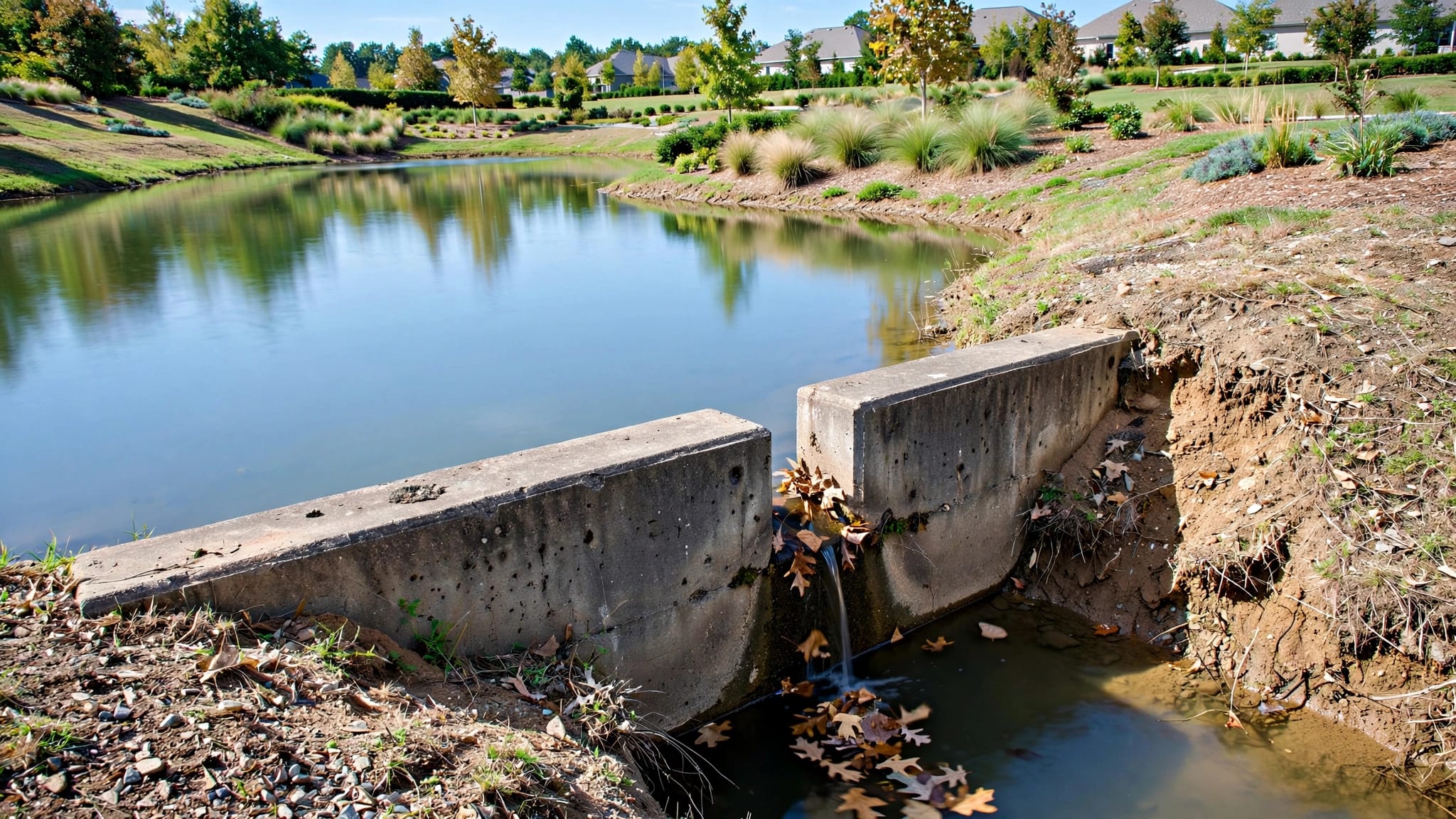
An intake problem often points to a broader lake management issue. Repeated clogs may come from excessive plant growth, shoreline erosion, storm debris, sediment buildup, or runoff entering the basin. Treating the intake alone won't correct those causes.
A weekly or biweekly inspection can catch changes before they interrupt irrigation. Staff should photograph intake areas, note water levels, check for new growth, and report any drop in pump performance. Monthly reviews can compare conditions across all lakes on the property.
Seasonal planning matters in Southwest Florida. Wet-season storms can carry branches, grass clippings, sediment, and nutrient-rich runoff into retention ponds. Dry-season low water can expose erosion, leaking irrigation lines, and intake components that need attention. A Florida lake maintenance calendar can help communities align inspections with seasonal conditions.
Maintenance plans should also address landscape practices around each lake. Keep grass clippings out of the water, correct irrigation overspray, maintain stable shorelines, and monitor areas where stormwater enters. These steps reduce the material and nutrients that support recurring problems.
When a property has several lakes, treat each basin according to its conditions. One lake may need algae control, while another needs submerged weed management or debris removal near an intake. A single schedule for every basin can miss these differences.
Choose a qualified lake treatment provider
Lake treatments require more than product selection. The provider should understand aquatic plants, water movement, irrigation systems, Florida retention ponds, and the safety requirements for occupied properties.
Ask whether the company will inspect the intake before treatment, document shutdown instructions, coordinate with the irrigation contractor, and check the system after the restricted period. The service plan should also identify how staff will receive treatment notices and what signs require a follow-up visit.
For Florida communities and golf courses, licensing is another practical consideration. Seabreeze Lake Maintenance lists Commercial Applicator License #CM28291 and State-Licensed Specialty Contractor #SCC131152136 . Property managers can Get a Free Lake Health Assessment to discuss lake conditions, intake concerns, and a maintenance plan for the property.
A qualified provider should keep treatment records, follow product labels, and account for residents, pets, wildlife, irrigation use, and nearby recreational areas. Those records also give the board or property manager a clear reference when future treatments become necessary.
Conclusion
Protecting an irrigation intake during a lake treatment starts with a clear map, accurate plant identification, and communication between lake and irrigation professionals. Shut down pumps when required, follow the product label, inspect screens after treatment, and document the restart conditions.
For communities, golf courses, and multi-lake properties, irrigation intake protection should be part of routine lake maintenance rather than an emergency response. A well-planned treatment controls the target problem while keeping the water system and surrounding property in dependable condition.
Recent Posts