Coontail Identification in Florida Community Lakes
A submerged plant can spread across a retention pond before most residents notice it. When that happens, coontail identification Florida property managers can trust is the first step toward choosing the right response.
Coontail is common in Florida lakes, including HOA ponds, golf course water features, and multi-lake communities. It can provide useful underwater cover, yet dense growth may interfere with drainage, recreation, appearance, or water-quality work. Learn to recognize its structure before anyone treats the lake.
Key Takeaways
- Coontail has stiff, forked leaves arranged around underwater stems.
- It has no true roots and can grow as a floating or submerged plant.
- Hydrilla, milfoil, cabomba, chara, and filamentous algae can look similar from shore.
- Plant identification should come before herbicide selection or mechanical removal.
- Licensed lake professionals can assess growth while checking drainage structures and dissolved oxygen risks.
Coontail Identification Florida Managers Can Use
Coontail is the common name for Ceratophyllum demersum , a submerged aquatic plant found throughout Florida. The plant grows below the surface, although long stems can reach the top of shallow water or form loose surface clusters.
Its most recognizable feature is the leaf shape. Leaves grow in crowded whorls around the stem and divide into narrow, forked segments. Those segments feel firm and bristly rather than soft. The plant often resembles a bottlebrush or a raccoon's tail, which explains its common name.
Color can range from bright green to dark green. Older or stressed growth may look brownish, especially when it begins to break down. The stems can become several feet long, with denser growth near the tips. Small flowers and fruits may occur underwater, but property managers usually identify coontail by its leaves and growth habit.
Another important clue is the lack of true roots. Coontail can remain suspended in the water column or drift freely. It may also stay near the bottom, held in place by modified structures rather than a typical rooted system. This feature separates it from many other submerged weeds.
Look for these signs during a shoreline inspection:
- Stiff, forked leaves with a rough or bristly appearance
- Leaves arranged in circular groups around the stem
- Long, flexible stems that may rise toward the surface
- Dense underwater beds that sway with water movement
- Loose fragments or floating pieces after wind, boat activity, or maintenance
A single plant fragment can make identification difficult. Shoreline staff should collect a fresh sample in a container of lake water, rather than relying on a distant view through glare. A close photograph should show the entire stem, the leaf arrangement, and the plant's growing environment.
How to Tell Coontail From Similar Lake Plants
Misidentification causes many treatment problems. A product that works on one aquatic plant may not provide the same result on another. Accurate coontail identification in Florida communities requires a close look at leaf texture, stem structure, and whether the plant floats or anchors.
| Plant | Main identification feature | Common concern |
|---|---|---|
| Coontail | Stiff, forked leaves in whorls around the stem | Dense underwater growth and surface clusters |
| Hydrilla | Narrow leaves with noticeable teeth and a central midrib | Rapid spread and heavy submerged beds |
| Eurasian watermilfoil | Soft, featherlike leaves around the stem | Thick surface canopies |
| Cabomba | Flat, fan-shaped underwater leaves | Dense submerged stands |
| Chara | Rough, branched growth with a strong musky or garlic-like odor | Confusion with rooted plants or algae |
| Filamentous algae | Hairlike strands forming soft mats | Floating green material and decaying organic matter |
Hydrilla often has narrower leaves with visible serrations. It may also produce small tubers in the sediment, although those aren't visible during a quick shoreline check. Milfoil has a softer, featherlike appearance, while coontail leaves look more rigid and forked.
Cabomba is easier to separate when the fan-shaped leaves are visible. Chara can resemble a submerged plant bed, but it has a coarse, brittle texture and often produces a distinct odor when crushed. Filamentous algae has no clear stems or leaf whorls. Instead, it forms slimy or stringy mats that may detach and float.
A green mat at the surface doesn't automatically indicate coontail. The plant may be algae, a submerged weed reaching the surface, or loose vegetation moved by wind.
For another common source of confusion, review this guide to filamentous algae versus chara identification. The difference matters because algae and rooted or stem-forming plants need different management decisions.
When Coontail Becomes a Problem in a Community Lake
A moderate amount of coontail may provide cover for small fish and aquatic organisms. It can also remain below the surface without affecting a lake's appearance. Problems begin when growth becomes dense, reaches the surface, or moves into areas that need to stay open.
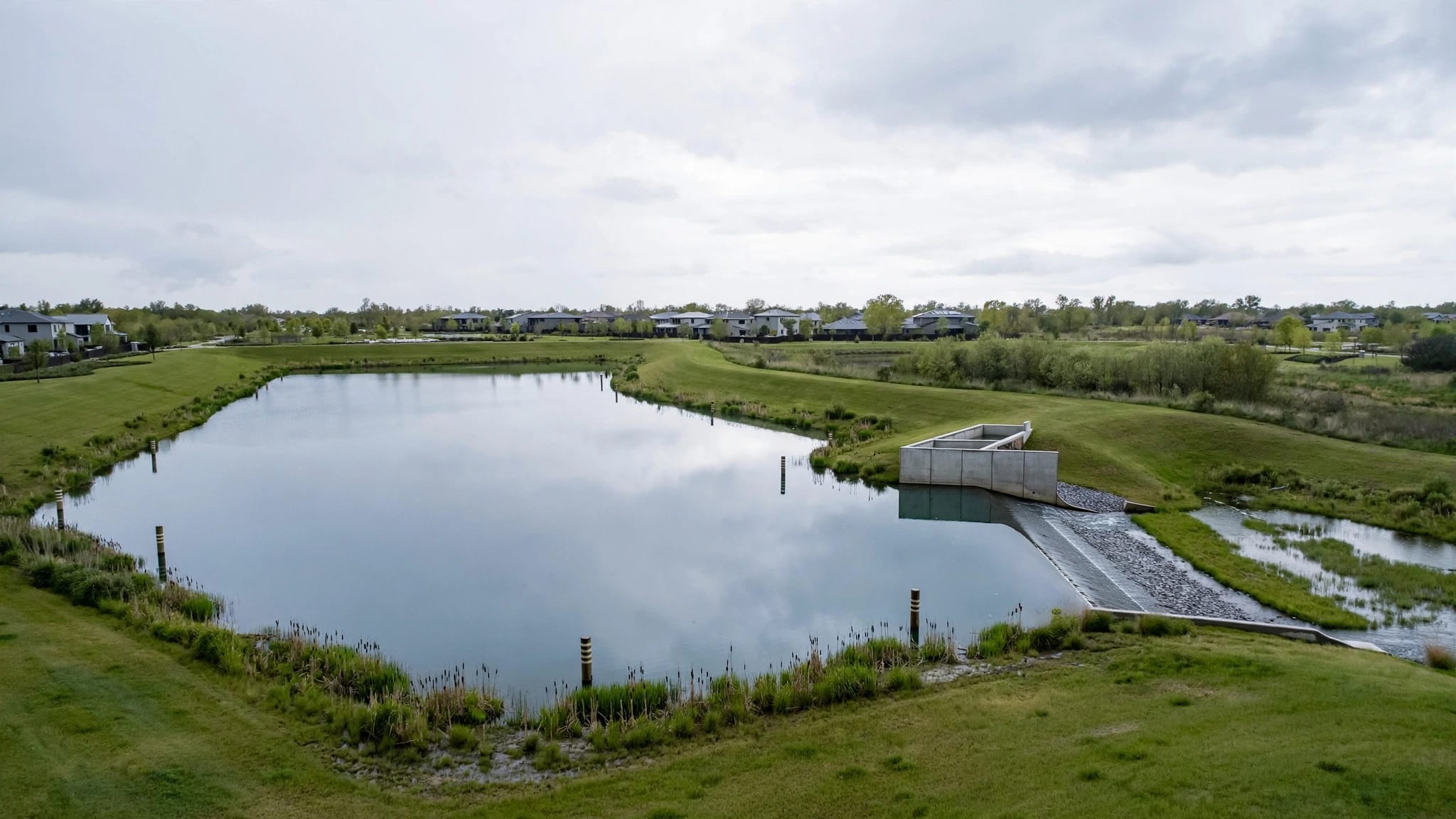
In a retention pond, the first concern is often drainage. Vegetation should not restrict an inlet, outfall, weir, control structure, or emergency spillway. A dense plant bed can also trap floating debris near an outfall. HOA maintenance teams should inspect these areas before deciding whether a treatment is needed.
Golf courses may face additional concerns. Submerged growth can interfere with irrigation intake areas, create difficult sightlines near tee boxes, and collect along edges that golfers can see. In residential communities, surface fragments may draw complaints because they make a pond look neglected, even when the water remains functional.
Watch for these changes:
- Coontail reaches the surface across a large section
- Growth blocks access for inspections or shoreline work
- Floating fragments collect around drains or control structures
- Plants interfere with irrigation, fishing, or golf course operations
- Decaying vegetation creates odor or reduces water clarity
- Dense beds begin to replace open water needed for drainage
Nutrient-rich runoff can support aquatic plant growth. Fertilizer, organic debris, sediment, and stormwater all affect conditions inside a retention pond. However, the presence of coontail doesn't identify the single cause of a problem. A proper inspection also considers water depth, circulation, sunlight, recent rain, and the condition of the shoreline.
A community should avoid treating every submerged plant automatically. Selective management may be appropriate when growth affects safety, function, appearance, or water quality. Leaving a limited, healthy bed alone may be the better choice when it doesn't interfere with the pond's purpose.
Why Timing and Treatment Method Matter
Coontail can spread when stems break apart and move through the water. Cutting or raking may improve a small access point, but loose fragments can relocate to another section of the lake. Mechanical removal also may not address the conditions supporting regrowth.
Chemical treatment requires the same care. A licensed applicator must identify the plant, calculate the treatment area and water volume, follow the product label, and account for nearby uses. Irrigation, fishing, swimming, pets, wildlife, and stormwater movement all matter when planning an application.
Large-scale treatment can create a second problem when too much vegetation dies at once. Decomposing plants consume oxygen, especially in warm water. Low dissolved oxygen can stress or kill fish. For that reason, professionals often divide treatment areas, monitor conditions, and remove heavy surface debris when appropriate.
Established growth can also respond poorly to incomplete or poorly timed applications. Read why mature aquatic weeds resist treatments before assuming that one application will solve a dense infestation. Water movement, plant density, weather, and treatment coverage can all affect results.
Seabreeze Lake Maintenance provides aquatic vegetation management for Southwest Florida communities and commercial properties. The company holds Commercial Applicator License #CM28291 and State-Licensed Specialty Contractor #SCC131152136. A sound program may combine plant identification, selective treatment, mechanical removal, aeration, shoreline work, and follow-up inspections.
The right method depends on the lake, not only the plant name. Coontail near an outfall needs a different response than coontail spread through a quiet back cove.
A Practical Inspection Process for HOAs and Golf Courses
Property managers can make the first inspection more useful by recording where the plant appears and how it changes. Walk the shoreline at several locations, then inspect visible inlets, outlets, fountains, and irrigation areas. Avoid entering the water unless trained staff have the proper equipment.
Photograph the plant in clear water and label each image with the lake section. Note whether the growth is rooted-looking, floating, attached to the bottom, or moving with wind. Record recent rain, maintenance activity, water discoloration, odor, and fish behavior.
A professional assessment should answer four basic questions:
- Is the plant coontail or another aquatic species?
- How much of the lake contains the growth?
- Does it affect drainage, access, safety, or appearance?
- What treatment can control it without creating a larger water-quality problem?
For multi-lake properties, map each water body separately. One pond may need treatment while another needs only monitoring. Applying the same plan across every lake can waste money and disturb beneficial vegetation.
Communities can get a Free Lake Health Assessment to review coontail growth, water conditions, shoreline concerns, and maintenance needs with Seabreeze Lake Maintenance.
Conclusion
Reliable coontail identification Florida lake managers can use depends on details that are easy to miss from shore: stiff forked leaves, circular leaf arrangements, long stems, and the absence of true roots. Those traits help separate coontail from hydrilla, milfoil, cabomba, chara, and filamentous algae.
Once the plant is identified, the community can decide whether it needs treatment or monitoring. A careful plan protects drainage structures, fish, shoreline appearance, and the lake's daily function while avoiding unnecessary disturbance. The first green patch may be small, but a clear inspection gives your HOA, golf course, or property team a better path forward.
Recent Posts