What Sulfate Levels Mean in Florida HOA Lakes
A sulfate result can tell an HOA something about the dissolved minerals in a lake, but it cannot diagnose a lake problem on its own. Sulfate levels in lakes need context , including the water source, other test results, and changes over time.
That distinction matters for retention ponds, golf course lakes, and multi-lake communities. A drinking-water guideline or groundwater reading isn't automatically a target for a neighborhood lake. Here's how to read sulfate results without mistaking one number for a complete assessment.
Key Takeaways
- Sulfate is a dissolved ion, usually reported in milligrams per liter (mg/L). Its concentration alone doesn't identify where it came from.
- Groundwater measurements and drinking-water standards don't establish a normal or harmful sulfate level for an HOA lake.
- Florida's 250 mg/L secondary drinking-water standard is based on drinking-water considerations, not a lake's aquatic-life health.
- A useful interpretation compares consistent samples over time and considers the lake's other water-quality measurements and site conditions.
What a Sulfate Measurement Means
Sulfate is one dissolved component
Sulfate, written as SO₄²⁻, is an ion that can occur naturally in water. A lab report typically gives its concentration in mg/L. That result describes the amount of sulfate in the sample, but it does not identify the source or explain what caused a change.
For a community lake, the number is one part of a broader water-quality picture. It should be considered alongside the lake's drainage, water sources, and other test results. A change in sulfate may be worth tracking, but the result by itself doesn't show whether algae, fish, or shoreline conditions are affected.
Sulfate is different from conductivity
Sulfate and specific conductance are related measurements, but they are not interchangeable. Conductivity reflects how well water carries an electrical current, which depends on the mixture of dissolved ions. It does not measure sulfate alone.
Florida's 2024 Integrated Water Quality Assessment lists total sulfate and specific conductance as separate monitored parameters. That distinction matters when a report includes both: a conductivity change can point to a change in dissolved materials, but it can't be converted directly into a sulfate concentration.
What Sulfate Levels in Lakes Can and Cannot Tell You
A result doesn't identify its source
Sulfate in a sample could reflect the water's natural chemistry or a change in what enters the lake. The lab result alone cannot distinguish among possible sources. Site conditions and additional samples are needed to understand whether a reading is part of a stable pattern or a recent change.
For HOA managers, the practical question is whether the result differs from that lake's own history. One pond's reading may not be a useful baseline for another pond on the same property, especially when the basins have different drainage or water sources.
One result doesn't explain a visible problem
A sulfate result shouldn't be treated as proof that sulfate caused algae, odor, low oxygen, or fish stress. Those conditions have multiple possible causes, and sulfate by itself doesn't diagnose them.
Instead, review the result alongside observations and other measurements. How to read HOA lake water test results explains how individual values fit into a wider report. If a lake has a recurring problem, testing should help investigate it rather than substitute one number for a diagnosis.
What Florida Groundwater Data Can Tell an HOA
Groundwater measurements vary widely
U.S. Geological Survey (USGS) studies show that sulfate in Florida groundwater varies by location and depth. In samples from the Upper Floridan aquifer, shallow groundwater ranged from 0.5 mg/L in a Polk County recharge area to 1,800 mg/L near the coast in Sarasota County. Deeper samples ranged from 6.0 to 2,800 mg/L.
Another USGS study of 33 wells in parts of Marion, Sumter, and Citrus Counties found sulfate concentrations from less than 0.2 to 1,400 mg/L. These figures describe groundwater samples, not retention ponds or community lakes.
A groundwater range isn't a lake standard
Groundwater data can provide context about the variety of water chemistry in Florida. However, it cannot define the expected sulfate level for a surface-water lake. The study areas, depths, and water sources differ from those of an HOA's ponds.
A Florida water-resources summary reports average sulfate in rainwater at about 2 mg/L. That figure also isn't a lake baseline, since rainwater is only one possible influence on a waterbody. A result for a community lake should be compared with samples from that lake, collected under comparable conditions.
Why the 250 mg/L Figure Doesn't Set a Lake Threshold
It's a drinking-water standard
Florida DEP lists sulfate at 250 mg/L under its secondary drinking-water standards. The EPA's Secondary Maximum Contaminant Level is also 250 mg/L. EPA established that level in 1984 based on taste.
Secondary standards concern drinking-water qualities such as taste, odor, or appearance. EPA states that they aren't federally enforceable. More importantly for an HOA, 250 mg/L is not an aquatic-life threshold and shouldn't be used to label a lake safe, unsafe, healthy, or unhealthy.
Florida monitoring isn't the same as a limit
Florida's surface-water standards are in Chapter 62-302 of the Florida Administrative Code. The statewide materials don't establish a single numeric sulfate criterion for interpreting every Florida lake or retention pond.
Florida DEP's inclusion of sulfate in its water-quality assessment means the parameter is monitored. It doesn't make a particular value an HOA lake action threshold. The appropriate meaning of a result depends on the question being investigated and the lake's history.
How HOAs Should Interpret a Sulfate Result
Compare consistent samples
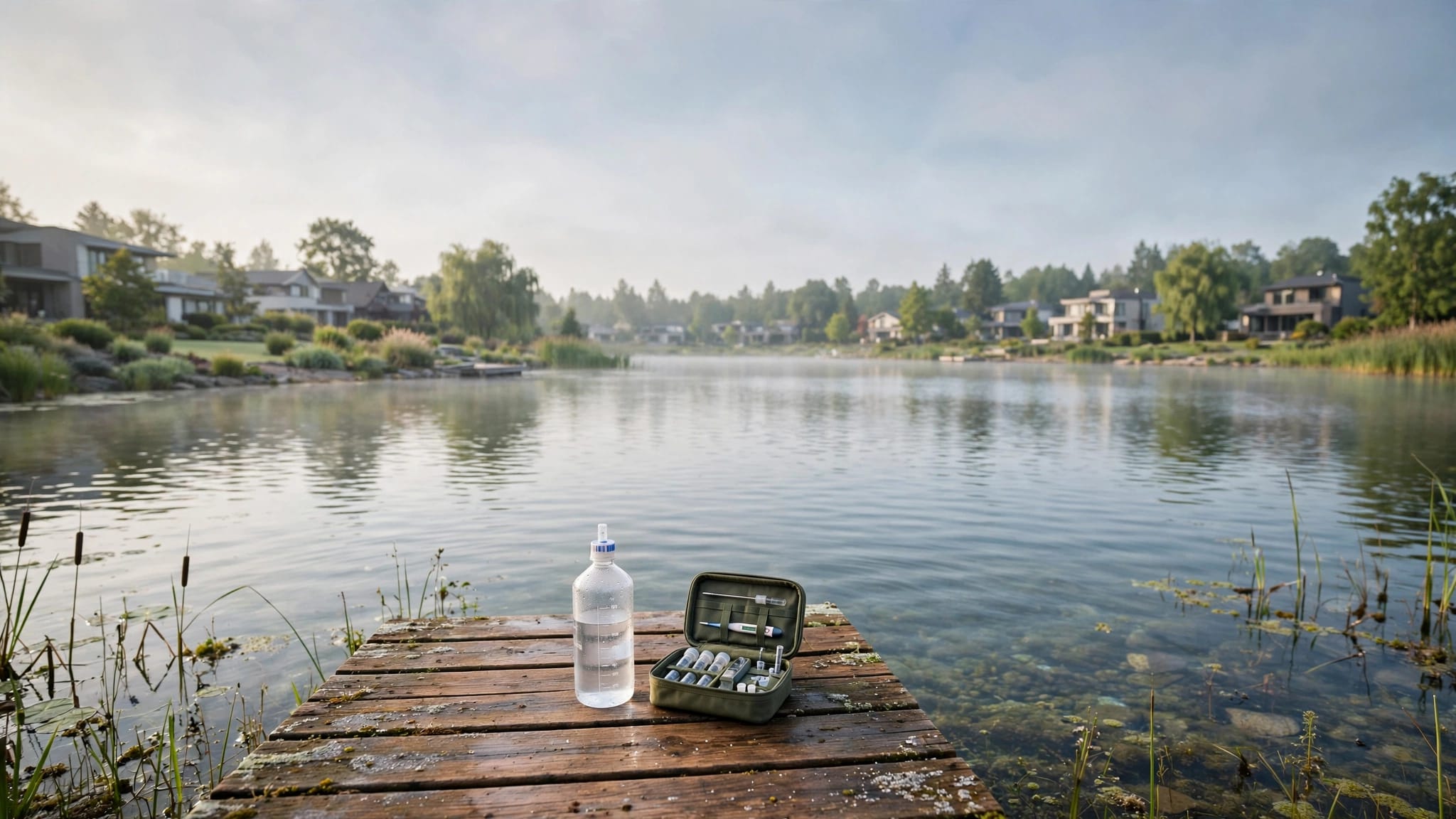
A trend is more useful when samples come from comparable locations and conditions. Keep records of the collection date, sampling point, depth, recent rainfall, and any unusual change in water level or drainage. If samples use different methods or collection practices, the results may be harder to compare.
A clear chain-of-custody process for community lake water samples helps maintain reliable documentation, especially when laboratory results will inform a board decision. For properties with several basins, keep each lake's records distinct rather than treating one pond as a stand-in for the rest.
Read sulfate with the rest of the report
A water-quality review may include pH, dissolved oxygen, nutrients, clarity, and conductivity, depending on the lake and the concern. These measurements help describe different conditions. None should be treated as a direct substitute for a sulfate result.
Likewise, chloride is another dissolved ion, but it has its own interpretation. How chloride levels affect HOA lakes covers that separate measurement. Reviewing related indicators together gives managers a stronger basis for deciding whether a result is stable or calls for further investigation.
Practical Steps for Community Lake Managers
Connect test results to site observations
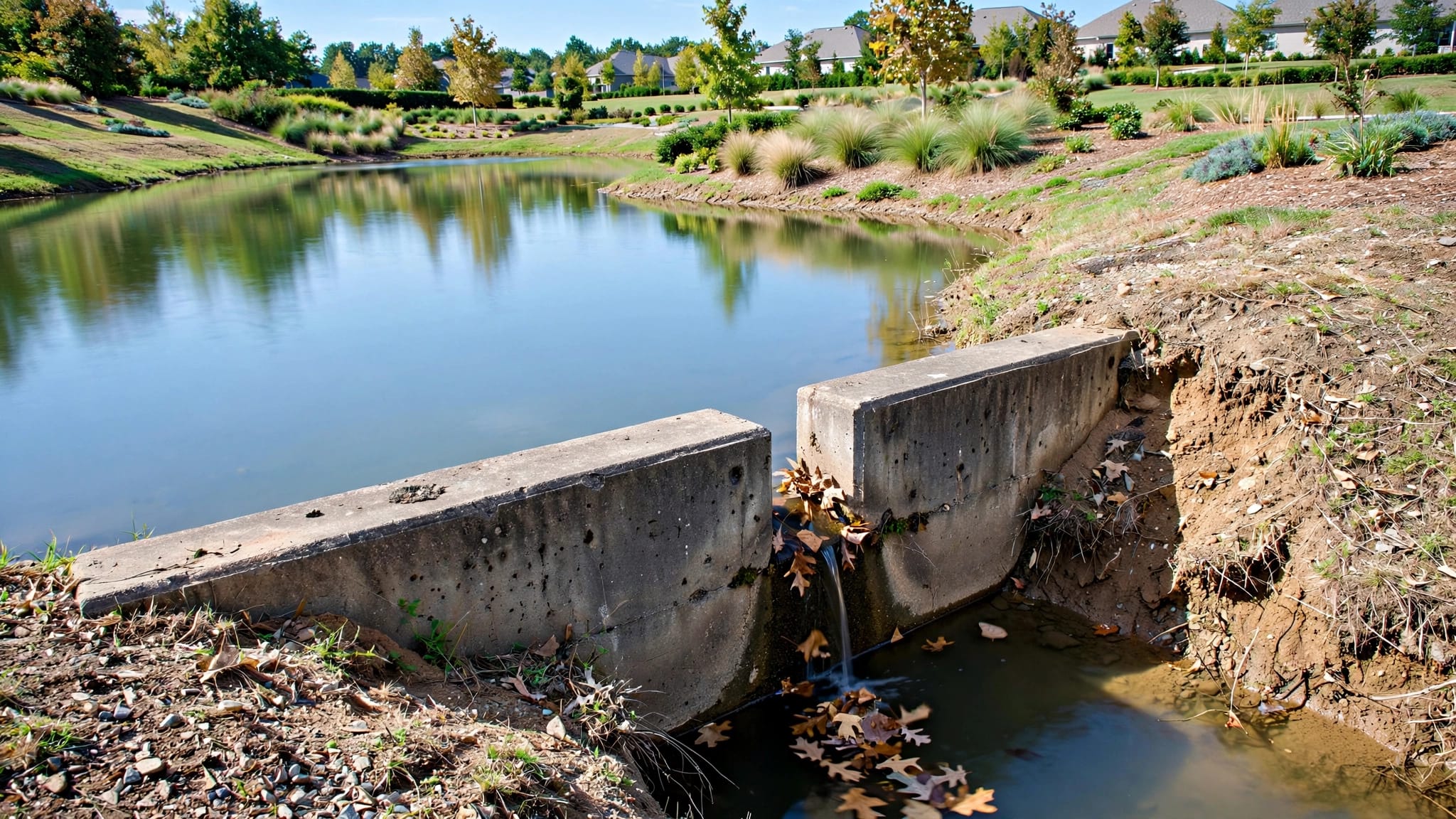
When a sulfate result changes, document what else has changed at the lake. Note recent storms, water-level shifts, visible discharges, blocked inlets, damaged banks, erosion, or excess debris. These observations help describe the conditions around the sample without assuming a cause.
Also record any algae growth or other visible concern, while keeping those observations separate from the sulfate measurement. The goal is to build a usable record: what was measured, where and when it was collected, and what was happening at the property.
Use testing to guide a specific decision
Before arranging additional testing, identify the management question. Is the board tracking a change over time, investigating an unusual result, or reviewing a broader water-quality concern? A focused question makes it easier to select appropriate sampling and related measurements.
Seabreeze Lake Maintenance serves HOAs, gated communities, golf courses, and other multi-lake properties in Southwest Florida. Our team holds Commercial Applicator License #CM28291 and State-Licensed Specialty Contractor #SCC131152136. Boards can Get a Free Lake Health Assessment to discuss a lake inspection and water-quality concerns.
FAQ About Sulfate in HOA Lakes
Is there a normal sulfate level for Florida HOA lakes?
The available statewide information doesn't establish one normal sulfate range for all Florida lakes and retention ponds. Groundwater figures aren't a surface-water baseline. Comparing consistent results from the same lake over time is more useful.
Does 250 mg/L mean a lake is unsafe?
No. The 250 mg/L figure is a secondary drinking-water standard based on taste, not a lake aquatic-life threshold. It shouldn't be applied as a safety cutoff for a community pond.
Can sulfate explain algae or low oxygen?
A sulfate result by itself cannot diagnose algae growth or low dissolved oxygen. Those conditions require their own assessment, including relevant water-quality measurements and site observations.
A Useful Way to Read Sulfate Results
Sulfate is a measurable part of lake chemistry, but one result doesn't reveal its source or determine the lake's overall condition. Drinking-water standards and groundwater measurements also shouldn't be mistaken for HOA lake thresholds.
For community managers, the strongest interpretation comes from consistent sampling, careful records, and the full water-quality picture . That approach helps turn a lab result into a sensible next step for the property.
Recent Posts