What Lake Chloride Levels Mean for HOA Lake Management
A chloride reading can help explain changes in a community lake, but it rarely tells the whole story by itself. For HOAs, golf courses, and gated communities, the useful question is whether a result differs from the lake's normal pattern and what could be driving that change.
Chloride is one clue in a broader water-quality picture. Read alongside conductivity, salinity, site conditions, and repeated samples, it can help managers decide whether to investigate a new source or keep monitoring.
Key Takeaways
- Chloride is a dissolved ion that can be present naturally or enter a lake through outside sources.
- One reading can't identify where chloride came from or prove saltwater intrusion.
- Conductivity and hardness offer related information, but neither is a substitute for a chloride measurement.
- Repeated results, consistent sampling locations, and shoreline observations make trends easier to interpret.
- Multi-lake properties need lake-specific records because individual ponds can receive water from different parts of the site.
A rising result deserves attention, but it doesn't automatically call for a treatment. The next step is to compare the reading with other measurements and inspect what flows into the affected lake.
What Lake Chloride Levels Can Tell You
Chloride is a negatively charged ion found in dissolved salts. A water test can measure how much chloride is in a sample, offering a useful piece of information about the lake's water chemistry. However, that result alone doesn't show whether chloride came from groundwater, irrigation water, saltwater influence, or another source.
For a community property, chloride testing is most useful when it answers a specific management question. A board might want to know whether a lake's chemistry is changing, whether a coastal basin could be affected by saltwater intrusion, or whether a difference between two ponds needs further investigation.
A single sample is a snapshot. A series of comparable results is more informative because it shows whether a reading is stable, rising, or tied to a particular event. A high result in one lake also doesn't mean every pond on the property has the same condition.
When managers review chloride testing for coastal lakes, they should treat it as one part of a site-specific assessment. That's especially important in Southwest Florida, where a lake's drainage connections, location, and water sources can differ from those of its neighbors.
Keep Chloride Separate From Other Water Measurements
Related measurements can help describe a lake, but they answer different questions. Mixing them up can lead to a mistaken diagnosis or an ineffective response.
Chloride and conductivity
Conductivity measures how readily water carries an electrical current. Dissolved ions contribute to that current, so a higher result can point to more dissolved material. Yet conductivity doesn't identify which ions are present or provide a chloride concentration.
If conductivity is high, chloride testing may help clarify the picture. The reverse is also true: chloride results can be considered alongside conductivity to understand whether the lake's dissolved salts appear to be changing. A single conductivity reading can have several possible explanations, so managers should compare it with other test results and conditions around the basin. See what elevated lake conductivity can mean.
Chloride and hardness
Water hardness relates mainly to dissolved calcium and magnesium. Chloride can be present in the same water, but a hardness result does not diagnose salinity or establish a chloride level.
This distinction matters when an HOA receives a water-quality report with several mineral measurements. Each value has a different role. Reading chloride, conductivity, and hardness as separate results helps keep the discussion accurate. Our guide to distinguishing water hardness from lake salinity covers how those measurements fit together.
Consider Possible Sources Before Choosing a Response
Chloride may be present in water from natural mineral sources. In a managed lake, outside inputs can also affect the result. Saltwater influence, irrigation water, or other sources may change chloride and conductivity, but the test alone cannot distinguish among them.
Look at the lake's setting and drainage
The route water takes across a property can help narrow the investigation. Review which inlets, swales, canals, or drainage areas feed the pond. Note nearby irrigation, recent site work, and whether the lake is connected to other basins.
On a multi-lake property, one pond may receive water from a different part of the grounds than another. A result from a lake near the coast, for example, shouldn't automatically be applied to an inland pond. Compare the conditions around each basin before deciding whether a property-wide issue exists.
Use patterns as evidence, not proof
A chloride increase that appears repeatedly in the same lake deserves more attention than a single reading with no clear pattern. If a coastal lake also shows recurring plant failure in the same shoreline areas or repeated shoreline loss after storms, salinity could be part of the issue. Those observations still don't prove saltwater intrusion.
Testing can help assess whether salinity is involved, while site inspections help identify where water is entering and what may be changing. For more context on chloride testing for coastal community lakes, compare results with the lake's history and visible conditions.
Compare Results Across Time and Across Lakes
A baseline makes a new test easier to interpret. Without earlier results, a manager may know the current chloride reading but have little basis for judging whether it reflects a lasting condition or a recent change.
Keep sampling conditions consistent
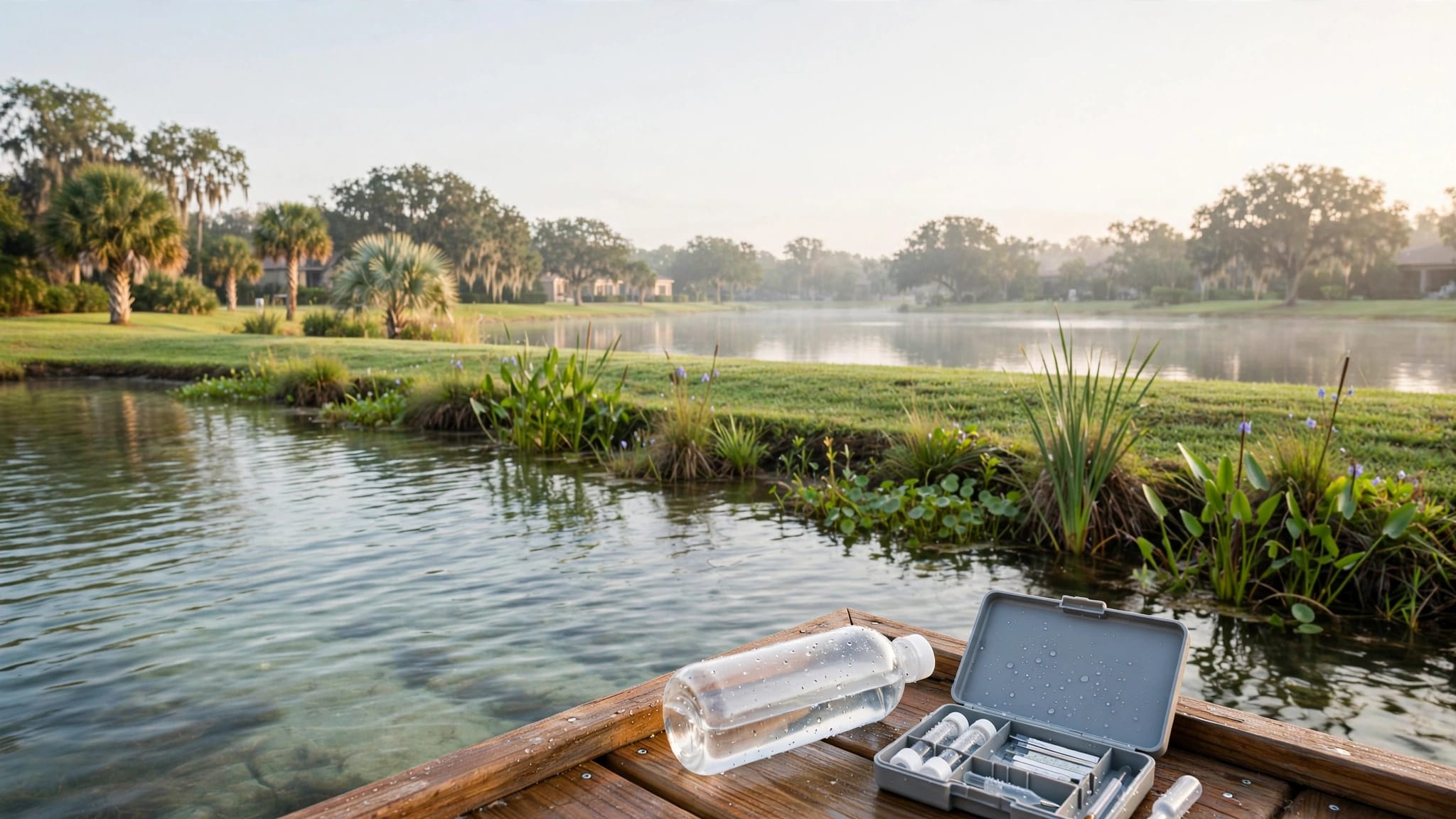
For useful comparisons, record the lake, sampling location, date, and any relevant conditions, such as recent rainfall or visible changes near an inlet. Use the same locations where possible. A sample taken near an inflow may differ from one collected in open water, so the locations should remain clear in the record.
Consistent records also help the board explain why a follow-up sample was taken and what question it was meant to answer. Proper documentation supports reliable comparisons; see sampling procedures for community lake water.
Compare neighboring ponds carefully
A property-wide view is useful, but it shouldn't flatten differences among basins. One pond may collect roadway drainage, while another receives irrigation runoff or water from a connected lake. As a result, matching readings aren't guaranteed, even when the ponds sit close together.
Track each lake separately, then look for shared patterns. If several connected basins show changes around the same time, a shared water source or drainage route may deserve attention. If only one pond changes, focus first on its inlets, shoreline, and surrounding land use.
Build a Practical Chloride Monitoring Plan
Monitoring works best when it supports a clear decision. A community doesn't need to collect numbers without a reason; it needs records that can distinguish routine conditions from a change worth investigating.
Choose measurements that add context
Chloride results are easier to interpret alongside conductivity or salinity measurements. Other water-quality indicators, including pH, dissolved oxygen, nutrients, and temperature, can help describe the lake's overall condition. They don't replace chloride testing, but they can show whether other changes are happening at the same time.
The mix of measurements should reflect the lake and the question under review. Coastal Southwest Florida properties may benefit from tracking conductivity or salinity when saltwater influence is possible. For a broader view of water quality indicators for HOA lakes, include measurements that support the property's maintenance decisions.
Set a repeatable recordkeeping process
Keep results by lake, rather than combining every pond into one property average. Note sample locations and dates, then pair the records with observations about water flow, shoreline condition, plant health, and visible changes. That history can help managers distinguish a recurring pattern from an isolated result.
For larger communities, a written sampling plan can also make responsibilities clearer. It can identify which locations matter, when a follow-up sample is useful, and how the results will guide maintenance priorities.
Turn a Reading Into a Management Decision
An elevated chloride result is a reason to ask what has changed, not a reason to apply an unrelated treatment. Algae control, aquatic weed management, or aeration may address other lake conditions, but they don't identify the source of chloride.
Start with the comparison: Is the reading new, repeated, or limited to one basin? Then review nearby water inputs and compare the result with conductivity, salinity, and relevant site observations. If the pattern points toward a changing source, the response should address that source where practical, rather than focusing only on the appearance of the water.
Boards can also use the findings to prioritize follow-up. A stable result may call for continued observation. A repeated rise paired with changing shoreline conditions may justify a closer water-quality review. The correct choice depends on the evidence from that lake, not on a generic assumption about every pond.
At Seabreeze Lake Maintenance, we work with HOA communities, golf courses, and multi-lake properties across Southwest Florida. Our Commercial Applicator License #CM28291 and State-Licensed Specialty Contractor #SCC131152136 support the lake management work we provide. Communities with recurring water-quality concerns can Get a Free Lake Health Assessment to discuss an inspection and appropriate next steps.
Frequently Asked Questions
Does one high chloride reading prove saltwater intrusion?
No. A chloride result can be part of an investigation, but it cannot identify the source by itself. Repeated readings, related water measurements, drainage conditions, and shoreline observations provide better context.
Does high conductivity mean chloride is high?
Not necessarily. Conductivity reflects the combined effect of dissolved ions, not chloride alone. Chloride testing can add detail when conductivity is elevated, while other measurements help clarify the wider water-quality picture.
Should every lake in a community be tested the same way?
Each lake should have its own record and sampling locations. Ponds on the same property can receive water from different inlets or surrounding areas, so their results and management needs may differ.
Can an algae treatment correct a chloride problem?
An algae treatment addresses algae, not the reason a chloride result changed. Management should first interpret the water test and assess possible sources, then choose a response that fits the cause.
Conclusion
Chloride is a useful indicator, but it isn't a complete diagnosis. For HOA lakes, retention ponds, and golf course water bodies, its meaning comes from repeated results, related measurements, and the conditions around each basin.
A consistent, lake-specific record helps managers respond to real changes instead of guessing from one number. When a reading shifts, the best first step is to understand the pattern and investigate the possible source.
Recent Posts