

Can Water Softener Discharge Affect a Community Lake?

Seabreeze Lake Maintenance • October 14, 2026

Share this article

Water softener discharge may matter to a community lake if it reaches the lake through a drain, swale, or connected basin. However, its presence alone doesn't prove that lake conditions have changed or identify the cause of a water-quality problem.

For HOAs, golf courses, and gated communities, the useful first step is to trace where water flows and compare those pathways with lake observations and test results. That keeps decisions grounded in evidence rather than assumptions about a single source.

How discharge could reach a community lake

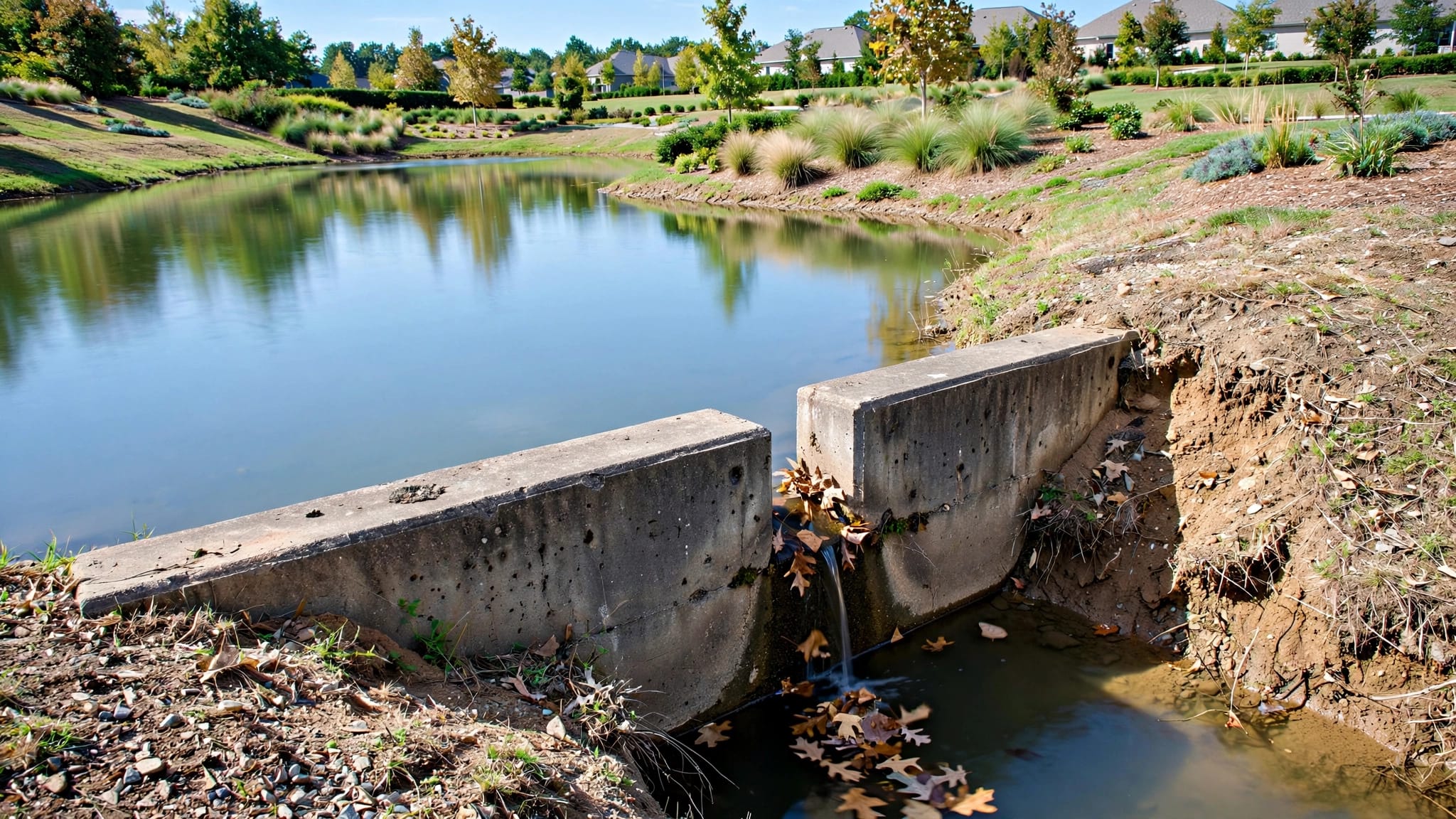
A discharge can affect a lake only if it has a route into the water. For a retention pond or community lake, that route might include a storm drain, roadside swale, drainage ditch, or another basin connected by pipes or overflow structures. The route depends on the property's drainage layout.

Trace the route, not just the nearest lake

A discharge point beside one pond may feed a different basin, or may drain away from all lakes. Map the softener's outlet and follow the flow path, including any inlets, culverts, and outfalls. On multi-lake properties, connections can carry water between basins, so the nearest shoreline may not be the only place to inspect.

Separate a possible source from visible symptoms

Cloudy water, algae, odor, or changes in shoreline plants can have several causes. Stormwater may carry soil, fertilizer, leaves, or grass clippings into a lake, and one basin may receive more runoff than another. Silt deposits, a clogged inlet, or wilted littoral plants are useful clues about site conditions, but none proves a water softener is responsible.

What lake measurements can tell managers

Conductivity measures how readily water carries an electrical current. A higher reading can indicate more dissolved material, including salts and minerals, but it doesn't identify where that material came from. Rain runoff, evaporation, irrigation water, and other sources can affect readings too.

For a closer look at possible sources, see our guide to tracing salt and mineral sources in lakes.

Compare readings with location and timing

A single measurement offers limited context. Record where and when samples were collected, recent rainfall, and whether the reading changes near a suspected discharge route. Comparing locations and repeated readings can show whether a pattern exists, though it still may not establish the cause by itself.

Read conductivity alongside other results

Water quality tests can include pH, dissolved oxygen, and conductivity. Each describes a different condition, so one number shouldn't be treated as a complete diagnosis. Our guide to interpreting water test results for community lakes explains how readings work together.

Why connected lakes need a property-wide view

A community's ponds are part of a drainage system, not isolated features. Water may pass through swales, pipes, and overflow structures before reaching a lake, then move onward to another basin. As a result, a change in one pond may reflect an upstream source or a broader runoff pattern.

Compare affected and unaffected lakes, and note their drainage areas. If only one basin changes, its inlets and nearby flow routes deserve attention. If several change around the same time, look for shared connections or a common event, such as heavy rain. The pattern helps narrow the investigation without treating correlation as proof.

Pool-water information can offer a useful contrast, but it doesn't answer the water-softener question. See our article on pool water discharge risks for lake water quality for guidance specific to pools.

Practical steps for HOA and golf course managers

Start by identifying the discharge outlet and documenting where water goes under normal conditions. Walk the route after rainfall, when flow is easier to see. Note blocked inlets, erosion, sediment deposits, and any connection between ponds. These observations help distinguish a direct route from a nearby outlet that doesn't reach the lake.

Next, compare lake conditions at consistent locations. Keep dates, weather, photographs, and test results together. If a change appears close to one inlet, sample there and at another location for comparison. A qualified water-quality professional can help select appropriate tests and interpret results without assuming a source in advance.

If the suspected outlet connects to a stormwater system, address the discharge pathway as well as the lake symptoms. Treating algae or weeds without understanding the inflow may leave the cause of recurring changes untouched. For Southwest Florida communities, we provide lake health assessments and water-quality management. Our field services include aquatic weed control and shoreline work, supported by Commercial Applicator License #CM28291 and State-Licensed Specialty Contractor #SCC131152136. Get a Free Lake Health Assessment.

Key Takeaways

  • A water softener discharge matters to a lake only if it reaches the water.
  • Conductivity can point to dissolved material, but it can't identify the source alone.
  • Drainage maps, repeated readings, and comparisons among connected ponds give managers better context.
  • Visible symptoms such as algae or silt require investigation, not assumptions about one cause.

Frequently asked questions

Does a high conductivity reading prove a water softener is affecting the lake?

No. Conductivity can indicate dissolved salts or minerals, but it doesn't distinguish a water softener from other possible sources. Location, timing, drainage patterns, and other test results provide necessary context.

Should an HOA test only the pond closest to the discharge?

No. The nearest pond may not receive the discharge, and connected basins may carry water elsewhere. Trace the drainage route and compare relevant locations across the property.

Can algae or damaged shoreline plants confirm the source?

No. Algae and stressed plants can result from several water-quality or site conditions. Treat them as signs to inspect and test, not proof of a particular discharge source.

Protect the lake by tracing the water

A community lake can show signs of stress without revealing the source. For water softener discharge, the clearest approach is to follow the drainage path, compare lake conditions, and interpret test results together. That gives boards and property managers a sounder basis for deciding what action fits the site.

Recent Posts

By Seabreeze Lake Maintenance • October 18, 2026
Yes. A septic system leak can affect a community lake if wastewater reaches the shoreline, a stormwater inlet, or groundwater that connects with the lake. The size and type of impact depend on the leak, the site's drainage, and how residents use the water. For HOAs, golf cours...

By Seabreeze Lake Maintenance • October 17, 2026
A sulfate result can tell an HOA something about the dissolved minerals in a lake, but it cannot diagnose a lake problem on its own. Sulfate levels in lakes need context , including the water source, other test results, and changes over time. That distinction matters for reten...
By Seabreeze Lake Maintenance • October 16, 2026
A visible flow from an outfall during dry weather deserves attention, but it doesn't identify the source by itself. A careful inspection of HOA lake outfalls helps your community document what's happening, spot nearby damage, and decide what follow-up makes sense. For gated co...