Can Pool Water Be Drained Into a Community Lake?
A hose pointed toward a community lake can create a water-quality problem that reaches beyond one homeowner's property. Draining pool water into a retention pond shouldn't be a routine disposal method.
In Florida, permission depends on local requirements, water chemistry, and the receiving system. Even dechlorinated water may be unsuitable for discharge into lakes serving gated communities, golf courses, or multi-lake properties.
Before pumping begins, confirm who controls the drainage system and which disposal methods are allowed.
Florida Rules for Draining Pool Water
State guidance doesn't grant blanket permission
Florida Department of Environmental Protection guidance identifies dechlorinated pool discharges under F.A.C. Rule 62-624.200(2)(q), provided they don't violate water-quality standards. However, that guidance recommends releasing suitable water over vegetation rather than directly into surface waters.
Local restrictions also matter. For example, Orange County advises against draining pools into streets, storm drains, ponds, lakes, or other surface waters.
Southwest Florida communities should verify requirements with their local stormwater department before approving a discharge. A rule used elsewhere in Florida doesn't establish permission for a property in Lee, Collier, or Charlotte County.
HOA approval and regulatory approval are separate
An HOA may maintain a shoreline without owning every drainage structure or controlling every discharge decision. Recorded plats, easements, permits, and maintenance agreements can assign different responsibilities.
Golf course communities may also divide obligations between the association and the golf operator. Therefore, written HOA permission doesn't replace applicable environmental requirements.
Following sound community lake management basics helps boards identify responsible parties before residents or contractors change drainage.
Why Pool Water Can Harm Retention Lakes
Chlorine and other chemicals affect aquatic life
Chlorine that keeps a pool sanitary can harm fish and other aquatic organisms. Florida DEP guidance cites a surface-water chlorine criterion below 0.01 mg/L , far below normal swimming-pool treatment levels.
Water clarity doesn't establish safety. Pool water can look clean while containing chlorine, dissolved salts, or treatment chemicals.
In addition, filter backwash and acid-cleaning wastewater require separate handling. Boards shouldn't treat these waste streams as ordinary pool-drain water or authorize their disposal into a lake.
Salt and discharge flow create additional concerns
Saltwater pools still produce chlorine through salt chlorine generators. Turning off the generator doesn't remove salt already dissolved in the water.
Freshwater lake managers should evaluate that salt load before any proposed discharge. There isn't a universal statewide salt-pool threshold in the cited DEP guidance.
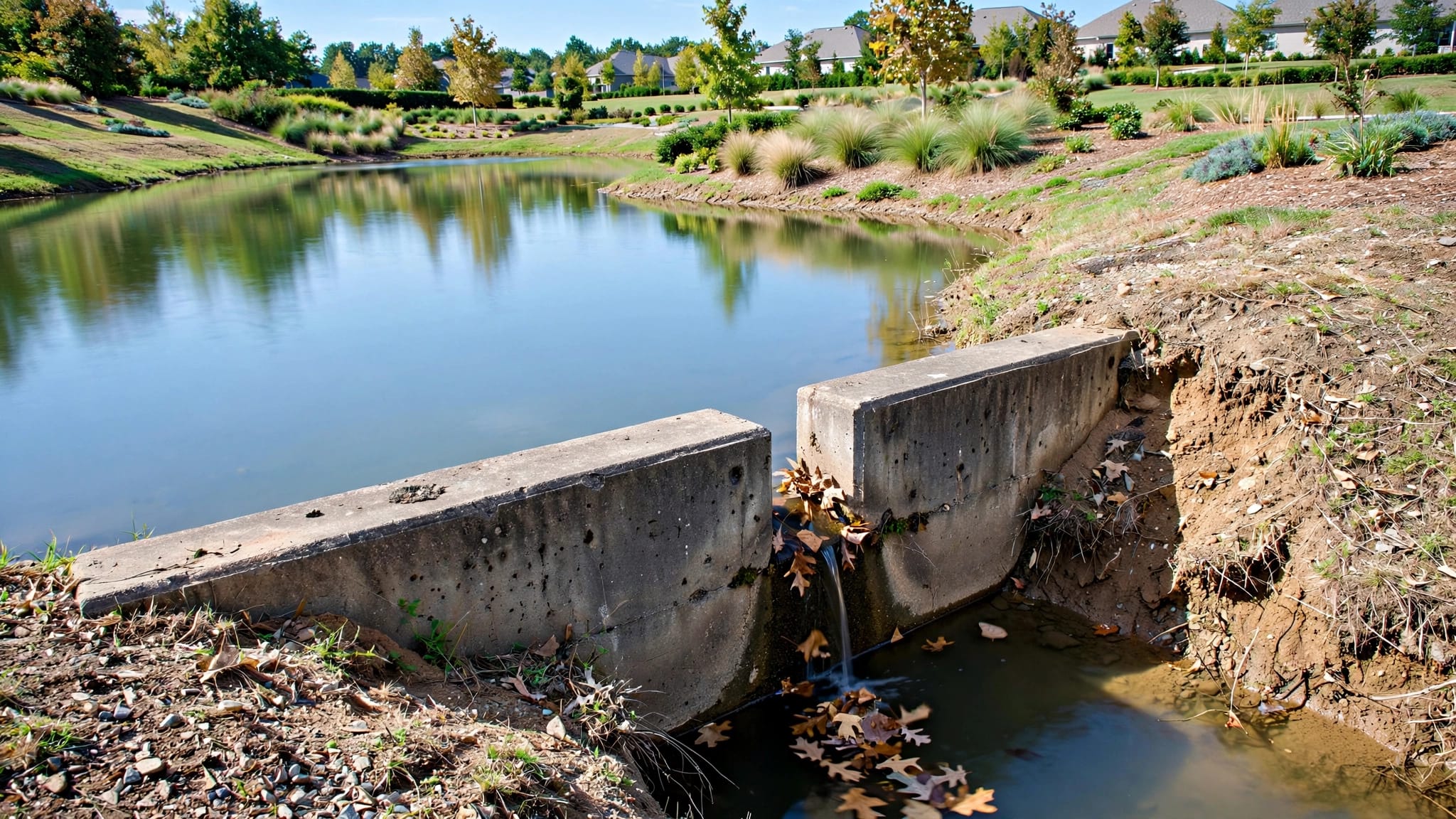
Meanwhile, concentrated flow can erode banks and carry sediment into a retention pond. On multi-lake properties, culverts, swales, and overflow structures may carry discharged water into neighboring basins. Assess the connected system rather than assuming the nearest lake contains the entire impact.
A Safer Plan Before the Pool Is Drained
Before draining pool water, have the pool contractor and property manager agree on an authorized destination. Use these steps to document that decision:
- Confirm local discharge requirements and review the community's drainage permits and governing documents. Identify who must approve the work.
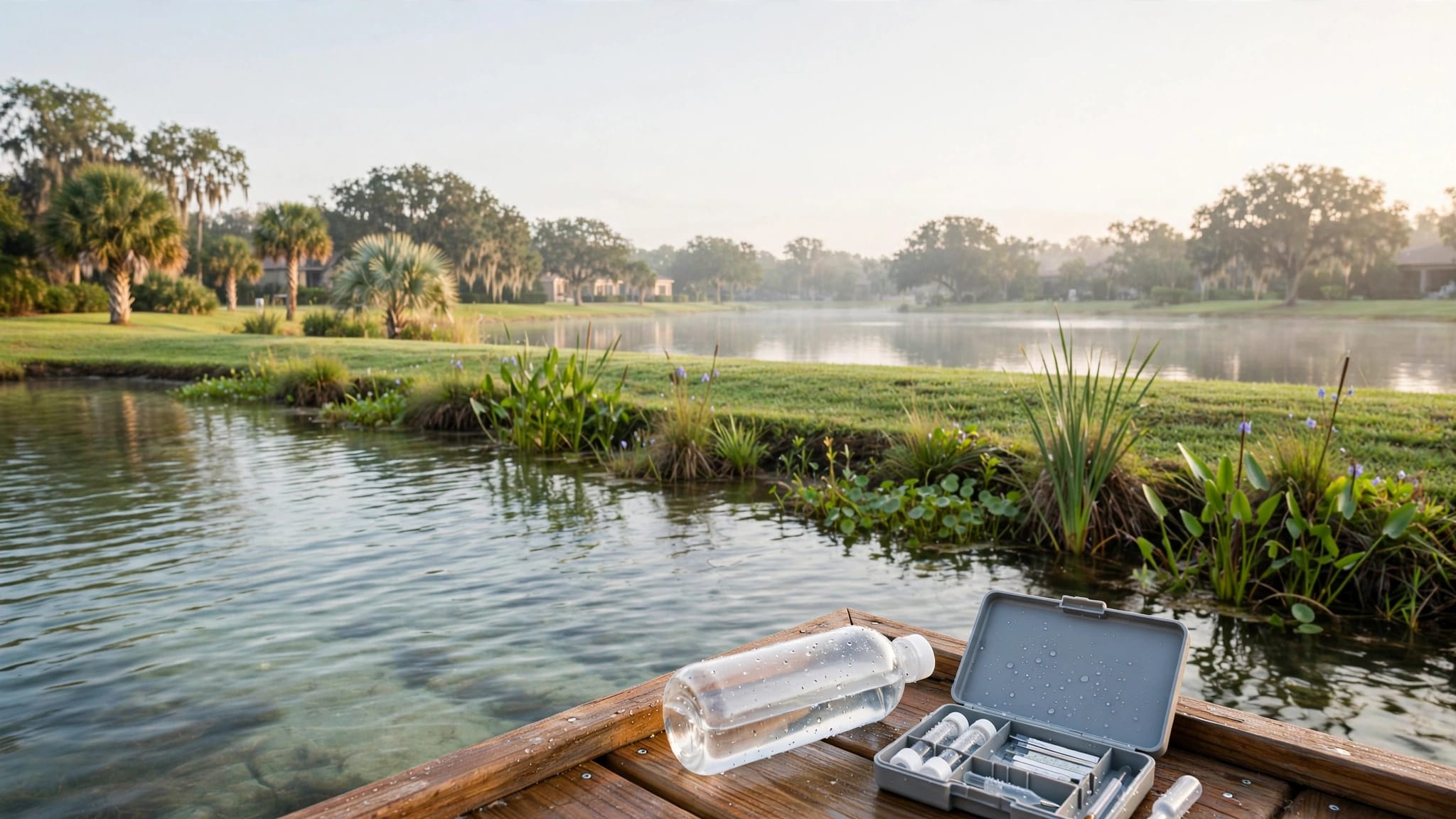
- Test the water before discharge. DEP guidance recommends pH between 6.5 and 8.5, clear water without solids, and controlled flow. Use chlorine testing capable of checking the required low concentration.
- Ask whether an approved vegetated area can receive the water without runoff reaching a lake, neighboring property, or street. Avoid saturated ground and conditions likely to cause flooding or erosion.
- If on-site disposal isn't suitable, ask the wastewater utility about sanitary-sewer acceptance or arrange authorized removal. Never assume a sewer connection is available or approved.
Don't discharge settled material from the pool bottom with otherwise suitable water. Also, have the pool contractor assess structural and groundwater risks before fully emptying a pool.
When lake conditions are already uncertain, professional lake water quality testing can establish a baseline before nearby work begins.
What to Do After an Unauthorized Discharge
Stop the discharge if it's still occurring and safe to stop. Then notify the property manager and lake maintenance provider.
Record the source, approximate volume, discharge location, timing, recent pool treatments, and any visible shoreline damage. On connected properties, identify downstream lakes and drainage structures that may have received water.
If fish show distress, water changes color, or unusual odors appear, seek prompt professional evaluation and contact the appropriate local authority. Don't add chemicals to the lake as an improvised correction.
Testing should address the suspected problem. Chlorine, conductivity, dissolved oxygen, or pH measurements may be appropriate, depending on the incident. Understanding HOA lake water test results helps boards connect findings to follow-up work rather than ordering unrelated treatments.
Key Takeaways for Community Managers
- Require a disposal plan before pool contractors begin pumping.
- Keep approvals, testing records, and discharge details together.
- Include resident pool-draining procedures in community rules so individual projects don't bypass lake-protection measures.
Frequently Asked Questions
Does waiting 48 hours make pool water safe?
Waiting alone doesn't confirm safe chemistry. Florida DEP guidance recommends waiting at least 48 hours after the last chlorine addition or until free chlorine falls below 0.01 mg/L. Retest before discharge, and confirm the destination is authorized.
Can residents use a storm drain instead?
A storm drain may carry water directly to a retention lake or another surface waterbody. Therefore, moving the hose to a street inlet doesn't solve the disposal problem. Verify the drainage route and local requirements first.
Protect the Lake Before Opening the Drain
Draining pool water requires an approved disposal plan , not an assumption that a large retention lake can absorb the discharge. Chemistry, drainage connections, and shoreline conditions all affect the decision.
Seabreeze Lake Maintenance supports Southwest Florida community lake care under Commercial Applicator License #CM28291 and State-Licensed Specialty Contractor #SCC131152136.
For an HOA or golf course planning nearby pool work, a lake inspection can identify receiving-water concerns before pumping starts. Protecting shared lakes begins with controlling what enters them.
Recent Posts