Water Residence Time: A Guide for Community Lake Care
Two lakes in the same community can need different maintenance plans, even when they look alike. For your HOA, water residence time belongs in the same conversation as drainage, water testing, and recurring lake problems.
A reliable assessment requires site-specific records , not a guess based on surface appearance. That matters for retention ponds, golf course lakes, and connected basins across Southwest Florida.
Start by separating what your maintenance team can observe from what a drainage assessment needs to establish.
Key Takeaways for HOA Boards
- Request a documented, site-specific assessment before using residence time to justify maintenance changes.
- Evaluate water exchange separately from aeration, because circulating existing water doesn't establish how much water enters or leaves.
- Compare individual lakes using drainage records, water-quality results, and maintenance history rather than giving every basin the same treatment schedule.
Put Water Residence Time in Context
A residence-time estimate can inform a lake-management discussion, but it can't diagnose algae, oxygen problems, or shoreline erosion by itself. Your board needs to understand the estimate's supporting information and limits before using it to approve work.
Ask what supports the estimate
A qualified assessment needs information about the basin and its water movement. Useful records include lake dimensions, depth surveys, drainage plans, water-level observations, rainfall records, and available inflow or discharge measurements.
However, an older construction drawing may no longer describe current conditions accurately. Sediment accumulation, shoreline changes, and drainage modifications can warrant additional field checks.
Ask whether the assessment reflects present conditions and seasonal variability. Also ask which measurements support it and which parts rely on assumptions. A figure without that explanation offers little guidance for a maintenance budget.
Keep circulation and drainage separate
A fountain can produce a strong spray while a sheltered cove has poor circulation. Likewise, visible surface movement doesn't show whether water is exchanging through the property's drainage network.
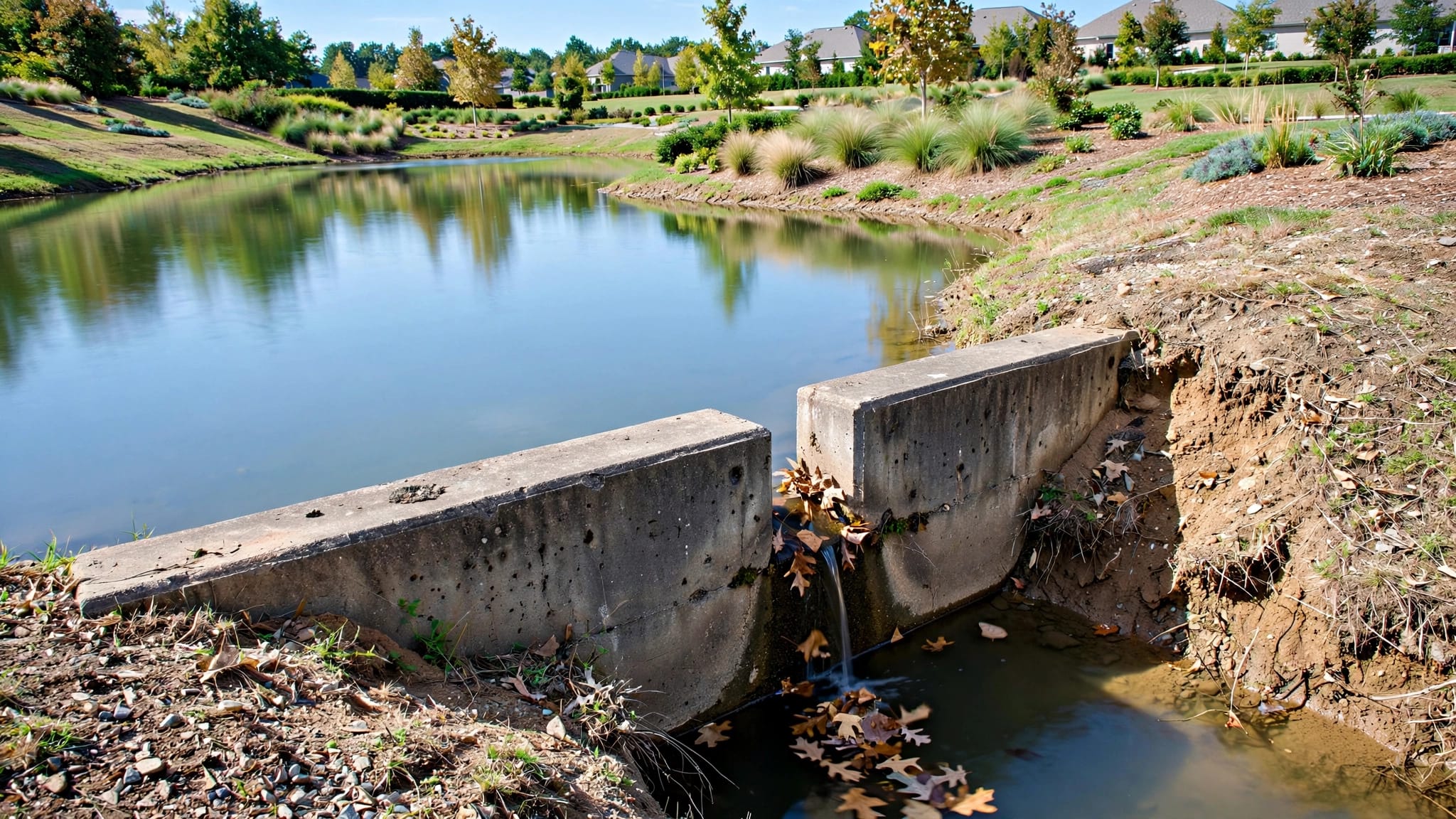
Your team should inspect inlets, outlets, connecting pipes, and control structures separately from aeration equipment. A checklist for checking lake inlets and outlets helps organize those observations.
Don't change outlet elevations or modify drainage structures to pursue a preferred residence-time figure. Those features support the property's stormwater function, and changes may require engineering review and authorization.
Account for Southwest Florida's Seasonal Conditions
One inspection cannot capture every condition a community lake experiences. Wet-weather observations and dry-weather records provide different pieces of the maintenance picture.
Inspect after substantial rainfall
After heavy rain, inspect runoff entry points, shoreline washouts, debris accumulations, and accessible drainage structures. Record whether cloudiness begins near an inlet or appears throughout the basin.
Runoff can carry sediment, fertilizer nutrients, pet waste, and organic debris into community lakes. Therefore, an algae response alone may leave the source of repeated problems unaddressed.
Document what happened before the water changed. A rain-related pattern gives your contractor a more useful starting point than a photograph without a date or location. Also note whether neighboring lakes changed at the same time.
Compare dry-weather observations
During dry periods, record water levels, irrigation activity, exposed shoreline areas, and changes in vegetation. Golf course and community landscaping practices also belong in these records.
For example, recurring runoff near sprinklers deserves attention even when the property hasn't received significant rainfall. Irrigation can carry material toward the same shoreline repeatedly.
Keep seasonal observations separate rather than averaging away the differences. A lake that looks stable during one inspection may need closer attention under different conditions. These records support a broader assessment; they don't establish residence time on their own.
Test Water Quality Before Choosing a Response
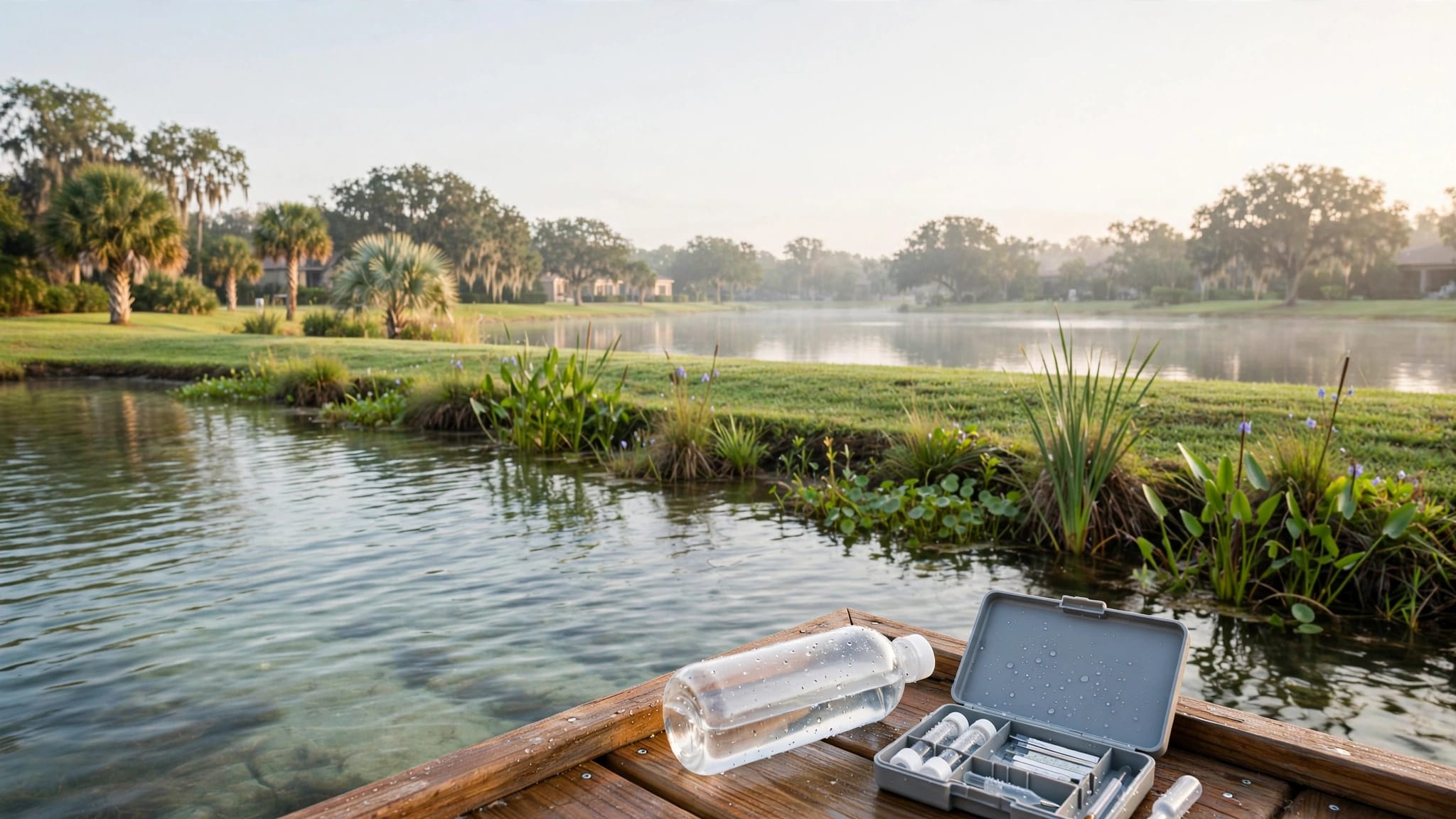
Water residence time should sit alongside measured water quality, rather than replace it. Testing helps your team determine whether a visible concern involves oxygen, nutrients, suspended material, or another issue.
Build an oxygen and temperature profile
Measure dissolved oxygen and temperature at several depths and locations. Include the deepest basin, sheltered coves, and areas where circulation appears weak.
Near-dawn measurements often reveal lower oxygen conditions because photosynthesis stops overnight while plants, algae, and other organisms continue consuming oxygen. A midday surface reading can miss that concern.
Use these findings when reviewing equipment placement and operating schedules. Guidance on sizing aeration systems for community lakes helps connect equipment decisions with lake conditions.
Aeration supports oxygen and circulation management. However, it doesn't remove incoming nutrients, repair erosion, or clear blocked drainage structures.
Track chemistry and clarity consistently
Depending on the concern, testing may include nitrogen, phosphorus, pH, alkalinity, turbidity, and water clarity. Your contractor should select measurements that answer the actual maintenance question.
Consistency matters. Record the sampling location, depth, time, weather, and recent treatment history so later results have a useful comparison.
For example, a clarity change after shoreline erosion calls for a different investigation than recurring algae without visible sediment runoff. Professional lake water quality testing supports those distinctions.
Also record odors, surface scum, and fish behavior. These observations help prioritize follow-up, although they don't replace testing.
Evaluate Each Lake in a Connected System
Multi-lake properties need individual basin records and a shared drainage map. Otherwise, the board may approve work in one lake without understanding relevant conditions elsewhere.
Follow the drainage connections
Identify which lakes receive runoff, which connect through pipes or channels, and where water leaves the property. Confirm those connections using drainage records and field inspections.
Assign each basin a consistent name or number. Then label its inlets, outlets, aerators, shoreline trouble spots, and sampling locations.
This makes reports easier to compare. It also helps the team investigate whether repeated cloudiness or debris accumulation follows a shared drainage route. Two nearby lakes may require different responses because their depths, exposure, drainage inputs, and equipment differ.
Investigate patterns rather than appearances
A lake beside the clubhouse may receive complaints first, while another basin has a less visible water-quality concern. Appearance and resident exposure matter, but they shouldn't determine every maintenance priority.
Compare repeated observations across the property. Does one lake cloud after rain? Does another develop odor during hot weather? Does a third repeatedly collect shoreline debris?
The distinction between routine pond monitoring and diagnostic testing helps determine when observations need further investigation.
Avoid assuming that matching symptoms prove a matching cause. Each basin needs evidence that supports its recommended work.
Turn the Findings Into a Maintenance Schedule
A useful maintenance plan converts observations into assigned tasks, follow-up dates, and measurable results. It also makes clear which questions still require drainage or engineering input.
Set a baseline, then adjust
For most Florida communities, monthly service is a practical baseline. However, weather, plant growth, stormwater demands, and inspection findings may call for tighter intervals.
Review Florida HOA lake service schedules alongside your property's actual conditions. A recurring monthly visit shouldn't prevent an additional inspection after heavy rainfall or equipment failure.
Visible fish distress deserves prompt attention , rather than waiting for the next scheduled appointment. Sudden odor or rapid water-color changes also warrant timely review.
The schedule should identify routine inspections, equipment checks, debris removal, and treatment follow-up. Residence-time discussions should inform planning only when reliable site information supports them.
Address sources and verify results
Match each action to a documented finding. Eroding banks need shoreline evaluation; excess vegetation needs identification; recurring nutrient inputs need attention beyond surface treatment.
Coordinate with landscape and golf course teams where fertilizer, mowing debris, or irrigation runoff may affect lake conditions. Resident practices matter too, including pet-waste disposal and feeding fish or waterfowl.
After work, compare the same locations and measurements used before it. Record the treatment area, application conditions, observed response, and remaining concerns.
Clear reporting helps the board distinguish a temporary visual improvement from a maintenance plan that addresses recurring problems. It also gives the next inspection a defined purpose.
Know When to Bring in a Lake Professional
Bring in a lake-management team when growth returns repeatedly after treatment, several connected basins develop concerns, or water changes accompany erosion, odor, or fish stress.
The inspection should cover water quality, circulation equipment, vegetation, shoreline condition, drainage access, and previous maintenance records. If the residence-time question requires hydraulic analysis, the review should identify that need rather than assign an unsupported value.
Ask for recommendations tied to findings. An equipment proposal should explain the oxygen or circulation concern. A treatment recommendation should identify the target problem and describe follow-up.
Seabreeze Lake Maintenance serves HOAs, gated communities, golf courses, and other multi-lake properties across Southwest Florida. The Fort Myers-based team holds Commercial Applicator License #CM28291 and State-Licensed Specialty Contractor #SCC131152136.
For a review of your community's lake conditions and maintenance priorities, Get a Free Lake Health Assessment to book a call and lake inspection with Seabreeze Lake Maintenance.
Frequently Asked Questions
Can a board choose an ideal residence-time target?
A board shouldn't adopt a universal target without a qualified assessment. The lake's stormwater purpose, drainage configuration, seasonal conditions, and supporting measurements all matter.
Ask the assessor to explain the basis for any recommendation and how it relates to the property's operating requirements. Also confirm whether proposed changes require engineering review or permit authorization.
Maintenance decisions still need water-quality evidence. A residence-time estimate doesn't replace oxygen readings, vegetation identification, or inspections of recurring shoreline problems.
Should every lake receive the same maintenance?
A shared reporting system makes sense, but identical work across every basin often doesn't. Each lake can have different runoff inputs, depths, equipment, shoreline conditions, and recurring concerns.
Use consistent inspection categories so the board can compare lakes fairly. Then adjust tasks and follow-up according to the findings.
For example, one basin may need erosion repair while another needs an aeration review. Keep both decisions connected to documented conditions rather than assuming the most visible lake represents the entire property.
Make Lake Decisions From Evidence
Water residence time is most useful in maintenance planning when a qualified assessment supports it. Your board gets stronger guidance by pairing that assessment with drainage inspections, water testing, and basin-specific records.
Two similar-looking lakes can need different care. Consistent monitoring gives your community a defensible basis for those differences.
Keep the focus on documented conditions and verified results. That approach helps protect the lake's stormwater function while making maintenance priorities clearer for residents, managers, and contractors.
Recent Posts