Aeration System Sizing for Community Lakes
A lake can look clean at the surface while oxygen levels fall in deeper water. For HOAs, golf courses, and gated communities, accurate aeration system sizing keeps equipment matched to each basin instead of relying on guesswork.
Multi-lake properties face a special challenge. Each lake may have a different depth, shape, water volume, shoreline use, and stormwater function. A system that works well in one basin may leave stagnant areas in another.
The right design starts with a lake-by-lake inventory, then connects measurements to equipment, placement, operation, and maintenance.
Why Each Community Lake Needs Its Own Design
A multi-lake property is rarely made up of identical basins. One lake may be broad and shallow, while another may have a deep central pocket. A third may receive runoff from several streets or golf course drainage areas.
Those differences affect circulation. Depth changes how much pressure an air system needs. Shape affects diffuser placement. Inlets, outlets, bridges, fountains, and heavy vegetation can create areas where water movement slows.
Florida heat adds another concern. Warm surface water can sit above cooler bottom water, creating layers that mix poorly. The deeper layer may lose oxygen while the surface still looks normal. This process is called stratification, and Florida lake stratification in hot weather can create odor, poor clarity, and fish stress.
Acreage alone can't describe these conditions. Two one-acre lakes may require different systems because one is six feet deep and the other has a 14-foot basin with limited circulation.
The design question is therefore broader than, "How much equipment does this property need?" It is, "What does each lake need to perform its intended job safely and consistently?"
Start With a Lake-by-Lake Inventory
Before selecting compressors, diffusers, or surface aerators, create a property map that gives every lake its own profile. Use lake names or identification numbers so measurements, photos, work orders, and equipment records stay connected.
Record these details for each basin:
- Surface area, measured in acres or square feet.
- Average depth and maximum depth.
- Estimated water volume.
- Basin shape, including narrow sections and deep pockets.
- Inlets, outlets, culverts, drainage pipes, and overflow structures.
- Existing fountains, aerators, pumps, and electrical panels.
- Visible algae, weeds, odor, turbidity, debris, or fish stress.
- Shoreline use, including homes, cart paths, sidewalks, docks, and recreation areas.
- Distance to power and the likely route for airline or electrical installation.
Water volume provides a useful starting point. A simple estimate uses:
Water volume in acre-feet = surface area in acres x average depth in feet
One acre-foot contains about 325,851 gallons. This estimate becomes less reliable when the basin has steep sides, irregular contours, or large differences between shallow shelves and deep pockets. A bathymetric survey gives a better result when the lake has complex depths or a major water-quality problem.
Depth readings should cover more than the shoreline. Measure along several transects, including the center, deepest area, inlet zones, and locations where algae or odor appear. HOA lake depth and water quality are closely related because shallow water warms faster, loses volume during sediment buildup, and may develop different circulation patterns.
Power access also belongs in the first survey. A lake with a nearby electrical panel may support a compressor cabinet, while a remote basin may need a different layout or power solution. Long airline runs can affect pressure and service access, so the equipment location matters as much as the diffuser location.
A good inventory prevents a common mistake: adding up all lake acreage and ordering one system based on a single average. That approach can oversupply a shallow basin and undersupply a deep one.
Set the Performance Goal Before Choosing Equipment
Aeration can support several goals, but the equipment should match the result the community needs. A stormwater retention pond may need better circulation and odor control. A golf course lake may need reliable oxygen support in a deep pocket near a fairway. A highly visible entrance lake may also require quiet operation and limited surface disturbance.
Common goals include:
- Moving water through stagnant areas.
- Supporting more even oxygen levels throughout the water column.
- Reducing the chance of oxygen depletion during hot weather.
- Improving conditions near deep basins and organic sediment.
- Reducing odor caused by low-oxygen water.
- Supporting clearer, healthier water as part of a broader maintenance plan.
A lake may need one goal or several. A system designed for destratification has different placement needs than a decorative surface unit selected for visible water movement.
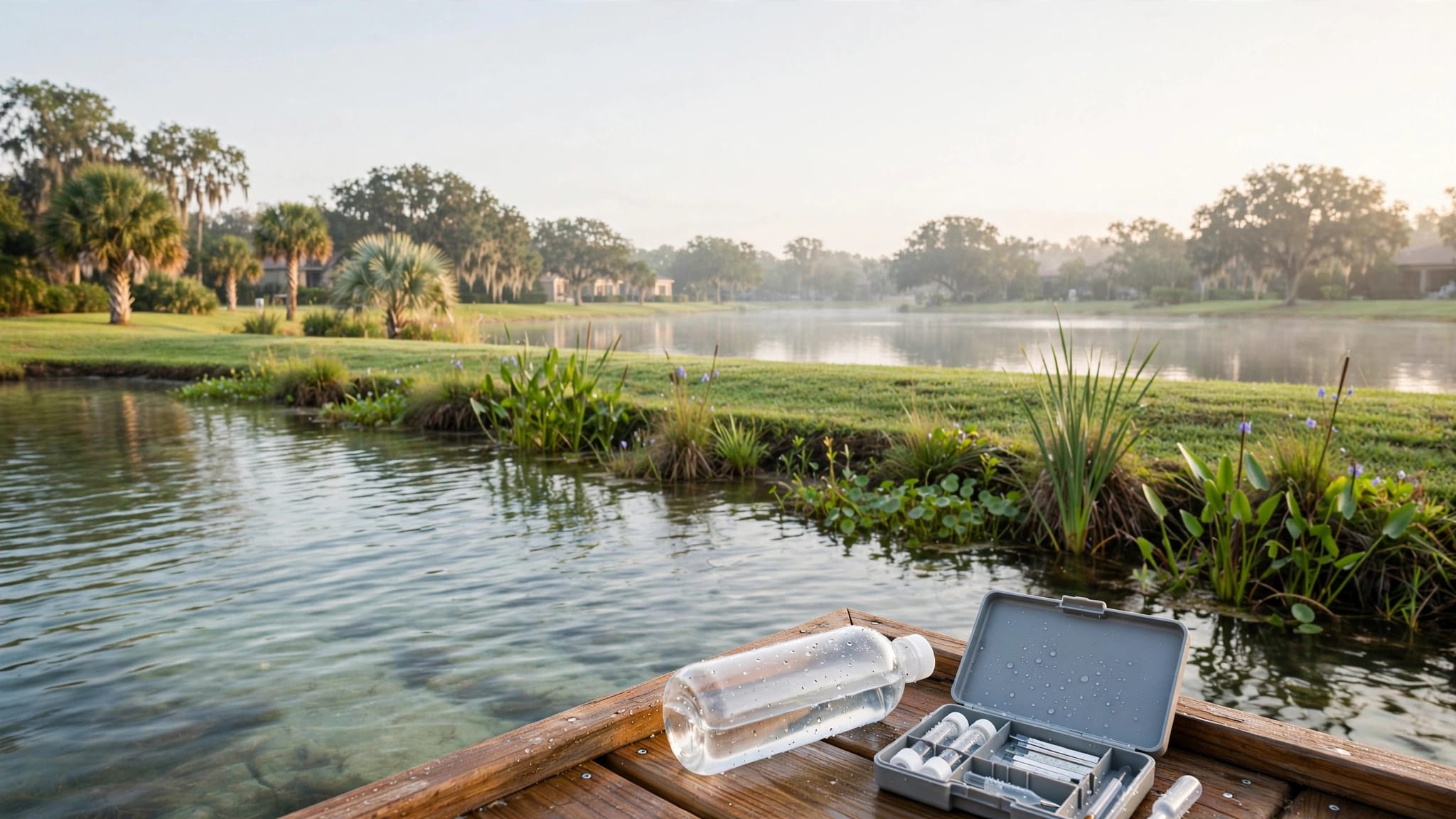
Water testing should guide the decision. Dissolved oxygen and temperature readings at several depths show whether the lake has an oxygen problem, a circulation problem, or both. Readings near dawn often reveal the lowest oxygen conditions because plants and algae consume oxygen overnight while photosynthesis stops.
Aeration doesn't remove excess nutrients, repair erosion, clear clogged outfalls, or replace aquatic weed control. Those issues need separate attention. For example, a murky lake may have suspended sediment, runoff, organic buildup, or microscopic algae. Why retention ponds become murky depends on the cause, so equipment should support a wider water-quality plan.
Choose Surface Aerators, Bottom Diffusers, or a Combination
The two main aeration approaches are surface aeration and bottom-diffused aeration. A property may use one method across several lakes or combine them where conditions differ.
Surface aerators
Surface aerators pull water upward and expose it to air. They create visible agitation, spray, or fountain-like movement. That appearance can work well in an entrance lake or a location where residents expect to see active water movement.
Surface units may also fit shallow basins where bottom-diffuser placement is difficult. However, the visible spray can create noise, windblown mist, or conflicts with nearby sidewalks and homes. Electrical access, anchoring, maintenance clearance, and wildlife safety also need review.
A surface aerator may improve conditions near the unit without moving water evenly through a long, irregular basin. Placement and the manufacturer's performance data determine how much of the lake receives useful circulation.
Bottom diffusers
Bottom-diffused systems release air through submerged diffuser assemblies. Rising bubbles lift deeper water toward the surface, where the water releases gases and returns through the basin. The main benefit is water movement through the water column without a large surface spray.
Diffused air often fits deeper community lakes, broad basins, and areas where a quiet appearance matters. The design still depends on diffuser depth, air volume, basin shape, and spacing. One diffuser placed in the deepest section may leave shallow coves and corners with limited movement.
Airlines need proper routing and protection. Diffusers need secure placement, and the system needs access for inspection and cleaning. A clogged diffuser or damaged airline can reduce performance even when the compressor still runs.
Combined systems
Some properties benefit from a combination. A visible surface unit may support the entrance lake, while bottom diffusers handle a deep rear basin. A narrow pond may use a targeted surface aerator, while a larger lake uses several diffuser zones.
A detailed surface aerators versus bottom diffusers comparison can help a board weigh water depth, visual goals, power access, noise, and maintenance needs.
How Aeration System Sizing Turns Measurements Into Equipment
Good aeration system sizing connects lake conditions to the actual operating performance of the equipment. Horsepower alone doesn't provide enough information. A larger motor may produce more airflow, but the system still needs to deliver that air at the pressure created by diffuser depth and line losses.
Manufacturers typically provide performance data for compressor output, operating pressure, diffuser airflow, oxygen transfer, and water movement. Use those figures instead of comparing motors by horsepower alone.
For a bottom-diffused system, the compressor must overcome the water pressure at the diffuser. Freshwater creates about 0.433 pounds per square inch of pressure for every foot of depth. A diffuser at 12 feet faces about 5.2 psi of hydrostatic pressure before adding losses from airlines, fittings, valves, and the diffuser itself.
That number is a design reference, not a complete equipment specification. A qualified designer also checks the compressor's airflow at the required pressure. A unit that produces a stated volume of air at low pressure may deliver much less at a deeper diffuser.
Oxygen transfer data also needs careful interpretation. Laboratory values often come from clean water under standard conditions. Community lakes contain organic material, suspended particles, algae, and other factors that can reduce field performance. Temperature changes matter too.
The design process should answer several practical questions:
- How much water does each lake contain?
- Which sections have the lowest oxygen or weakest circulation?
- How deep are the diffuser stations?
- What airflow does each diffuser need?
- What pressure will the compressor see?
- How many independent zones are needed?
- What electrical service can safely support the equipment?
- How will technicians inspect, clean, and repair the system?
Diffuser placement should follow the basin's actual shape. Deep stations often support circulation in large open areas, while narrow coves may need separate attention. Keep equipment away from areas where it could interfere with stormwater discharge, sediment movement, boating, fishing access, or shoreline repairs.
A lake that looks uniform on a site plan may have very different behavior in the water. Wind exposure, trees, bridges, islands, vegetation, and irregular banks can change circulation. Field observations and depth data should guide the final layout.
The system also needs operating flexibility. Independent valves or zones allow technicians to adjust output when one lake has a different need. Controls can support seasonal schedules, inspection shutdowns, and maintenance without taking every lake offline.
Oversizing creates its own problems. Excessive turbulence can disturb sediment, interfere with shoreline conditions, waste electricity, and create unnecessary wear. Undersizing leaves dead zones and may produce disappointing results. The goal is enough circulation and oxygen support for the lake's conditions, with equipment that can be serviced and adjusted.
Design the Property as a Portfolio of Separate Basins
After each lake receives its own profile, group the property into practical equipment zones. The map may include several similar lakes, but similarity should be based on depth, volume, use, and water behavior rather than location alone.
A property manager might identify:
- Lakes with deep central pockets and low bottom oxygen.
- Shallow retention ponds that receive heavy runoff.
- High-visibility lakes near entrances or amenity areas.
- Golf course lakes with irrigation, cart-path, and maintenance constraints.
- Remote basins where power and service access are limited.
This grouping helps the board set priorities. A lake with repeated odor, fish stress, or poor clarity may need attention before a basin with stable water quality. High-visibility areas may justify quieter equipment or a more controlled appearance.
A shared compressor station can sometimes serve several nearby lakes through a properly designed manifold. That choice depends on distance, airline routing, pressure requirements, zone controls, power, and service access. Separate systems may cost more initially, but they provide direct control when lakes have different operating needs.
The lowest installation price isn't always the lowest long-term cost. A shared system with long lines and complicated valves may take more time to troubleshoot. Conversely, individual systems may simplify service and allow one lake to keep operating while another receives repairs.
Standardizing equipment across similar lakes can reduce training and spare-parts needs. Still, standardization should follow the water conditions. Installing identical units in every basin only because the property has one preferred model can produce uneven results.
Boards should also plan for future access. Keep compressor cabinets reachable, label airlines and valves, document diffuser locations, and retain a current property map. Clear records help a new management company or maintenance crew understand the system without starting the survey over.
If the property needs a professional review, Get a Free Lake Health Assessment to schedule a lake inspection with Seabreeze Lake Maintenance.
Account for Florida Retention Pond Conditions
Southwest Florida retention ponds and lakes receive heavy heat, intense rainfall, lawn runoff, organic debris, and changing water levels. These conditions affect both water quality and aeration performance.
Warm water holds less dissolved oxygen than cooler water. At the same time, biological activity can increase during hot weather. Storms may add sediment and nutrients, while grass clippings and leaves increase organic material. A lake may therefore need stronger circulation during the same season when water quality problems become more visible.
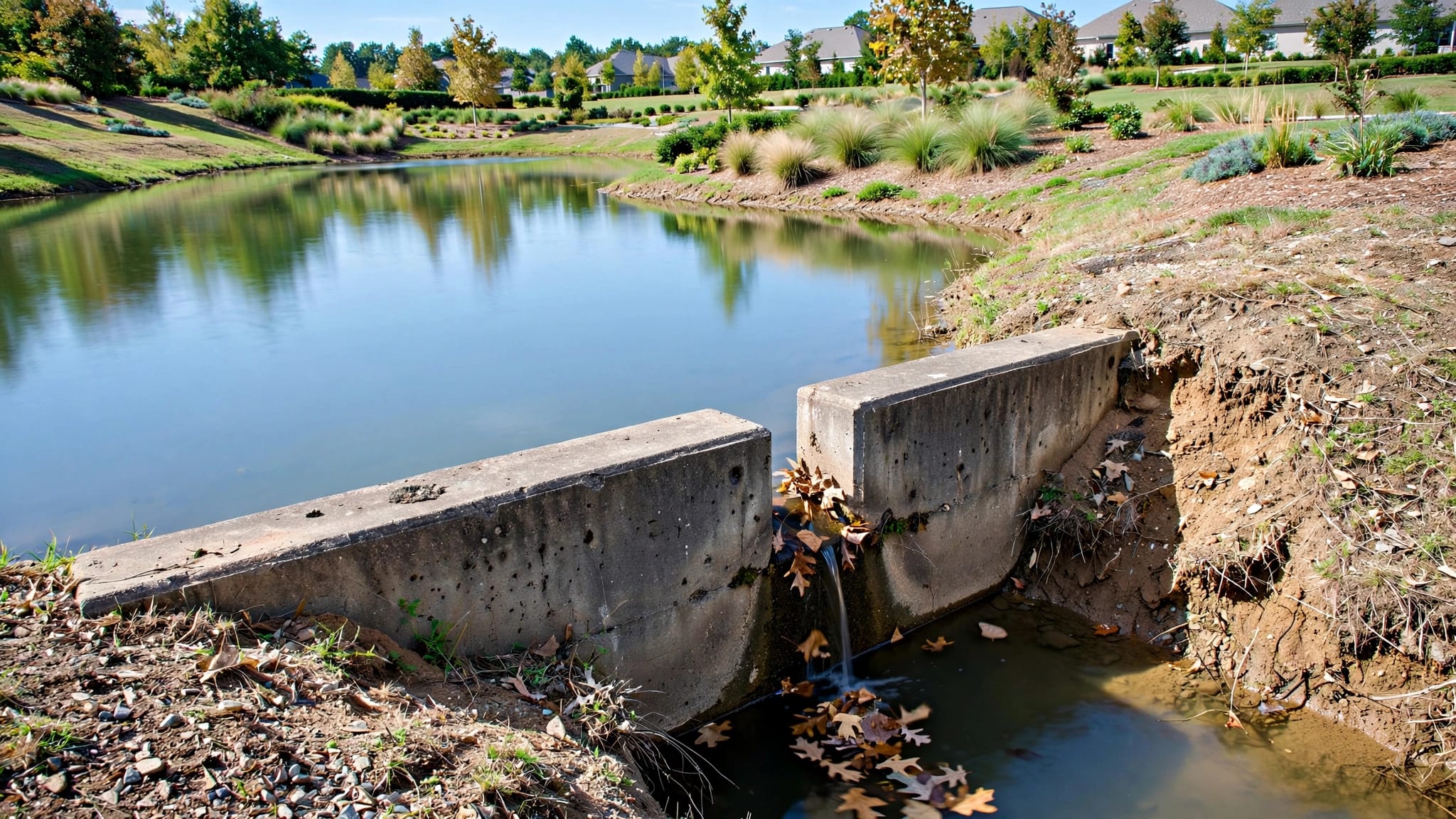
Aeration should support the pond's stormwater role. Diffusers and surface units can't block inlets, restrict outfalls, damage control structures, or interfere with inspection access. Equipment placement should leave room to inspect banks, pipes, spillways, and areas with erosion.
Retention ponds also need attention outside the water. A damaged shoreline, clogged discharge structure, or eroded inlet can create a problem that aeration won't solve. Lake maintenance may need to include debris removal, aquatic vegetation control, water-quality testing, erosion control, and shoreline inspections.
Safety matters around homes, sidewalks, golf paths, and amenity areas. Electrical components need suitable protection, and airlines should be routed so they don't create trip hazards or interfere with mowing and shoreline work. Wildlife, residents, pets, and guests should all be considered during installation.
Seabreeze Lake Maintenance works on retention ponds and community lakes under Commercial Applicator License #CM28291 and State-Licensed Specialty Contractor #SCC131152136.
Install and Commission the System Carefully
Installation begins with a site review, not equipment delivery. Confirm the power source, disconnect location, cabinet placement, airline route, diffuser coordinates, service access, and relationship to stormwater structures.
For bottom-diffused systems, crews should verify that each diffuser sits at the planned depth and remains stable. Airline connections need testing before the lines are covered or the system is placed into regular operation. Long runs should be checked for kinks, leaks, and unnecessary bends.
After startup, confirm compressor pressure, airflow, zone operation, and electrical performance. Each diffuser station should produce the expected movement. Uneven bubbling may indicate a valve setting, blockage, leak, or pressure problem.
A severely oxygen-depleted lake may need a staged startup. Moving poor-quality bottom water too quickly can spread low-oxygen water through areas that previously had better conditions. Follow the equipment manufacturer's startup guidance and monitor dissolved oxygen during the first operating period.
Record baseline conditions before commissioning. Photos from fixed shoreline points, temperature readings, dissolved oxygen profiles, water clarity, odor observations, and notes about algae or fish activity create a useful comparison for later inspections.
Monitor Results and Adjust the Design
Aeration is an operating system, not a one-time installation. Regular inspections show whether the lake is receiving the expected circulation and whether conditions have changed.
Technicians should review compressor performance, pressure, airflow, diffuser bubbling, electrical components, shoreline conditions, water level, odor, clarity, algae, and aquatic weeds. Water tests at different depths provide better information than a single surface sample.
A useful inspection schedule depends on the property, equipment, and water conditions. Many communities use weekly or biweekly lake service, with added checks after heavy storms, power interruptions, unusual odor, or fish activity.
The HOA lake inspection checklist can help property managers organize recurring observations. Photos taken from the same locations make gradual changes easier to see.
Signs that a system may be undersized or poorly placed include persistent low oxygen at depth, stagnant corners, recurring odor, weak movement in a target area, or water-quality problems that continue despite proper operation. Those signs can also point to nutrient loading, sediment, or a damaged component, so testing should come before buying more equipment.
A lake may also improve after shoreline repairs, weed control, or sediment changes. Review the system after those changes instead of assuming the original settings remain ideal.
Common Sizing Mistakes That Raise Costs
Several errors appear often on multi-lake properties:
- Sizing by acreage alone. Area doesn't show depth, volume, shape, or oxygen demand.
- Choosing by horsepower only. Compressor output at operating pressure matters more than the motor label.
- Using one layout for every basin. Similar-looking lakes can have different circulation patterns.
- Ignoring power and service access. A system becomes difficult to maintain when cabinets, valves, and airlines are poorly located.
- Treating aeration as a complete lake solution. Nutrients, weeds, erosion, sediment, and stormwater structures may need separate work.
- Skipping baseline testing. Without starting measurements, the board can't tell whether the system changed water quality.
- Failing to document zones. Unlabeled valves and unmarked diffuser locations slow future service.
A reliable design leaves the community with more than equipment. It provides a map, operating instructions, maintenance records, and measurable performance targets.
Conclusion
The right aeration system sizing plan begins with separate measurements for every lake. Depth, volume, basin shape, oxygen readings, stormwater inputs, power access, and shoreline use all affect the final design.
Surface aerators, bottom diffusers, and combined systems can each work well when matched to the basin. Regular inspections then confirm whether the equipment is circulating water as planned and whether changing conditions require adjustments.
For a community with several lakes, the strongest design is the one that treats each basin as part of the property while respecting its individual needs. Good records and consistent monitoring keep a small water-quality issue from becoming a large maintenance bill.
Recent Posts