Multi-Lake Property Inspection Checklist After Treatment
When aquatic treatment ends, the inspection begins. A multi-lake property inspection must show what happened at every retention pond, not only what looks good beside the clubhouse or golf cart path.
HOA boards, golf course managers, and property teams need a clear record of plant response, water conditions, shoreline risks, and equipment status. That record helps separate a normal treatment response from a problem that needs attention.
Use the checklist below after each treatment visit, then set follow-up timing around the product label, weather, lake conditions, and public safety.
What a post-treatment inspection should confirm
A post-treatment inspection confirms four practical points: the treatment reached the intended area, the water is responding as expected, no new safety or environmental issue appeared, and follow-up actions have an owner.
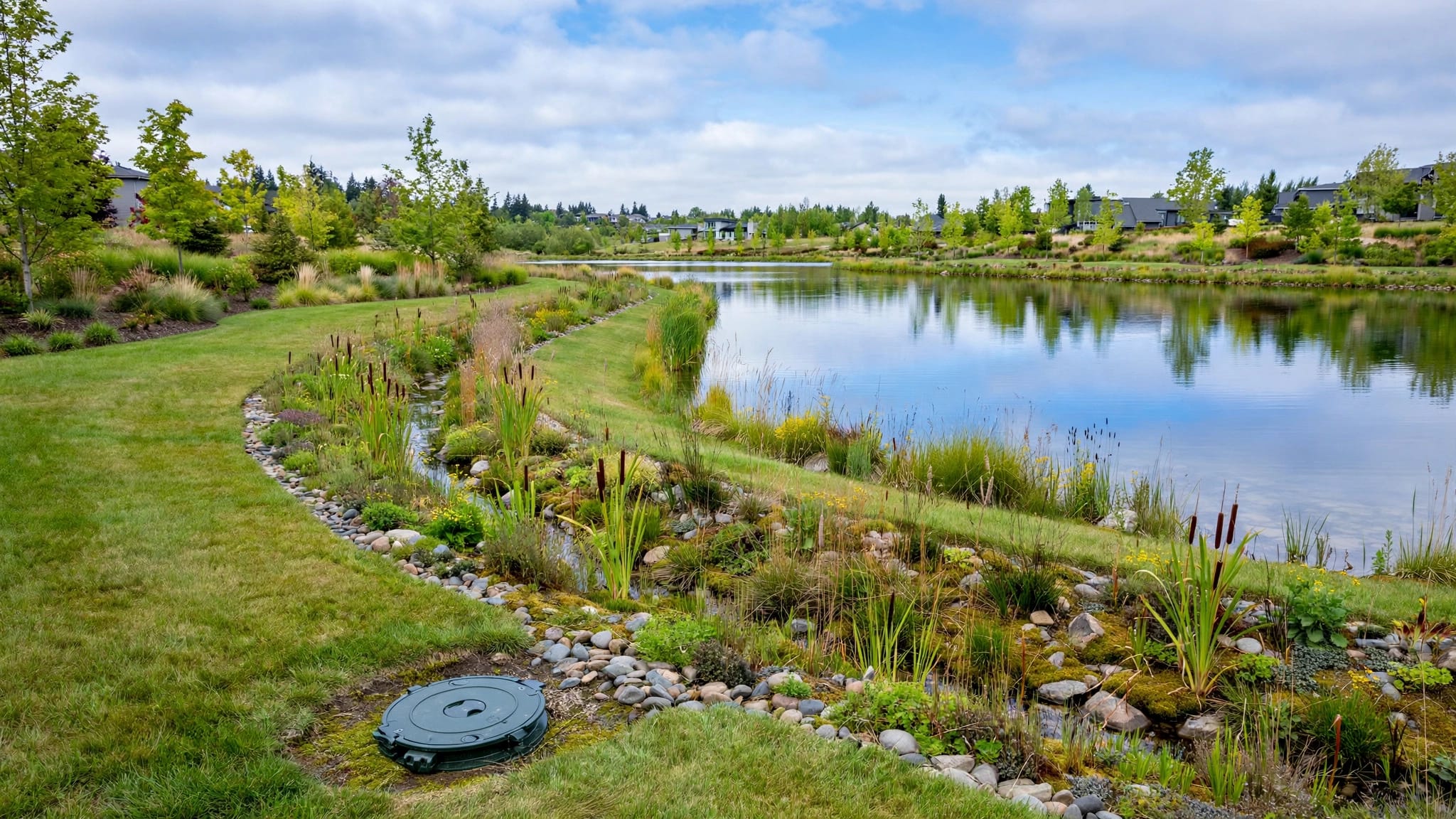
Multi-lake properties need a basin-by-basin review because conditions can vary sharply between ponds. Water depth, shade, circulation, runoff, plant density, and aeration may differ even when the lakes sit within the same community.
Timing matters. Follow the product label and treatment plan for water-use restrictions, irrigation instructions, notices, and access requirements. A same-day review can identify blocked access, visible drift, equipment trouble, or fish distress. A later inspection can show whether algae or aquatic weeds are declining and whether untreated areas remain.
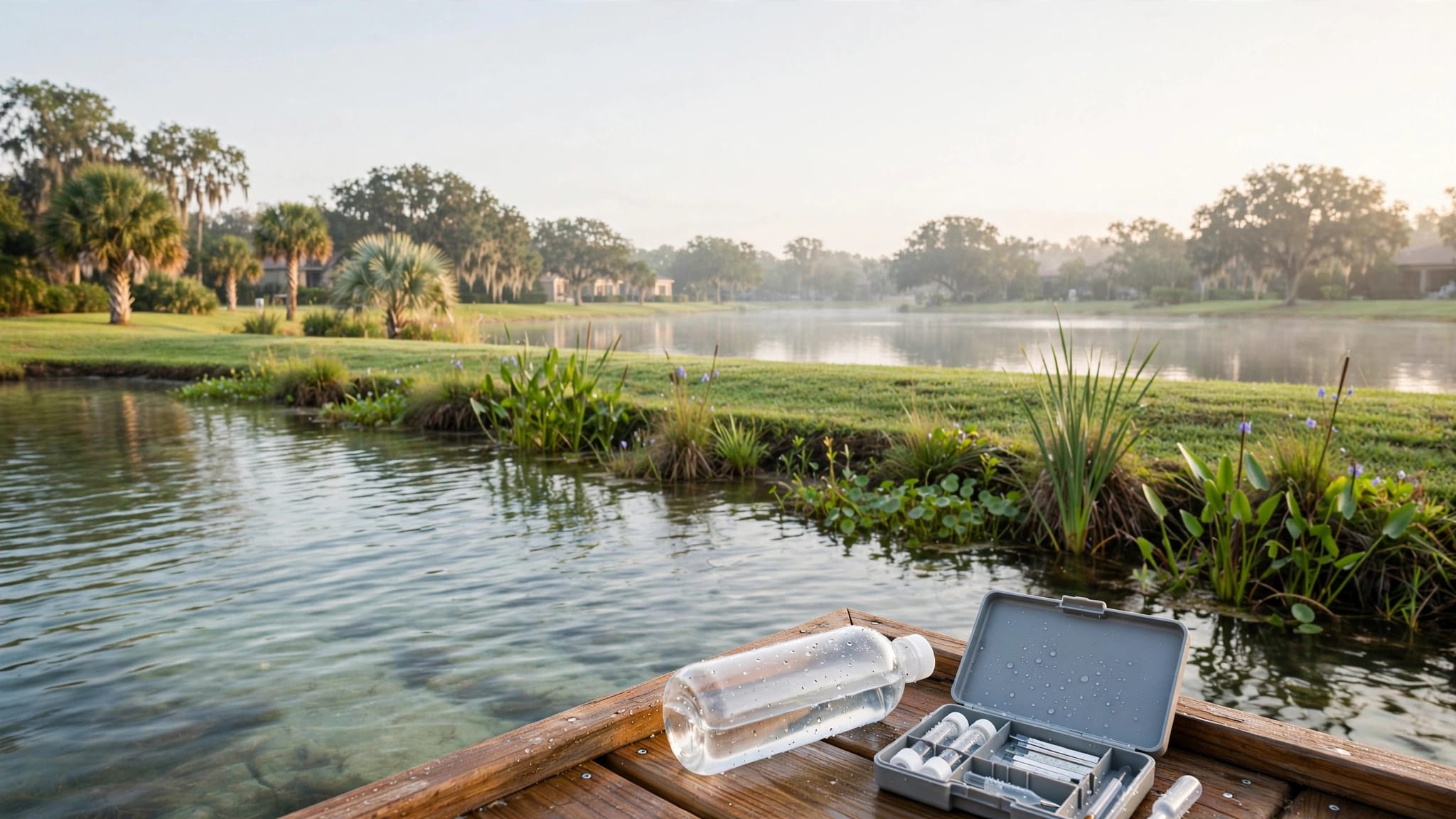
Use dated photos from fixed viewpoints whenever possible. Capture the shoreline, water surface, inlets, outfalls, aerators, fountains, and any problem area. Consistent photos make it easier to compare conditions during the next weekly or biweekly visit.
For a recurring baseline, pair this review with the Florida HOA lake inspection checklist.
A treatment record can show what was applied, but only a lake-by-lake inspection can show how each basin responded.
The multi-lake property inspection checklist
Move through one lake or retention pond at a time. Record the waterbody name or number on every page, photo set, and work order.
- Start with the treatment record. Note the lake name, treatment date and time, applicator, target plant or algae, product, active ingredient, treated area, weather, wind, and any required site restrictions. Never combine several basins on one line.
- Compare current conditions with baseline photos. Use the same viewing points before and after treatment. Look for changes in plant coverage, algae mats, water color, clarity, floating material, and shoreline appearance. A change in color alone doesn't prove success or failure.
- Inspect the treated surface. Check whether the target growth is declining, unchanged, or spreading into untreated pockets. Look for drifting plant material, dense mats near an outfall, unusual foam, strong odors, or sudden turbidity. Record the location instead of describing the whole lake as healthy or unhealthy.
- Watch for fish and wildlife concerns. Note fish gathering at the surface, gasping, swimming abnormally, or appearing dead. Also record unusual wildlife activity, stranded animals, or visible impacts near the shoreline. Don't handle dead fish or wildlife. Photograph the area and notify the lake manager promptly.
- Walk the accessible shoreline. Look for exposed soil, fresh washouts, bank slumping, standing water, damaged plantings, litter, broken fencing, and newly unsafe access points. Check areas near homes, sidewalks, cart paths, playgrounds, docks, and stormwater discharge points.
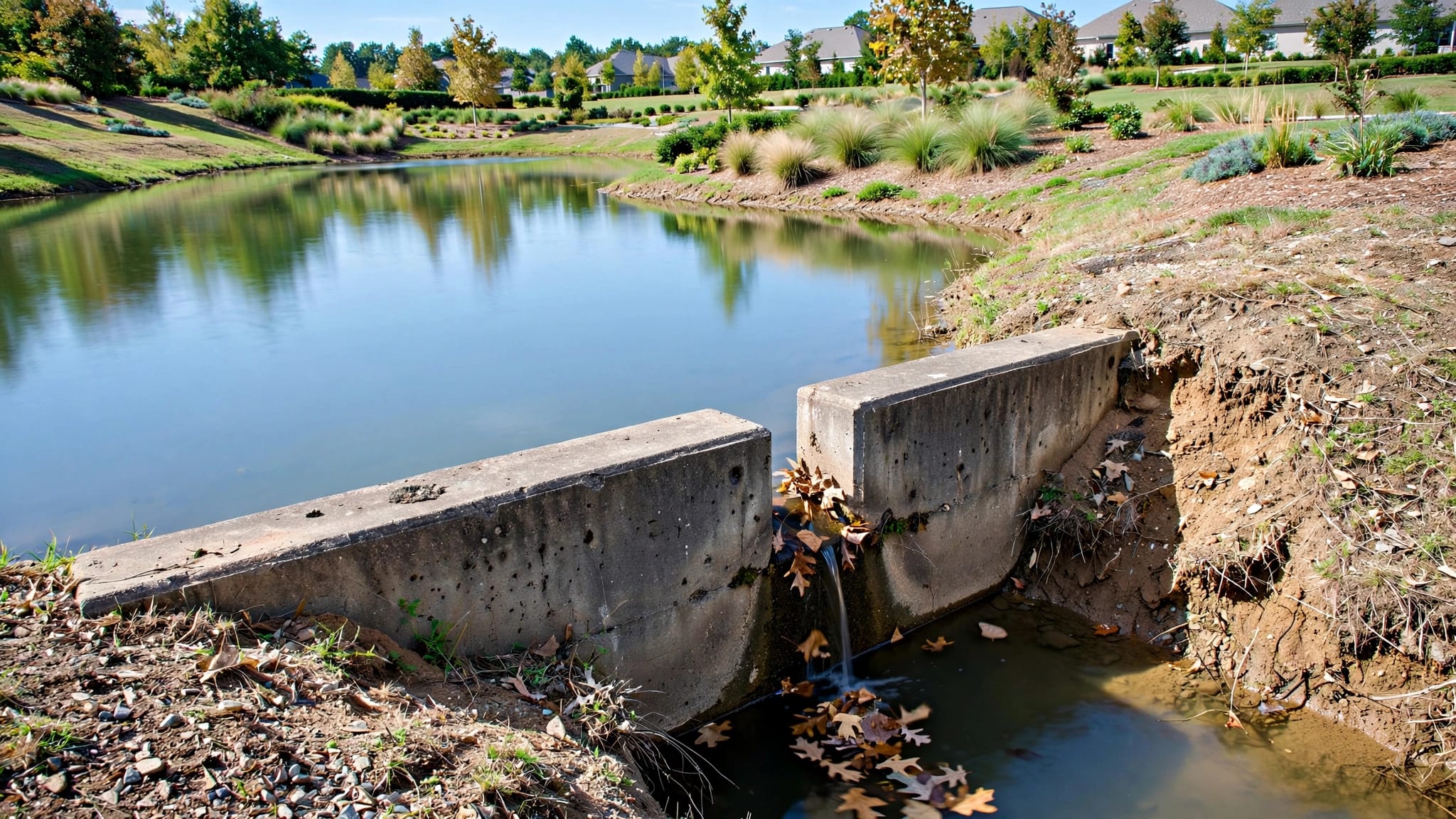
- Check inlets, outlets, and equipment. Confirm that water can move through visible pipes, control structures, weirs, skimmers, and trash racks. Observe fountains, aerators, pumps, and irrigation intakes for normal operation, unusual noise, disconnected lines, or blocked screens. Don't open electrical panels or enter restricted structures during a routine inspection.
- Assign the next action before leaving. Mark each finding as routine monitoring, maintenance follow-up, or urgent escalation. Add the responsible person, recommended date, photo numbers, and any resident, golfer, staff, or contractor notice that may be needed.
The inspection should include areas that look normal. A clean entry lake can distract from a blocked outfall, algae growth behind a peninsula, or erosion at the far side of a retention pond.
Inspect shorelines, structures, and public areas separately
Water quality and shoreline condition are connected, but they need separate observations. Treatment may control surface growth while runoff continues to cut a bank or carry nutrients into the basin.
Look for changes at the water's edge
Inspect the full accessible perimeter, not only the side visible from a road. Pay close attention to corners, narrow coves, drainage swales, steep slopes, and locations where stormwater enters the lake.
Fresh soil in the water, exposed roots, leaning trees, small channels, and collapsed edges can point to active erosion. Mark the location with a photo and a nearby reference point, such as a drain, lot number, light pole, or cart path intersection.
Review planted littoral areas with care. Beneficial shoreline plants may look different after treatment, seasonal changes, or water-level fluctuations. Don't remove or treat vegetation until the plant has been identified and the maintenance plan confirms the correct action.
Check structures and shared-use areas
Retention ponds often include structures that affect drainage and nearby property. Inspect visible control boxes, pipes, spillways, inlet grates, outfall channels, and access roads for blockage or damage. Leaves and litter can collect where water enters or exits, while sediment can reduce flow around the structure.
Golf course teams should also check irrigation intakes, pump areas, cart paths, bridges, and maintenance access. HOA teams should review sidewalks, fencing, pet access, warning signs, and locations where residents gather near the water.
A surface treatment doesn't repair a damaged bank or blocked drainage structure. Keep those findings on a separate maintenance work order so they don't disappear inside a chemical treatment record.
Turn field observations into an actionable report
A useful report lets someone who wasn't present understand the condition of each basin. Use plain descriptions, exact locations, photos, and measurements when available.
Write "floating algae along the east bank beside the pedestrian bridge" instead of "lake looks bad." Record whether an issue is new, unchanged, improving, or recurring. If you can't confirm the cause, describe the observation without presenting a guess as a diagnosis.
This simple format helps organize the next step:
| Observation | Useful record | Follow-up |
|---|---|---|
| Fish at the surface or dead fish | Time, location, photos, weather, recent treatment | Notify the lake manager promptly |
| Floating plant or algae material | Approximate area, wind direction, photos | Monitor or remove according to the maintenance plan |
| Blocked inlet or outlet | Structure name, water level, debris, photos | Assign a maintenance inspection |
| New erosion or bank damage | Location, affected length, nearby asset, photos | Schedule shoreline assessment |
Each lake should receive a complete entry, including "no issue observed" where appropriate. A blank field doesn't show whether the area was inspected or skipped.
During a multi-lake property inspection, consistent records also help identify patterns. If the same basin develops algae after rainfall, receives heavy runoff, or loses water faster than neighboring ponds, the maintenance team has useful information for future water-quality and shoreline decisions.
When to schedule licensed follow-up
Some findings need more than observation. Fish distress, widespread die-off, strong odor, sudden water discoloration, blocked water-control structures, active erosion, and repeated treatment failure should receive prompt review.
Treatment changes should follow the product label and the judgment of a properly licensed aquatic professional. Applying more product without confirming the cause can create additional water-quality concerns and may not solve runoff, circulation, or nutrient problems.
Shoreline stabilization, erosion control, equipment repair, and structural work also require the right contractor for the task. Property managers should keep license information, insurance documents, treatment records, site maps, and prior inspection reports together.
Seabreeze Lake Maintenance is based in Fort Myers and serves Southwest Florida HOAs, gated communities, golf courses, apartment complexes, and commercial properties. The company holds Commercial Applicator License #CM28291 and State-Licensed Specialty Contractor #SCC131152136.
Boards comparing vendors can review this guide to comparing lake service proposals, including visit frequency, inspection coverage, credentials, and shoreline responsibilities.
If several basins need an on-site review, Get a Free Lake Health Assessment to discuss the property and its current maintenance needs.
Conclusion
A strong post-treatment review does more than confirm whether weeds or algae changed. It documents each lake's response, checks public areas and water-control structures, records wildlife concerns, and assigns the next action.
The most reliable multi-lake property inspection is consistent without being one-size-fits-all. Each retention pond deserves its own photos, observations, and follow-up plan, so small problems don't remain hidden until they affect residents, golfers, drainage, or property appearance.
Recent Posts