How HOA Boards Should Compare Lake Service Proposals
The lowest HOA lake service proposal is not always the cheapest one. A board can save money on paper and spend far more later on algae, erosion, missed visits, or weak reporting.
That risk grows on retention ponds and community lakes in gated neighborhoods and multi-lake properties. When one vendor manages several waterbodies, the board needs more than a price. It needs a clear scope, a fair schedule, and proof that the work fits the site.
The best comparison starts with the same facts from every bidder, then measures what each company will actually do.
Start with a clear scope of work
A proposal can only be compared if every vendor is pricing the same job. That sounds simple, yet many boards skip this step and end up with bids that look similar but cover very different work.
If your board is still building the request, writing an effective lake service RFP for HOAs can help you ask for the same details from every company. That matters because lake maintenance is not one-size-fits-all. One property may need weed control and floating debris removal. Another may need shoreline repair, algae treatment, and water quality management.
For multi-lake communities, list each lake or retention pond by name if you can. Note the known trouble spots, access points, and any areas with erosion or heavy plant growth. Also ask vendors to spell out how often they will visit, what they will inspect, and what they will treat on each visit.
A short scope leads to short answers. A strong scope leads to useful bids.
Compare services line by line, not just the total
The total price is only useful when the scope matches. Otherwise, the cheapest bid may leave out work the property needs most.
Use a side-by-side review so the board can compare the same items in each proposal.
| Item to compare | What the board should look for | Red flag |
|---|---|---|
| Routine visits | Clear visit frequency and site coverage | "As needed" with no schedule |
| Aquatic weed control | Named treatment areas and methods | Broad language with no detail |
| Algae treatment | Planned response for visible blooms | No mention of algae at all |
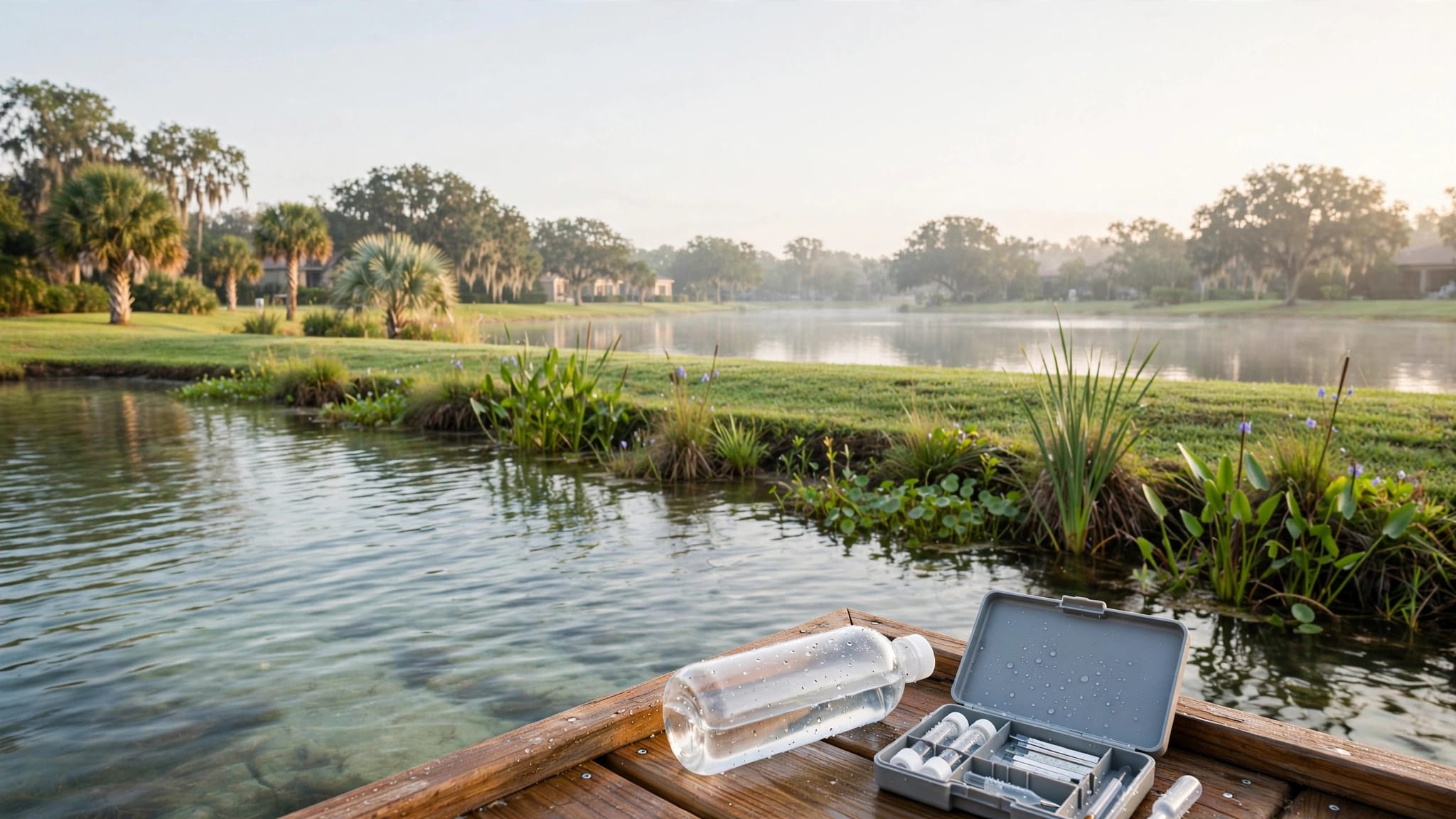
| Water quality management | Testing, notes, or monitoring plan | No tracking or follow-up |
| Debris removal | Included cleanup steps | Extra charges hidden in fine print |
| Shoreline care | Erosion, plant, or edge work if needed | Shoreline ignored in the proposal |
That table makes one thing clear. A proposal with more detail is often easier to manage, even if the price is higher.
If one company includes water quality checks and another does not, the totals are not equal. If one bid covers shoreline repair and the other leaves it out, the board is not comparing the same service. Ask each vendor to explain any vague line item before the vote.
Read the pricing structure with care
A good proposal shows how the number was built. It should not feel like a guess wrapped in a monthly fee.
Look for line-item pricing when possible. That makes it easier to see what routine service costs, what extra visits cost, and what special work costs. Boards should also ask how the vendor bills for storm cleanup, emergency algae events, or debris removal after heavy rain. Those moments are common on Florida properties, so they should not come as surprises.
A low bid that leaves out key work can cost more than a complete proposal.
Ask these questions before the board compares final numbers:
- What does each routine visit include?
- What work triggers an extra charge?
- Are algae, weeds, and debris priced separately?
- Does the fee change if the property has several lakes or ponds?
- How are emergency visits billed after storms?
You should also check whether the proposal uses flat monthly pricing, per-visit pricing, or a mix of both. Any of those can work. The key is knowing what the board gets in return.
If a vendor avoids pricing details, the board loses control of the budget.
Check licenses, insurance, and local response
Lake care on Florida properties should be handled by a company that knows the rules and the site conditions. That includes access through gates, treatment limits, and the timing of work around rain and runoff.
Ask for the vendor's insurance documents, license numbers, and proof of experience with retention ponds, lakes, and shoreline work. On Florida properties, ask for the Commercial Applicator License and the State-Licensed Specialty Contractor number. Seabreeze Lake Maintenance holds Commercial Applicator License #CM28291 and State-Licensed Specialty Contractor #SCC131152136.
That kind of detail matters because the board is not just buying labor. It is trusting the company to work around residents, pets, wildlife, and common areas. A vendor should also be able to explain how it handles access to a gated community, who opens and closes gates, and how quickly it can inspect a problem area after heavy rain.
When the paper looks close, a site walk can settle the question. Book a lake inspection and Get a Free Quote before the board locks in a choice.
Look for reporting that helps the board stay in control
A strong lake service proposal should say how the company reports its work. Without that, the board may get service but no record of what changed or why.
Good reporting gives the board a paper trail. It helps managers explain spending, helps homeowners understand what was done, and helps future boards compare results over time. It also makes it easier to spot patterns, such as the same weed issue returning after a wet month or one pond always needing more attention than the others.
Look for regular photo updates, treatment notes, and clear comments about trouble spots. If a company tracks water quality, those results should be easy to read. If it handles algae control, the proposal should say how it documents the problem before and after treatment. If it removes debris or works on shoreline issues, the board should know when the work happened and what still needs attention.
A vendor that communicates well saves the board time later. It also keeps small problems from turning into bigger ones.
Use the contract to catch gaps before you sign
A proposal can look polished and still leave out important terms. That is why the contract matters as much as the bid itself.
Strong bids should line up with essential HOA lake maintenance contract details. The board should check whether the contract matches the promised scope, the visit schedule, and the reporting plan. It should also confirm how price changes work, who approves extra charges, and how the vendor handles missed visits or urgent work.
This is also the time to look at renewal terms, termination terms, and responsibility for site records. If the contract is vague, the board may have trouble holding the vendor to the proposal later.
A clean contract keeps everyone on the same page. It gives the board a clear path if conditions change, and it makes future bidding easier because the previous work is documented.
A better proposal protects the whole property
Comparing HOA lake service proposals is about more than choosing a number. The board needs a scope that matches the site, pricing that shows the real work, and credentials that fit the job.
When those pieces line up, the community gets steadier lake care, better records, and fewer surprises after storms or seasonal growth. That is how a board protects the property without chasing the lowest line on the page.
A strong proposal is the one that makes the next year easier to manage.
Recent Posts