Community Pond Dredging FAQ for HOA Boards
A pond can look fine from the sidewalk and still be losing depth every season. For HOA boards, that hidden change turns into shallow water, weak drainage, and a bill that grows with every storm.
This guide is for retention ponds and lakes in gated communities, golf courses, and other multi-lake properties. It is not about koi ponds or small ornamental basins. When community pond dredging comes up, the real question is simple: how do you know when the work is needed, what should it cost, and what should the board ask before signing anything?
Questions the board should answer first
Before anyone prices dredging, the board should define the problem. Is the basin losing depth, or is it full of floating debris and plant growth? Dredging removes settled sediment, so the scope matters.
Boards that need a cleaner bid packet can start with a Florida HOA lake management RFP guide. It helps separate routine maintenance from a larger project.
| Board question | Why it matters |
|---|---|
| How much depth has been lost? | It changes equipment, haul-out volume, and cost. |
| Where can crews stage? | Access affects turf, pavement, and time on site. |
| What other work is needed? | Shoreline repair, plants, or erosion control may belong in the same plan. |
| Where will dredged material go? | Disposal rules and trucking can change the budget fast. |
A board that answers these questions early has a much better chance of getting apples-to-apples bids. It also avoids the common mistake of asking for a price before the scope is clear.
Signs a pond needs dredging
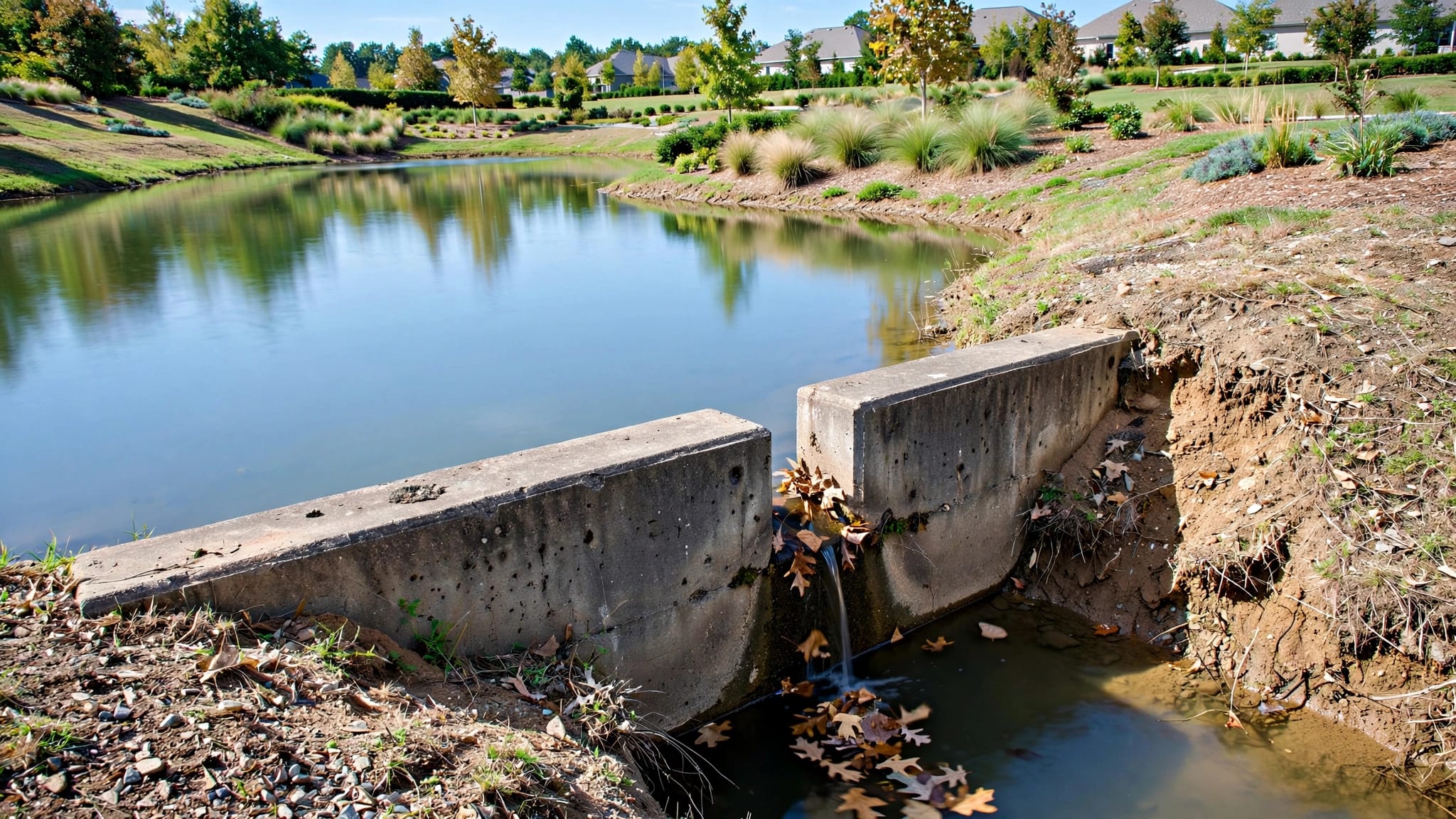
A shallow shoreline is one clue, but not the only one. Look for exposed muck, sediment bars after storms, sudden plant growth in water that used to stay open, and corners where water no longer moves well.
If runoff keeps washing soil into the basin, the problem keeps coming back. For more background, review the causes of sediment buildup in lakes. In many communities, the source is a mix of erosion, lawn debris, and stormwater flow.
Algae can show up too, because shallow water warms fast and leaves less room for dilution. Still, algae is a symptom, not a full diagnosis. If the lake has lost depth, a surface treatment won't restore it.
In gated communities with several lakes, one basin may be in bad shape while another still looks healthy. That is why boards should inspect each water body on its own. A lake that drains into another can also spread the same sediment problem twice.
What drives the price
Dredging prices don't come from one number. Depth, access, disposal, and follow-up work all matter.
| Cost factor | What it changes |
|---|---|
| Sediment depth | More material means more time and heavier equipment. |
| Site access | Narrow roads or soft ground can slow the crew. |
| Water management | Dewatering or bypass pumping adds labor. |
| Disposal distance | Haul time and dump fees affect the total. |
| Follow-up repairs | Shoreline stabilization or replanting adds scope. |
That is why a cheap bid can look good on paper and still miss real costs. Boards should ask each bidder to name what is included, what is optional, and what is excluded. If the proposal hides disposal or restoration work, the final bill can jump later.
For larger properties, it helps to separate dredging from routine weed control, debris removal, and bank repair. That keeps the board from paying twice for the same issue.
Permits, access, and timing
Many community lake projects need local permits or approvals, and some also need a plan for water handling or sediment disposal. The exact path depends on the lake, the discharge point, and local rules. Boards should ask that question early, not after the crew arrives.
Timing matters too. Heavy rain can slow the work, and busy resident seasons can make access harder. A good plan protects walkways, turf, irrigation lines, docks, and cart paths. In golf communities, it also helps to coordinate around play.
Resident notice matters because dredging changes how people use the shoreline for a while. Clear signage, fenced staging areas, and a set work window cut down on complaints. The calmer the schedule, the easier it is to keep the project moving.
Picking a contractor who knows HOA water
Dredging in a community setting takes more than equipment. The contractor should know retention ponds, lakes, shoreline limits, and the cleanup that follows. That experience matters more than a low number.
Seabreeze Lake Maintenance works under Commercial Applicator License #CM28291 and State-Licensed Specialty Contractor #SCC131152136, which matters when a project includes water treatment, shoreline work, or erosion repair. That kind of work often sits next to dredging, so the board should want one clear plan.
Before the board votes, ask these questions:
- What equipment will be used, and why?
- How will spoil be removed and disposed of?
- What follow-up work is included after the basin is dredged?
- Who handles shoreline repair if the bank slips?
If your board wants a site visit before it compares bids, Get a Free Quote and book a lake inspection.
A clear inspection gives the board a better starting point than guesswork. It also helps the community avoid paying for work that doesn't solve the real problem.
What HOA boards should remember
Community pond dredging is usually about more than depth loss. It is about drainage, shoreline stability, and the cost of waiting too long.
The best boards define the scope, check the cause of the buildup, and ask for bids that separate dredging from follow-up work. That keeps the project grounded in facts, not guesswork.
When a basin starts acting shallow, the warning is already there. The sooner the board answers those questions, the easier the fix tends to be.
FAQ
How often should a community pond be dredged?
There is no fixed schedule. Sediment load, runoff, shoreline erosion, and upstream drainage all change the timeline. Some basins go years between major cleanouts, while others fill faster because they catch heavy stormwater or soil from nearby slopes. The trigger is loss of function, not the calendar.
Can dredging fix algae problems?
It can help when shallow water and muck feed the problem, but dredging does not replace water quality management. A pond may still need aeration, debris removal, nutrient control, or shoreline work. If algae keeps coming back, the board should look at the source, not just the symptoms.
Does the work shut down the whole community?
Usually no, but the work zone may need access limits, temporary signage, and short closures near the shoreline. Good scheduling keeps disruption down. On larger properties, crews often work one basin or one section at a time so residents can still use the rest of the site.
Recent Posts