How Lake Depth Affects HOA Water Quality
A lake can look calm from the shore and still have water quality problems below the surface. In HOA communities, lake depth shapes how much light reaches the bottom, how water moves, and how fast oxygen gets used up.
That matters for retention ponds, golf course lakes, and multi-lake properties where small changes spread quickly. When depth changes, water quality changes with it, and the signs often show up first as algae, odor, or poor clarity.
Why lake depth changes the water column
Depth controls how a lake mixes. Wind can stir a shallow pond more easily, while deeper water can stay layered for long stretches.
Sunlight also reaches different depths in different ways. In a shallow pond, more of the bottom gets light, so plants and algae have more room to grow. In a deeper lake, the lower water can stay darker and cooler, which changes the balance between oxygen use and oxygen supply.
The table below shows the basic pattern many HOA lakes follow.
| Lake depth pattern | Water movement | Common water quality effect |
|---|---|---|
| Shallow water | Mixes fast and warms quickly | More algae, less oxygen, more plant growth |
| Deep water | Can stay layered for long periods | Low oxygen near the bottom, odor, nutrient release |
| Sediment-filled water | Loses depth over time | Faster warming, more muck, more runoff impact |
That pattern explains why two lakes in the same neighborhood can behave very differently. One may stay fairly clear after rain, while another turns cloudy or green within days.
Depth also affects how much water the lake has to absorb nutrients. A shallow pond has less room for error. A deeper lake has more volume, but that doesn't always mean better water quality. If the bottom water goes stale, trouble can build out of sight.
Shallow lakes warm fast and lose oxygen sooner
Shallow water heats up fast in Florida sun. When that happens, the water holds less dissolved oxygen , and the lake starts to favor algae and nuisance plants.
That change matters because oxygen supports the bacteria and fish that help keep a lake balanced. When oxygen drops, organic matter breaks down in a slower, dirtier way. Odors show up. Water can turn dull or cloudy. Weeds can spread along the edges and across flat shelves.
Shallow HOA lakes also feel runoff more sharply. Rain washes in fertilizer, soil, turf clippings, and leaves. In a deep lake, that material has more water around it to dilute the impact. In a shallow pond, the same load can trigger a visible algae bloom.
Retention ponds are especially sensitive because they collect whatever comes off roofs, streets, and lawns. That means a short storm can change the lake fast. A light green film one week can turn into thick surface growth the next.
Shallow water changes faster, so a small nutrient load can become a big algae problem.
Warm, shallow water also encourages rooted weeds near the shoreline. As plants spread, they trap more debris and slow water movement even more. The lake starts to behave like a bowl with no outlet, even when it still drains properly on paper.
Deep lakes can hide problems below the surface
Depth helps a lake resist quick warming, but it can create a different issue. When weather stays calm, the top and bottom layers stop mixing. The surface gets oxygen from air and plant activity. The bottom can run low on oxygen as leaves, algae, and other organic material sink and break down.
That layering can trap poor water quality below the surface for weeks. The lake may look fine from a dock, yet the lower water can hold the real problem. Once that oxygen-poor layer gets disturbed by wind or heavy rain, the whole lake can change fast.
A common result is a sudden odor after a storm. Another is a burst of algae after the lake turns over and moves nutrients from the bottom into the upper water. Fish can also stress when the bottom water lacks oxygen for too long.
That is one reason many deep HOA lakes need lake and pond aeration systems to keep water moving and oxygen levels steadier. Aeration helps reduce still pockets and supports healthier conditions across the water column.
A deep lake with poor circulation can act like a closed room with one open window. The air at the top may feel fine, but the lower space grows stale. Once that happens, depth stops helping and starts hiding the problem.
Sediment makes lakes shallower over time
Lake depth is not fixed. Over the years, sediment, muck, and organic debris settle to the bottom and slowly reduce the water's depth.
That process often starts with small things. Soil washes in from bare areas. Leaves drift from nearby trees. Grass clippings and yard debris blow toward the shoreline. In construction-heavy areas, runoff can carry even more silt into the basin.
As the bottom rises, the lake changes behavior. Sunlight reaches more of the floor. Water warms faster. Plants root farther out from shore. Algae gets more access to nutrients stored in the sediment. The lake can shift from a deeper system with stable zones to a shallow one that reacts fast to every storm.
This is where lake depth and water quality become tied together over the long haul. A pond that slowly fills in loses its margin for error. Rainfall that once spread through a larger volume now hits less water. That means faster color changes, faster odor changes, and faster plant growth.
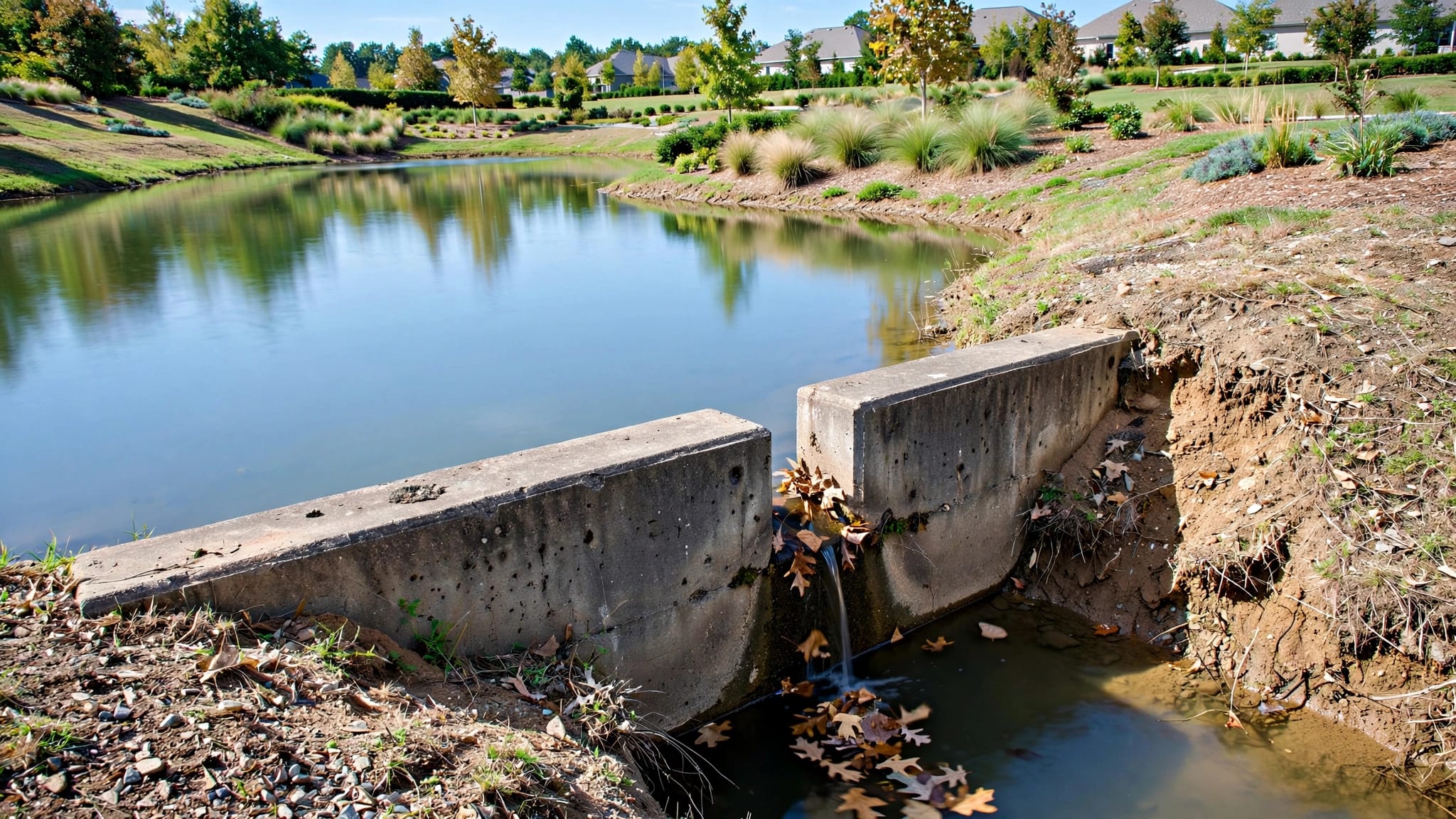
Shoreline erosion makes the problem worse. When banks wash away, the lake gains extra soil and loses shoreline structure at the same time. That is why shoreline stabilization and debris control matter just as much as algae treatment in many HOA systems.
A lake does not need to be nearly full to show signs of this process. Even a small drop in depth can change how the entire basin behaves.
What HOA boards should watch before problems spread
Depth-related water quality issues usually show a trail of warning signs before they become expensive. Boards and property managers can catch a lot by watching for changes after rain, heat, or dry spells.
Look for these signs:
- Algae returns soon after treatment.
- Water near the shore turns cloudy after storms.
- Odors show up during hot weather or calm mornings.
- Weeds spread farther from the bank than before.
- Muck builds up around inlets, corners, and shallow shelves.
These clues often point to more than one issue. A shallow area may be heating up faster. A deeper basin may need more circulation. Sediment may be reducing the lake's usable depth. Runoff may be feeding the problem every time it rains.
For retention ponds and lakes in gated communities, golf courses, and other multi-lake properties, Seabreeze Lake Maintenance works under Commercial Applicator License #CM28291 and State-Licensed Specialty Contractor #SCC131152136.
If your community is dealing with repeat algae, odor, or poor clarity, Get a Free Quote for a lake inspection. A clear look at depth, circulation, and sediment can point to the real cause.
Conclusion
Depth shapes nearly every part of a lake's behavior. It affects heat, oxygen, mixing, plant growth, and the way nutrients move through the water.
Shallow lakes warm fast. Deep lakes can trap stale water below the surface. Lakes that slowly fill with sediment lose the space they need to stay balanced.
That is why lake depth water quality problems rarely come from one cause alone. The strongest results come from watching depth, circulation, and runoff together, then treating the lake as a living system that changes over time.
Recent Posts