Floating Heart Identification in Florida HOA Lakes
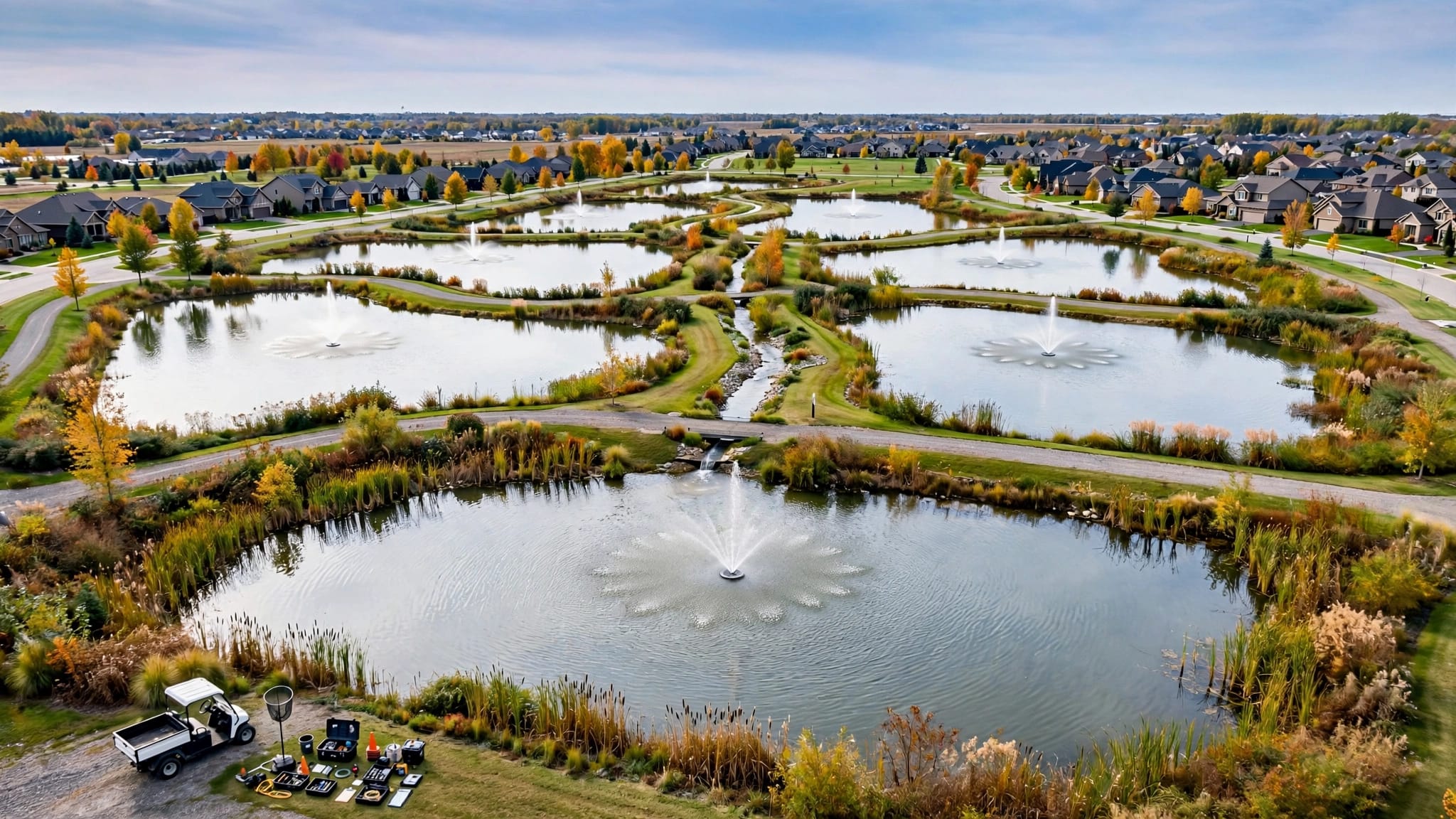
A pale flower and heart-shaped leaf can look harmless along a community lake. In a Florida retention pond, however, the plant may spread through shallow water, cover open surface, and interfere with inspections near drains and outfalls.
A search for "floating heart identification Florida" often starts after an HOA board notices unfamiliar growth near a fountain or shoreline. Correct identification matters because floating heart can resemble water lilies, pennywort, duckweed, or watermeal, yet each plant calls for a different management plan.
What Floating Heart Looks Like in Florida Lakes
"Floating heart" usually refers to aquatic plants in the Nymphoides genus. The plants grow from submerged stems or roots, then send long stalks upward to floating leaves. They are rooted in the pond bottom, even though most of the visible plant rests on the surface.
The leaves are usually rounded to heart-shaped. Their size, color, and texture vary by species. Some have smooth green surfaces, while others show darker markings or a slightly waxy appearance. Leaf shape provides a useful clue, but it doesn't confirm the plant on its own.
The flowers offer better evidence. Depending on the species, flowers may be white or yellow and can rise above the water on slender stalks. Many floating heart flowers have fringed or finely divided petal edges. Small flowers may appear among the leaves, while a larger infestation can produce blooms across an entire shallow area.
Florida ponds may contain native and nonnative Nymphoides species. Banana lily, also called water snowflake, is associated with white flowers and small banana-shaped structures beneath the leaves. Yellow floating heart has yellow flowers with fringed edges and can form dense growth in suitable conditions.
These differences matter during a lake inspection because the same common name may describe more than one plant. A clear photograph of the flower, leaf surface, leaf underside, and stalk gives a technician better information than a photo of the pond from a distance.
Floating heart shouldn't be confused with a free-floating plant. Duckweed and watermeal drift without visible leafstalks or a clear connection to the pond bottom. Floating heart has larger leaves and a more organized structure, even when wind pushes the plants together.
A heart-shaped leaf identifies a group of possibilities, not a treatment plan. The flower, stalk, root connection, and growth pattern complete the identification.
A Field Guide for floating heart identification Florida HOA Teams Can Use
Start at the pond edge, where shallow water often reveals the plant's structure. Don't enter the water or pull vegetation near a steep bank, stormwater inlet, or unstable shoreline. A safe observation from the bank is usually enough for an initial report.
Use these field signs when documenting a suspected floating heart:
- Leaf shape: Look for rounded or heart-shaped leaves attached to long stalks. Record whether the leaves have smooth edges, a notch, spots, or a glossy surface.
- Flower color: Note whether flowers are white, yellow, or another color. Fringed petal edges are an important clue.
- Plant connection: Check whether several leaves connect to submerged stems or appear to grow from the bottom. This separates floating heart from tiny free-floating weeds.
- Location: Mark the side of the lake, nearby inlet, fountain, littoral shelf, or drainage feature. Location helps crews find the original patch.
- Coverage: Estimate whether the plant occupies a few feet of shoreline, a narrow band, or a large surface area. Photograph the patch from close and far distances.
- Water movement: Record whether the growth sits in still water, gathers downwind, or circles around an aerator or fountain.
A good photo includes something familiar for scale, such as a ruler, gloved hand, or standard-sized leaf. Take pictures in daylight, avoid glare, and capture both an individual plant and the larger infestation. If flowers are present, photograph them before wind or rain changes the scene.
For a board or property manager searching for floating heart identification Florida professionals can act on, the location notes are as useful as the plant image. A maintenance crew needs to know whether the patch threatens a drain, blocks shoreline visibility, or sits beside desirable littoral plants.
Floating Heart and Common Lookalikes
A quick comparison can narrow the possibilities before a professional inspection.
| Plant | Common visual clue | Growth habit |
|---|---|---|
| Floating heart | Heart-shaped leaves on stalks, often with fringed flowers | Rooted in pond sediment |
| Water lily | Larger leaves and showy flowers, with species-specific leaf and flower forms | Rooted, with leaves floating |
| Spatterdock | Thick, rounded leaves and yellow cup-shaped flowers | Rooted in shallow water |
| Water pennywort | Rounded or kidney-shaped leaves, often along creeping stems | May float or spread at the shoreline |
| Duckweed | Tiny individual fronds with no long leafstalks | Free-floating |
| Watermeal | Fine green granules that resemble floating powder | Free-floating and easily spread by wind |
Water pennywort can spread along wet margins and create confusion when viewed from a distance. Review this water pennywort identification guide if the growth appears closer to the bank than the open water.
Duckweed and watermeal often create a green film or dense surface cover. Their small size is the main clue. This watermeal versus duckweed comparison can help a maintenance committee separate those plants from larger, stalked species.
The comparison doesn't replace a site inspection. Wind can push separate plants into one mass, and mixed infestations are common in shallow retention ponds.
Why Floating Heart Appears in Retention Ponds and Community Lakes
Florida HOA lakes receive nutrients through stormwater runoff, lawn fertilizer, decomposing leaves, bird activity, and organic sediment. Those inputs can support aquatic plant growth, especially in shallow coves with limited circulation.
Retention ponds also have features that favor floating vegetation. Littoral shelves, gently sloped banks, and protected corners provide shallow areas where rooted plants can establish. During the wet season, stormwater can carry plant fragments and nutrients into the basin. During the dry season, lower water levels may expose more sediment and concentrate nutrients in the remaining water.
Water movement affects where residents see the plant. Wind may push floating leaves against one shoreline, while fountains, aerators, or inflows move growth toward another area. A small patch can therefore look much larger or smaller depending on the day.
The plant may also appear after another maintenance issue changes the lake. Heavy algae growth, decaying vegetation, sediment buildup, or a blocked inlet can affect light and nutrient conditions. Treating the visible leaves without reviewing those conditions may lead to repeated regrowth.
That pattern is common with established aquatic weeds. Treatment may appear successful for several days, then new growth becomes visible nearby. Mature plants can have dense root systems, hidden beds, or growth that shifts with wind. HOA boards can review these aquatic weed treatment challenges before approving a one-time response.
A lake inspection should therefore include more than the surface. The technician should review water depth, plant density, nearby desirable vegetation, stormwater structures, shoreline access, and any fountains or aeration equipment.
What to Do After You Spot Suspected Floating Heart
Begin with documentation rather than removal. Raking a patch into open water can scatter fragments, disturb the bank, and make the original location harder to find. Residents also shouldn't apply household weed killer to a community lake. Aquatic products require correct labeling, application rates, water-use precautions, and protection of non-target plants and wildlife.
Send the photos and location to the property manager or lake maintenance provider. Include the date, recent weather, approximate patch size, and whether the growth sits near a drain, fountain, walking path, or shoreline structure. Report any fish stress, foul odor, or sudden water color change at the same time.
A professional assessment should answer four practical questions:
- What plant is present, and is more than one species growing there?
- How large is the infestation below and above the water surface?
- Could the growth affect drainage, equipment, visibility, or resident safety?
- Which control method fits the plant, season, water conditions, and nearby vegetation?
Depending on the findings, a plan may include selective aquatic herbicide treatment, mechanical removal, debris removal, follow-up inspections, or changes to the routine maintenance schedule. Mechanical removal can help when dense vegetation blocks an inlet, gathers around equipment, or creates a hazard near an accessible shoreline. Crews may also need to remove dead material so decomposition doesn't consume oxygen or add more nutrients to the water.
Licensed application matters in a shared lake. An HOA pond isn't a private backyard container, and residents, pets, fish, irrigation systems, and downstream connections may all affect the work plan. Seabreeze Lake Maintenance holds Commercial Applicator License #CM28291 and State-Licensed Specialty Contractor #SCC131152136 for lake and pond maintenance work.
A treatment plan also needs follow-up. Crews should check whether the original patch is declining, whether wind moved plants into another cove, and whether new growth is appearing along the littoral shelf. Routine weekly or biweekly visits can catch small patches before they spread across a visible section of the lake.
For communities that need a broader response, integrated aquatic weed and algae management combines plant identification with water-quality review, removal when needed, and ongoing maintenance. If the plant is affecting curb appeal or drainage, Get a Free Lake Health Assessment to schedule a property review.
Build Floating Heart Identification Into the Maintenance Plan
Identification works best when it becomes part of routine lake care. Ask maintenance crews to photograph unfamiliar plants during scheduled visits, record their locations, and compare conditions after storms or major changes in water level.
A simple lake map can show recurring problem areas. Mark shallow shelves, inflow points, outfalls, fountains, aerators, and shorelines that collect windblown material. Over time, these records can reveal where floating heart or other aquatic weeds appear first.
Seasonal inspections also help. After heavy rain, check areas receiving concentrated runoff and inspect inlets for plant material or debris. During drier periods, review exposed banks, lower water levels, and shallow edges where rooted plants may become easier to identify.
An HOA should keep plant records with treatment dates, photographs, weather conditions, and follow-up findings. This information helps board members evaluate recurring costs and prevents each new management group from starting without a history of the lake.
The maintenance budget should separate routine care from larger repairs. Weekly or biweekly visits may cover inspections, weed and algae control, equipment checks, and debris removal. Shoreline stabilization, erosion work, sediment removal, or fountain repairs may need separate planning.
The goal isn't to remove every plant from a lake. Healthy community lakes can contain useful vegetation when it grows in the right place and remains under control. The goal is to prevent invasive or excessive growth from blocking drainage, damaging water quality, hiding shoreline erosion, or reducing the appearance and function of the property.
Conclusion
Floating heart identification in Florida HOA lakes depends on more than a heart-shaped leaf. Flower color, fringed petals, stalks, root connection, location, and growth pattern help separate Nymphoides species from lilies, pennywort, duckweed, and watermeal.
When residents report a suspected patch early, the property team has more options and better information. A clear photo, mapped location, and licensed inspection can protect the lake's appearance, drainage features, desirable plants, and long-term maintenance budget.
Recent Posts