What High Ammonia Means in Florida HOA Lakes
When high ammonia in Florida HOA lakes shows up, the water is sending a clear warning. The lake may still look calm from the bank, but the chemistry can already be off.
That matters in retention ponds, community lakes, golf course water bodies, and other shared properties. It matters even more in gated communities and multi-lake sites, where one bad water source can affect several ponds at once, but this is not about koi ponds.
Why ammonia climbs in HOA lakes
Ammonia usually comes from decay. Leaves fall in, grass clippings wash across pavement, fertilizer runs off after rain, and fish waste settles into the bottom. As that material breaks down, ammonia can rise.
Florida weather makes the problem easier to trigger. Heavy rain pushes nutrients into lakes. Hot temperatures speed up decay. Shallow water can warm fast, and warm water holds less oxygen.
That combination creates a lake that works harder to stay balanced. If the basin already has a lot of organic buildup, ammonia can climb after a storm, a mowing event, or a long stretch of still weather.
Here are a few common sources and what they usually mean for HOA water bodies:
| Source of ammonia | What it means | What you may notice |
|---|---|---|
| Decaying leaves and grass | Organic waste is building up | Dark water, odor, muck along the edge |
| Fertilizer runoff | Nutrients are washing in from turf or landscaping | More algae growth after rain |
| Fish waste and dead plant material | The lake is carrying more biological load than it can process | Cloudy water, surface scum, stressed fish |
| Low oxygen in the bottom layer | Breakdown slows and waste stays in the system | Strong smell, poor water clarity |
A lake with ammonia problems is often carrying too much waste for its size. The water may not fail all at once, but it starts slipping out of balance.
What a high ammonia reading does to the water
Ammonia does more than raise a number on a test. It changes how the lake behaves.
At warmer Florida temperatures, ammonia becomes more stressful for fish and other aquatic life. The risk gets worse when pH rises, since the toxic form of ammonia becomes more active in alkaline water. That means a lake can look fine on a sunny afternoon and still be under stress.
Warm, shallow water can make ammonia more harmful than the same reading would be in cooler conditions.
Fish often react first. They may gather near the surface, move slowly, or stay near moving water. In some lakes, the water turns dull and heavy. In others, algae starts taking advantage of the extra nutrients.
High ammonia also points to a larger maintenance issue. If organic waste keeps breaking down in the lake, the water can keep cycling through the same trouble. That is why repeated spikes matter. One reading may be a weather event. A pattern points to a system problem.
For HOA boards and property managers, the main concern is not the reading alone. It is what the reading says about the lake's load, oxygen levels, and nutrient pressure.
Signs residents notice before the lab report comes back
Residents often spot a problem before a lake test confirms it. The changes can be subtle at first, then harder to ignore.
A few of the most common signs include:
- Fish near the surface, especially in the early morning
- A sour, swampy, or sharp smell near the shoreline
- Green water, brown water, or sudden cloudiness
- Sludge or decaying plant matter along the edge
- Algae growth after rain or irrigation runoff
- Plants thinning out in one area while another area looks choked with growth
The lake may also look uneven. One cove stays calm while another develops surface film. One shoreline smells fine, while another gets strong after a storm. Those clues matter because HOA lakes are not always uniform. Wind, runoff, depth, and shade can change conditions from one side to the next.
Timing matters too. If the water changes after a heavy rain, fresh mowing, or a fertilizer application nearby, ammonia should move up the list of things to check. If the lake has a history of muck buildup, the bottom layer may be feeding the problem.
Testing gives the real answer, but visible signs still help. They tell managers where to sample and what to inspect first.
How HOA teams should respond
A lake with rising ammonia needs a practical response, not guesswork. Start with the source. Check for runoff, stuck irrigation heads, decaying debris, and areas where water sits too long.
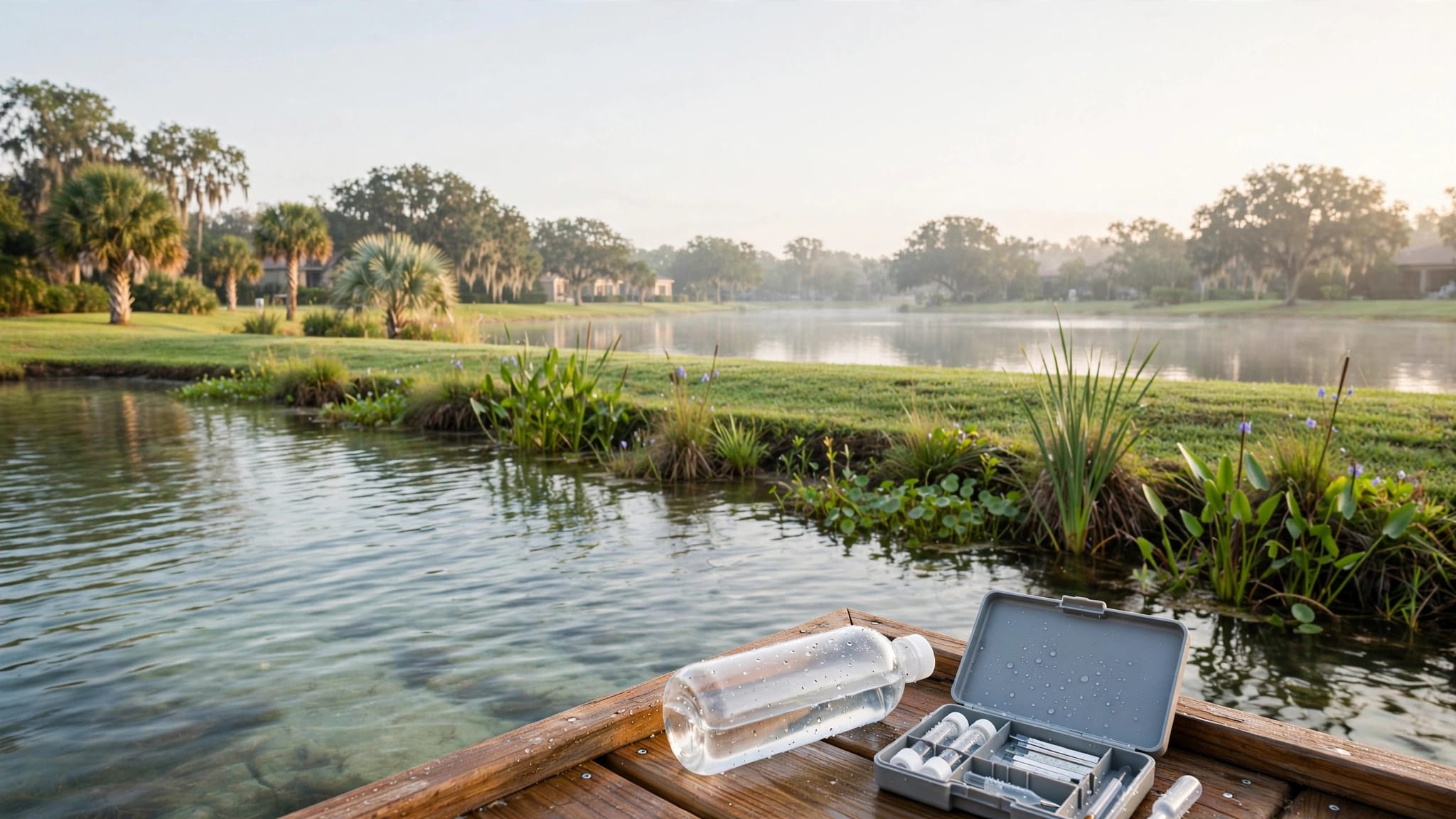
Next, test the full picture, not just ammonia. pH, dissolved oxygen, temperature, and clarity all help explain the reading. A lake can have the same ammonia number on paper and very different risk levels in the field.
In many cases, cleanup and circulation go hand in hand. Debris removal lowers the organic load. Aeration helps move oxygen through the water column. That can support the bacteria that break down waste and reduce the stagnant conditions that let ammonia build.
Lake and pond aeration systems can be a smart part of that plan when a lake struggles with low oxygen and repeated buildup. They work best as part of a broader maintenance program, not as a stand-alone fix.
Qualified treatment also matters. Seabreeze Lake Maintenance works with HOA communities, golf courses, and commercial properties, and holds Commercial Applicator License #CM28291 and State-Licensed Specialty Contractor #SCC131152136. That matters when a lake needs treatment that fits the site, the water conditions, and local rules.
If your community is seeing repeated water quality issues, Get a Free Quote for a lake inspection and a plan that fits the property.
How to keep ammonia from coming back
The best long-term fix is consistency. A lake that gets checked only after it turns green usually costs more to manage.
Routine maintenance helps break the cycle. That means keeping leaves, grass clippings, and other debris out of the water. It also means watching fertilizer use near the shoreline and checking that stormwater is not carrying extra nutrients into the basin.
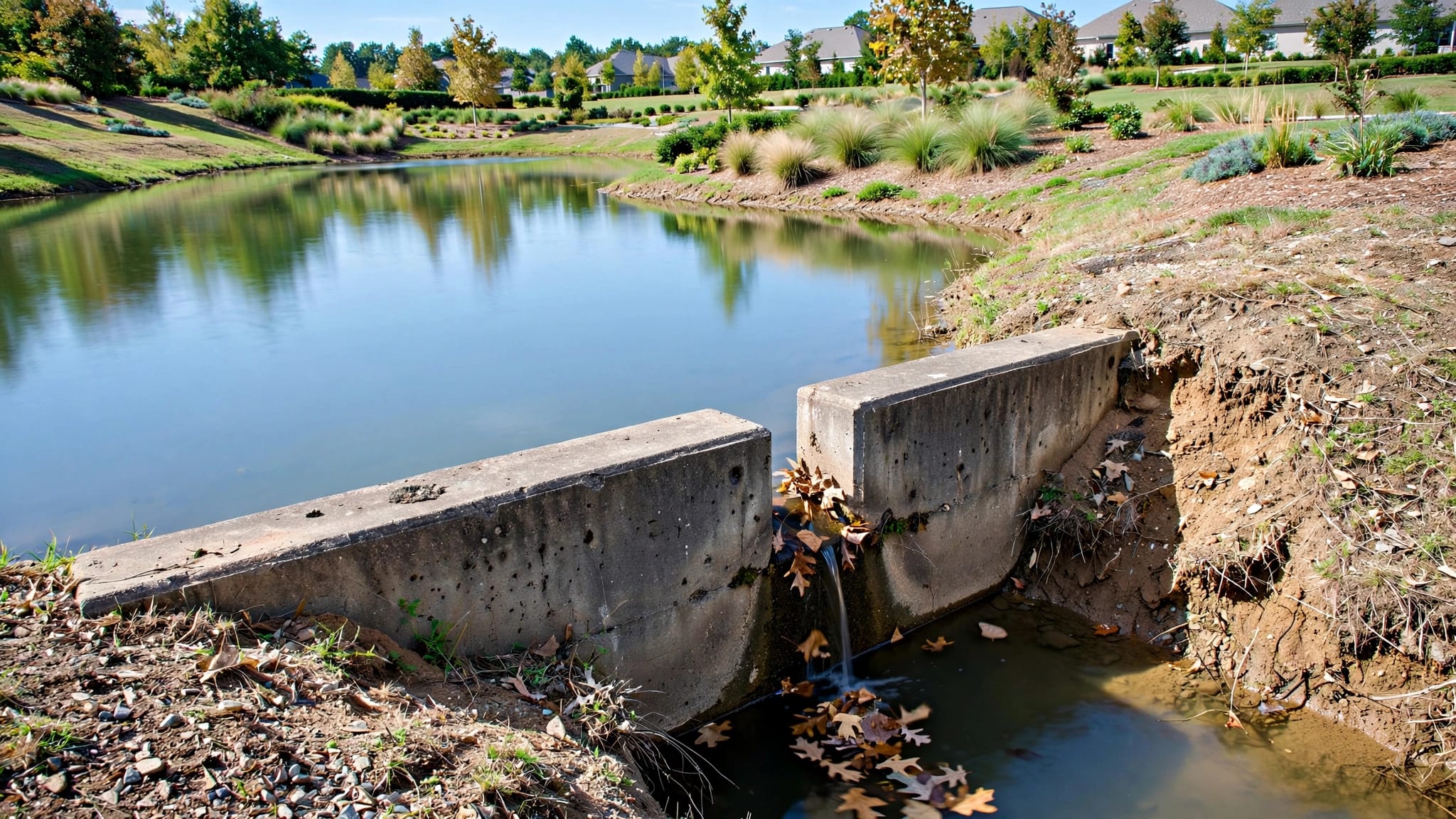
Shoreline condition matters too. Bare edges erode faster. Erosion sends sediment and nutrients into the water, which feeds the same ammonia buildup problem. Stable banks and healthy littoral zones help slow that process.
Regular monitoring is also important on multi-lake properties. One pond may show warning signs before the rest. Catching that early gives managers a chance to correct the source before it spreads across the property.
A few habits make a real difference over time:
- Inspect inlets and outfalls after storms.
- Remove dead vegetation before it piles up.
- Watch for irrigation overspray near the bank.
- Test water after major weather changes.
- Keep aeration and circulation equipment running as designed.
A stable lake is usually a managed lake. That is especially true in Florida, where heat, rain, and heavy growth can move the water out of balance fast.
Conclusion
High ammonia is not just a water test result. It is a sign that the lake is carrying too much waste, too little oxygen, or both. In Florida HOA lakes, that often starts with runoff, decaying plant matter, and long stretches of warm weather.
The good news is that ammonia problems are manageable when they're caught early. Watch for visible signs, test the full water profile, and keep up with routine maintenance before the lake tips further out of balance.
Recent Posts