Why Mowing to the Waterline Hurts Florida HOA Lakes
A crisp edge around a lake can look tidy from a sidewalk or golf cart. Yet mowing right to the waterline often strips away the exact protection a shoreline needs.
For Florida HOA lakes , that shortcut can set off erosion, muddy water, and repeated repair work. It matters even more in retention ponds and lakes that sit inside gated communities, golf courses, and other multi-lake properties.
Why a clean edge can backfire
Homeowners usually want a lake edge that looks neat and controlled. That makes sense. A rough shoreline can feel unfinished, especially after a storm or a growth spurt.
The problem is that the shoreline is not just decoration. It is a working part of the lake system. Grass, roots, and approved shoreline plants help hold soil in place. They also slow down runoff before it carries dirt and lawn chemicals into the water.
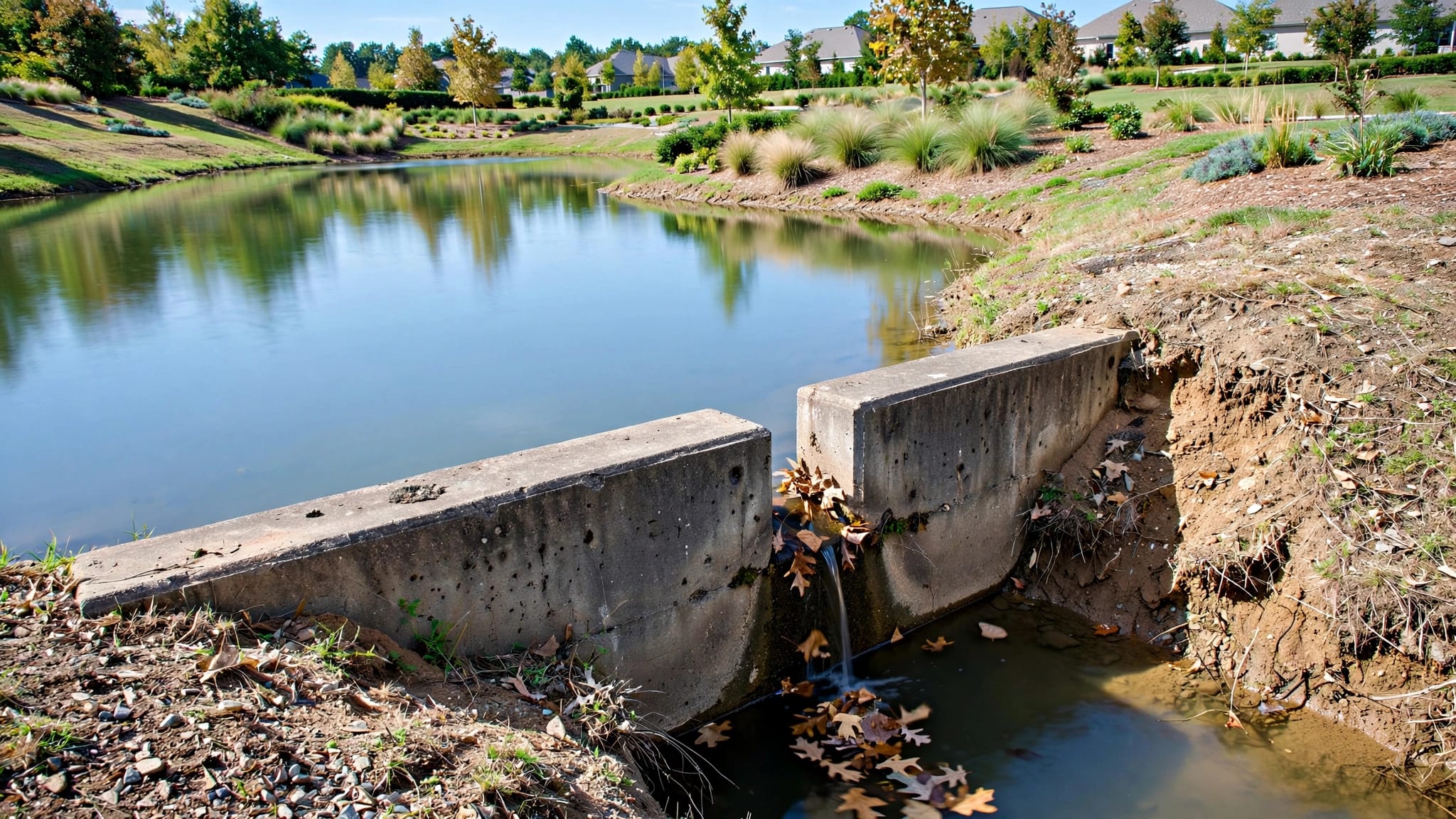
When mowing goes right to the edge, that protection thins out. Bare soil takes the hit from rain. Small washouts form first, then the bank starts giving way.
A clean edge is easy to admire. A stable edge is easier to keep.
This is shoreline care for retention ponds and lakes in gated communities, golf courses, and other multi-lake properties, not koi ponds.
What the shoreline loses when mowers go too low
The edge of a lake does more than separate land from water. It acts like a filter and a brace at the same time. Once that strip is shaved down, the shoreline has less support and the lake takes on more stress.
| Practice | What it does | Long-term effect |
|---|---|---|
| Mowing to the waterline | Removes grass and young plants at the edge | Bare soil, faster erosion, more runoff |
| Managed shoreline buffer | Keeps roots and littoral plants in place | Firmer banks and cleaner inflow |
| Shoreline stabilization | Uses plants or materials where banks are weak | Less washout and fewer repairs |
The table says what many lake managers already know. A lake edge that looks sharply trimmed can lose the hidden structure that holds it together.
That structure matters in Florida because heavy rain can hit hard and fast. Water that would normally slow down in thick grass now races across bare ground. It picks up sediment on the way. That sediment ends up in the lake.
Once sediment starts moving, it rarely stops on its own. It settles in shallow spots, builds up along the bank, and creates a cycle that makes mowing damage worse each season.
How short grass leads to bigger lake problems
When soil washes into the lake, the trouble spreads. First, the water turns cloudy. Then shallow areas fill in faster. After that, weeds and algae get more room to grow.
Short grass at the edge also changes what happens after fertilizer runs off nearby turf. Nutrients that would have been slowed by a healthy buffer reach the water more easily. That can feed algae blooms and ugly surface mats.
The result is not just a visual problem. It affects maintenance costs, safety, and the feel of the whole community. A lake that used to look open and clean can start to look tired and unmanaged.
Low oxygen can become part of the pattern too, especially where water sits still and plant debris breaks down near the bank. In those cases, Florida lake and pond aeration systems can help support better circulation and healthier water. Aeration helps, but it does not replace shoreline protection.
The biggest cost often shows up slowly. One season of over-mowing becomes two seasons of patchy banks, then a shoreline repair project lands on the budget. That is a lot to pay for a neat edge that only looked good for a few weeks.
Better ways to maintain HOA shorelines in Florida
A healthy shoreline does not have to look wild. It just needs room to work. The right plan keeps the edge controlled while protecting the bank underneath.
Keep a buffer strip alive
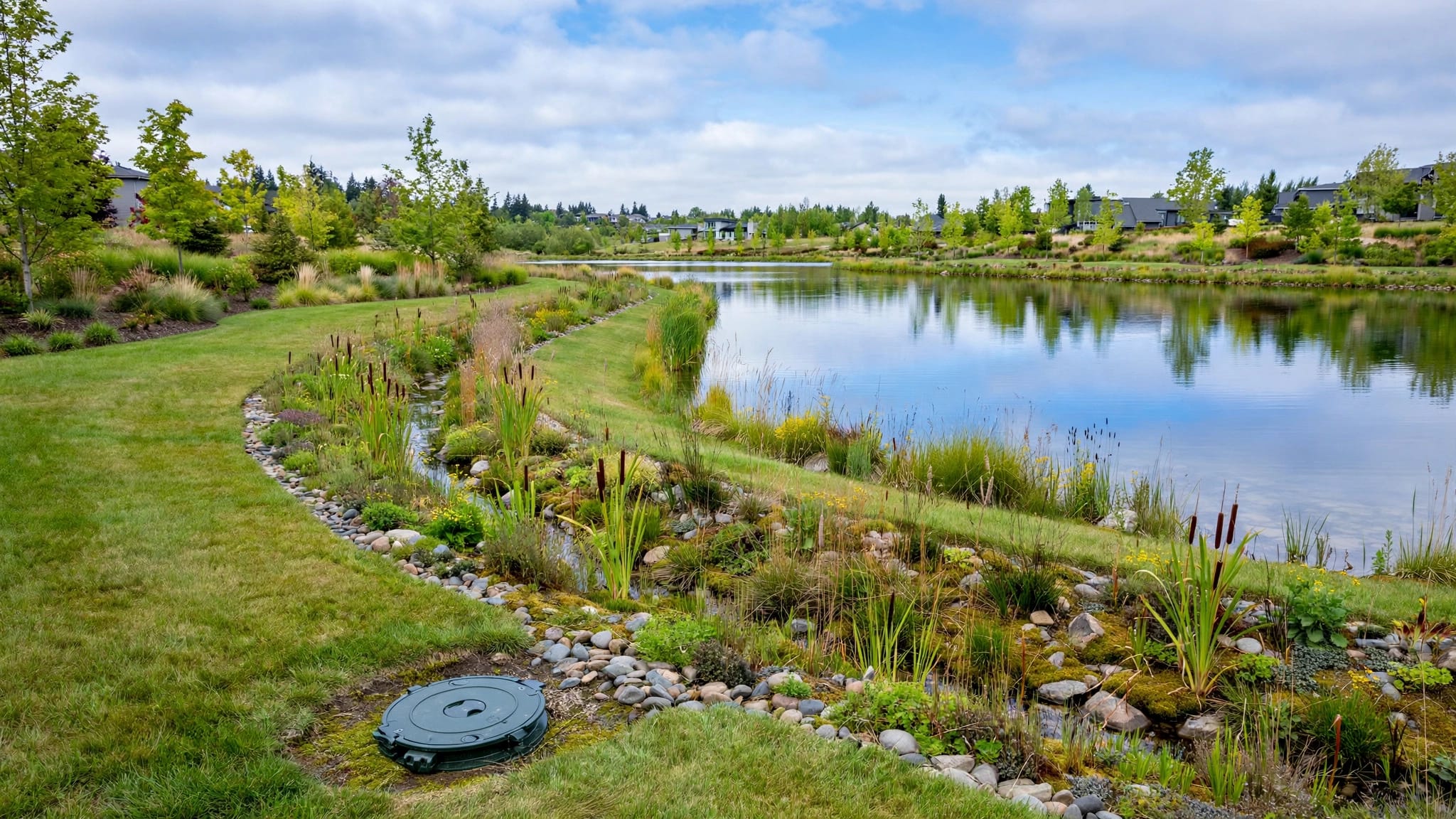
A narrow band of taller grass, sedges, or approved littoral plants can do a lot of work. It softens rain impact, traps loose soil, and gives the shoreline roots that hold ground in place.
Mowers can still keep the community looking sharp. They just need to stop short of the waterline. That change alone can reduce the amount of bare soil that gets exposed after storms.
Around ponds that border sidewalks, streets, or homes, the buffer can be managed carefully. The goal is not to let the area grow out of control. The goal is to let it function.
Restore bare banks before they fail
Once a bank starts to slide, mowing less often is not enough. Bare areas need help from shoreline stabilization, plantings, or other erosion control methods.
In Florida, that might mean replanting littoral zones, adding approved erosion control materials, or shaping the edge so water no longer cuts a direct path through the soil. The right fix depends on the slope, the soil, and how water moves across the site.
This is where routine observation matters. A weak spot is much easier to repair before it becomes a full washout.
Match mowing with lake management
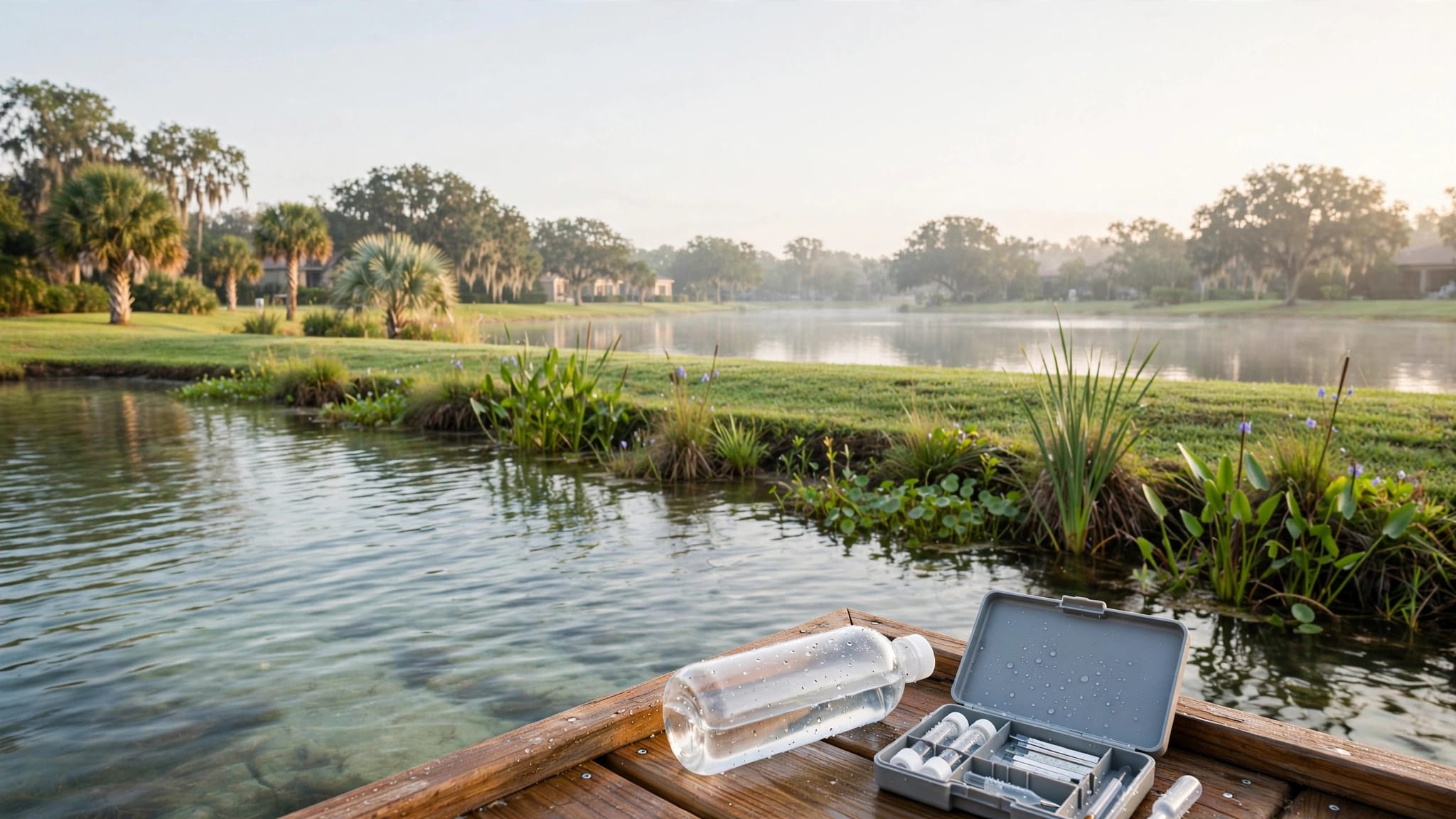
Shoreline care works best when it fits into the full lake plan. Mowing, debris removal, algae treatment, water quality checks, and aeration should all support the same goal.
For retention ponds and lakes in gated communities, golf courses, and other multi-lake properties, shoreline work should be handled by a team that understands drainage, plant growth, and local requirements. Seabreeze Lake Maintenance holds Commercial Applicator License #CM28291 and State-Licensed Specialty Contractor #SCC131152136.
That level of care matters when the shoreline needs more than a quick trim. It helps keep the property looking finished without sacrificing the bank underneath.
Signs your community is cutting too close
If a lake edge is getting mowed to the waterline, the damage usually leaves clues. Look for these signs after rain or routine mowing:
- Bare dirt showing along the bank
- Muddy water near the shoreline
- Small slumps, scallops, or undercut spots in the edge
- Exposed roots or washed-out mulch
- More algae or floating debris near shore
- Repeated touch-up mowing because the bank never holds shape
A few of these signs can point to a drainage issue. Several of them together often mean the shoreline is losing support.
At that point, the answer is usually not "mow it shorter." It is a better maintenance plan that protects the bank first. A site review can show whether the main problem is mowing, runoff, erosion, or a mix of all three.
If your community is seeing these issues, Get a Free Quote to schedule a call and lake inspection.
Conclusion
Mowing to the waterline may look tidy for a day, but it weakens the shoreline that Florida HOA lakes depend on. Once the buffer is gone, rain, runoff, and erosion take over fast.
A better plan keeps the edge managed without stripping away the roots and plants that hold the bank together. That protects water quality , reduces repairs, and keeps the whole property looking cared for.
When the shoreline stays healthy, the lake does too.
Recent Posts