Total Suspended Solids Testing for Florida HOA Lakes
A retention lake that turns muddy after every storm deserves more than another cleanup visit. For Florida HOAs, total suspended solids testing helps measure the particles in that cloudy water and guide an investigation into their source.
However, a result needs context before your board approves treatment or shoreline work. Consistent monitoring connects laboratory findings with rainfall, drainage, and maintenance history.
A useful investigation starts with understanding what those suspended particles can tell you.
Key Takeaways for HOA Boards
- TSS measures suspended particles, but it doesn't identify their source or establish overall lake health.
- Repeatable sampling locations and documented weather conditions make results more useful across multiple lakes.
- Corrective work should address the cause, whether that's eroding banks, incoming sediment, algae, or disturbed bottom material.
The goal is to connect testing with a maintenance decision. That matters for gated communities and golf courses managing stormwater lakes, where appearance and drainage performance both deserve attention.
What Total Suspended Solids Testing Measures
Suspended particles include more than soil
Total suspended solids, usually shortened to TSS, describes the concentration of solid particles suspended in water. Laboratory reports commonly express the result in milligrams per liter, or mg/L.
Those particles can include silt, clay, algae, decomposing vegetation, and other fine debris. Because several materials contribute to the reading, TSS alone can't distinguish shoreline erosion from an algae problem.
Suspended material can reduce light penetration. Some particles also carry nutrients, while decomposing organic matter can increase oxygen demand. However, the consequences depend on the material present and the lake's conditions.
TSS, turbidity, and dissolved solids measure different things
Turbidity describes water cloudiness through an optical measurement. TSS describes the concentration of suspended material. Although both help investigate murky water, they aren't interchangeable.
Particle size and composition affect cloudiness, so an HOA shouldn't convert one reading into the other without a validated relationship. Understanding the causes of cloudy lake water helps explain why similar-looking lakes can have different problems.
Total dissolved solids, or TDS, is another separate measurement. It concerns dissolved material rather than suspended particles. Before comparing reports, confirm which measurement each report contains.
When Florida Community Lakes Need Investigation
Persistent cloudiness and storm-related changes
Florida downpours can move soil, grass clippings, and other debris through drainage systems into retention ponds. A storm-related color change deserves inspection, especially when cloudiness persists or returns after ordinary rainfall.
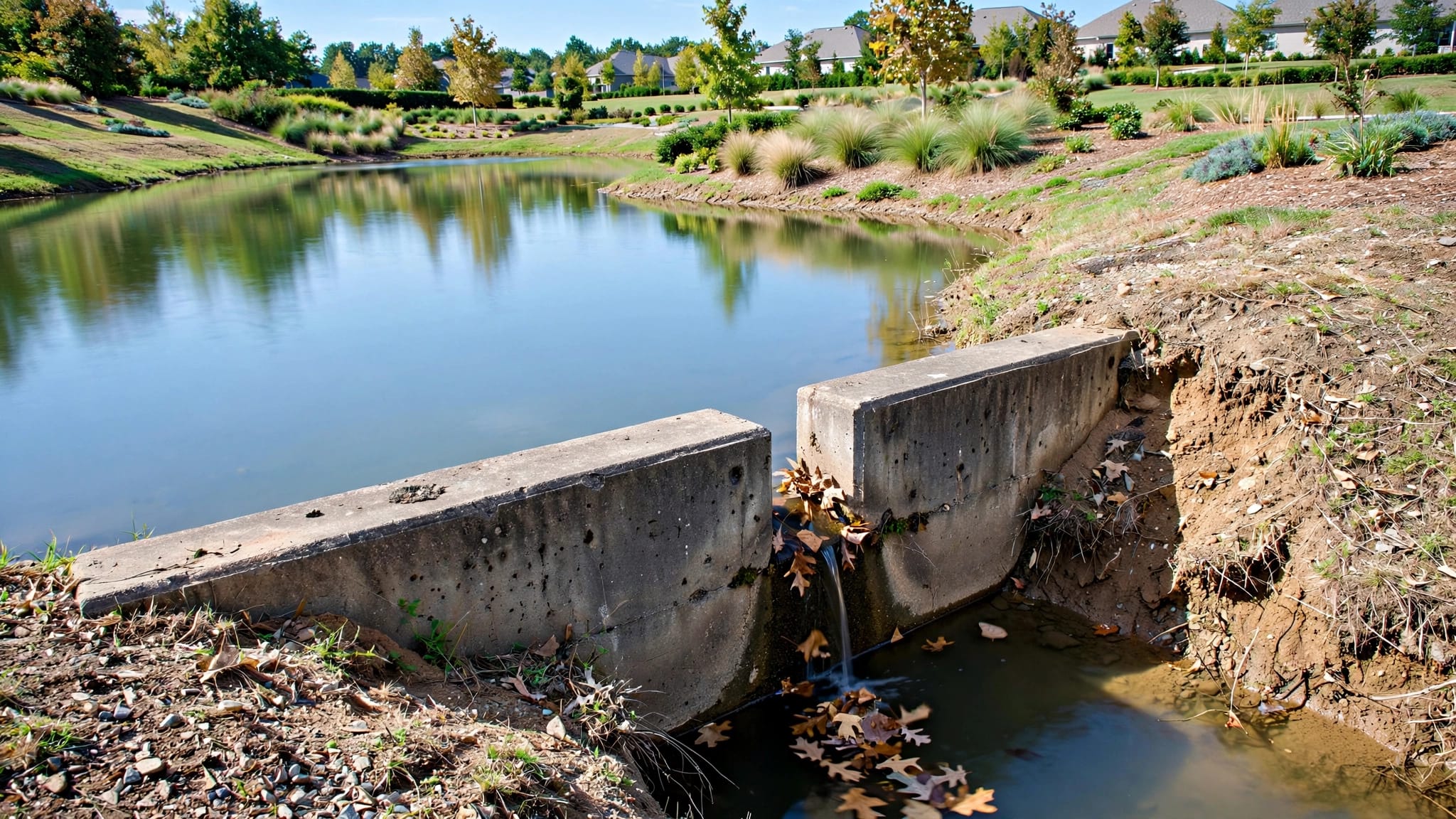
Look for muddy water entering through a pipe, exposed soil along drainage routes, and fresh washouts on the bank. These observations help determine where sampling will be most informative.
Also document nearby construction, landscape grading, irrigation changes, and shoreline work. Each can change the amount or movement of material entering a lake.
Algae, odors, and circulation concerns
Green water may contain suspended algae rather than mineral sediment. Meanwhile, brown water can contain organic particles, soil, or a mixture.
Odors, fish stress, or recurring blooms call for more than a TSS result. Dissolved oxygen, temperature, pH, nutrients, and chlorophyll-a can help explain conditions that suspended-solids testing can't resolve.
A fountain's visible spray doesn't prove that every cove receives adequate circulation. For multi-lake properties, review each basin separately. Diagnostic testing for pond problems can help match additional measurements to the symptoms, rather than ordering unrelated tests.
Build a Repeatable Sampling Plan Across Lakes
Choose stations that answer a clear question
Start with the property's drainage layout. Identify major inlets, outlets, open-water areas, stagnant corners, and sections with recurring erosion or algae.
For golf courses, also consider irrigation returns, drainage near cart paths, and heavily managed turf. Connected lakes may need stations that show where water enters and leaves individual basins.
Give each lake and station a consistent identifier. Then ask the sampling professional to define appropriate locations and depths for the investigation. Sampling only the easiest shoreline access point may miss the area responsible for the problem.
Keep lake-specific results separate, even when several basins share a drainage system.
Record conditions alongside every sample
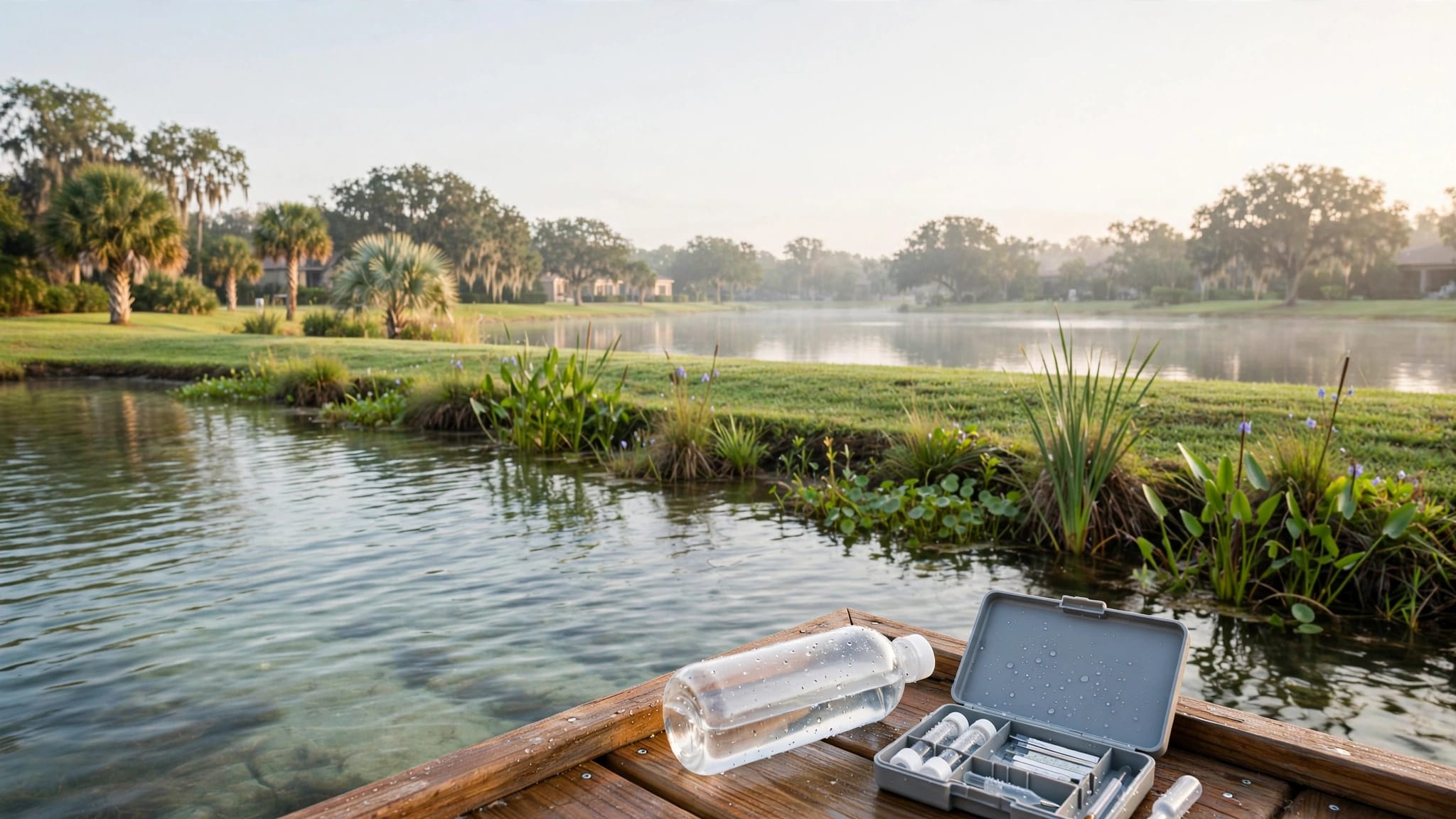
A result becomes more useful when the record includes the location, depth, collection time, water level, and recent rainfall. Also document visible algae, water color, odors, and whether aeration equipment was operating.
Note recent treatments, mowing, grading, or equipment adjustments. Otherwise, a maintenance-related change may look like a new water-quality problem.
Use the same stations during later sampling rounds whenever possible. Photographs from fixed shoreline locations provide another comparison. A Florida HOA lake inspection checklist helps property managers organize observations between laboratory visits.
Arrange collection and handling requirements with the laboratory before sampling.
Read TSS Results Without Jumping to Conclusions
Compare each lake with its own history
A lake's historical results provide context that a neighboring lake's numbers may not. Basin depth, shoreline condition, drainage area, and maintenance history all affect suspended material.
Compare results collected under similar conditions. Then examine storm-related samples separately to see how the lake responds to runoff.
A temporary increase followed by recovery suggests a different management question than persistently elevated readings. However, that pattern still doesn't identify the particles or prove their source.
For connected lakes, differences between inlet and outlet stations may help focus the investigation. Interpret those differences alongside water movement and field observations.
Use companion tests and applicable requirements
TSS doesn't establish oxygen conditions, bacterial safety, or nutrient concentrations. Therefore, match companion measurements to the concern.
When algae dominates the water, chlorophyll-a and nutrient results can add useful context. If fish show stress, dissolved oxygen measurements deserve prompt attention. The guide to reading HOA lake test results explains how these findings fit together.
Avoid adopting an internet number as a universal pass-or-fail standard. Review the lake's history, designated use, applicable permits, and relevant water-quality requirements with the appropriate professional before setting an action trigger.
Match Lake Maintenance to the Source
Reduce incoming material and shoreline erosion
When observations point to sediment entering through drainage routes, begin upstream. Inspect exposed ground, eroding swales, nearby construction, and areas where irrigation creates runoff.
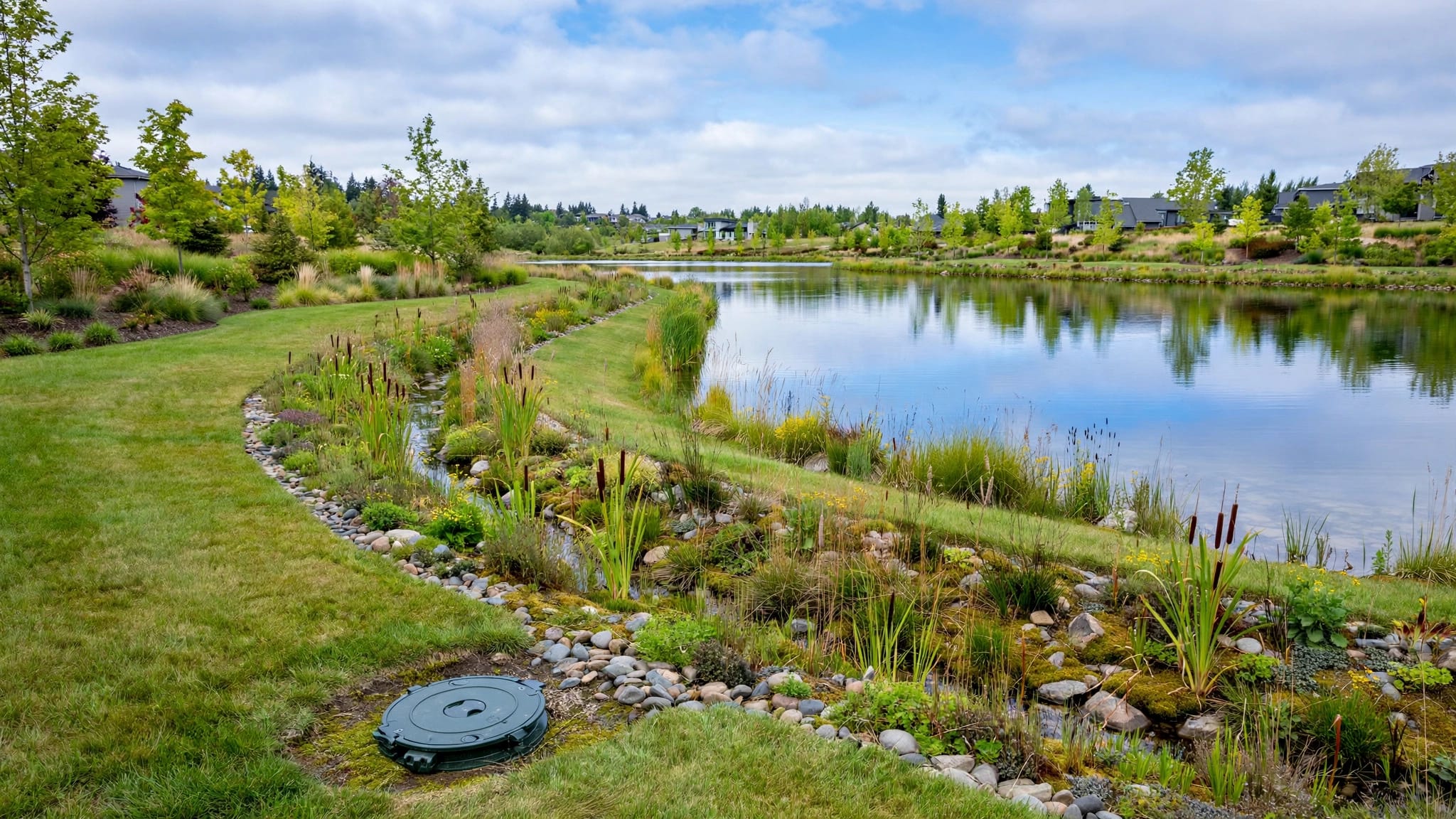
Along the lake edge, inspect bare banks and repeated washouts. Appropriate shoreline vegetation and stabilization can reduce soil loss, but the repair should fit the slope, drainage pattern, and site requirements.
Keep grass clippings and landscape debris out of the water and drainage structures. Also address pet-waste collection because runoff can carry nutrients and bacteria into community lakes.
These measures address different pollutants. TSS testing alone won't verify whether bacterial contamination has improved.
Investigate internal sources before major work
Wind, equipment, and circulation can disturb bottom sediment in shallow areas. Therefore, review aeration placement and recent operating changes when cloudiness appears near equipment.
Aeration can improve oxygen conditions, but its placement deserves attention when sediment disturbance becomes a concern. Likewise, algae control should follow identification and a broader water-quality review.
A high TSS result alone doesn't justify dredging. Before considering sediment removal, investigate accumulated deposits, lost depth, drainage performance, access, and permitting needs.
Total suspended solids testing measures particles in the water at the sampling time. It doesn't measure the volume of sediment lying on the lake bottom.
Turn Monitoring Into an HOA Maintenance Program
Set a monitoring schedule around the property's history and risks. Florida doesn't have one routine sampling frequency that fits every private HOA lake. Recurring erosion, algae, fluctuating water levels, or fish stress can justify additional investigation.
Keep inspections distinct from laboratory testing. Weekly surface checks and monthly shoreline and equipment reviews provide useful observations, while storms may require extra visits. Guidance on lake water-quality action thresholds can help connect observations with follow-up decisions.
The service agreement should identify who records concerns, coordinates laboratory work, reports urgent conditions, and provides results to the board. Request proposals that distinguish inspection work, laboratory analysis, and follow-up management. Also retain records when vendors change.
Seabreeze Lake Maintenance serves Southwest Florida communities from Fort Myers and holds Commercial Applicator License #CM28291 and State-Licensed Specialty Contractor #SCC131152136. Boards can Get a Free Lake Health Assessment to schedule a call and lake inspection, then discuss practical management options.
Frequently Asked Questions
Should every lake in a community receive the same testing schedule?
Connected lakes can still differ in depth, runoff exposure, circulation, and shoreline stability. Use consistent documentation across the property, but match sampling frequency to each lake's condition.
A stable basin may need periodic baseline testing. A lake with recurring muddy inflows or unexplained changes may need targeted sampling after relevant events. Review that distinction when budgeting, so the board directs investigation toward the lakes with unresolved concerns.
Will a lower TSS result prove the lake is healthy?
A lower result shows less suspended material in that sample. It doesn't establish adequate oxygen, acceptable nutrient conditions, or freedom from contamination.
Compare the result with field observations and any companion tests selected for the problem. Also confirm whether weather and sampling conditions were comparable. Clearer water is useful evidence, but an HOA still needs a broader assessment before declaring a recurring lake problem resolved.
Make Testing Support the Next Maintenance Decision
A muddy lake deserves an explanation before the board commits to corrective work. Total suspended solids testing is most useful when paired with repeatable sampling and documented site conditions.
For Florida HOA lakes, source control and follow-up monitoring help determine whether the chosen work addressed the problem. Keep the investigation tied to each lake's drainage, shoreline, and maintenance history, so the next decision rests on evidence rather than appearance alone.
Recent Posts