Managing Canada Geese Around Florida HOA Lakes
A flock beside your community lake can become a maintenance problem when droppings cover sidewalks and nesting birds guard walking routes. Managing Canada geese in Florida starts with removing attractants , protecting residents, and understanding wildlife rules.
For HOAs, golf courses, and gated communities, the response must also protect retention ponds and stormwater infrastructure. Chasing birds away from one shoreline can simply move the problem to another lake.
Start by identifying why the birds stay, then build a coordinated plan for the entire property.
Key Takeaways
- Stop feeding and address easy access between closely mowed turf and water.
- Canada geese have federal and Florida protections. Nest, egg, and adult-bird control require separate consideration.
- Track activity across every lake so deterrence doesn't merely shift the flock.
- Pair wildlife management with shoreline care, waste cleanup, and water-quality monitoring. Goose removal alone won't correct other sources of nutrients or sediment.
Why Canada Geese Settle Beside Florida Lakes
Canada geese favor places that combine grazing opportunities, open sightlines, and nearby water. Closely mowed lawns beside gently sloping banks provide convenient routes between feeding areas and a watery refuge.
That combination is common around golf courses and landscaped community retention ponds. Resident feeding adds another reason to return, even when the shoreline otherwise looks well maintained.
First, confirm the species. Canada geese have a black head and neck with a white cheek patch. Florida properties can also host other waterfowl, and rules differ by species.
Then observe how the flock uses the property. Record where birds graze, enter the water, rest, and leave droppings. Also note whether residents feed them or whether food waste accumulates near outdoor seating.
A brief visit doesn't call for the same response as repeated occupation of a busy sidewalk. The goal is to reduce conflicts and repeated congregation while respecting wildlife protections.
How Goose Activity Affects Lake Health
Droppings add nutrients and cleanup demands
Goose waste adds organic material and nutrients to the shoreline. During heavy rain, runoff can carry that material into retention ponds.
However, geese aren't automatically the main cause of an algae bloom. Fertilizer, pet waste, grass clippings, and eroding soil can contribute too. An HOA should examine those sources before assigning the entire problem to wildlife.
Accumulated organic debris can also contribute to muck buildup in HOA lakes. Removing accessible waste and keeping landscape debris out of drainage routes helps reduce that loading.
For paved surfaces, arrange cleanup that collects waste rather than washing it toward storm drains. Workers should follow appropriate hygiene and protective-equipment practices.
Cloudy water needs its own diagnosis
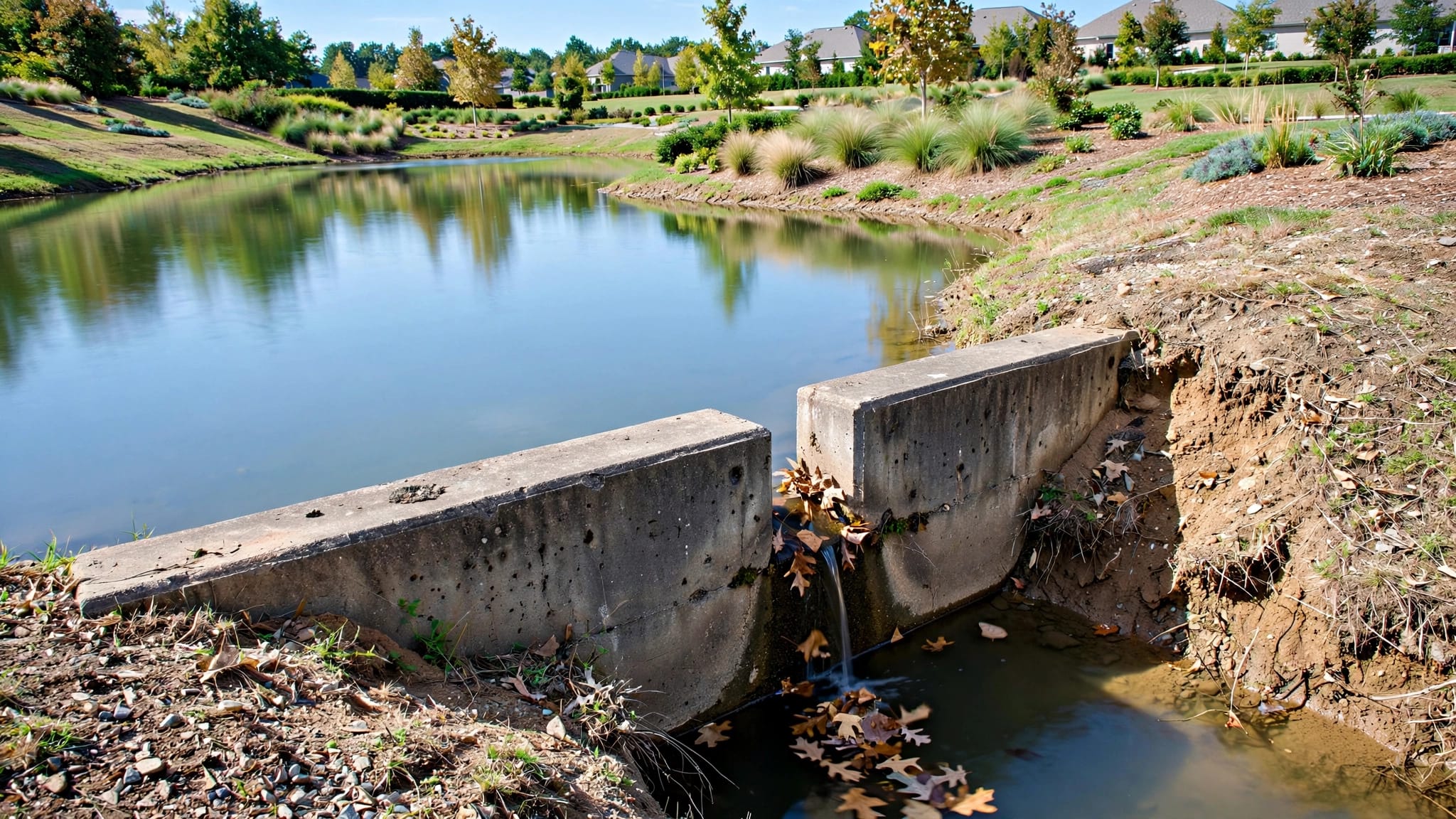
Concentrated grazing and foot traffic can damage vegetation along heavily used banks. Exposed soil then becomes another sediment source during storms.
Still, cloudy water doesn't prove geese caused the problem. Communities should investigate causes of cloudy community lakes, including runoff, erosion, and bottom disturbance.
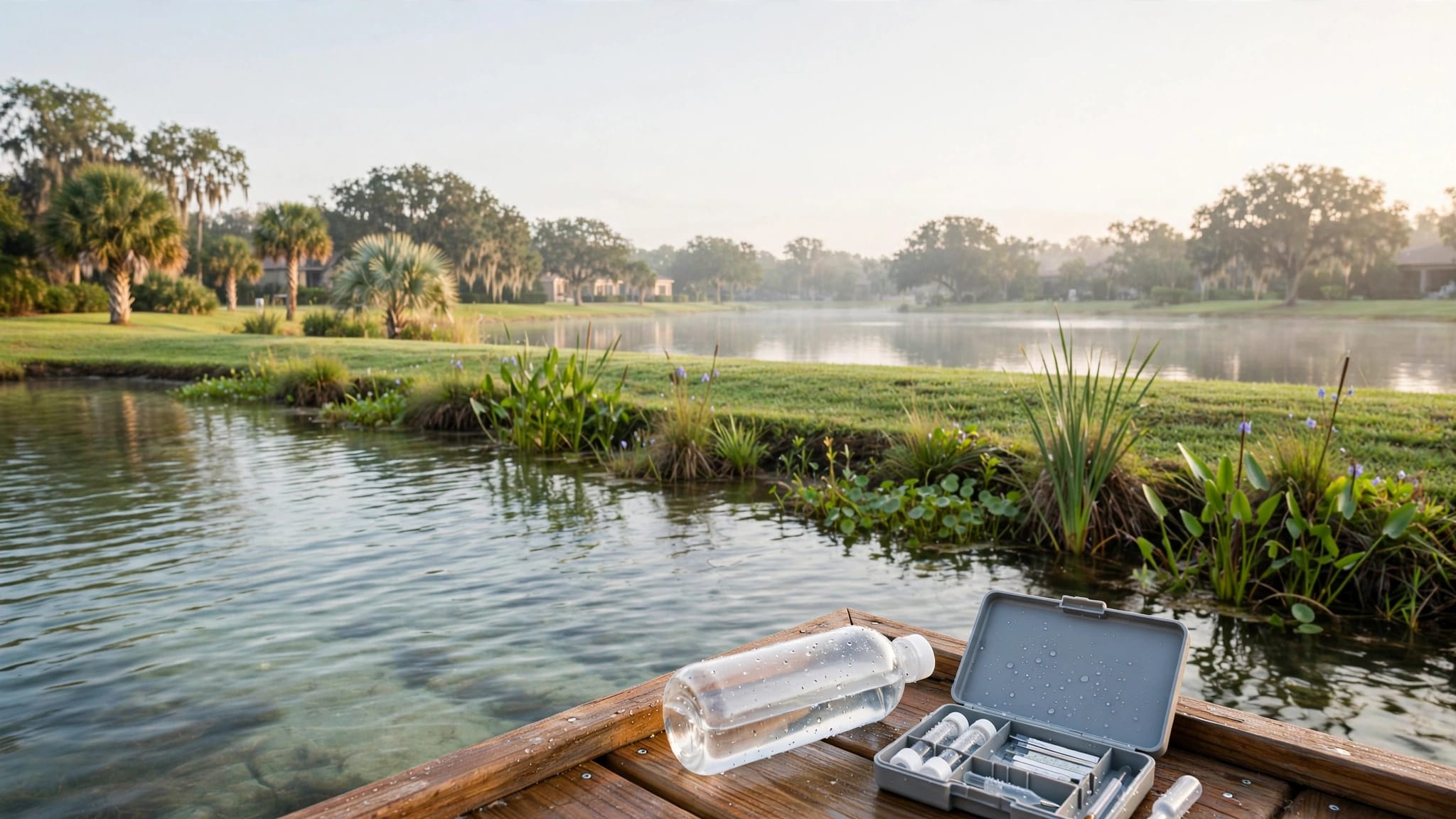
Likewise, a strong fountain spray doesn't establish that every lake corner has adequate circulation. Water-quality checks should assess the affected basin instead of relying on appearance alone.
What Florida HOAs Can Legally Do
Canada geese, including resident flocks, receive protection under the Migratory Bird Treaty Act . Florida also protects them through Florida Administrative Code Rules 68A-16 and 68A-9.002.
Separate deterrence from taking birds
The U.S. Fish and Wildlife Service recommends starting deterrence when geese arrive. Its general guidance allows most waterfowl harassment without a permit outside the breeding season, but that isn't blanket approval for every technique in Florida.
Use non-injurious methods and check applicable requirements before starting a program. Don't let residents capture, injure, relocate, or kill birds themselves.
Active nests, eggs, and goslings require added caution. If a goose defends a walking route, keep people and pets away rather than approaching it. The Florida Fish and Wildlife Conservation Commission advises against approaching or feeding geese.
Nest and egg work requires authorization
Eligible HOAs and landowners can use the USFWS Resident Canada Goose Nest and Egg Registration program for federal authorization on property under their jurisdiction.
Registration includes conditions and reporting duties. Confirm applicable Florida requirements before beginning any work. This authorization doesn't permit capturing or killing adult geese.
Authorized nest and egg destruction isn't restricted to the old March 1 through June 30 federal window. That restriction ended with a rule effective July 22, 2019.
The Federal Special Canada Goose Permit goes to state wildlife agencies, not directly to an HOA. Boards should consult FWC and USFWS about the correct authorization for their circumstances.
Deterrents That Fit Community Shorelines
Change the conditions that attract geese
Begin with a clear no-feeding policy. Explain it through resident notices and signs at recurring feeding locations, then apply it consistently.
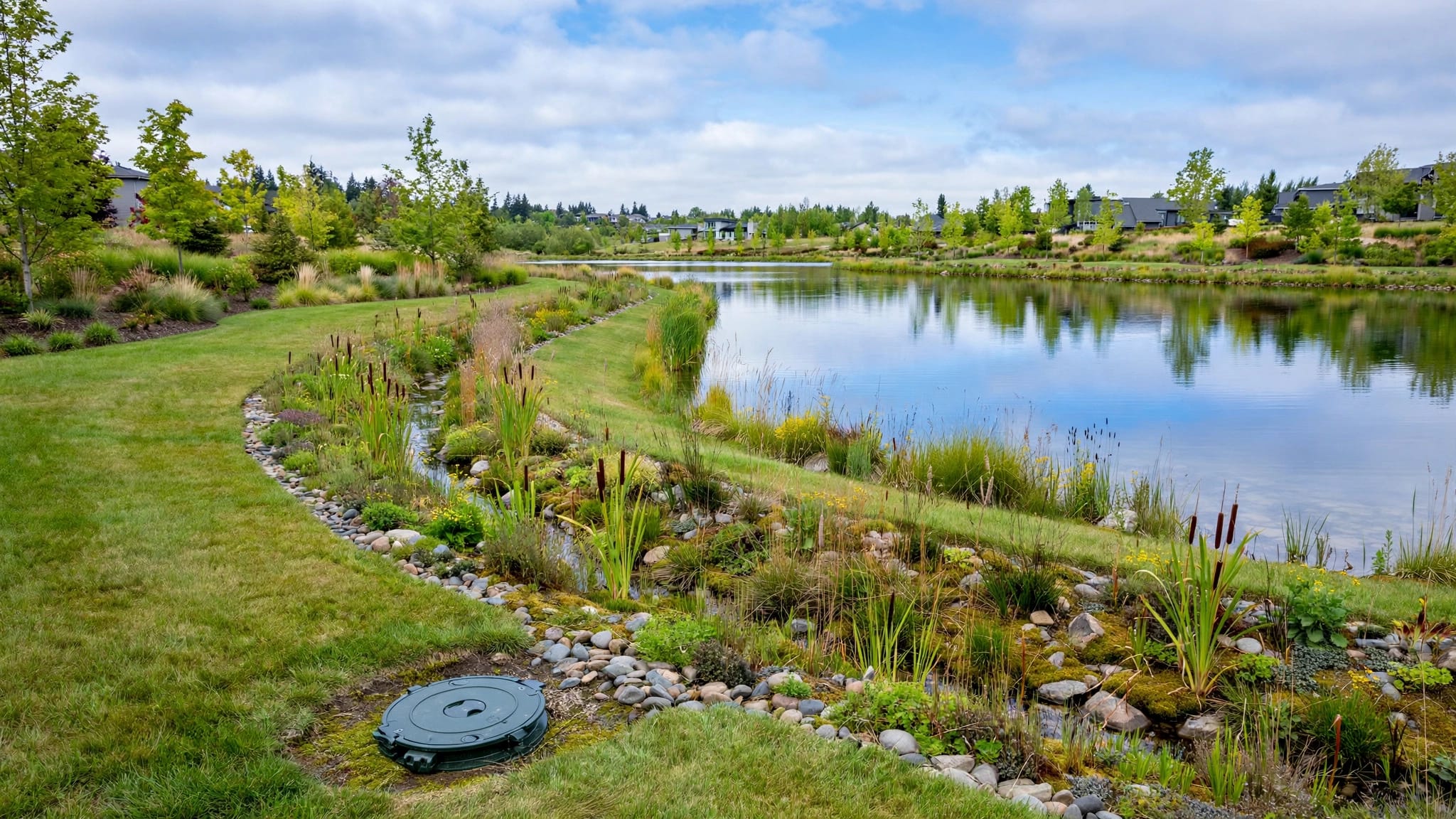
Next, review shoreline landscaping. Appropriate vegetated buffers can interrupt the easy transition between short turf and open water. Littoral plants occupy shallow shoreline areas, while suitable upland planting can reduce open grazing access.
However, planting changes must respect the pond's approved design, drainage function, maintenance access, and visibility needs. Dense planting shouldn't conceal hazards beside public paths.
Selective fencing can restrict access at heavily used locations. Have the placement reviewed so it doesn't block stormwater structures, create a trip hazard, or interfere with routine lake service.
Use deterrence as a managed program
USFWS identifies visual deterrents, patrol dogs, fencing, and other habitat changes among possible control measures. Their suitability depends on the property, bird activity, and legal restrictions.
Visual devices need monitoring because birds can become accustomed to an object that never changes. Record the response rather than assuming installation solved the problem.
Professional patrol dogs may be an option where conditions allow. Residents shouldn't send pets into the lake or use them to chase nesting birds. Florida lakes can support alligators, and uncontrolled pursuit creates another safety problem.
Likewise, noise devices can conflict with community rules and nearby homes. Choose methods that fit the site, avoid injury, and protect nests and young.
Build One Plan for Every Community Lake
Record activity by basin and exposure
A multi-lake property needs one shared record, with observations separated by lake. Otherwise, a successful deterrent at the clubhouse may appear effective while birds gather beside another neighborhood sidewalk.
Track flock counts, dates, feeding locations, droppings, nesting observations, and resident complaints. Photographs from consistent locations help the board compare conditions.
Then prioritize by exposure. Repeated droppings beside a busy path require a different response than occasional geese on a remote bank. Drainage connections, erosion, and lake use also affect priority.
Assign one coordinator to receive reports and communicate with landscaping, lake-maintenance, and wildlife-control providers. This reduces conflicting instructions and discourages residents from improvising their own control methods.
Review results and account for movement
Measure more than whether geese leave during a service visit. Check whether they return, move to another basin, or continue using the same grazing area.
Set a written review schedule and increase observations when activity changes. USFWS includes monthly monitoring by a skilled birder or biological consultant among its suggested measures.
During reviews, compare bird activity with cleanup demands, shoreline damage, and resident exposure. If counts fall but water remains poor, investigate other causes.
Budget separately for monitoring, landscape changes, cleanup, and any authorized wildlife work. Ask contractors to define their scope and reporting responsibilities before approving a recurring program.
Coordinate Goose Concerns With Lake Maintenance
Wildlife management and lake maintenance overlap, but they require different expertise. An aquatic-treatment credential doesn't authorize handling protected birds, nests, or eggs.
Seabreeze Lake Maintenance supports Southwest Florida HOAs, gated communities, golf courses, and other properties with lake and pond management. Its work includes aquatic weed and algae control, water-quality management, aeration, shoreline inspections, debris removal, and erosion control.
The company holds Commercial Applicator License #CM28291 and State-Licensed Specialty Contractor #SCC131152136. Boards should still verify the qualifications and authorizations of anyone proposing wildlife-control work.
Before changing shoreline plants or ordering aquatic treatments, review Florida lake treatment permit requirements. Plant management and goose control involve different regulatory questions.
For goose-heavy shorelines with erosion, algae, or recurring runoff concerns, Get a Free Lake Health Assessment to book a call and lake inspection. A site review can identify lake-maintenance needs separately from wildlife actions requiring agency guidance.
Frequently Asked Questions
Can an HOA remove a Canada goose nest?
An HOA shouldn't remove a nest simply because it obstructs landscaping or sits near a walkway. Eligible communities can obtain federal authorization through the Resident Canada Goose Nest and Egg Registration program, subject to its conditions.
Before any work, confirm current registration and applicable Florida requirements. Keep residents and maintenance crews away from the nest while the board establishes a lawful response.
Will aeration keep Canada geese away?
Aeration addresses water circulation and dissolved oxygen needs. It isn't a reliable goose deterrent.
A community may need aeration and goose management at the same time, but the work serves different purposes. Review food availability, turf access, feeding behavior, and nesting activity when birds repeatedly occupy a lake. Assess aeration needs separately through lake conditions and equipment performance.
Should every goose sighting trigger a complaint?
Occasional sightings don't automatically require control. Reports become more useful when they describe repeated congregation, feeding, blocked access, defensive behavior, or concentrated waste.
Ask residents to provide the lake location, date, and a photograph taken from a safe distance. They shouldn't approach birds to identify a nest or obtain a closer image. A consistent reporting process gives the board usable information without encouraging disturbance.
Conclusion: Reduce Conflicts Across the Whole Property
Managing Canada geese around Florida HOA lakes works best when boards address attractants and coordinate action across every basin. Consistent monitoring helps distinguish occasional wildlife presence from a recurring maintenance problem.
Keep deterrence lawful, protect nesting birds, and investigate water-quality concerns on their own merits. The result is a clearer plan for residents, contractors, and the community's stormwater lakes.
Recent Posts