Florida HOA Lake Pump Station Maintenance Checklist
A lake pump can run while a blocked intake or failing control prevents it from doing its job. For HOA boards, Florida lake pump maintenance starts with checking the entire water-moving system, not simply listening for a motor.
Retention ponds and lakes in gated communities, golf courses, and multi-lake properties need reliable operation when rainfall or irrigation demand increases. Routine observations help, but electrical work and internal pump servicing belong to qualified technicians. Begin by confirming what each station does and which requirements govern it.
Identify Each Pump Station's Purpose
Separate stormwater pumping from irrigation and aeration
A stormwater pump station moves water through the property's approved drainage system. An irrigation station draws lake water for landscape or turf use. Transfer pumps may move water between connected basins.
Meanwhile, fountains and aerators support circulation or oxygen conditions. Their operation doesn't confirm that a stormwater pump works.
Label each station on the property map, including its source lake, destination, intake, valves, and control panel. On multi-lake properties, record which basins connect through pipes or overflow structures. This prevents crews from inspecting the wrong intake or confusing an irrigation problem with a drainage failure.
Review permits, plans, and equipment instructions
Keep the Environmental Resource Permit (ERP), approved drainage plans, as-built drawings, equipment manuals, and service records accessible. Florida DEP identifies Rule 62-330, Florida Administrative Code, and the incorporated ERP Applicant's Handbooks as governing references. Chapter 12 addresses operation and maintenance.
The property's permit and approved plans determine its obligations. Therefore, don't change discharge locations, water-level settings, or pumping arrangements based on a general checklist.
During developer turnover, confirm who owns each station and who must maintain it. Also obtain model numbers, warranty information, contractor contacts, and any unresolved repair reports.
Set Inspection Timing Around Site Conditions
Establish routine observations and professional service
The Southwest Florida Water Management District recommends monthly or quarterly stormwater-system inspections, with additional checks after major rainfall. That's general District guidance, not a statewide legal schedule for every HOA pump station.
Follow the site's permit, applicable local requirements, and manufacturer instructions first. Then adjust observations for equipment history, rainfall, debris accumulation, and operational demand.
Managers can compare broader community lake service intervals when coordinating lake maintenance. However, a weed-treatment visit doesn't automatically include pump servicing. Put pump inspection tasks and responsible personnel in the contract.
Add checks when conditions change
Schedule additional inspections after power interruptions, unusually heavy runoff, repeated alarms, falling irrigation pressure, or unexplained water-level changes. An intake surrounded by floating weeds needs closer attention than one that stays clear.
Dry-season low water can expose intake components or erosion that high water hides. During the rainy season, branches, grass clippings, and sediment can accumulate around screens and drainage structures.
Avoid assigning identical service needs to every basin. Instead, track each lake separately and shorten inspection intervals where recurring problems justify it. A stable neighboring lake doesn't prove the shared system is functioning correctly.
Florida Lake Pump Maintenance: The Walk-Around Checklist
Start from safe, accessible ground. Managers should document visible conditions without opening electrical cabinets, entering wet wells, or reaching into operating equipment.
Use these checks during each scheduled visit:
- Confirm that gates, service paths, and equipment access remain clear and secure.
- Look for floating vegetation, algae mats, trash, and sediment around the intake.
- Observe accessible screens for restriction, damage, or displaced sections.
- Check visible pipes, fittings, and valves for leaks, corrosion, or physical damage.
- Record lake levels and look for exposed intakes, unusual drawdown, or unexpected water accumulation.
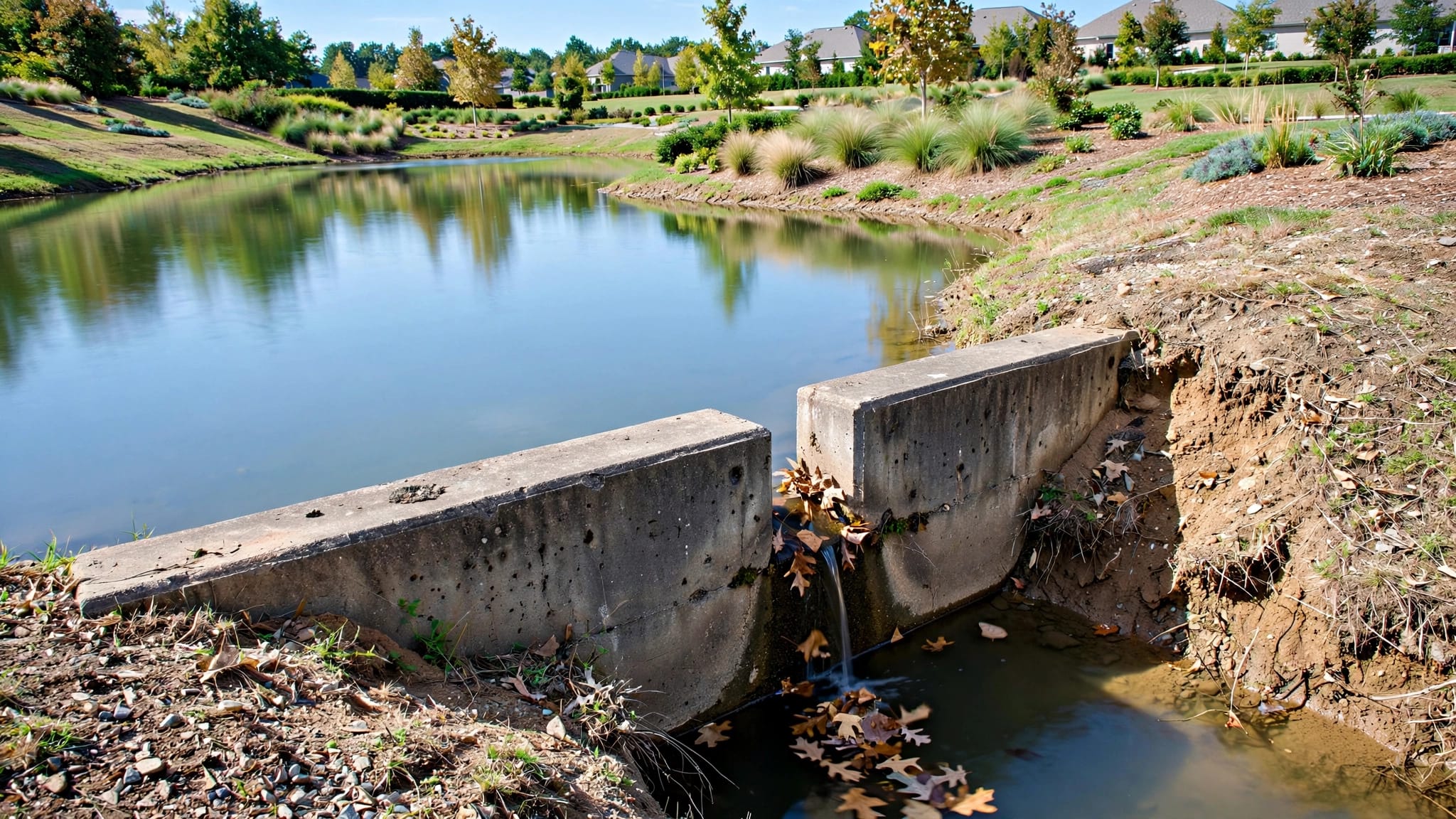
- Inspect banks near the station for erosion, settlement, exposed piping, and unstable access.
- Photograph visible damage, abnormal discharge, and debris from consistent observation points.
Then follow the water's route beyond the pump. A working pump can't compensate for a blocked downstream pipe or damaged outfall. Pair the station inspection with checks of lake pipes, inlets, and outfalls.
Where a wet well exists, have qualified personnel inspect its accessible condition, debris accumulation, and level-control components. Property managers shouldn't enter it or remove covers casually.
Don't remove shoreline plants indiscriminately. Identify vegetation that restricts equipment or drainage access, then plan targeted maintenance that preserves bank stability and appropriate littoral planting.
Have Qualified Technicians Check Controls and Performance
Verify alarms, level controls, and electrical condition
A technician should review the station's controls against its design and manufacturer instructions. Relevant checks may include level sensors, floats, alarm functions, pump sequencing, and remote notifications, depending on installed equipment.
Test notifications through an authorized procedure. Confirm that messages reach the current manager or designated responder, including after-hours contacts.
Damaged enclosures, corrosion, repeated breaker trips, and unusual control behavior require professional attention. Don't repeatedly reset a tripped breaker or bypass an alarm.
Electrical work requires appropriate qualifications and applicable safety procedures. Lake-treatment credentials alone don't establish authorization to perform electrical repairs.
Compare operating data with a documented baseline
Have technicians record available operating information, such as runtime, starts, discharge pressure, flow, and motor current where appropriate instruments exist. Compare readings under similar operating conditions and against equipment specifications.
Also document unusual vibration, grinding sounds, leaks, and changes in output. These observations help narrow the problem, but they don't establish a diagnosis.
An intake restriction, worn component, leaking connection, or control fault can produce different symptoms. Therefore, request findings before approving replacement.
Where the design includes multiple pumps, verify each unit's operation. Service standby equipment according to the approved design and manufacturer requirements.
Coordinate Intake Cleaning With Aquatic Treatments
Intake maintenance and aquatic plant management need a shared plan. Floating weeds, algae mats, and loose plant fragments can collect against screens. Treatment-related plant debris can also increase cleaning needs.
Before treatment, identify which lakes supply irrigation water and which intakes serve each system. Record operating schedules, connected basins, and the person authorized to shut equipment down. The applicator should also review any product-label irrigation restrictions.
Don't begin work with an already restricted intake without addressing the obstruction and planning follow-up. However, screen cleaning or pump isolation should follow equipment-specific procedures under qualified personnel.
Removed sediment needs separate attention. The Southwest Florida Water Management District warns that sediment may contain hazardous material and advises approved disposal. Check with the county Solid Waste Department or Florida DEP before disposal rather than assuming it's ordinary clean soil.
Crews should also clean shared lake equipment between separate water bodies to reduce the spread of plant fragments.
Finally, investigate recurring debris sources. Grass clippings, unstable banks, and persistent weed growth can keep loading the intake even after crews clean it.
Prepare for Heavy Rain and Power Interruptions
Review pump stations before storms threaten Southwest Florida. Clear approved access routes, document existing damage, check intake conditions, and confirm emergency contacts.
Use the property's wet- and dry-season maintenance calendar to coordinate station checks with shoreline and drainage inspections. Preparation should happen before hazardous weather limits safe access.
If the station has backup power, arrange inspection and testing under its manufacturer instructions and site plan. There isn't one universal generator requirement or fuel reserve established by general stormwater-maintenance guidance.
After a storm or outage, wait until access is safe. Then inspect debris, erosion, lake levels, visible piping, and equipment damage. Qualified personnel should evaluate flooded electrical equipment before restart.
Treat rising water near homes, a failed station, or persistent alarms as urgent escalation items. Notify the responsible manager and service contractor immediately.
Also verify authorization before unusual pumping. Don't assume emergency conditions permit discharge onto neighboring property or into an unapproved receiving area. DEP's NPDES requirements depend on the activity and discharge circumstances; they don't establish a separate permit requirement for every routine HOA pump operation.
Changes to stormwater facilities require review with applicable agencies before alteration.
Keep Records and Maintenance Responsibilities Clear
Give each station and lake a permanent identifier. Every inspection report should record the date, observer, operating condition, photographs, findings, and assigned follow-up.
Separate observed symptoms from confirmed diagnoses. For example, a report can document reduced irrigation pressure without declaring the pump defective. The technician's later findings should explain the cause and proposed repair.
Fixed photo locations help reveal gradual shoreline settlement, recurring debris, or changes in intake exposure. A property manager's lake inspection checklist can keep broader lake observations consistent across multiple basins.
The service agreement should identify who observes equipment, performs technical testing, coordinates water-quality sampling, and handles emergencies. Require repair deadlines and written confirmation when work is complete. Board reports should distinguish completed repairs from open issues and identify any access, parts, or approval delays.
Budget from actual inspection findings and equipment history. Routine lake service and pump repairs may involve different contractors and separate costs.
Seabreeze Lake Maintenance serves Southwest Florida HOAs, gated communities, golf courses, and other lake properties. The company holds Commercial Applicator License #CM28291 and State-Licensed Specialty Contractor #SCC131152136. Confirm the qualifications and scope required for each task, including pump, electrical, engineering, and aquatic-treatment work.
A lake health assessment can help boards coordinate intake conditions, vegetation management, shoreline concerns, and equipment follow-up.
Keep the Whole Pumping System Dependable
A running motor is only one part of a dependable lake pump station. Clear intakes, functioning controls, sound discharge paths, and documented follow-up all matter.
Build Florida lake pump maintenance around the approved design, equipment instructions, and each basin's conditions. Then assign clear responsibility for observations, technical service, and urgent response.
The most useful checklist produces a record of completed checks, unresolved problems, and verified repairs before the next storm or irrigation demand exposes a failure.
Recent Posts