What High Turbidity Means in Florida HOA Lakes
HOA lake turbidity can rise after one storm, but it should not stay high for long. When the water stays cloudy, the lake is usually giving you a warning about runoff, erosion, or sediment moving through the system.
For retention ponds and lakes in gated communities and other multi-lake properties, that warning matters. Murky water can hide deeper problems, make routine care harder, and lead to complaints from residents, golf course crews, and property managers.
The good news is that high turbidity leaves clues. Once you know what to look for, you can tell the difference between a short-lived change and a problem that needs attention.
What high turbidity looks like in an HOA lake
High turbidity means the water has too many suspended particles. Those particles can be soil, clay, silt, algae, decaying plant matter, or fine debris washed in by rain.
The lake may look muddy, milky, greenish, or dull. Sometimes it changes with the wind or after heavy rainfall. Other times it stays cloudy from one week to the next.
Cloudy water after a storm is common. Cloudy water that never clears is a maintenance clue.
A quick visual check can help you spot the pattern.
| What you see | What it may mean | What to watch |
|---|---|---|
| Brown or muddy water after rain | Runoff or shoreline erosion | Check inlets, bare banks, and washout areas |
| Milky or dull green water | Fine suspended matter or algae | Look for nutrient inputs and heavy sun exposure |
| Cloudy water that stays the same for days | Ongoing sediment or bottom disturbance | Inspect shallow spots, outfalls, and bank wear |
| Water that clears in calm weather, then clouds again | Wind-driven sediment or repeated disturbance | Note wind direction, shallow shelves, and traffic |
That table gives a simple rule of thumb. If the lake clears fast, the issue may be temporary. If the water stays cloudy, the lake likely has a source that keeps feeding the problem.
Why Florida lakes get cloudy so fast
Florida weather makes turbidity easier to trigger. Heavy rain, strong sun, shallow shorelines, and fast-growing vegetation all play a part.
Stormwater brings in fine material
Summer storms can send a lot of water across grass, pavement, and landscape beds. That runoff carries soil, mulch, grass clippings, and other fine material into the lake.
In HOA systems, this often starts at the inlets. Water enters fast, carries sediment with it, and leaves the lake looking cloudy. Even a short storm can change the water's look for days.
Bare banks and weak shorelines keep feeding the water
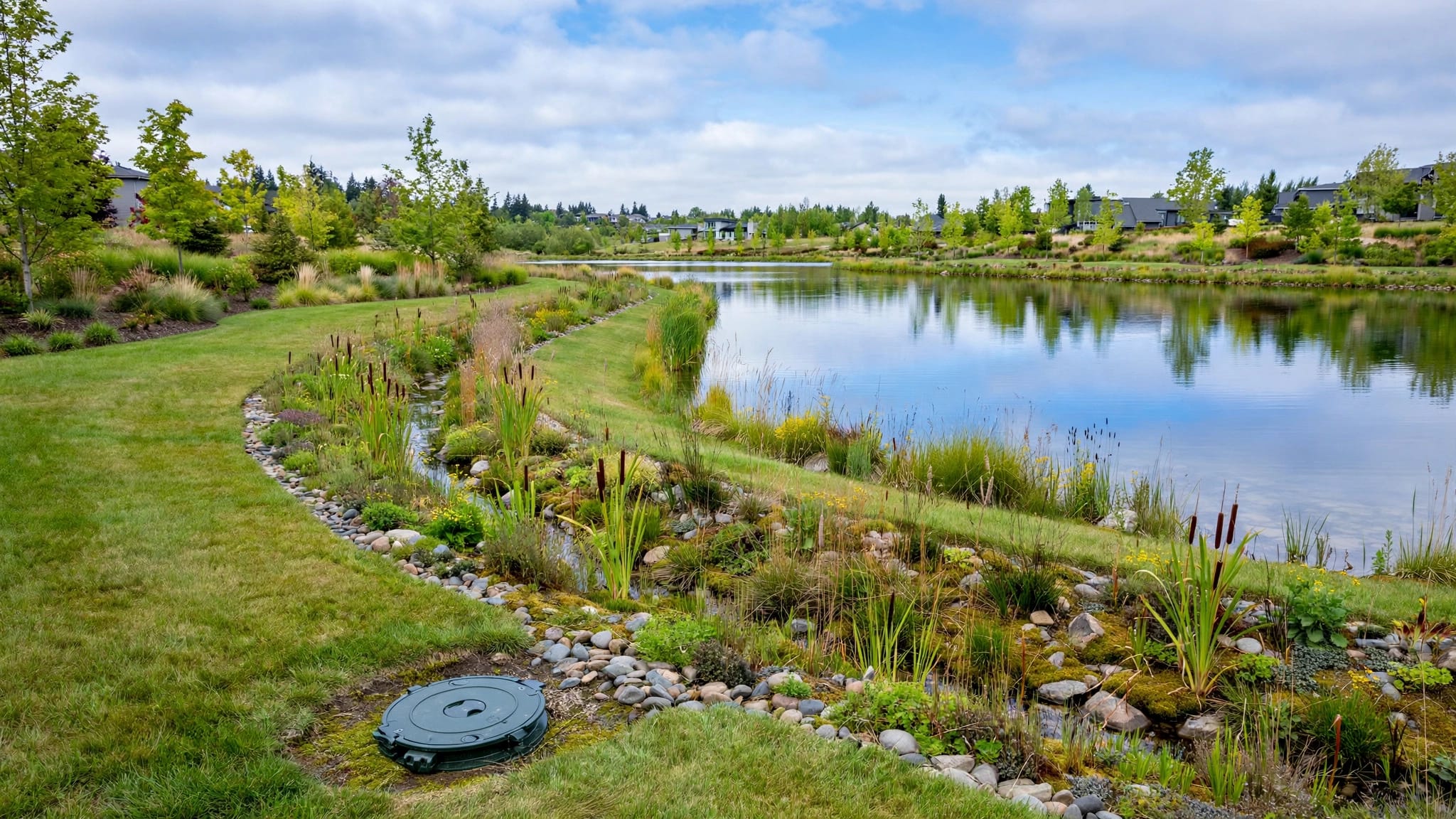
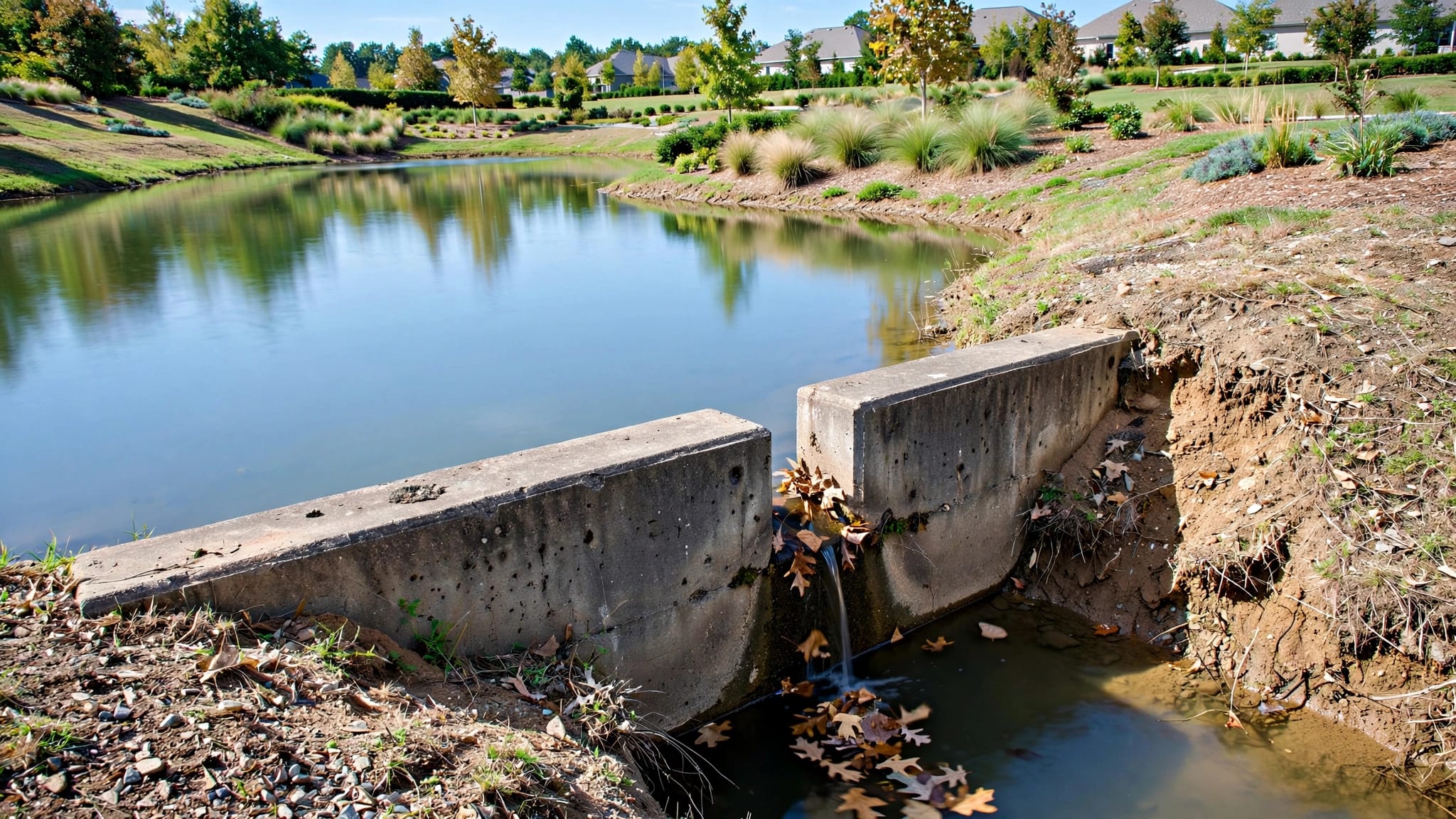
When shoreline grass thins out, soil washes off the edge more easily. Mowers that cut too close to the bank can make it worse. So can foot traffic, cart paths, and areas where rain hits exposed slopes.
A weak shoreline keeps adding material every time water moves. That is why erosion control matters so much in Florida lake maintenance. A stable bank does more than look neat. It helps keep sediment out of the water.
Wind, algae, and bottom disturbance add to the problem
Shallow lakes are easy to stir up. Wind can push fine sediment back into the water column, especially where the bottom is loose. That can make one side of the lake look much worse than the other.
Algae can also make water look cloudy, even when the problem starts with nutrients instead of dirt. When the lake gets too much runoff from fertilizer or organic waste, algae can bloom fast. Then the water loses clarity and the lake becomes harder to manage.
For community lakes, the source often isn't one thing. It is usually a mix of runoff, erosion, and seasonal growth.
Why cloudy water matters to residents and property managers
Cloudy water is more than a cosmetic issue. It changes how the lake functions and how people feel about the property.
Low clarity can make it harder for sunlight to reach underwater plants. That changes plant growth and can shift the balance of the whole lake. It can also hide trash, floating debris, damaged shoreline areas, and dead spots along the bank.
For managers, high turbidity can create a slow chain of problems:
- It makes early algae signs harder to see.
- It can hide erosion until the bank has already slipped.
- It can make treatment results less predictable.
- It can make the property look neglected, even when crews are working hard.
For residents, cloudy water often raises concern before any other symptom appears. People notice the look of the lake on the way home, from balconies, or near walking paths. In golf course settings, that matters even more, because the lake is part of the view from tees, fairways, and cart paths.
Water clarity also affects trust. When the lake stays murky, people wonder what else is happening below the surface.
How to read turbidity during routine lake checks
Routine checks work best when they follow the same path each time. A glance from the parking lot is not enough. A real inspection looks at the inlets, shoreline, spillways, and open water.
A Florida HOA lake inspection checklist helps managers compare conditions from one visit to the next. That matters because the same lake can look fine one day and cloudy the next after a storm or mowing cycle.
A strong check usually starts with these questions:
- Is the cloudiness strongest near the inflow?
- Are the banks bare, sloped, or breaking down?
- Did the lake change after rain, fertilizer use, or shoreline work?
- Does the water clear when the wind calms down?
Those answers point to the source. If the problem starts near a drain or pipe, runoff may be the driver. If the whole lake stays dull, sediment or algae may be more involved. If the shoreline is the weak point, bank repair may matter more than water treatment alone.
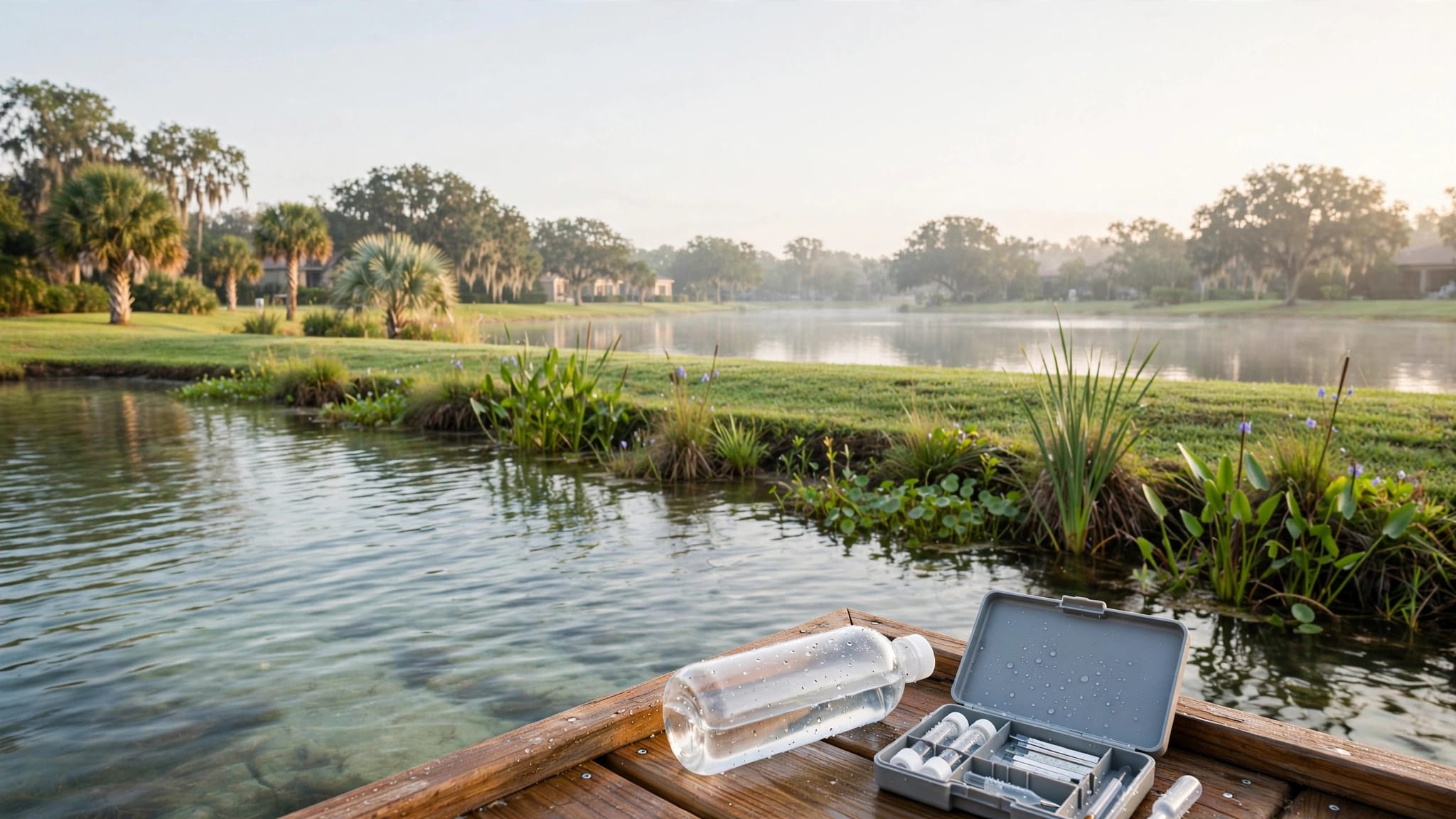
A simple field note on each visit helps too. Write down what the water looks like, where the cloudiness is strongest, and whether the condition is getting better or worse. That record can reveal a pattern long before the problem becomes obvious.
What to do when turbidity stays high
A lake that stays cloudy needs a root-cause fix, not a quick visual cover-up. The best response depends on what is putting material into the water.
- Start with the source. Check inlets, drainage paths, banks, and any recent landscaping work. If sediment keeps entering the lake, the water will stay cloudy no matter how often it is treated.
- Reduce erosion. Stabilized shorelines, better grading, and healthy vegetation can keep loose soil in place. In many HOA systems, this step does more than any short-term water treatment.
- Match treatment to the cause. Aeration, debris removal, algae treatment, aquatic weed control, and water quality management all have a place, but they need to fit the problem. The wrong fix can waste money and time.
- Track the result. After repairs or treatment, check whether the water clears after storms, holds its clarity longer, or clouds up in the same spots again.
If the lake has stayed cloudy for weeks, Get a Free Quote and schedule a lake inspection. A licensed team with Commercial Applicator License #CM28291 and State-Licensed Specialty Contractor #SCC131152136 can review the lake, look for the source, and build a plan for community lakes and retention ponds, not koi ponds.
When cloudiness comes with odor, algae mats, shoreline collapse, or persistent debris, the issue is usually bigger than a surface fix. That is when it helps to compare the lake against signs your HOA lake needs professional care.
Conclusion
High turbidity is one of the clearest warning signs in a Florida HOA lake. Sometimes it shows up after a storm and clears on its own. Other times it points to runoff, erosion, algae pressure, or a shoreline problem that keeps feeding the water.
The key is to watch the pattern. If the lake stays cloudy, the source is still active. Catching that early protects the water, the shoreline, and the way the property looks to every person who passes by.
Recent Posts