How to Read HOA Lake Water Test Results
A lake can look calm and still be out of balance. Clear water does not always mean healthy water, and a green surface does not always mean a crisis.
That's why HOA lake water test results matter. They show what's happening below the surface, where oxygen, nutrients, algae, and sediment can shift fast after rain, fertilizer runoff, or hot weather.
For retention ponds and lakes in gated communities, golf courses, and other multi-lake properties, the report only helps if someone can read it with context. In Southwest Florida, Seabreeze Lake Maintenance works with these properties and carries Commercial Applicator License #CM28291 and State-Licensed Specialty Contractor #SCC131152136.
Start with the report details, not the numbers
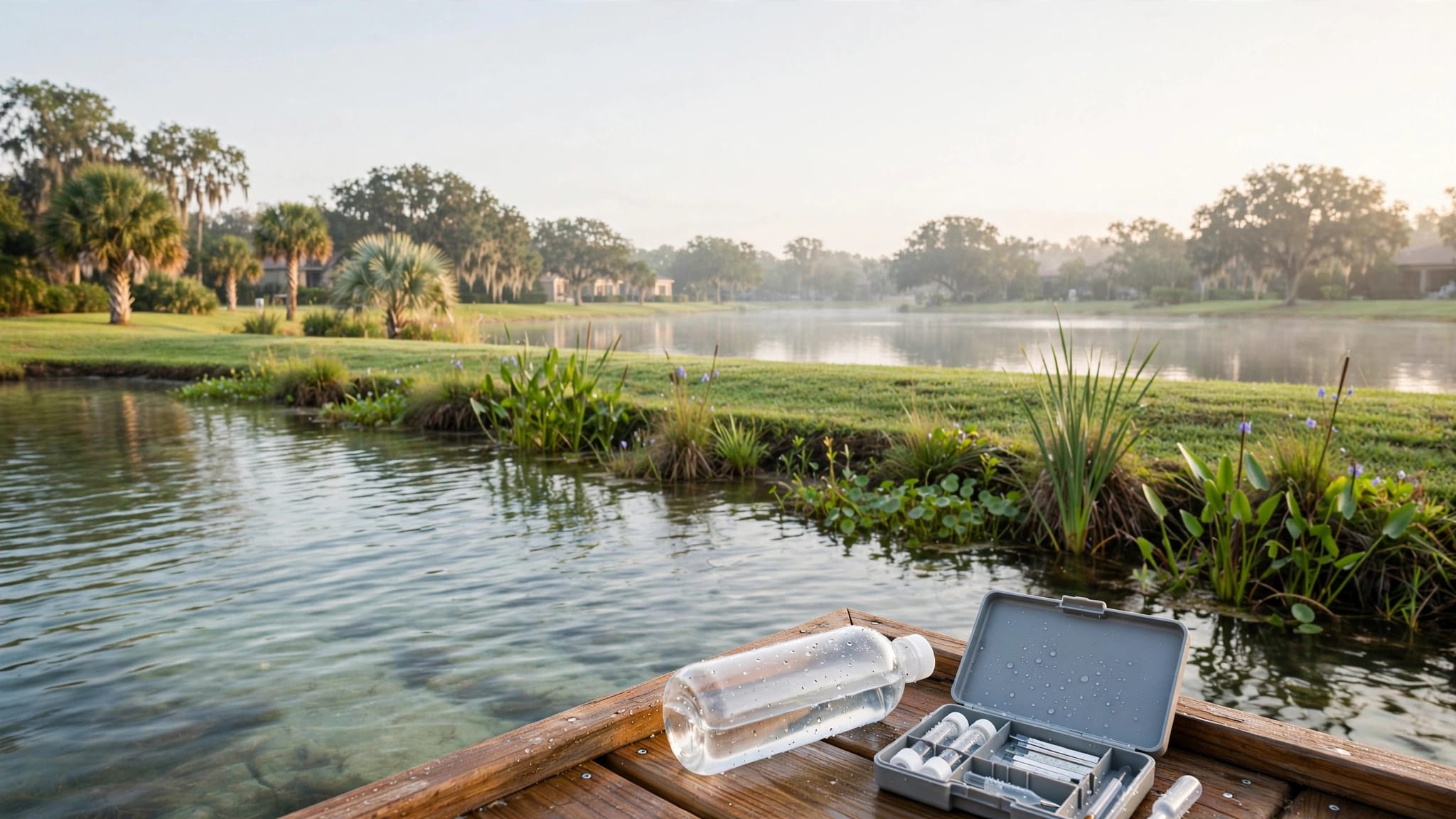
The best place to begin is the top of the report. Before you look at the readings, check when and where the sample was taken.
A strong water test report should tell you:
- The sample date and time
- The pond or lake name
- The sampling location
- The depth, if that applies
- The testing method or lab used
- Any weather notes, like rain or wind
These details matter because lake water changes throughout the day. A sample taken after a storm can look very different from one taken during a dry stretch. A shallow edge sample can also tell a different story than a sample from open water.
Next, look for units. One report may show phosphorus in parts per billion, while another shows dissolved oxygen in milligrams per liter. If the units are unclear, the number can be easy to misread.
One sample shows a moment. A series of samples shows a pattern.
That pattern is where the real value sits. If the same lake keeps showing the same problem, you have a maintenance issue, not a random blip.
What the common water quality numbers mean
Most HOA and golf course lake reports focus on a handful of key measurements. The table below gives a quick way to read them.
| Test item | What it measures | What a poor result can point to |
|---|---|---|
| pH | How acidic or basic the water is | Stress on fish, plants, and treatment performance |
| Dissolved oxygen | How much oxygen is in the water | Fish stress, odor issues, and low biological activity |
| Phosphorus | A nutrient that feeds algae | Algae blooms and cloudy water |
| Nitrogen | Another plant and algae nutrient | Fast growth of algae and nuisance vegetation |
| Turbidity | How cloudy the water is | Sediment, runoff, or stirred-up bottom material |
| Chlorophyll-a | A marker tied to algae levels | Active algae growth in the water column |
A single high or low number does not tell the whole story. It tells you where to look next.
For example, high phosphorus with rising chlorophyll-a usually points to algae pressure. Low dissolved oxygen with murky water can point to poor circulation, decay, or too much organic matter in the pond. High turbidity after rain often points to runoff, erosion, or construction impact nearby.
Some reports also include alkalinity, conductivity, or temperature. Those values help with context. Alkalinity affects how stable pH stays. Conductivity can hint at dissolved salts or runoff. Temperature changes how much oxygen the water can hold.
If your lake sits in a managed community, these values matter because they affect appearance, odor, and long-term stability. They also help guide decisions on aeration, weed control, shoreline work, and nutrient management.
Read the lake report as a pattern, not a snapshot
A lot of people focus on one bold number. That misses the larger story.
A lake is not a jar on a shelf. It changes with weather, sunlight, plant growth, and runoff from the surrounding property. A test taken on Monday can look better or worse on Friday without any major change in the pond itself.
That is why trends matter more than one reading. Compare the current report with the last few tests. Look for movement, not just red flags.
If phosphorus has crept up for three months, the lake may be receiving more nutrients from lawn fertilizer, drainage, or decaying vegetation. If dissolved oxygen drops each summer, the lake may need more circulation or aeration. If turbidity spikes after rain, the problem may be sediment entering from banks, swales, or nearby hardscape.
Daily timing matters too. Oxygen is often lowest near sunrise. Algae can also change pH during the day. A late-afternoon sample may not match an early-morning one, even in the same pond.
The same idea applies to weather. Heavy rain can wash in nutrients and silt. Long dry spells can concentrate pollutants. Wind can stir up bottom muck and make the water look worse than it is.
When reading a report, ask three simple questions:
- Is this a one-time change or a repeated pattern?
- Does the reading match what the lake looks like on site?
- What changed around the lake before the test, like rain, mowing, fertilizing, or stormwater flow?
Those questions give the numbers real meaning. Without them, the report is just a page of measurements.
What bad results usually mean for a community lake
The biggest mistake HOAs make is treating every problem the same. A cloudy lake, a fish stress issue, and an algae bloom do not need the same fix.
Poor test results usually point to one of a few root causes. Nutrients can feed algae. Low oxygen can slow the lake's natural balance. Erosion can fill in edges and stir up sediment. Excess plant growth can block circulation and trap debris.
Here is how those issues often show up in the report and on the water:
- Algae blooms often pair with high nutrients, especially phosphorus.
- Odor or fish stress often pairs with low dissolved oxygen.
- Cloudy water often pairs with high turbidity or sediment runoff.
- Thick shoreline growth can point to nutrient-rich runoff or shallow edges.
- Persistent murkiness may mean the lake needs a stronger maintenance plan, not a one-time treatment.
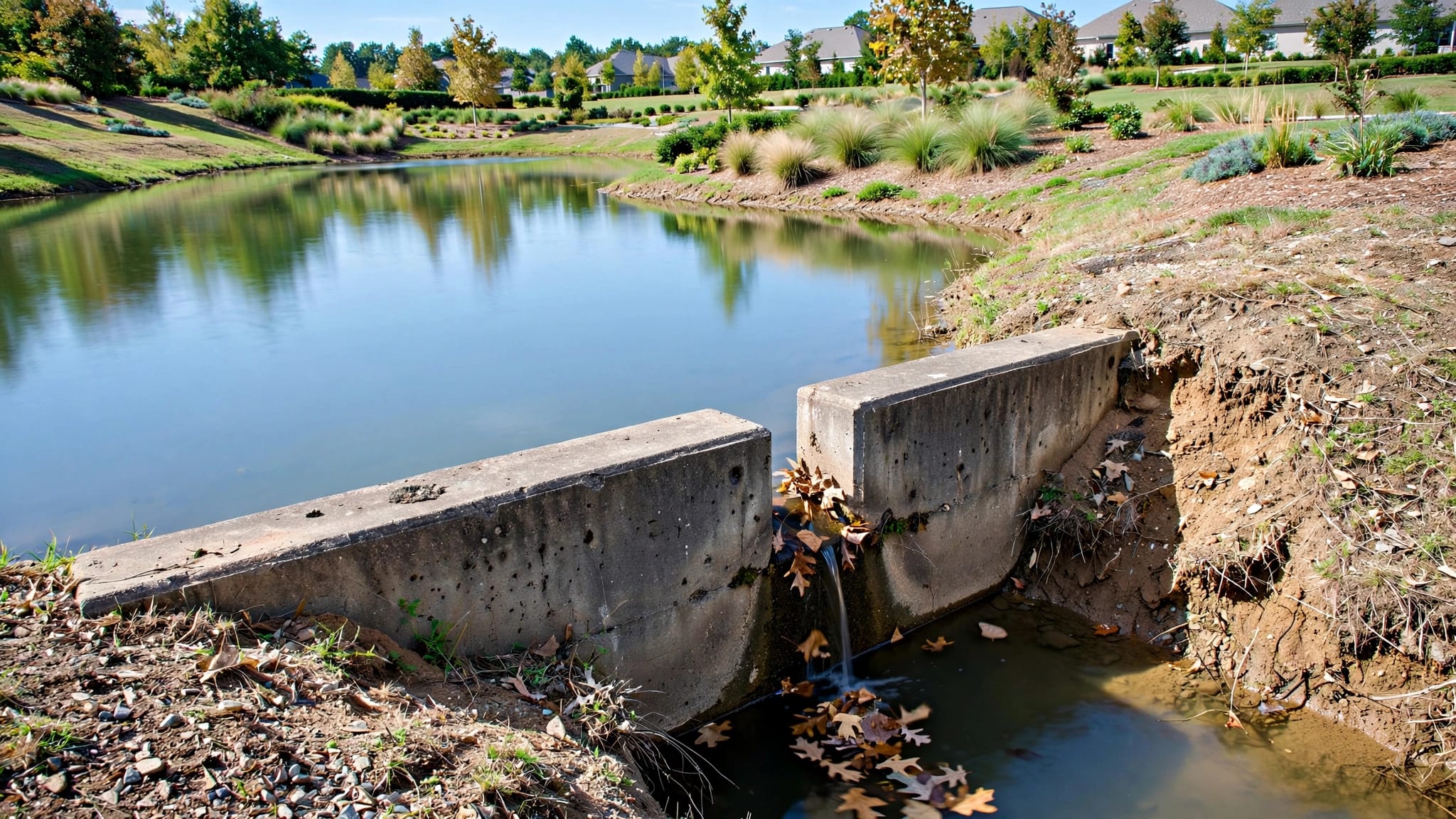
A report can also hint at management mistakes. If nutrients stay high after treatment, the source may still be active. If oxygen stays low, the lake may need aeration or better circulation. If the shoreline keeps washing out, the problem may be erosion, not water chemistry alone.
That is where a maintenance plan beats a quick fix. Lakes in gated communities and on golf courses need regular attention because one untreated source can undo months of work.
What to do after you read the results
Once you understand the report, turn the numbers into a plan. Start with the issue that affects the whole lake, then move to the local causes.
A simple next-step process looks like this:
- Identify the main problem, such as nutrients, oxygen loss, or turbidity.
- Check whether the issue matches what you see on site.
- Look for the source, including runoff, erosion, debris, or heavy plant growth.
- Match the fix to the cause, such as aeration, algae treatment, shoreline work, or better routine maintenance.
- Retest after the treatment window so you can see whether the numbers improved.
This is also the point where a professional lake inspection helps. A report can show the symptoms, but site conditions often explain the cause. The slope of a bank, the shape of a basin, nearby irrigation, and drain flow all matter.
If your results keep showing algae pressure, low oxygen, or shoreline issues, Get a Free Quote for a lake inspection and maintenance review. Seabreeze Lake Maintenance works with HOA communities, commercial properties, golf courses, and residential lakes throughout Southwest Florida.
Conclusion
Reading lake water test results gets easier when you stop chasing a single number. The real story sits in the mix of pH, oxygen, nutrients, clarity, and trends over time.
For HOA lakes and retention ponds, the goal is simple. Keep the water stable, keep the shoreline in shape, and catch small problems before they turn into expensive ones.
A good report should help you answer one question clearly: what does the lake need next?
Recent Posts