How Lake Connectivity Spreads Weeds Across Community Lakes
One weed patch in a community lake can become three patches after the next storm. When lakes share water, they also share fragments, seeds, and nutrient-rich runoff.
That is why lake connectivity weeds are such a common problem for HOAs, golf courses, and gated communities. A pond can look separate from the street, yet still feed the next basin through a culvert, overflow pipe, or drainage swale.
Once weeds find that path, they move faster than most residents expect. The key is understanding how the water moves, because weeds follow water movement with very little effort.
Why connected lake systems spread weeds so fast
Connected lakes behave like one larger system, even when each pond has its own shoreline and name. Water levels rise and fall together, and that movement carries plant material with them.
That matters because many aquatic weeds do not need a full plant to spread. A small piece of stem, a floating mat, or a seed head can start a new patch. In some cases, the weed only needs a few inches of slow water and a place to settle.
Shared water also spreads the conditions weeds like. Nutrients, silt, and organic debris move through the system too. So do the warm, shallow edges where weeds take hold first.
A lake with poor flow can feed a lake with slightly better flow. A lake with heavy runoff can seed the next basin. In a multi-lake community, one trouble spot often turns into a chain reaction.
The paths weeds take between community lakes
The spread usually follows the same few routes. Once those routes are known, the pattern is easier to see.
| Connection point | How weeds move | What crews often see |
|---|---|---|
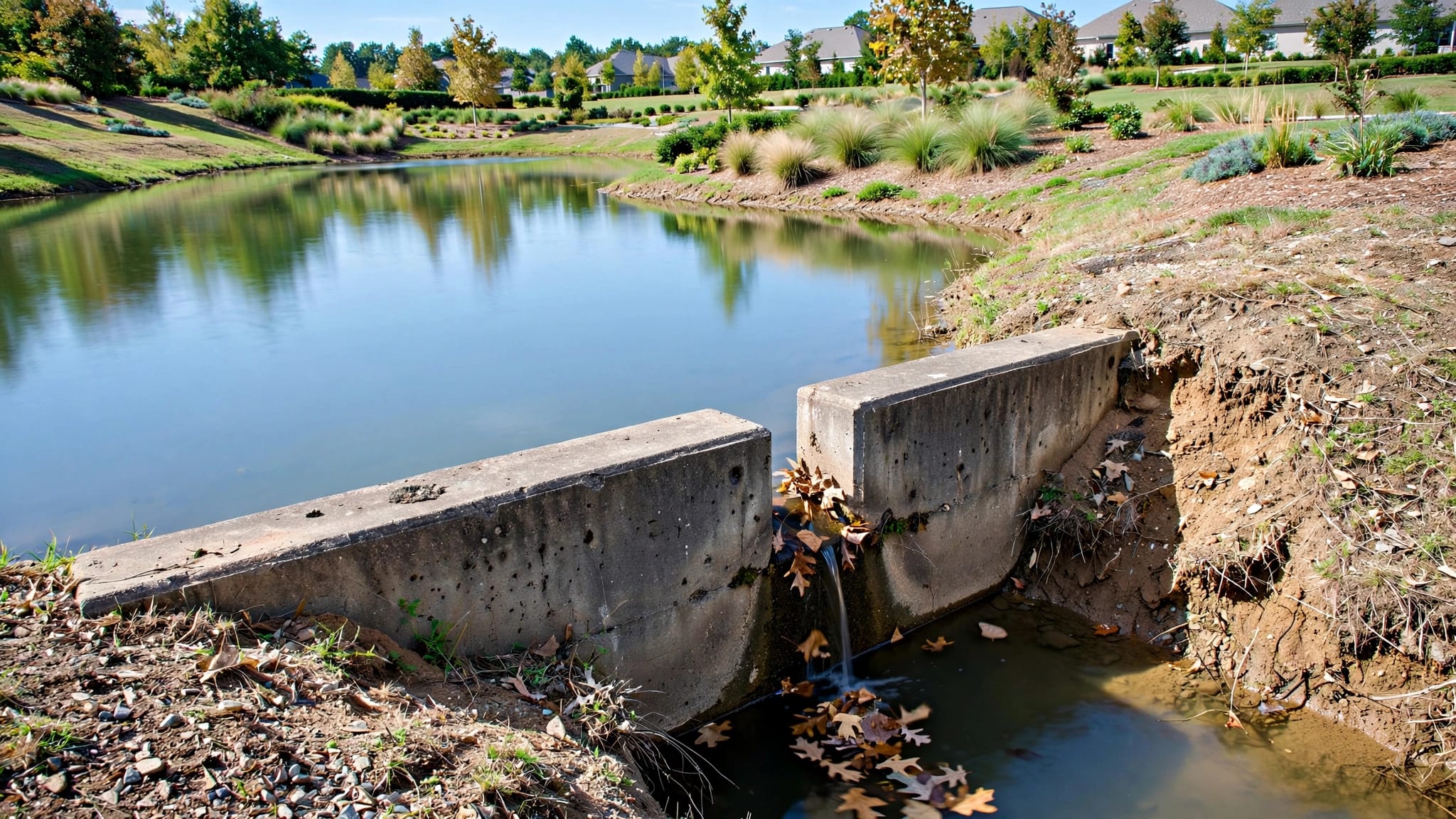
| Overflow weirs and spillways | Stormwater pushes plant pieces downhill | New growth appears after heavy rain |
| Culverts and pipes | Floating weeds and seeds pass through water movement | The same species shows up in the next lake |
| Pumps and circulation lines | Water carries fragments between basins | Fresh growth forms near discharge points |
| Shared runoff areas | Fertilizer, soil, and debris feed plant growth | Thick edges build up near inlets |
The takeaway is simple. Weeds do not need a long journey to spread. They only need a connection point and a little moving water.
If weeds keep returning after rain, the source may be upstream, not in the spot you treated last week.
That is why one shoreline cleanup rarely solves a connected-lake problem. The water route stays open, so the next storm can restart the cycle.
Why HOAs and golf courses see repeat outbreaks
Community lakes often have conditions that favor repeat growth. Many sit in shallow basins with wide edge zones. Those edges warm up fast, and weeds love that.
Golf courses and HOA communities also deal with runoff from turf, mulch, and landscaped beds. That runoff can carry nutrients into the water. More nutrients mean more growth, especially in still areas near the bank.
Irrigation can add to the problem. When water from lawns and fairways drains into lakes, it brings fine sediment and fertilizers with it. Then the lake gets cloudy, shallow, and rich in plant food.
Seasonal storms make the spread even more obvious in Florida. Heavy rain raises water levels, pushes fragments through overflow points, and moves weeds into new places. A patch that looked controlled in April can be back by June.
The cycle gets worse when one lake is treated and the next one is ignored. The treated basin clears up, then the untreated basin sends weeds back across the connection. That is why lake management for multi-lake properties has to look at the whole system, not one shoreline at a time.
What slows weed spread across a multi-lake property
The best control plans start with the water route, not just the visible weeds. A lake crew should map where water enters, where it leaves, and where it stalls.
Better circulation also helps, especially in basins that stay warm and still. Lake and pond aeration systems can reduce stagnant pockets and support healthier water movement.
A solid weed-control plan for connected lakes usually includes:
- Watching the inlets and outlets so new growth gets caught early.
- Removing floating fragments after treatment or trimming.
- Treating problem areas fast before they seed the next pond.
- Reducing nutrient runoff from turf, mulch, and bare soil.
- Improving circulation in dead zones where water barely moves.
Each step helps break the chain. If one link stays open, weeds can keep moving through the system.
If your community keeps seeing the same plants return, Get a Free Quote to schedule a lake inspection and treatment plan.
Why aeration and regular monitoring matter
A connected lake system needs more than a one-time spray. It needs regular checks, because the problem changes with rain, heat, and water level.
That is where steady monitoring matters. Small patches near an inlet are easier to control than a full shoreline mat. Debris removal, shoreline care, erosion control, and water quality work all help reduce the pressure that drives weed growth.
For retention ponds and lakes in gated communities, this is especially important. These waters are part of the property's appearance, drainage, and safety. When weeds spread, they affect all three.
Seabreeze Lake Maintenance works with HOA communities, golf courses, and other multi-lake properties across Southwest Florida. The team holds Commercial Applicator License #CM28291 and State-Licensed Specialty Contractor #SCC131152136, which matters when the job calls for careful treatment and consistent oversight.
Routine care also gives crews a chance to catch small changes before they become expensive ones. A thin line of growth near an outfall can point to a bigger flow issue. A cloudy inlet can hint at runoff problems. A weak circulation area can explain why weeds keep returning in the same spot.
Conclusion
Connected lakes do not keep weed problems contained. They pass them along. One fragment near an overflow or culvert can turn into a new patch after the next storm.
The communities that stay ahead of the problem treat the whole water network, not just the visible weed bed. They watch the flow paths, reduce runoff, and keep the water moving.
When a lake system is managed as one connected body, weed spread becomes easier to slow and easier to control.
Recent Posts