Foamy Water in Florida HOA Lakes: What Causes It?
Foamy water in Florida lakes can catch your eye fast, especially when it shows up along a quiet shoreline in an HOA community. It may look strange, but foam is often a clue, not a crisis.
In retention ponds, gated communities, golf courses, and other multi-lake properties, the real issue is usually what entered the water before the foam appeared. Warm weather, heavy rain, runoff, and decaying plant matter all play a part. This is about those lakes, not koi ponds, so the focus stays on larger managed waters.
What foam on the water is really telling you
Foam forms when air gets trapped in water that contains natural organic compounds or other surface-active materials. In plain terms, the water has something in it that helps bubbles hang together instead of popping right away.
That is why foamy water in Florida lakes can show up after wind, rain, or water movement. A little foam near a shoreline does not always mean a serious problem. Sometimes it is a short-lived mix of pollen, plant debris, and surface agitation.
Still, foam that keeps coming back tells a different story. If it collects in the same cove, near the same inlet, or around the same outfall, there is usually a source feeding it. That source may be runoff, decaying vegetation, or a water quality imbalance that has been building for weeks.
Florida lakes face extra pressure because warm water speeds up breakdown. Leaves, grass clippings, algae, and other organic matter decompose faster in heat. As they break down, they can release compounds that help foam form and stick around.
Foam is often a symptom, not the problem itself. The source is usually upstream or below the surface.
Storm runoff is a common trigger after heavy rain
Florida rain can change a lake fast. One strong storm can wash nutrients, dirt, mulch, grass clippings, and other debris into a retention pond or connected lake system. When that happens, foam often appears where the water slows down.
This matters even more in HOA communities and golf courses. One drainage basin can feed another, so a small issue in one area can show up in several lakes. A foamy corner may be the first sign that runoff is carrying more than rainwater.
Fertilizer is a common part of the picture. Overspray from turf care, landscape beds, or nearby lawns can add nutrients that feed algae and organic buildup. After that, the lake has more material to break down, and foam becomes easier to spot.
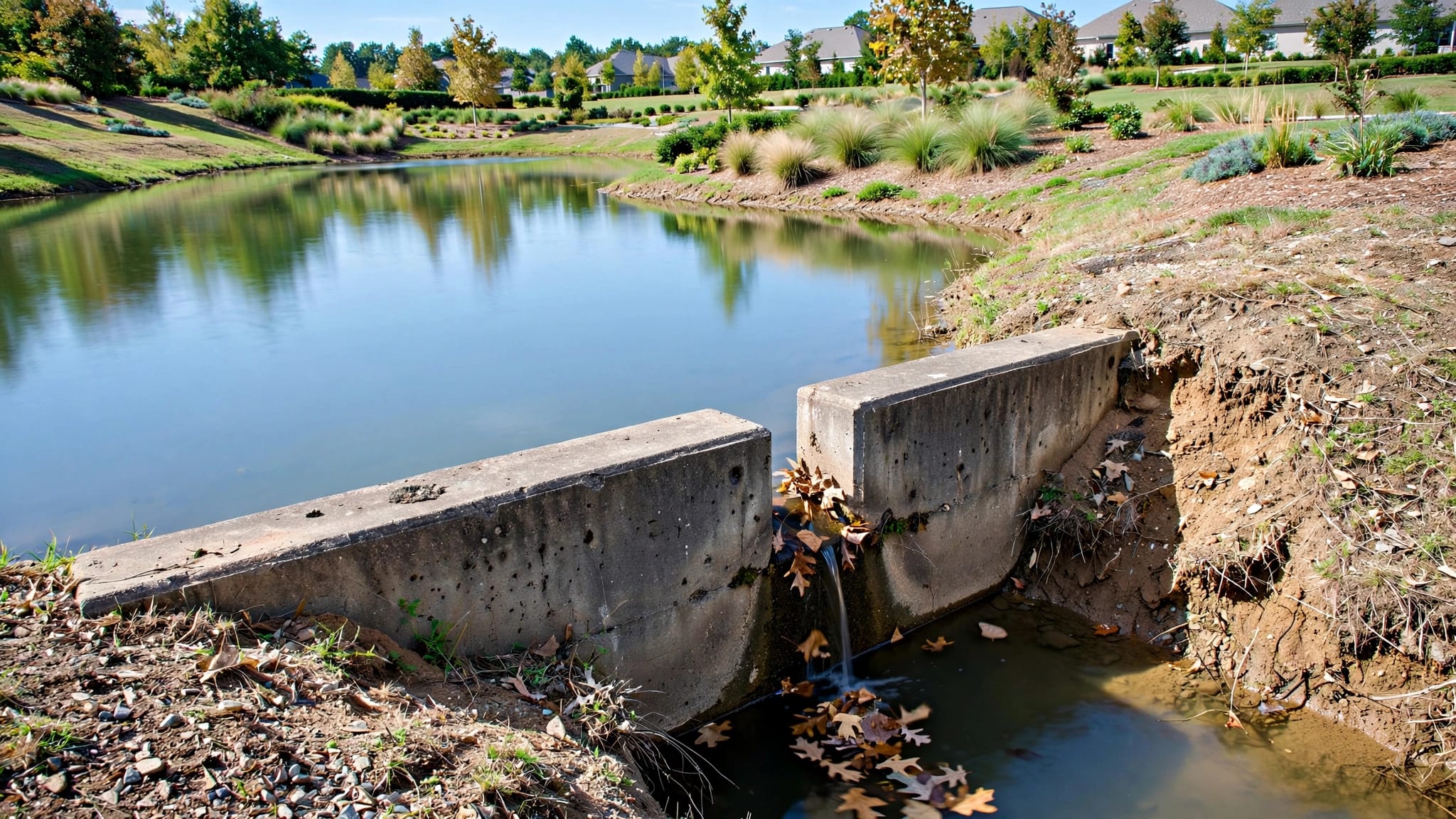
Erosion adds another layer. When shorelines wash away, soil and decaying plant matter enter the water more often. That creates a richer mix of organic material, which can make foam thicker and more stubborn. In lakes with a lot of inflow, the effect can show up quickly after each storm.
The best fix usually starts outside the water. Clean inlets, stable shorelines, and good drainage habits matter. So does keeping fertilizer and clippings out of catch basins. The lake often reflects what happens on land around it.
Decaying plants and low oxygen can keep foam around
Organic decay is one of the biggest reasons foam lingers in managed lakes. When algae dies back, when littoral plants break down, or when leaves sink and rot, the water fills with dissolved organic matter. That material can trap air and create visible foam.
Low oxygen makes the problem worse. As oxygen drops, decomposition slows and water quality slips. Then the lake can hold onto foam longer, especially in still water or in areas with weak circulation.
Florida heat speeds up this cycle. Warm water holds less oxygen than cool water, and it also helps microbes break down plant matter faster. That means a lake can shift from clear to foamy after a few hot weeks, especially if nutrient levels are already high.
You may also notice other signs at the same time. A faint sulfur smell, dark water, or patchy algae growth can point to a stressed lake. None of those signs should be ignored, because they often show up before the foam becomes obvious.
This is where lake and pond aeration systems can make a difference. Aeration helps move oxygen through the water column, which supports healthier breakdown and reduces the conditions that let foam build up. In HOA lakes, that can be a key part of long-term control.
Aeration, fountains, and wind can make the foam look worse
Sometimes the foam is already there, but water movement makes it easier to see. Aerators, fountains, and steady wind can push surface foam into corners, along seawalls, or against shoreline bends. That can make one area look much worse than the rest of the lake.
This does not mean the equipment is causing the entire problem. More often, it means the lake already has enough organic load for foam to show up once the surface starts moving. In other words, the aeration may reveal a condition that was hidden in calmer water.
However, equipment placement and water circulation still matter. If foam appears right after a fountain or aerator starts up, it is worth checking whether the unit is stirring up accumulated organics near the bottom or around the shoreline. In managed lakes, a good setup should improve water quality over time, not hide a larger issue.
Wind can do the same thing on its own. A foamy line along one side of the lake may simply be where the wind pushed it. If it disappears after the breeze changes and does not return, the lake may be telling you that the foam is surface-driven rather than chemical in nature.
That is why observations matter. Timing, location, and pattern all help narrow the cause. A single foamy afternoon is one thing. A repeated pattern after rain, heat, or water movement is another.
When HOA lakes need a closer look
Foam deserves attention when it keeps returning in the same spot. It also matters when it comes with oily sheen, strong odors, thick algae, or signs of fish stress. In a community lake, those clues usually point to a maintenance issue that needs more than a quick glance.
A proper inspection looks at the whole system. That includes storm drains, shoreline conditions, connected ponds, vegetation, and the water itself. In multi-lake properties, the trouble often starts in one basin and shows up somewhere else later.
Seabreeze Lake Maintenance works with retention ponds and lakes in gated communities, golf courses, and other commercial properties. The team operates under Commercial Applicator License #CM28291 and State-Licensed Specialty Contractor #SCC131152136, which matters when the job calls for trained, compliant treatment plans.
If foam keeps showing up, a site visit can help separate normal surface froth from a real water quality problem. For a closer look, you can Get a Free Quote and schedule a lake inspection.
Conclusion
Foamy water in Florida HOA lakes usually has a clear cause once you know where to look. Rain runoff, decaying plant matter, low oxygen, and surface mixing are the most common reasons it appears.
The important part is not guessing. It is tracking where the foam shows up, when it appears, and what else is happening in the lake at the same time. That is how you move from a surface symptom to the real source.
In managed lakes, foam is a sign to inspect, not a reason to panic . When the cause is found early, the fix is usually much easier to manage.
Recent Posts