Community Lake Maintenance for HOAs: A Practical Plan
A community lake can look fine from the road while weeds spread, an outlet clogs, or a shoreline starts to wash away. For HOAs, golf courses, and gated communities, effective lake maintenance protects appearance and helps the waterbody keep doing its job.
The best plan matches service frequency and inspection tasks to each lake's condition and function. A consistent schedule helps catch changes early, before they become larger maintenance concerns.
Key Takeaways
- Monthly service is a useful baseline for many Florida communities, with more frequent visits for lakes facing recurring algae, heavy runoff, or high use.
- Inspect the full waterbody, including shorelines, inlets, outlets, water levels, aeration equipment, and visible water changes.
- Treat each pond according to its purpose. A stormwater retention pond may need different attention from a golf course lake or an entrance feature.
- Keep notes, photos, and follow-up tasks so boards and property managers can track work and spot recurring issues.
Build a Maintenance Schedule Around Lake Conditions
A regular service rhythm gives property managers a reliable view of changing conditions. In Florida, rain, heat, runoff, and plant growth can change a lake's needs over the course of a season.
Set a practical visit frequency
For many Florida communities, monthly service is a baseline , not a fixed rule for every lake. The right schedule depends on plant growth, weather, runoff, how the lake functions in the stormwater system, and any recurring problems. Our guide to how often to service community lakes covers factors that can change that cadence.
Weekly service may fit high-use communities, golf courses, ponds with recurring algae, or properties that receive heavy runoff. If conditions are stable, a monthly routine may be suitable. When a pattern of algae or fast growth returns between visits, that is a reason to review the schedule.
Adjust visits to the season
A schedule should account for Florida's wet and dry seasons. Heavy rain can bring debris, muddy water, new erosion, and blockages. Meanwhile, warm conditions and runoff can encourage faster plant growth.
Use routine visits to establish what is normal for each lake. Then add attention when weather or changing conditions call for it. A Florida lake maintenance calendar can help communities plan seasonal work and post-rain follow-ups.
Inspect the Whole Waterbody, Not Just the Surface
Clear-looking water doesn't tell the whole story. A useful inspection includes shorelines, drainage structures, equipment, and changes in water level, as well as visible algae or weeds.
Check shorelines, inlets, and outlets
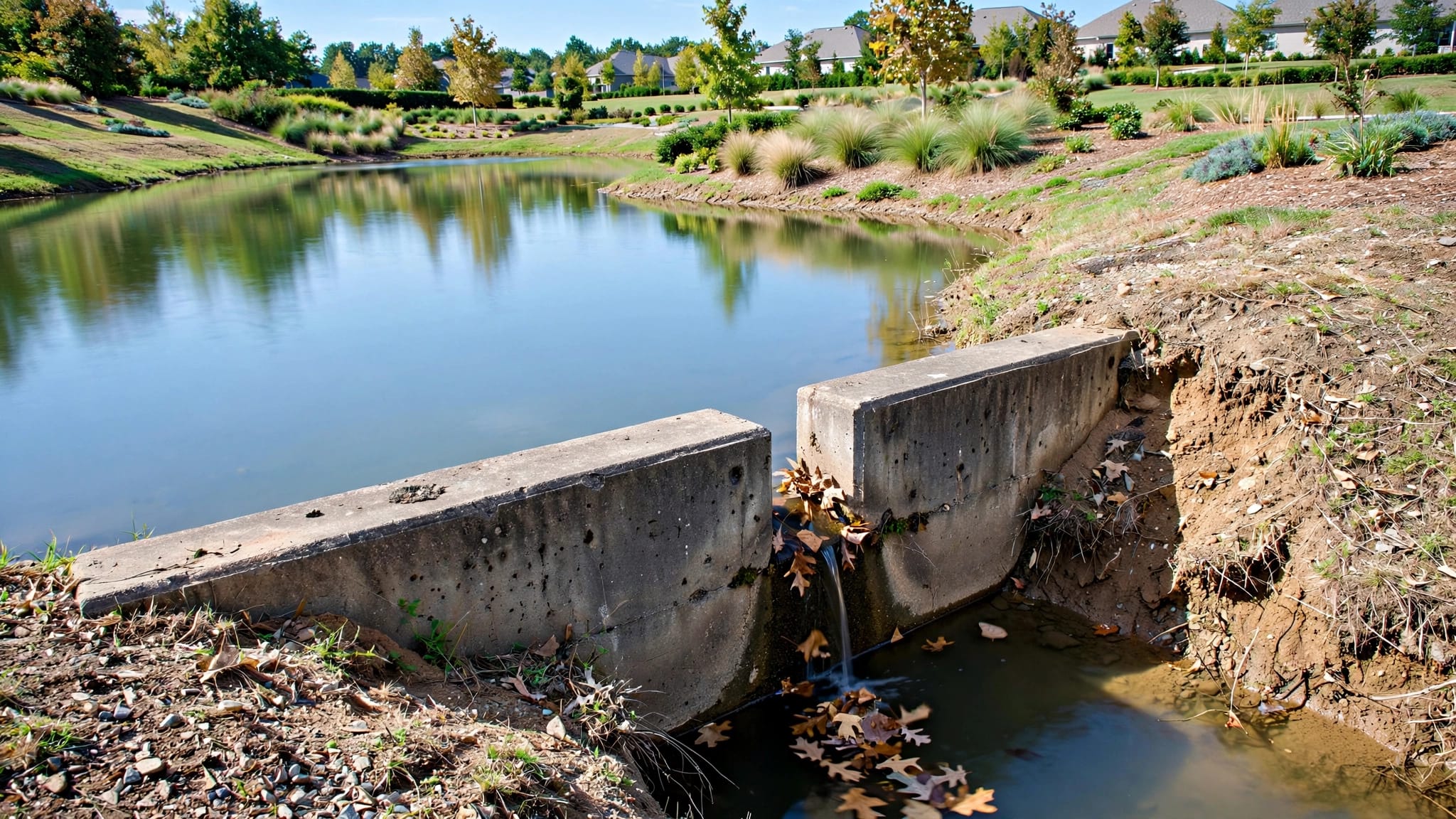
Walk accessible banks and look for fresh washouts, bare soil, soft spots, or areas where erosion appears to be growing. Around inlets and outlets, note debris, sediment, obstructions, and signs that water isn't moving as expected.
A control structure can appear intact while debris or erosion affects how it works. Regular checks help property managers record what has changed and arrange follow-up. Our retention pond inlet and outlet inspections page describes useful points to include in a review.
Observe levels, equipment, and water changes
Track water levels in the context of recent rain and normal site conditions. Also inspect aeration equipment for visible signs of damage or interruption. Record changes such as new algae, floating debris, unusual cloudiness, or an area of weed growth that has expanded.
Monthly reviews can include shorelines, inlets, outlets, water levels, aeration, and fixed-point photos. After major storms, look for debris, washouts, clogged structures, muddy water, and new low spots. A Florida HOA lake inspection checklist can help property managers organize those observations.
Match the Plan to Each Pond's Function
A multi-lake property rarely has one uniform maintenance need. Some waterbodies manage stormwater, while others sit beside homes, paths, or golf course features. A useful service plan accounts for those differences.
Keep stormwater function in view
Retention ponds help manage runoff and need to keep functioning through storms and dry periods. Therefore, maintenance should include more than visible weed control. Inlets, outlets, water levels, and signs of shoreline erosion all affect how a pond performs.
Different pond types can have distinct functions and maintenance needs. Before applying one schedule across a property, understand what each waterbody is designed to do. Our guide to maintenance needs for retention and detention ponds explains why the distinction matters for planning.
Give each lake a site-specific priority
A pond near a community entrance may need more frequent debris removal because residents see it every day. A lake near homes may call for close shoreline observation, while a golf course lake can face runoff from nearby turf and irrigation.
These differences don't mean every waterbody needs a separate vendor or unrelated process. They do mean that task lists and visit frequency should reflect location, function, and observed condition. Shared records can make it easier to compare lakes and direct attention where it is needed.
Coordinate Weed, Algae, Shoreline, and Aeration Work
Routine inspections identify issues; a maintenance plan also needs to define how the team responds. Aquatic weed control, algae treatment, aeration, shoreline stabilization, erosion control, and debris removal each address different conditions.
Treat visible growth as a condition to assess
Aquatic plants and algae can affect a lake's appearance and its use. When a growth issue appears, record where it is, how much of the shoreline or surface it affects, and whether it returns after treatment. Those details help distinguish a one-time concern from a recurring pattern.
Treatment should fit the plant or algae issue and the waterbody's conditions. Seabreeze Lake Maintenance holds Commercial Applicator License #CM28291. A recurring service plan can also pair treatment with water quality management and follow-up observations, rather than treating each visit as an isolated task.
Link shoreline and aeration work to inspections
Erosion often shows up along banks as bare or soft areas, washouts, or changes in the edge of the water. Addressing those signs early can help avoid leaving a growing problem unattended. Shoreline stabilization and erosion control should be considered alongside routine inspections, not only after a visible failure.
Aeration equipment also belongs on the inspection list. Record whether equipment is operating and note changes that require service. Seabreeze Lake Maintenance is a State-Licensed Specialty Contractor, #SCC131152136, with erosion repair expertise. For a lake that needs attention, Get a Free Lake Health Assessment to arrange a call and lake inspection.
Make Multi-Lake Work Easy to Track
Boards and managers need a clear record of what crews observed, what work they completed, and what needs follow-up. That record can connect routine service to a property's budget and maintenance priorities.
Keep a consistent record for every lake
Use a repeatable log for each waterbody. Include the service date, observations, work performed, changes since the last visit, and any follow-up task. Fixed-point photos can help show whether an area is improving or changing over time.
A shared format is especially useful on properties with several ponds. It helps managers compare conditions without treating every lake as though it has the same purpose or history. A structured lake maintenance program can tie inspection tasks, follow-up, and routine service together.
Define scope and review results
A service agreement should make the scope clear: which lakes are included, what routine work covers, how inspections are recorded, and how the team communicates follow-up needs. That clarity helps board members understand what the maintenance plan includes and what requires separate attention.
Review service notes and recurring issues with the schedule. If the same algae or shoreline concern returns, consider whether the frequency or scope needs adjustment. Our overview of what to include in a lake maintenance agreement explains how boards can define expectations for community lake work.
Frequently Asked Questions
How often should an HOA lake be serviced?
Monthly service is a common baseline for Florida communities. Weekly visits may suit golf courses, high-use properties, ponds with recurring algae, or sites with heavy runoff. Weather, plant growth, and the lake's stormwater role also affect the schedule.
What should a routine lake inspection include?
Review the shoreline, inlets, outlets, water levels, aeration equipment, and visible changes in water or plant growth. After major rain, look for debris, washouts, clogged structures, muddy water, and new low spots.
Should every pond in a community follow the same plan?
No. A retention pond, a lake beside homes, and a golf course waterbody may have different functions and conditions. Use a consistent inspection process, then adjust service tasks and frequency for each lake.
What should a board track to understand whether maintenance is working?
Keep dated service notes, photos from consistent locations, records of completed work, and follow-up items. Reviewing those records over time can help identify recurring problems and changes in lake condition.
A Reliable Plan Starts With Regular Attention
Community lake maintenance works best when it reflects each waterbody's function and condition. A steady schedule, clear inspection records, and timely follow-up help HOAs and property managers address visible concerns and stormwater needs.
When every lake has an appropriate plan, boards can make decisions based on its actual maintenance history, not appearance alone.
Recent Posts