Pollen or Algae? Field Checks for Community Lakes
A pale film on a retention pond can trigger resident complaints before anyone knows what it is. In a gated community or golf course, the difference matters: pollen may be a temporary surface deposit, while algae can signal a water-quality issue that needs attention.
Good lake algae identification starts with where the material appears and how it behaves, not a single glance at its color. A consistent walk around the water can help your team sort likely causes, document changes, and decide when to request a closer inspection.
Key Takeaways
- Pollen and algae can both collect at the surface, so appearance alone may not settle the question.
- Algae can form floating or attached growth, stringy mats, or cloudy water. Pollen is carried into the lake and deposited there.
- Wind, runoff, and lake layout affect where material gathers. Compare more than one shoreline or basin.
- Record the location, date, recent weather, and visible changes before making a treatment decision.
- If a bloom is unclear or expanding, keep people and pets away from it until the lake is assessed.
Why Pollen and Algae Get Confused
Both can change a lake's appearance without affecting every shoreline equally. Material may gather in a cove, along a seawall, or at one end of a pond while open water looks different. From a clubhouse window or a single photo, it can be hard to tell whether the surface is coated with deposited material or whether algae is growing in the water.
Pollen is a deposit, algae is growth
Pollen enters a lake from nearby vegetation and can collect on the water. Plant oils may also contribute to a surface sheen. These deposits can be mistaken for algae, especially when wind or rain concentrates material along an edge. A sheen alone does not identify its source. Sources of surface sheen in community ponds include pollen and plant oils, but also organic debris, algae activity, and runoff.
Algae is a broad category of growth. It can float on the surface, cling to structures or plants, form loose mats, or spread through the water and change its clarity. That range makes a reliable identification depend on several observations rather than one visual clue.
One pond can show more than one condition
A multi-lake property may have pollen on one basin and algae in another. Even within a single pond, growth can vary between open water, a sheltered cove, and an inflow area. A quick look at the most visible patch may not describe the rest of the lake.
That's why staff should compare several locations before reporting a suspected bloom. The pattern across the waterbody can be more useful than the surface appearance at one shoreline.
A Repeatable Method for Lake Algae Identification
A simple field walk can help narrow the possibilities without treating an uncertain observation as a diagnosis. Use the same route when possible, and note what changes from one visit to the next.
Look beyond the first visible patch
Start at the area residents reported, then compare it with the opposite bank, open water, nearby coves, and stormwater inlets. Note whether the material appears in several separate spots or follows one shoreline. Check whether it collects near structures or water movement equipment.
Wind can carry loose material toward one side of a lake. Runoff can also deliver particles and nutrients through drainage points. A dense shoreline band may show where material accumulated, but it does not automatically show where it began. Wind-driven algae buildup in community lakes can help explain why visible growth concentrates along a particular edge.
Notice whether it floats, clings, or clouds the water
Observe how the material relates to the waterbody. Is it only at the surface, attached to a seawall or submerged feature, or visible as cloudiness through the water? Algae can show up in any of these ways, so the location and form help guide the next inspection.
Also consider whether the material has recognizable plant structures. Duckweed, for example, is a tiny floating plant, while algae has no single structure or growth pattern. The differences between floating duckweed and lake algae can help teams rule out another common source of green surface cover.
Record conditions instead of relying on memory
Write down the lake name, observation point, date, recent rainfall, and wind direction if known. Add a short description of where the material is and whether the water looks different elsewhere. Photos from the same viewpoints make comparisons easier during later visits.
These notes are especially useful when residents report that the lake changed quickly. A dated record can show whether the patch shifted with wind, appeared near an inflow after rain, or returned in the same area.
Read the Material's Pattern Across the Lake
The distribution of a surface deposit can help distinguish a temporary event from a recurring lake condition. It also gives managers a better starting point for discussing possible sources.
Check whether wind or water movement explains the location
Loose material can collect on a downwind shore, while sheltered coves may hold surface deposits longer. Inlets and outfalls deserve attention too, particularly if a visible change appears near them after rain. Compare those areas with a location away from the shoreline.
A repeated line of algae on the same shore can reveal where wind and surface currents carry it. Still, the collection point may not be the source. If the growth keeps returning, the inspection should consider nearby drainage, shoreline conditions, and water movement rather than focusing only on the visible band.
Compare the whole property
For communities with several ponds, keep each waterbody's observations separate. One lake may receive more runoff or have different circulation than another, even when the basins sit close together. A property-wide report that combines them can hide those differences.
Use consistent names for the lakes and locations. That makes it easier for board members, property managers, and maintenance crews to discuss the same place and recognize whether a condition is isolated or recurring.
Separate Algae from Sheen, Cloudiness, and Other Growth
A lake can look discolored without having a surface algae bloom. Likewise, a thin film does not prove that the material is pollen. Managers should describe what they see before assigning a cause.
A sheen and cloudy water need different observations
A thin surface sheen may come from pollen and plant oils, but decaying leaves, grass, stormwater runoff, or algae-related activity can also affect the surface. Note whether the sheen is near an inlet, follows recent rain, or appears where plant debris collects. These clues help organize an inspection, but none confirms a cause on its own.
Cloudiness is different from a surface coating. Suspended soil, decaying leaves, tea-colored runoff, stirred-up bottom material, and dead algae can all reduce clarity. Reasons lake water can stay murky without an algae bloom show why cloudy water should not automatically be labeled an active bloom.
Rule out plants and attached growth
Floating plants can create a green cover that resembles algae from a distance. Close observation may show individual plants rather than a film or mat. Submerged vegetation can also be mistaken for algae when it reaches the surface.
Attached growth deserves a separate look from loose material moving across the pond. If the growth is anchored along a seawall or bottom, note that location for the inspection. Treatment choices depend on what is growing and where it is established.
Keep a Useful Record for HOA and Golf Course Lakes
A clear record helps a board see whether the problem is new, seasonal, limited to one area, or part of a repeating pattern. It also keeps resident reports connected to actual locations.
Give reports a consistent format
For each observation, record the lake name, date, general location, weather, recent rain, water appearance, and any relevant nearby activity such as mowing or visible runoff. Include photos from fixed viewpoints where practical. Keep notes factual, for example, "green material along the north cove," rather than recording an unconfirmed cause.
This approach is useful when several staff members or vendors serve the property. It gives each person a shared reference and makes comparisons across visits more meaningful.
Track where runoff and debris enter
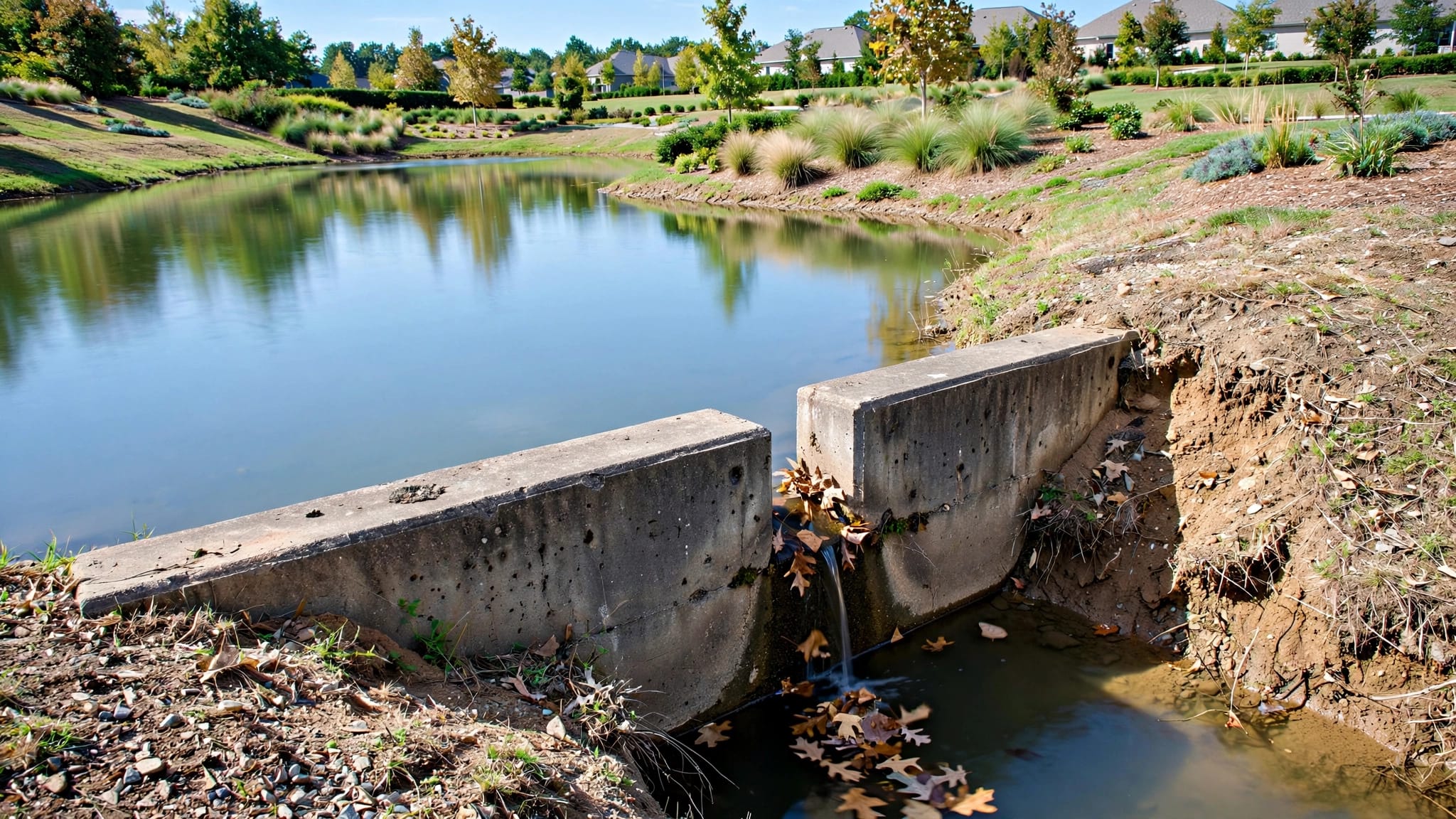
Look at stormwater structures, drainage paths, and shoreline areas where soil or plant debris may reach the water. Grass clippings and decaying vegetation can add organic material, while runoff can carry nutrients and sediment. Repeated inputs may contribute to recurring water-quality problems.
If the same inflow or bank appears in reports, include it in the property's maintenance record. That information can help a lake professional assess whether source control, circulation, shoreline work, or algae management is appropriate.
When Visual Checks Aren't Enough
Field observations are useful for sorting possibilities, but a shoreline glance cannot identify every bloom or explain why it keeps returning. A professional assessment should consider the full waterbody, including inflows, coves, open water, shorelines, and circulation equipment.
If a bloom is unexplained, spreading, or affecting a shared-use area, keep residents and pets away from the material until it has been assessed. Avoid authorizing broad treatment based only on a photo or surface color. Different algae forms and other floating growths can call for different responses.
At Seabreeze Lake Maintenance, we begin algae management with an on-site assessment and evaluation of the waterbody. Our licensed team serves community lakes and retention ponds in Southwest Florida, with Commercial Applicator License #CM28291 and State-Licensed Specialty Contractor #SCC131152136. For an unclear or recurring condition, Get a Free Lake Health Assessment.
FAQ
Can pollen and algae appear at the same time?
Yes. A lake may receive pollen while algae is also present, and different areas can show different conditions. Record what is visible at each location rather than assuming one cause explains every patch.
Does a surface sheen mean the lake has algae?
No. Pollen and plant oils, organic debris, runoff, and algae-related activity may all contribute to a sheen. The location and surrounding conditions can guide an inspection, but a sheen alone doesn't identify the source.
Can cloudy water confirm an algae bloom?
No. Soil particles, decaying leaves, runoff, bottom material, or dead algae can reduce clarity. A cloudy appearance needs to be considered alongside surface growth, location, and other observations.
Should staff treat a suspected bloom right away?
An uncertain identification is not a sound basis for treatment. Document where the material appears and request an assessment if it is spreading, recurring, or affecting a community area. Keep people and pets away from an unexplained bloom in the meantime.
Conclusion
When a lake's surface changes, start by observing where the material gathers and whether it floats, clings, or clouds the water. Pollen, algae, runoff, and other growth can look similar at first, so careful records matter more than a quick label.
For HOAs, golf courses, and multi-lake communities, consistent field checks help teams respond to the right problem and avoid treating a symptom before its cause is understood.
Recent Posts